

Some books ask for a month of your life. The seven on this list ask for one afternoon. Each one is short enough to finish in a single sitting, yet each one has stayed in print for decades and still sparks arguments in book clubs today. That is a rare combination, and it is exactly what makes them perfect for a quiet weekend, a long flight, or a rainy day with nowhere to be.
Short does not mean light. A few of these books are funny and warm. A few are dark and will leave you staring at the wall when you turn the last page. All of them were written by authors at the top of their craft, and all of them prove that a story does not need five hundred pages to change how you see the world.
Every book here runs about one to three hours of reading. The whole list adds up to roughly 820 pages, which means a determined reader could work through all seven in a single week. Read them in order, or jump to the mood that fits tonight. Each entry tells you what the book is about, why it has lasted, and where to find a copy.
The ratings shown are the Goodreads averages as reported in November 2026. They will keep moving as more readers finish each book, but the order of the list is ours: it starts with the sea and ends with a man who wakes up changed.
How was this list made? Every book here is under 200 pages in a standard paperback, has been in print for at least forty years, and holds a Goodreads average above 3.5 from hundreds of thousands of readers. The list covers seven genres and seven decades, so there is something here for every kind of reader, including readers who have not finished a book in years.
Seven books, one sitting each
The shortest book here is about 70 pages. The longest is under 200. None of them needs a bookmark.
1. The Old Man and the Sea
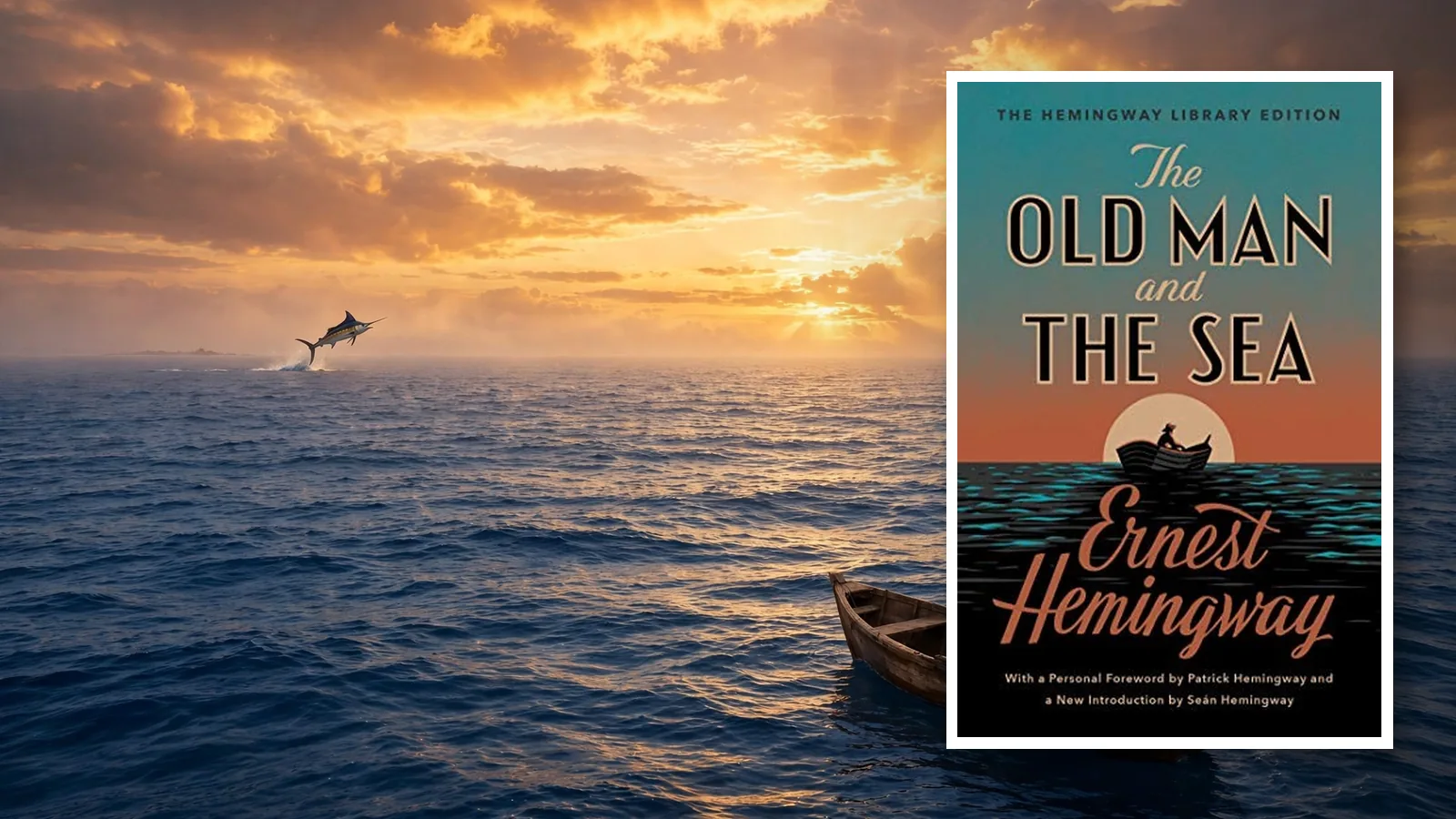
Santiago is an old Cuban fisherman who has gone eighty-four days without catching a fish. The other fishermen think his luck has run out, and only a young boy named Manolin still believes in him. One morning Santiago rows far out into the Gulf Stream alone, hooks a giant marlin, and begins a fight that lasts three days and three nights.
Ernest Hemingway published the novella in 1952, and it became the most famous book of his life. The whole story appeared in Life magazine on September 1, 1952, and the issue sold more than five million copies in two days. It won the Pulitzer Prize in 1953, and the Nobel Prize citation in 1954 named it as the latest proof of Hemingway’s mastery.
At a glance
Genre: Literary fiction, novella
Author: Ernest Hemingway
Year: 1952
Goodreads rating: 3.81/5
What stays with readers is not the fish. It is Santiago himself: stubborn, tired, polite to the fish he is trying to kill, and unwilling to quit even when he knows he is beaten. Hemingway writes in short, plain sentences, and the sea does the rest.
Read it in one afternoon, ideally somewhere you can hear water. At about 127 pages it is the perfect first pick from this list, and it works just as well on a second or third reading.
2. The Alchemist

Santiago is a young shepherd in Spain who keeps dreaming about a treasure buried near the Egyptian pyramids. He sells his flock, crosses the sea, and walks into the desert to chase the dream. Along the way he meets a gypsy woman, a man who calls himself a king, and an alchemist who teaches him to listen to his heart.
Paulo Coelho first published the novel in Portuguese in 1988. It sold slowly at first, then became one of the best-selling books of all time, with more than 150 million copies sold and translations into over 80 languages. It holds the Guinness World Record for the most translated book by a living author, and it is still the book people press into the hands of friends who feel stuck.
At a glance
Genre: Philosophical fable, adventure
Author: Paulo Coelho
Year: 1988
Goodreads rating: 3.92/5
Some readers love its simple wisdom. Others find it too simple. Both sides agree on one thing: it is hard to put down. The chapters are short, the desert keeps moving, and the ending lands with a twist that reframes everything Santiago learned on the road.
Pick this one when you need a push. It is a fable about following a dream, and it reads like a story told around a fire, not a lecture.
3. The Little Prince
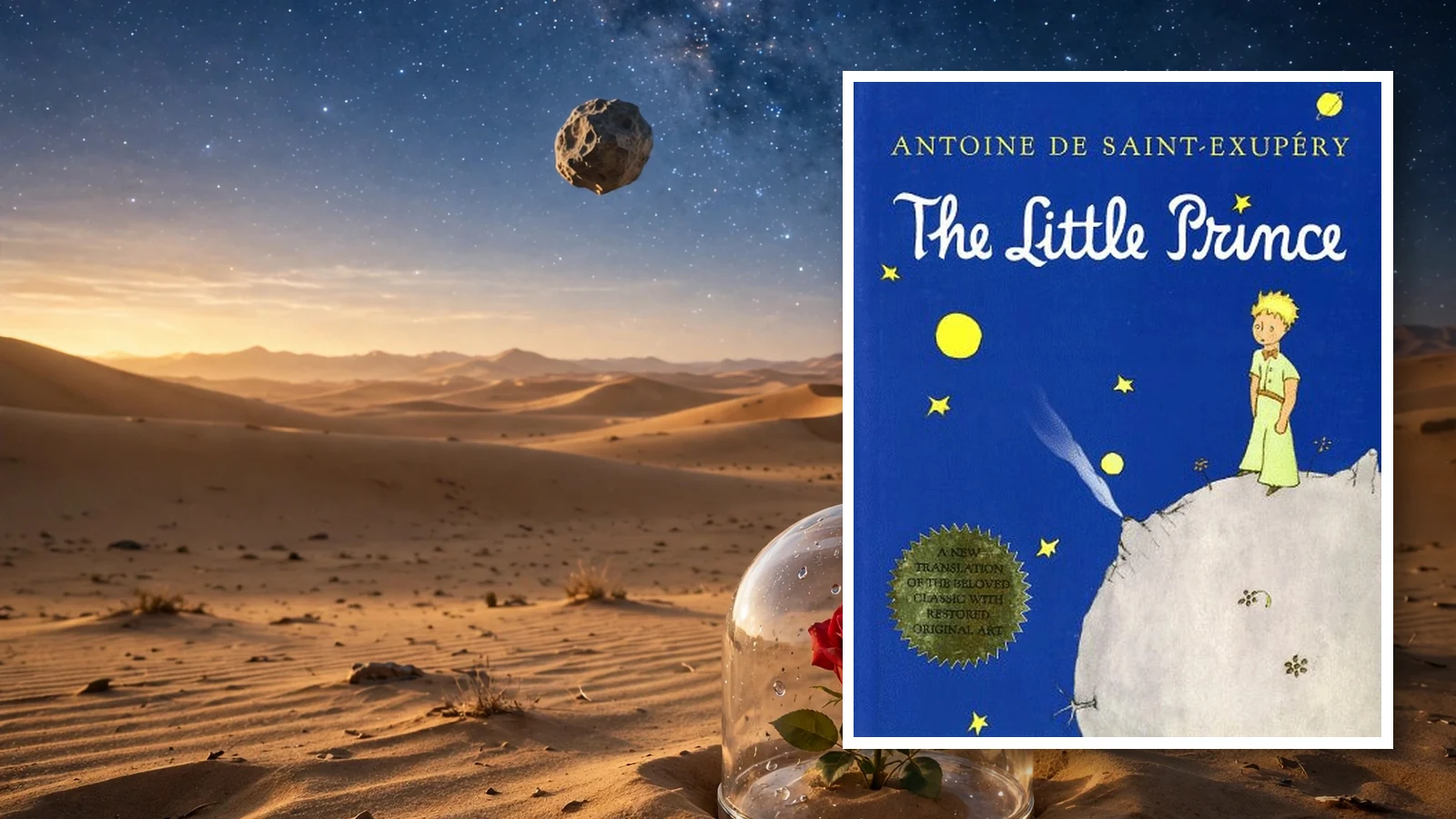
A pilot crashes his plane in the Sahara desert and meets a small boy from another planet. The boy, the little prince, tells him about his home, a tiny asteroid with three volcanoes and one rose, and about the strange grown-ups he met on his travels: a king with no subjects, a businessman who counts stars, and a lamplighter who never sleeps.
Antoine de Saint-Exupery wrote and illustrated the book in 1943, a year before he vanished on a wartime flying mission over the Mediterranean. It has since been translated into more than 500 languages and sells millions of copies every year. Children love the adventure. Adults keep coming back for the fox, who teaches the prince that what is essential is invisible to the eye.
At a glance
Genre: Philosophical fable, classic
Author: Antoine de Saint-Exupery
Year: 1943
Goodreads rating: 4.33/5
At about 96 pages it is the shortest read on this list after The Metamorphosis, and it has the highest Goodreads rating of the seven. The watercolor illustrations are Saint-Exupery’s own, and they are part of the story, not decoration.
Read it alone first, then read it with a child. You will notice different lines each time, and the sad, hopeful ending hits differently when you are the one doing the reading aloud.
4. The House on Mango Street

Esperanza Cordero is twelve years old, growing up in a poor Latino neighborhood in Chicago, and dreaming of a house of her own. Not her parents’ cramped flat on Mango Street, but a real house, with stairs and a yard and a door she can point to and say is hers. The book tells her story in forty-four short vignettes, some only a page long.
Sandra Cisneros published the novel in 1984, and it has sold more than seven million copies in the United States alone, in as many as twenty-six translations. It is taught in schools across the country, and it has also been banned in some of them, which tells you how much power a twelve-year-old narrator can carry.
At a glance
Genre: Coming-of-age novel
Author: Sandra Cisneros
Year: 1984
Goodreads rating: 3.67/5
The vignettes read like poems. One is about shoes. One is about a first job. One is about the four skinny trees outside Esperanza’s window, the only ones who understand her. Together they add up to a portrait of a girl learning to see her neighborhood clearly, and to leave it without forgetting it.
This is the most lyrical book on the list. Read it slowly, one vignette at a time, and let each small scene land before you move on.
Pick by mood
No wrong answers here. Start with the mood you are in, not the number on the list.
5. The Stranger
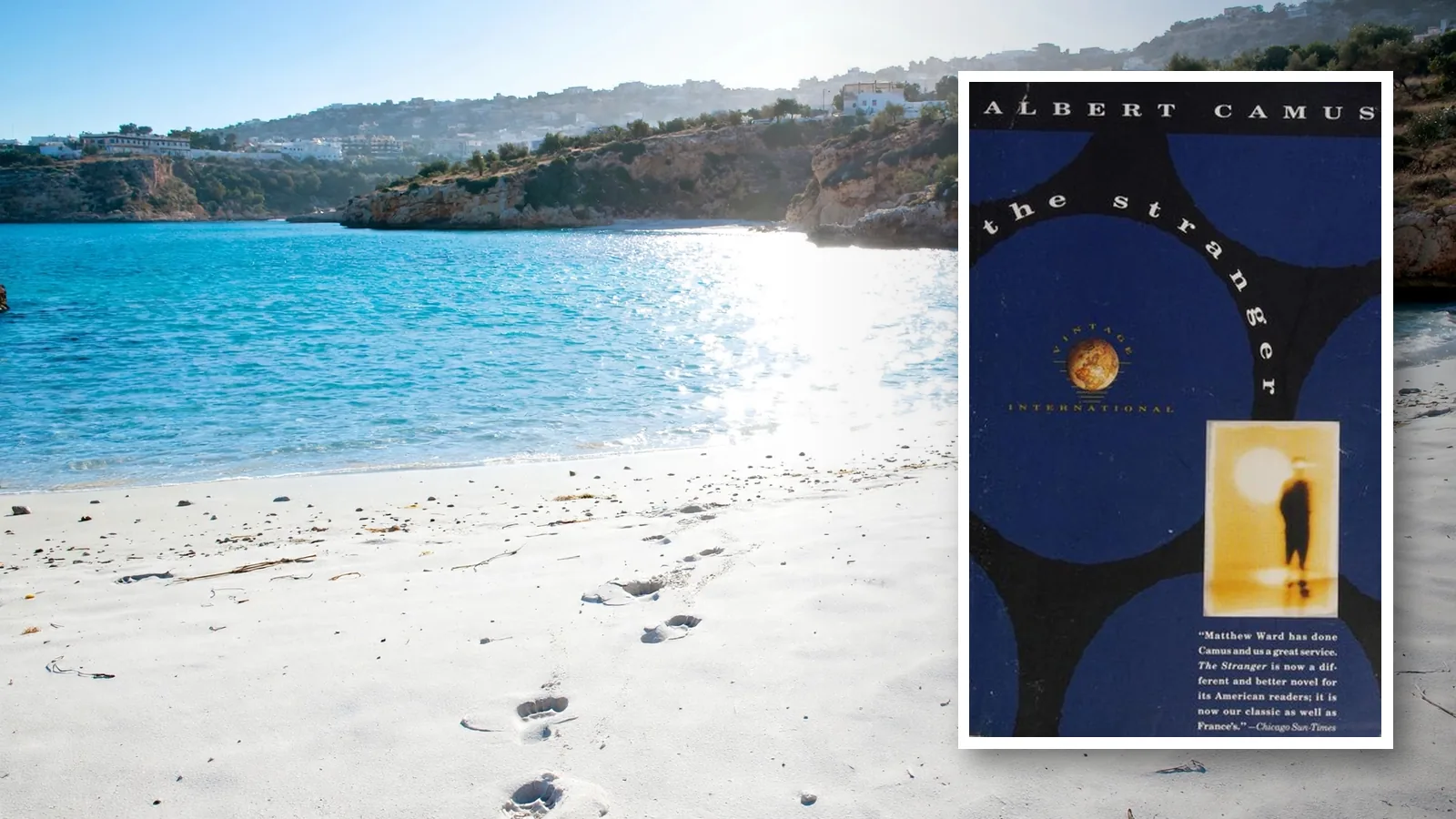
The book opens with one of the most famous first lines in literature: Mother died today. Or maybe yesterday, I do not know. Meursault, a young Frenchman living in Algiers, buries his mother without shedding a tear, goes swimming the next day, and starts a love affair. Then, on a blazing beach, he shoots a man for no reason he can explain.
Albert Camus published the novel in French in 1942, in the middle of the Second World War. The second half of the book is a trial, and the court is less interested in the murder than in Meursault himself: a man who refuses to pretend, to cry on cue, or to say he believes in things he does not believe. Camus won the Nobel Prize in 1957, and this strange, short novel is where most readers start with him.
At a glance
Genre: Existential novel, philosophical fiction
Author: Albert Camus
Year: 1942
Goodreads rating: 4.03/5
At about 123 pages it reads fast, but it does not let go fast. The sun on that beach is a character in the story, and Meursault blames the heat, the light, and the glare off the water for what his hand did. Whether that is an excuse or the truth is the argument readers have been having for eighty years.
Read it on a hot day if you can. The glare in the book feels stronger when the sun is doing the same thing outside your window.
6. The Pearl
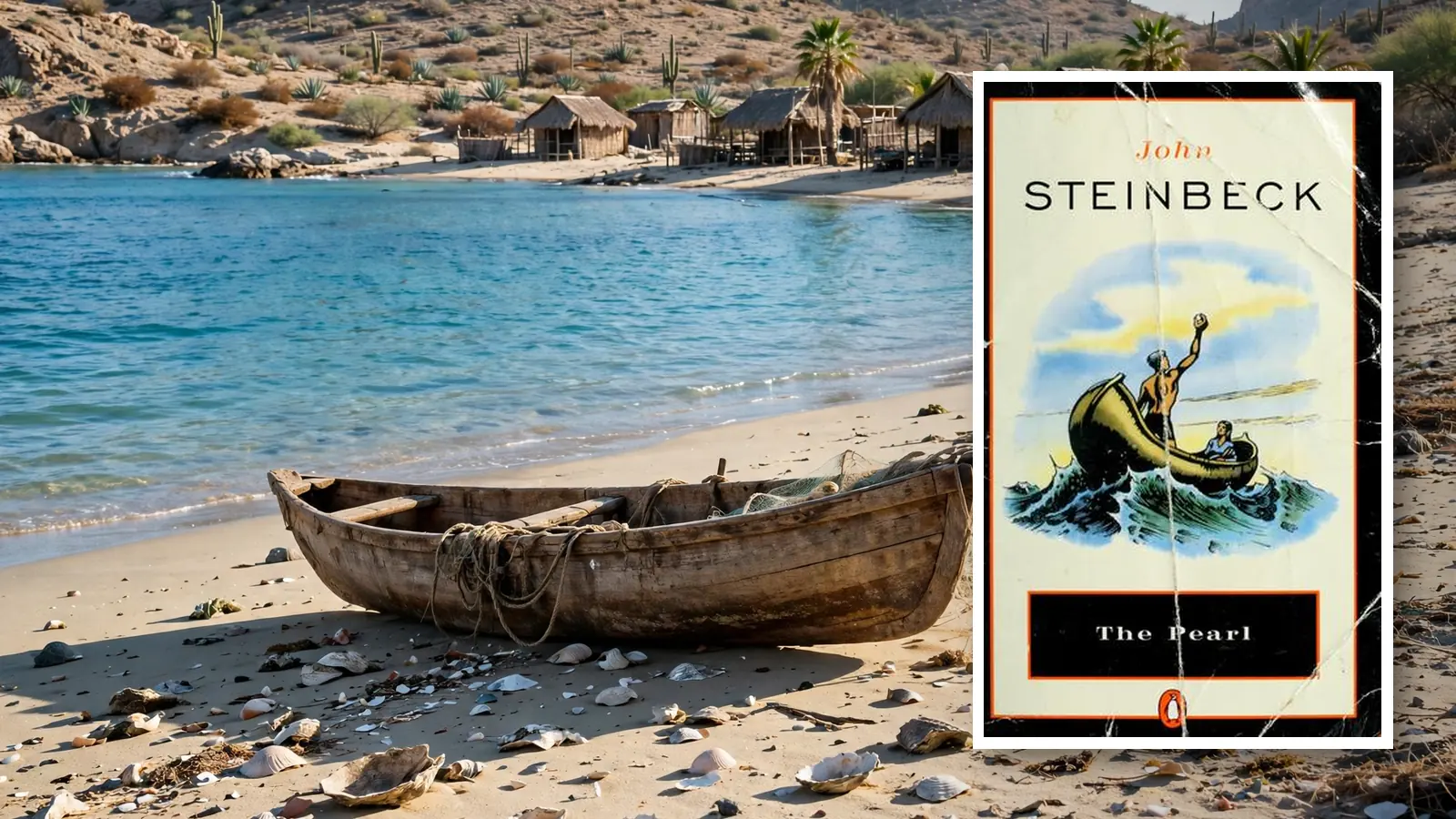
Kino is a poor pearl diver in the Mexican village of La Paz. His baby son Coyotito is stung by a scorpion, and the family has no money for a doctor. Then Kino finds a pearl so large and so perfect that the whole village whispers about it. It should save them. Instead it brings thieves, violence, and a slow unraveling of everything Kino loves.
John Steinbeck first published the story as The Pearl of the World in a magazine in December 1945, then expanded it into a novella in 1947. The first American edition was illustrated by the Mexican muralist Jose Clemente Orozco. At about 90 pages it is one of the shortest books Steinbeck ever wrote, and one of the most taught in schools.
At a glance
Genre: Parable, literary novella
Author: John Steinbeck
Year: 1947
Goodreads rating: 3.58/5
Buy: No verified Amazon link found in search, search the title on Amazon
The Pearl is a parable, which means it works like a folk tale: simple on the surface, heavy underneath. Steinbeck wrote it as a warning about what money does to people who have lived without it, and about how quickly a whole town can turn on a man who suddenly has something worth taking.
Read it when you want a story with a clear moral and an ending that refuses to soften it. You will finish it in about two hours, and you will think about the last page for much longer than that.
7. The Metamorphosis
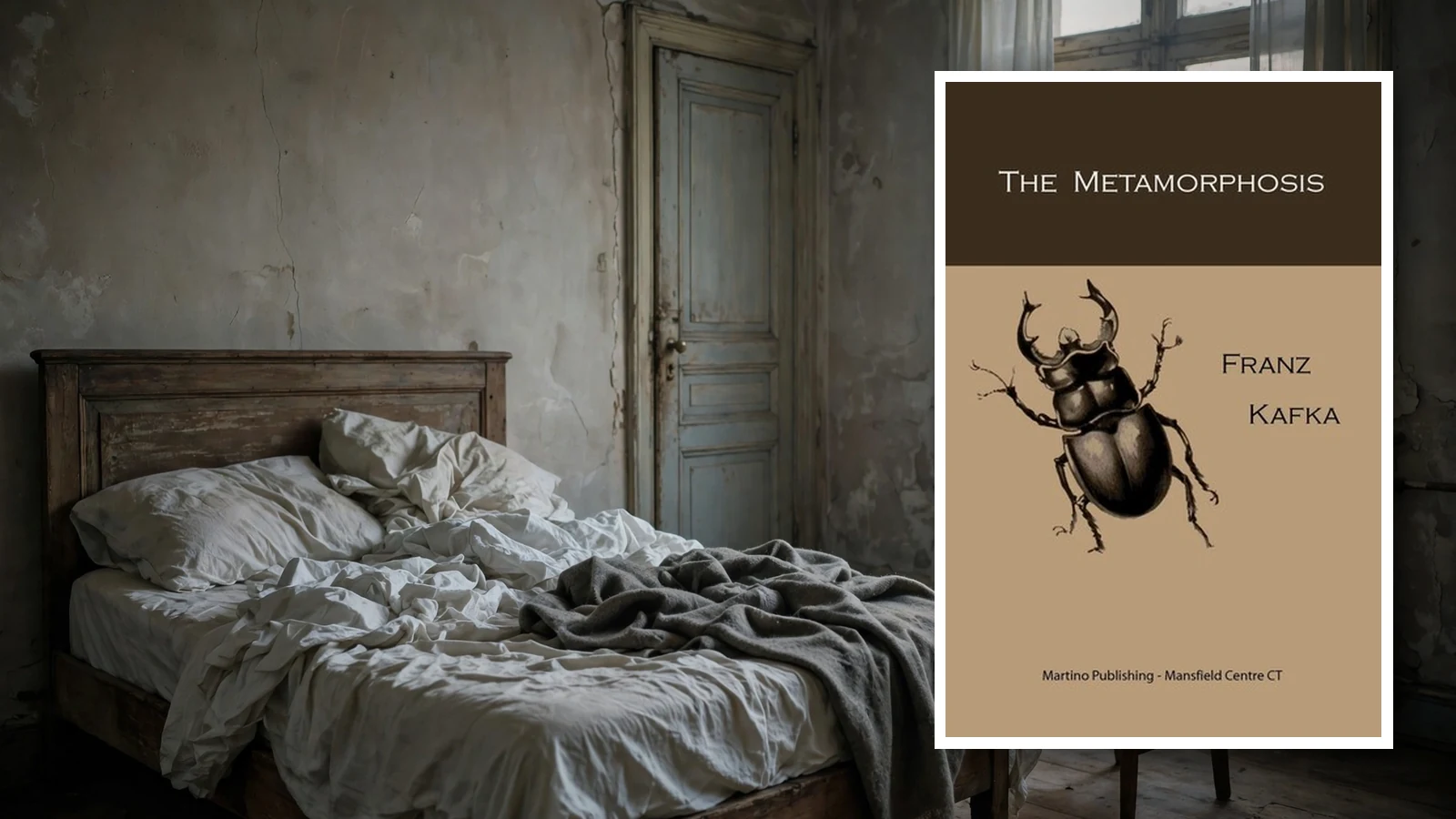
Gregor Samsa wakes up one morning from uneasy dreams and finds himself changed in his bed into a monstrous vermin. That is the first sentence, and the book never explains how it happened. Gregor is a traveling salesman, the only earner in his family, and now he is a giant insect who cannot get out of bed, cannot speak, and cannot work.
Franz Kafka wrote the story in 1912 and first published it in 1915, in a German literary journal, with the first book edition following later that year. At about 70 pages it is the shortest book on this list, and the strangest. His family tries to cope, then tries to ignore him, then locks his door. The horror is not the bug. It is how quickly love turns into inconvenience.
At a glance
Genre: Absurdist novella, classic fiction
Author: Franz Kafka
Year: 1915
Goodreads rating: 3.91/5
Kafka died in 1924, largely unknown, and never saw his work become famous. Today The Metamorphosis is read in schools and colleges around the world, and its opening line is one of the most quoted in all of literature. Readers still argue about what the bug means: illness, guilt, burnout, or simply the feeling of being useless to the people you love.
Read it in one hour, then give yourself the rest of the evening to sit with it. It is the darkest book on this list, and the one most likely to change how you read everything after it.
Your one-sitting plan
Seven books, seven evenings. Start with the one that scares you least, and end with the one that scares you most.
That is the list: seven books, seven afternoons, and seven very different answers to the question of what a short book can hold. A fisherman and his marlin. A shepherd and his dream. A prince and his rose. A girl and her house. A stranger and his trial. A diver and his pearl. A salesman and his transformation.
The best way to use this list is simple. Pick one tonight, not all seven at once. Put your phone in another room, make something warm to drink, and read until the book is done. The feeling at the end, that small shock of having lived a whole life in two hours, is the reason short classics never go out of print.
When you finish, pass the book on. Lend it to a friend, leave it on a train seat, or hand it to someone who says they never have time to read. These books were written for people exactly like that, and they have been proving it for more than a hundred years.

John Smith is the founder and CEO of Karaoke Machines Guru. He is a karaoke tutor and karaoke enthusiast and has been passionate about karaoke since he was a child. He also writes about karaoke-related tips, guides, and product reviews on this website.
He overlooks the whole website and makes sure that everything is running smoothly. Learn more!