

Earlier this month, the Booker Prize went to a work of science fiction for the first time. The End of Everything by M. John Harrison won on November 9, 2026, at a ceremony in London. Harrison is 81, the oldest winner in the prize’s history, and the judges were unanimous. A book that many readers had never heard of is now the book everyone is talking about. That is how classics are made: not always in a rush, and not always on the day a book is published.
The eight books on this list arrived quietly. None of them was a sensation on its first day. Three of them went on to win a Booker Prize or a Pulitzer Prize. Two of them were published after their authors had died. One of them was out of print for decades before readers brought it back. What they share is simple: ordinary people in difficult lives, plain writing, and stories that stay with you long after the last page.
They span 1965 to 2011, a stretch of 46 years, and the seven with a verified Goodreads average sit at 4.18 out of 5 between them. Each one earned its place slowly, reader by reader. If your shelves are full of the same famous titles, these eight are the ones worth making room for.
The scorecard: 8 books, 46 years
Ratings are Goodreads averages as reported in November 2026. They keep moving as more readers finish each book.
1. Stoner

William Stoner is the son of Missouri farmers, and he goes to university in 1910 to study agriculture. Then he takes a required English literature course, reads a sonnet, and his life changes direction. He becomes a student of literature, then a teacher, and his whole life plays out inside one university. John Williams published this novel in 1965, and almost nobody noticed. It sold only a few thousand copies and then vanished from the shelves.
Stoner marries the wrong woman, falls in love with a graduate student, fights a petty department war with a colleague, and loses more than he wins. Nothing explodes. Nobody gets rich or famous. The power of the book is how plainly it watches a decent, quiet man live an ordinary life that still matters. The Guardian called it the greatest novel you have never read, and that line has stayed on the cover ever since.
At a glance
Genre: Literary fiction
Author: John Williams
Year: 1965
Goodreads rating: 4.36/5
Buy: Stoner on Amazon
Stoner came back from the dead. The New York Review Books reissue in 2006 put it in front of a new generation, and readers in Europe made it a word of mouth hit before it caught on at home. It is now taught in universities and pressed into friends’ hands like a secret. The lesson is simple: a novel does not need a big plot to be a classic. It needs a true one.
Verdict: start here if you think quiet books are boring. This one will change your mind.
2. The Remains of the Day

Stevens has been the butler at Darlington Hall for most of his life, and he is proud of doing his job well. In the summer of 1956, his new employer gives him a car and a week off, so Stevens drives through the West Country to visit Miss Kenton, the former housekeeper he once loved and never told. Along the road, he looks back at the years he spent serving Lord Darlington, a decent man who held meetings with Nazi sympathizers and never understood what he was doing.
Kazuo Ishiguro won the Booker Prize for this novel in 1989. It is a book about what a man does not say, and Stevens does not say much. He misses his chance with Miss Kenton because duty always came first, and by the time he understands what he lost, it is gone. The 1993 film with Anthony Hopkins and Emma Thompson is one of the rare adaptations that gets the book right. Ishiguro went on to win the Nobel Prize in Literature in 2017.
At a glance
Genre: Literary fiction
Author: Kazuo Ishiguro
Year: 1989
Goodreads rating: 4.14/5
The title comes from the end of a working day, when the light is fading and a man takes stock of what is left. Stevens takes stock on the last page, and the answer is not kind. He has done his duty, and his duty cost him everything else. Few novels say so much with so little noise.
Verdict: read it slowly. The sentences look plain, and they land like hammer blows.
3. A Confederacy of Dunces

Ignatius J. Reilly is thirty years old, lives with his mother in New Orleans, wears a green hunting cap, and considers himself too good for every job in the city. His mother makes him work, so he takes a job at Levy Pants, gets fired, and ends up selling hot dogs from a cart in the French Quarter. John Kennedy Toole wrote the novel in the 1960s and could not get it published. He died in 1969 at the age of thirty-one, and his mother spent eleven years pushing the manuscript until Walker Percy, the novelist, helped get it into print.
The book came out in 1980 and won the Pulitzer Prize for Fiction in 1981. It is one of the funniest novels on this list, and also the most divisive. Readers either laugh at Ignatius on every page or give up on him by chapter three. He is lazy, rude, and convinced the world is a conspiracy against him. He is also, in his own strange way, right about a lot of things.
New Orleans is the other star of the book. Toole wrote the city the way it sounded in the early 1960s, with its accents, its food, its bars, and its street life, and that is a big part of why the novel still feels alive. The Goodreads rating is left out here because the sources do not agree on a single figure for the novel, so no number is printed rather than a wrong one.
Verdict: if you love big comic characters, Ignatius is waiting. If you hate him, you are not alone, and that is part of the fun.
4. The Master and Margarita
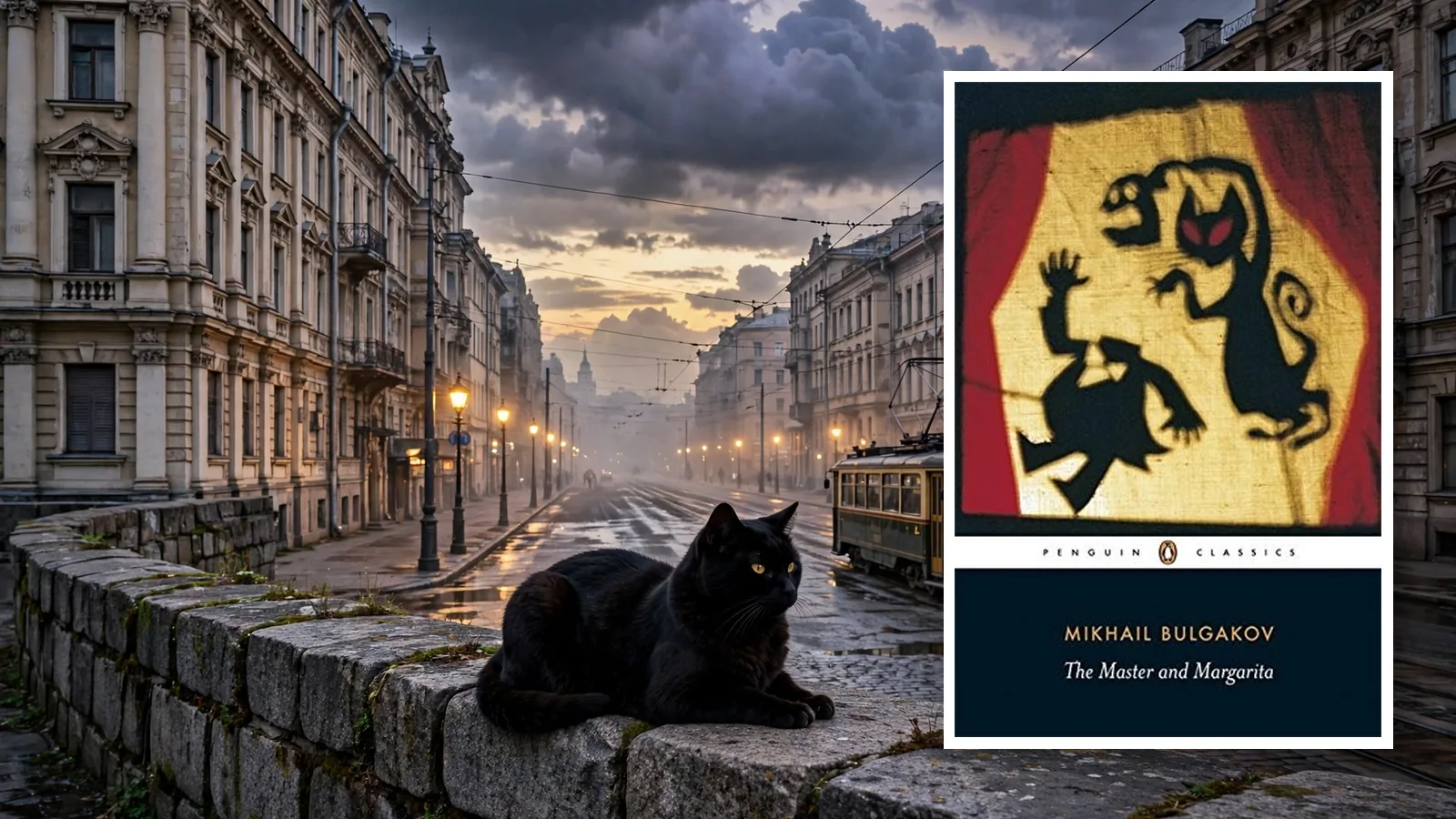
The devil arrives in Moscow one spring morning, dressed as a foreign professor, and brings a talking black cat named Behemoth with him. Mikhail Bulgakov wrote this novel in secret between 1928 and 1940, while Stalin’s Soviet Union was jailing writers for far less. The book has two stories woven together. In one, the devil, whom the book calls Woland, turns 1930s Moscow upside down. In the other, Pontius Pilate decides the fate of Jesus in Jerusalem.
The Master is a writer who burned his own novel about Pilate after the critics destroyed him. Margarita is the woman who loves him, and she makes a bargain with the devil to get him back. Bulgakov died in 1940, and the novel was not published until 1967, twenty-seven years later, in a censored edition. The full text reached readers only after that. It is the funniest book about evil ever written, and also one of the saddest books about what censorship does to artists.
At a glance
Genre: Satirical fantasy
Author: Mikhail Bulgakov
Year: 1967
Goodreads rating: 4.27/5
The Penguin Classics translation by Richard Pevear and Larissa Volokhonsky is the one to look for, and it keeps the jokes sharp and the Moscow street scenes vivid. Behemoth the cat steals every scene he walks into, which is fair, because he is the only character who knows exactly what is going on.
Verdict: the wildest book on this list, and the one most likely to make you read it twice.
Three books that refused to stay buried
Stoner was reissued by New York Review Books in 2006. Toole died in 1969, Bulgakov in 1940.
5. The Shadow of the Wind
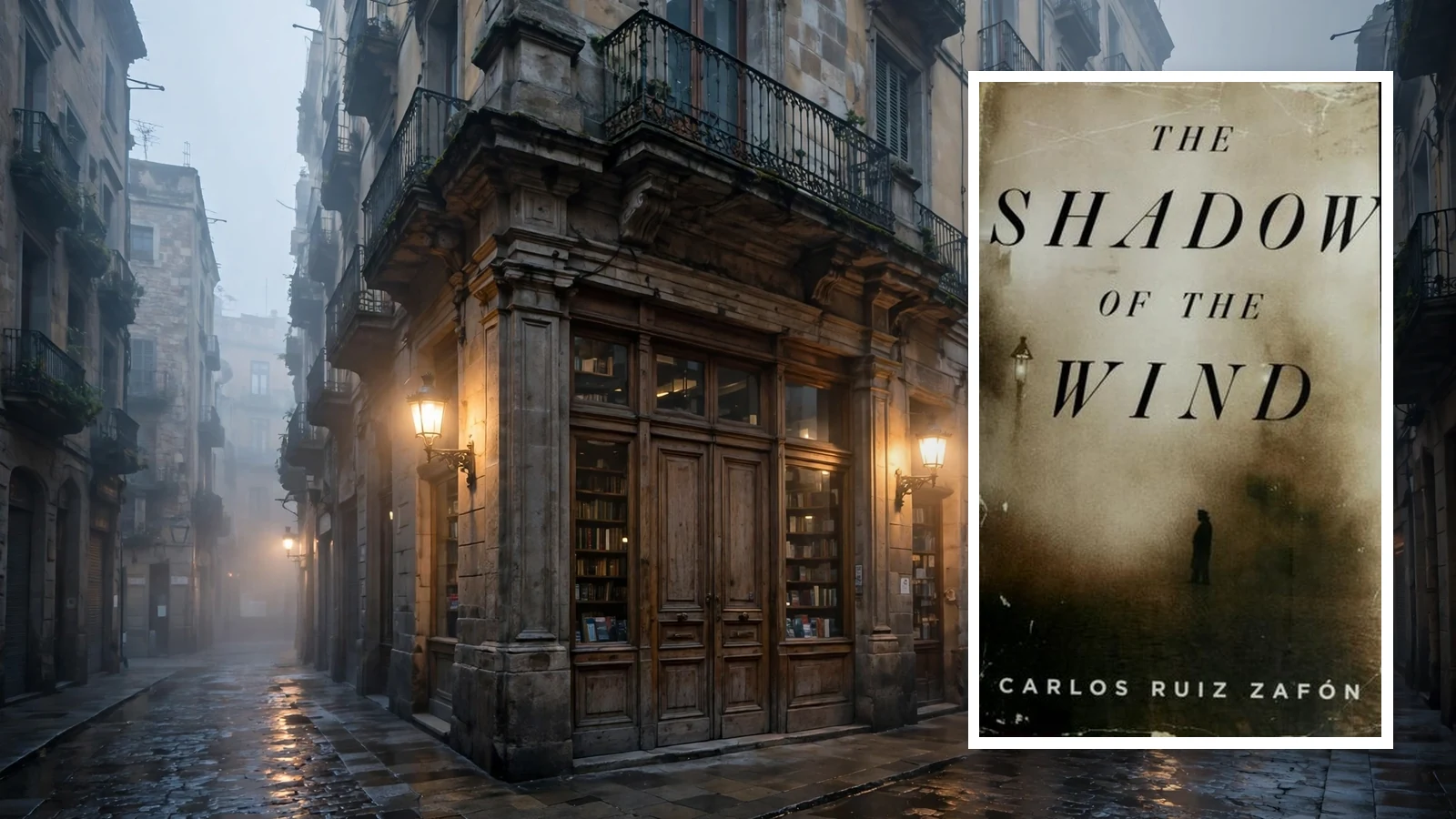
Barcelona, 1945. A bookseller takes his ten-year-old son Daniel to the Cemetery of Forgotten Books, a secret library where old books go to be saved. Daniel is allowed to pick one book, and he picks The Shadow of the Wind by a forgotten writer named Julian Carax. When he starts asking questions about Carax, he learns something strange: someone has been buying up every copy of Carax’s books and burning them.
Carlos Ruiz Zafon published this novel in Spanish in 2001, and it became one of the biggest-selling Spanish novels of all time, with more than 15 million copies sold. The English translation by Lucia Graves followed, and the book found the same huge audience in English. It is a gothic mystery, a love story, and a love letter to books themselves, set in a Barcelona of fog, gas lamps, and old bookshops that feels like it is hiding a secret on every street.
At a glance
Genre: Gothic mystery
Author: Carlos Ruiz Zafon
Year: 2001
Goodreads rating: 4.31/5
Zafon went on to write three more novels in the same world, and the four books together are called the Cemetery of Forgotten Books series. He died in 2020, but the first book is the one readers keep coming back to. It works as a mystery, and it works even better as a reminder of why bookshops matter.
Verdict: the most romantic book on this list. Read it on a rainy night, and the fog will feel real.
6. The Night Circus

Le Cirque des Reves opens only at night. Its tents are black and white, its performers are real magicians, and it appears in a new city without warning. Inside the circus, two young illusionists, Celia Bowen and Marco Alisdair, are bound by their mentors to a magical duel that neither of them chose. Erin Morgenstern published this novel in 2011, and it spent seven weeks on the New York Times bestseller list and was translated into 37 languages.
The circus is the real star. Morgenstern built it out of small wonders: a bottle garden that grows inside glass, a tent full of clouds, an ice garden that never melts. The duel between Celia and Marco matters less than the place they fight it in, and readers either fall in love with the atmosphere or find the plot too thin. Most fall in love. The book also won the Locus Award for Best First Novel.
At a glance
Genre: Fantasy
Author: Erin Morgenstern
Year: 2011
Goodreads rating: 3.99/5
This is the most current book on the list in more ways than one. A 15th anniversary edition came out on October 15, 2026, with a new introduction by Alix E. Harrow, and the paperback got a fresh look for the occasion. Fifteen years on, the circus is still arriving without warning, and readers are still lining up at the gate.
Verdict: the prettiest book on this list. Go for the atmosphere, and stay for the ending.
7. Middlesex
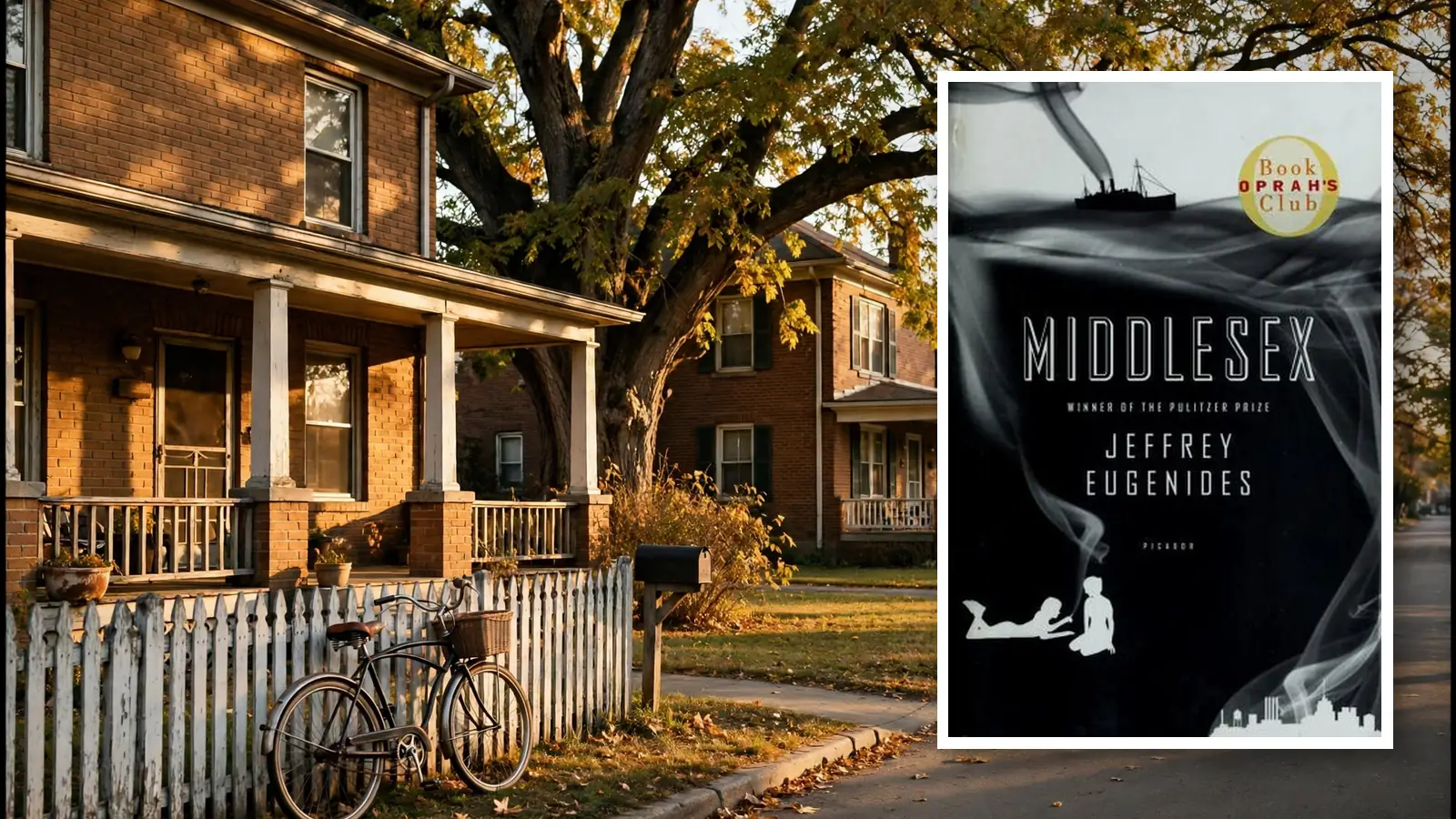
Calliope Stephanides is born in Detroit in 1960, the grandchild of Greek immigrants who fled Smyrna, and she is raised as a girl. At fourteen, she discovers she is intersex, with a body that does not fit the sex she was given. She becomes Cal, and she tells the story of her family across three generations: the grandparents who were brother and sister, the parents who ran a diner and a bar, and the city of Detroit that rose and fell around them all.
Jeffrey Eugenides published Middlesex in 2002, and it won the Pulitzer Prize for Fiction in 2003. It has sold more than four million copies, and it became an Oprah’s Book Club pick in 2007. The novel is big in every way: big in size, big in time, and big in feeling. It is also funny in places where you would not expect a family saga to be funny, and tender in places where you would not expect it to be tender.
At a glance
Genre: Family saga
Author: Jeffrey Eugenides
Year: 2002
Goodreads rating: 4.04/5
Buy: Middlesex on Amazon
Detroit is not just the setting here. The city’s story runs alongside Cal’s story: the car factories, the 1967 riots, the slow decline, and the stubborn life that stays. Eugenides worked on the book for years before it was published, and it shows in the detail. Every scene feels researched and lived in at the same time.
Verdict: the biggest book on this list. Give it a weekend, and it will give you a whole century.
8. The Sparrow

In 2019, scientists on Earth pick up a radio signal from space, and the signal is music. The Society of Jesus decides to send a mission to the planet Rakhat, and the crew includes Emilio Sandoz, a Jesuit priest and linguist. Mary Doria Russell published The Sparrow in 1996, and it won the Arthur C. Clarke Award, the BSFA Award, and the James Tiptree Jr. Award. It was her first novel, and it is still the one she is best known for.
The mission goes wrong in ways that have nothing to do with technology. Russell is less interested in spaceships than in what happens when good people with good intentions meet a world they do not understand. Sandoz comes home broken, and the book spends its second half finding out why. It is a first-contact novel that asks what first contact would cost, not just how it would look.
At a glance
Genre: Science fiction
Author: Mary Doria Russell
Year: 1996
Goodreads rating: 4.15/5
The sequel, Children of God, picks up where this one leaves off, and it is worth reading too. But The Sparrow stands on its own. It is the only science fiction novel on this list, and it sits comfortably next to the literary fiction because Russell writes about faith and guilt as carefully as any novelist on this page.
Verdict: the most haunting book on this list. It will stay with you longer than any of the others.
By the numbers: the eight, ranked by rating
Ratings are Goodreads averages as reported in November 2026. A low score here still beats most books.
Eight books, eight slow journeys to classic status. None of them arrived with a parade, and none of them needed one. They found their readers the old way: one person finishing a book, closing it, and telling a friend they had to read it. The Booker Prize winner this month proves the same point from the other direction. A great book can wait years for its moment, and when the moment comes, the readers are already there.
Pick one from this list and start tonight. Stoner if you want something quiet and true. The Master and Margarita if you want something wild. The Night Circus if you want something beautiful. Whichever one you choose, you are joining a long line of readers who found these books late and wished they had found them sooner.

John Smith is the founder and CEO of Karaoke Machines Guru. He is a karaoke tutor and karaoke enthusiast and has been passionate about karaoke since he was a child. He also writes about karaoke-related tips, guides, and product reviews on this website.
He overlooks the whole website and makes sure that everything is running smoothly. Learn more!