
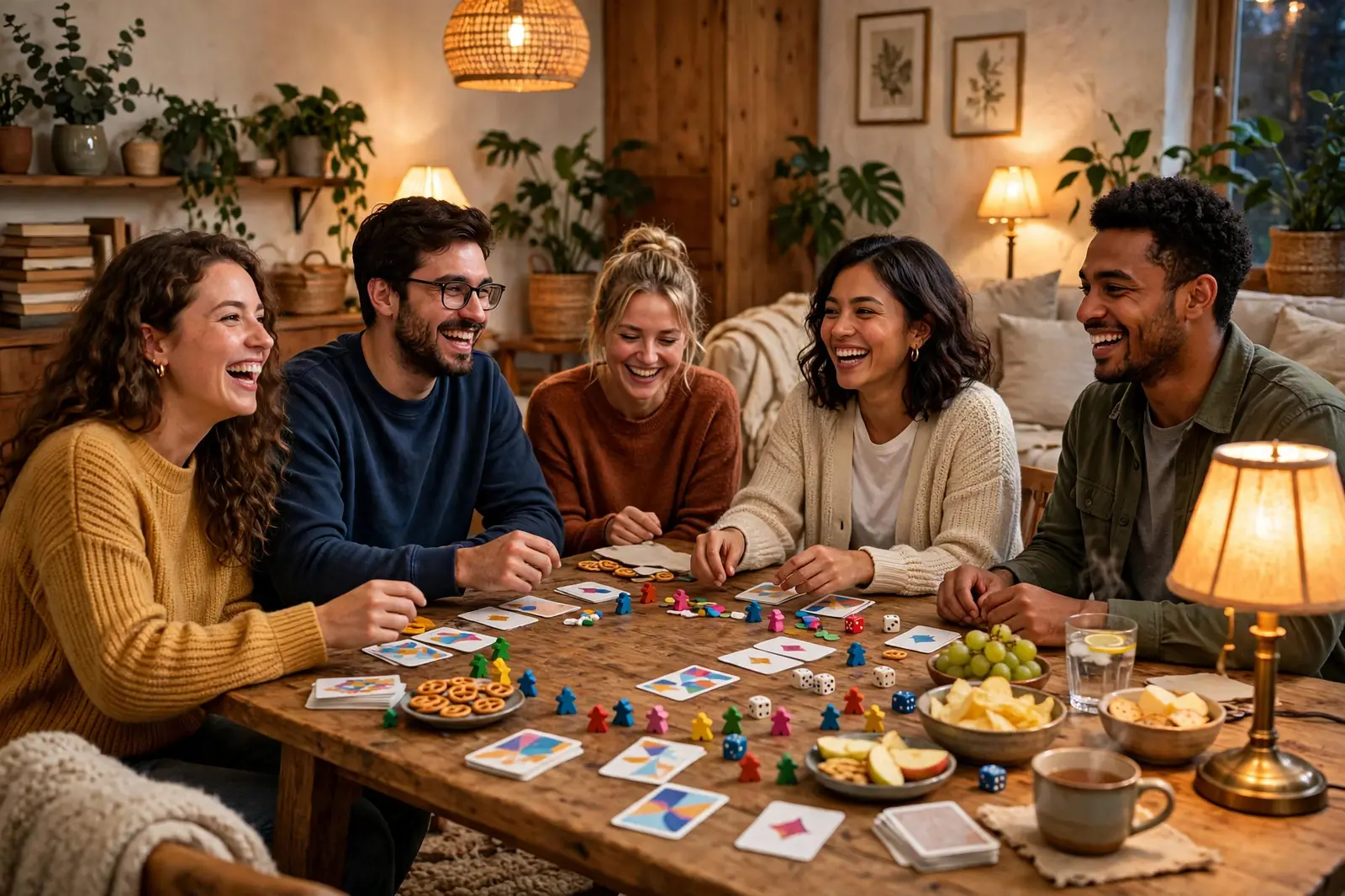
Every great game night starts the same way. Someone clears the table, someone else puts out snacks, and one person says the line that changes the evening: should we play a game? The phones go face down. The chairs pull closer. The room gets a little louder, and a little happier.
The right game does that work for you. It gives shy guests something to talk about, gives competitive friends a fair fight, and gives families a reason to stay at the table. You need only a few good picks that fit your group, your time, and your mood.
This guide collects ten of them, from a 15 minute word game to a long trading game that can fill a whole evening. Each pick comes with its player count, its typical play time, and a tip for first time players.
Pick by your night
Codenames, Exploding Kittens, UnoFamily classic
Ticket to Ride, Scrabble, ClueLong evening
Catan, Monopoly, Pandemic
1. Codenames
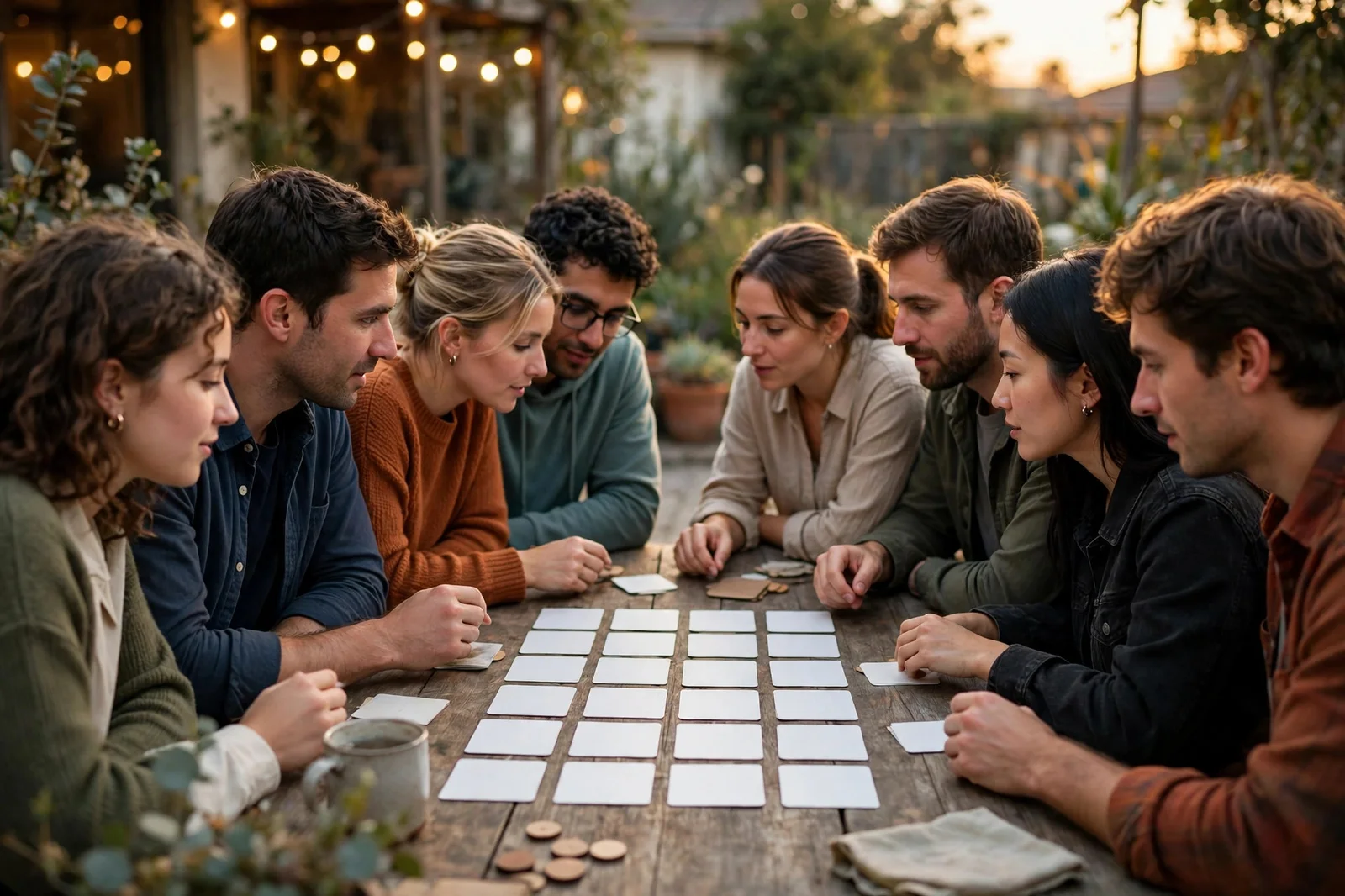
Codenames is a team word game for 4 to 8 or more players, and a typical game takes about 15 minutes. Two teams sit across from each other, and each team has a spymaster who knows which words belong to their team. The rest of the team sees only a grid of word cards, with no marks to help them.
At a glance
Players: 4 to 8+
Play time: About 15 minutes
Best for: Large groups, opening a game night
Shop: Codenames on Amazon
The spymaster gives a one word clue and a number, such as OCEAN 2, and the team tries to guess the two words that fit that clue. The fun is in the guessing. A clue that is too safe leads to slow progress, and a clue that is too clever can send your team straight to the other team’s word, or worse, to the assassin card that ends the game at once.
It is the best opener on this list for a large group, because nobody needs to learn a long set of rules. Play it first while people are still arriving, and let the laughter set the tone for the rest of the night.
Tip for first timers: if you are the spymaster, keep your first clue simple. Let your team feel a small win early, then get bolder as the game goes on.
2. Ticket to Ride
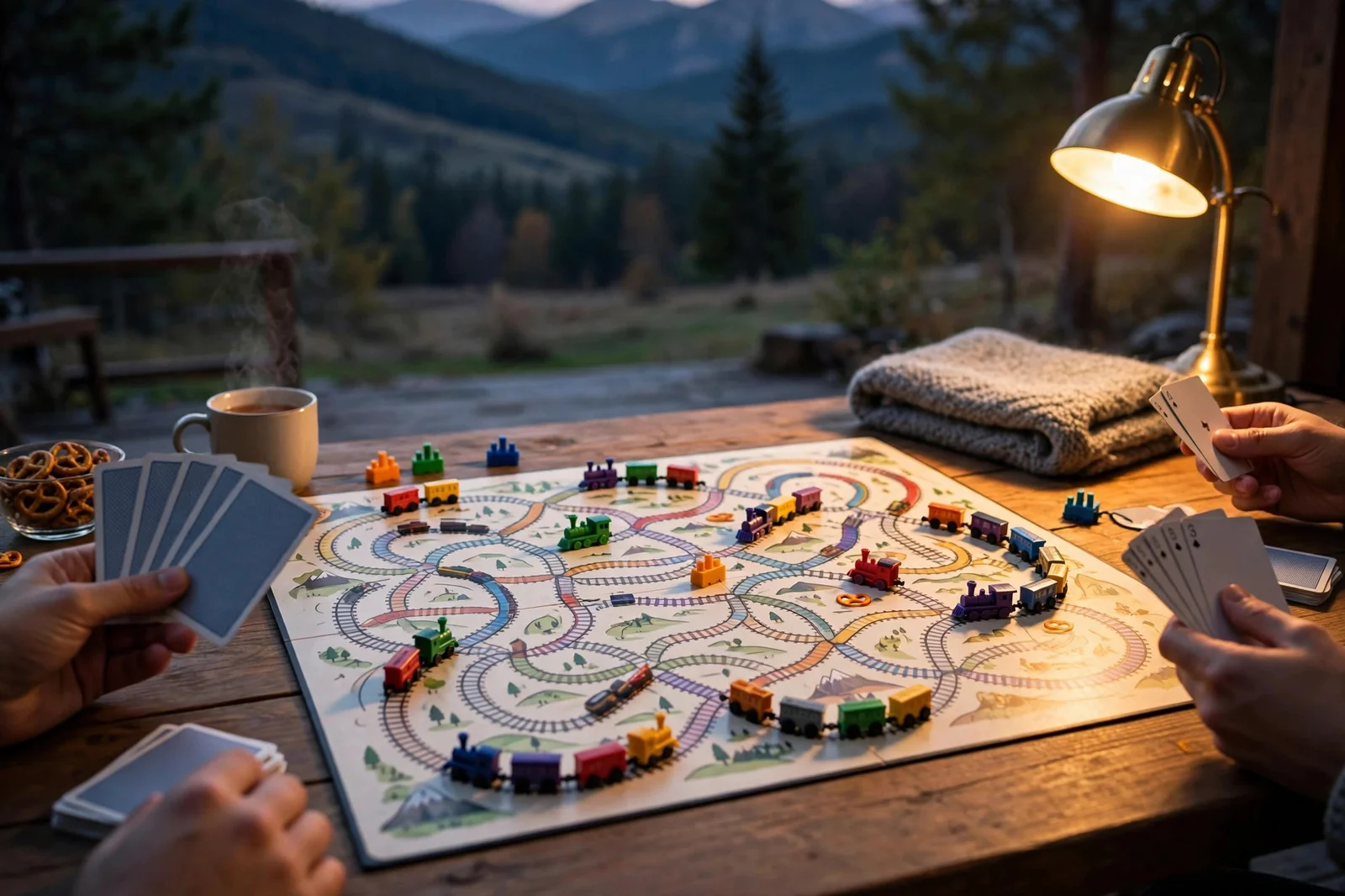
Ticket to Ride is a train route game for 2 to 5 players, and a typical game takes 30 to 60 minutes. Each player collects colored train cards, then claims routes on the map by playing matching cards. You score points for each route you claim, and for completing secret destination tickets that connect two cities.
At a glance
Players: 2 to 5
Play time: 30 to 60 minutes
Best for: Mixed ages, a calm first strategy game
Shop: Ticket to Ride on Amazon
The beauty of this game is how calm it feels. There is no direct attack, no player is knocked out, and a new player can learn the rules in about five minutes. Yet the choices still matter. Do you chase a long route for big points, or finish several short routes fast? Do you block a rival, or keep building your own network?
It works well for mixed ages, because a child can play on equal footing with an adult. Keep your destination tickets secret, and do not announce your plans out loud. A quiet player who builds steadily often wins.
Tip for first timers: finish your first destination ticket before you take a second one. An unfinished ticket loses points at the end, and that surprise can flip the result.
3. Catan
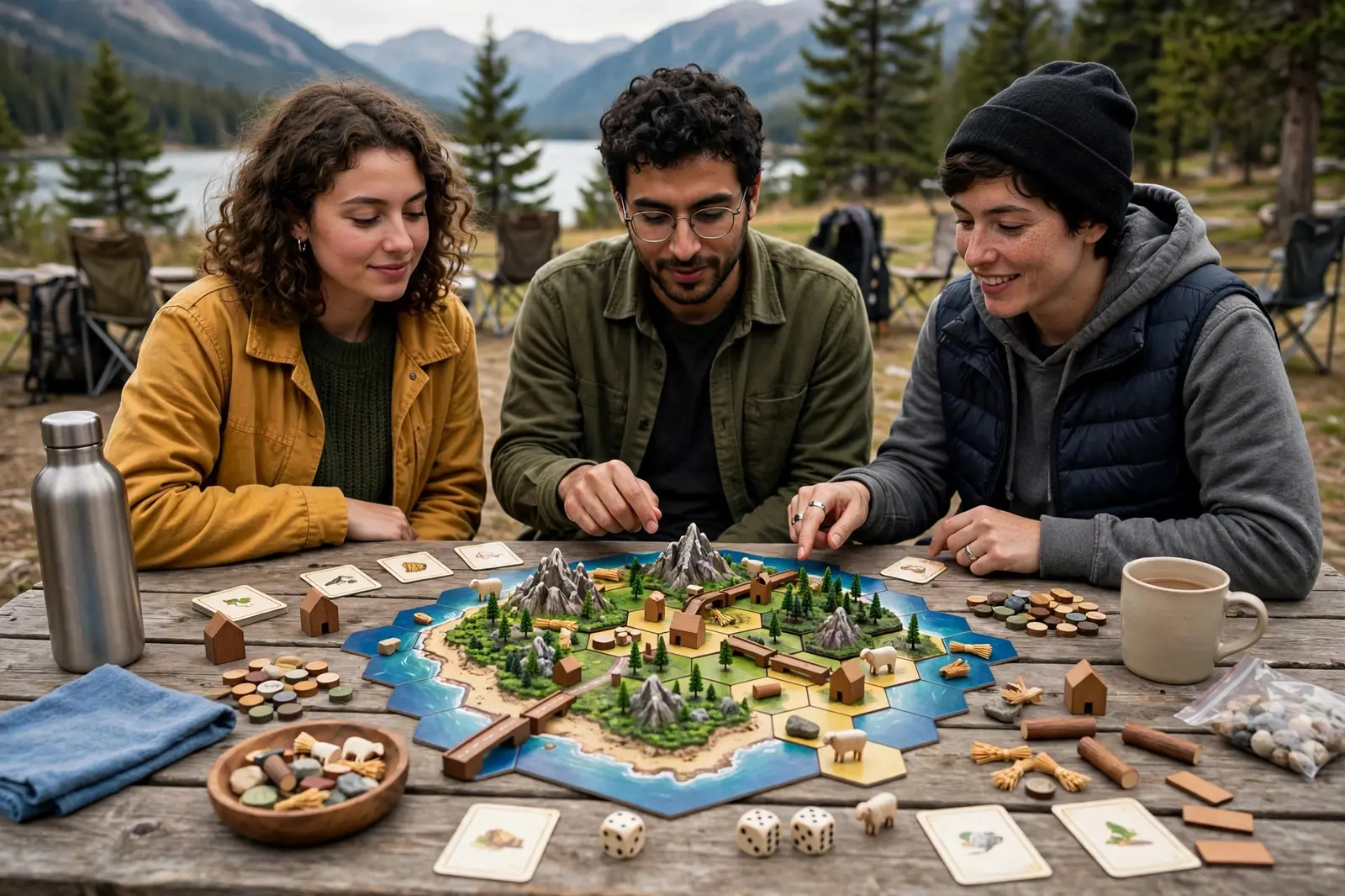
Catan is a trading and building game for 3 to 4 players in its standard game, and a typical game takes 60 to 120 minutes. Players settle an island made of hexagonal tiles, each producing a resource such as wood, brick, sheep, wheat, or ore. You use those resources to build roads, settlements, and cities, and the first player to reach 10 victory points wins.
At a glance
Players: 3 to 4 (5 to 6 with extensions)
Play time: 60 to 120 minutes
Best for: A full evening of trading and building
Shop: Catan on Amazon
Trading is where the game comes alive. You will swap wheat for brick, beg for a sheep, and haggle over a deal that helps you both, but helps you just a little more. Dice rolls decide which tiles produce each turn, so even a careful plan can be shaken up by one unlucky roll. This is the game for a full evening, not a quick filler.
Tip for first timers: build toward a port or a varied set of resources early. A player who can only produce one resource will spend the whole game begging for trades.
4. Azul
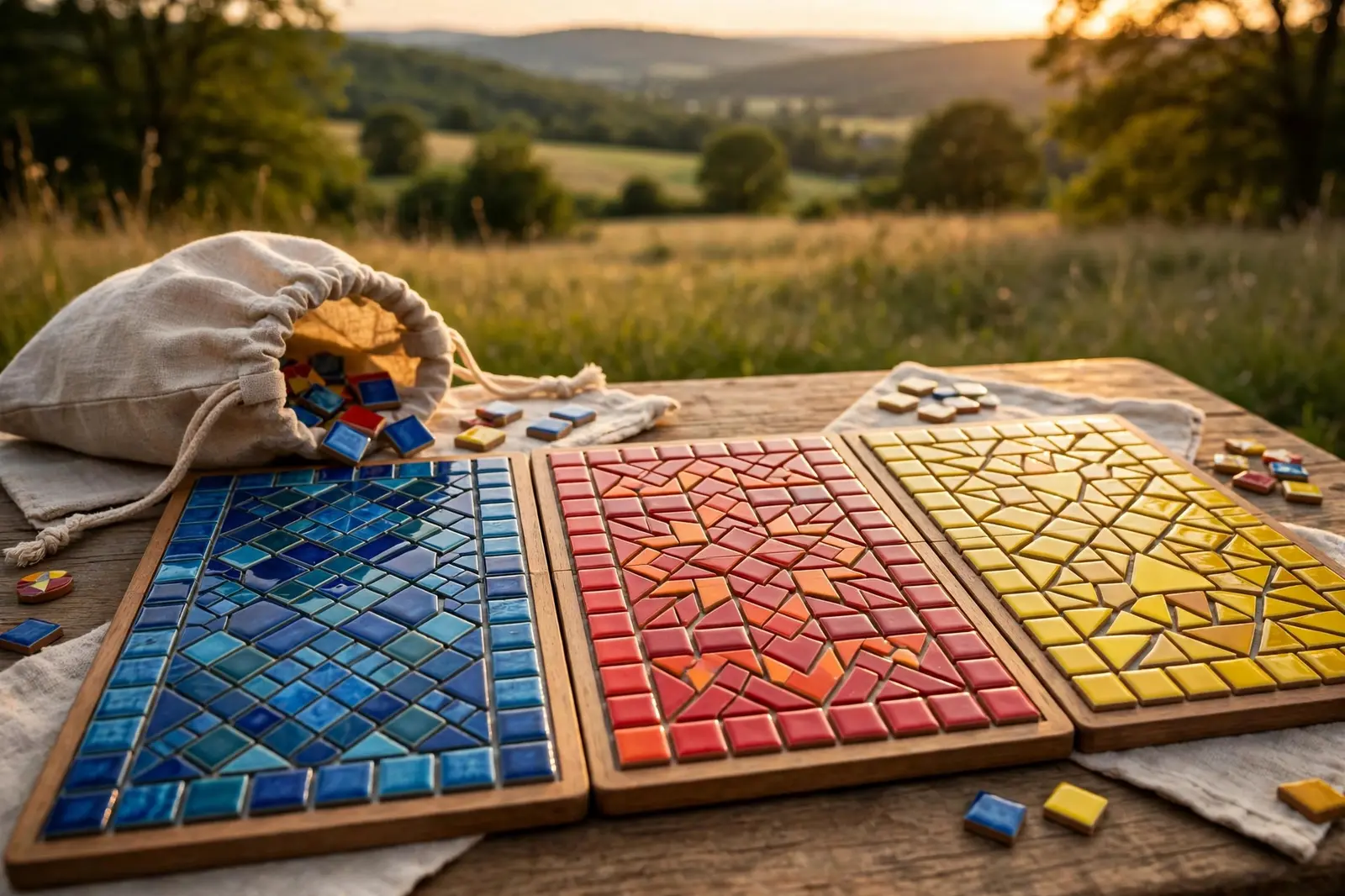
Azul is a tile drafting game for 2 to 4 players, and a typical game takes 30 to 45 minutes. Players take colorful tiles from shared factory displays and place them on their own board to build a mosaic pattern. You score points for completed rows, columns, and color sets, and you lose points for tiles you cannot place.
At a glance
Players: 2 to 4
Play time: 30 to 45 minutes
Best for: Couples and small families, quiet strategy
Shop: Azul on Amazon
The game looks calm and pretty, and it is, but it has a sharp edge. Every tile you take changes what is left for the next player, so a pick that helps you can also hurt a rival. That quiet tension is what keeps adults coming back after the kids are in bed.
It is a strong pick for a couple or a small family, because it plays well with just two players and it teaches in minutes. The pieces feel good in the hand, the board fills up in a satisfying way, and a game rarely drags on too long.
Tip for first timers: watch the center pile as well as the factory displays. Tiles left over in the middle can be a gift, or a trap that fills your board with pieces you do not want.
5. Pandemic
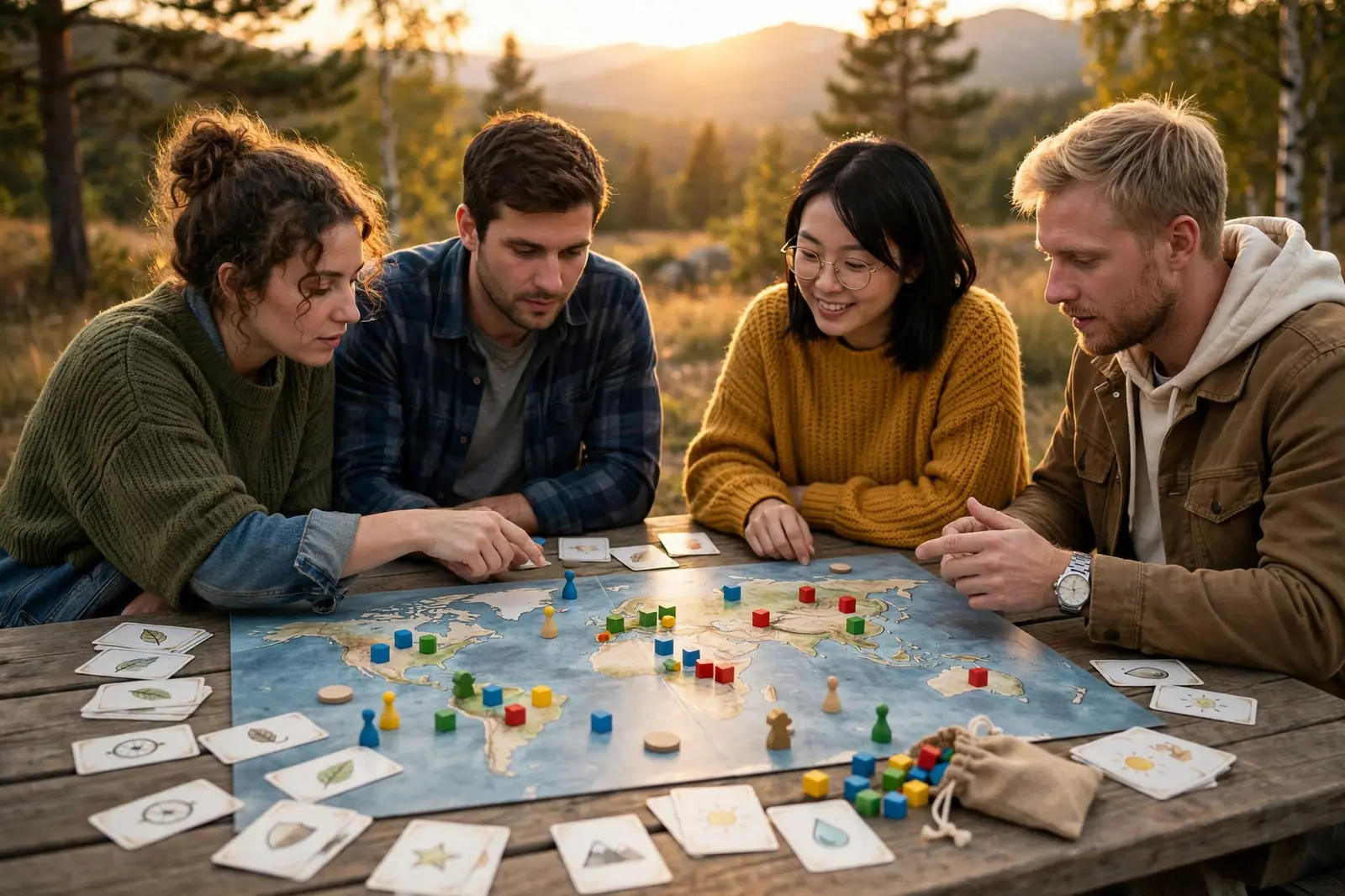
Pandemic is a cooperative game for 2 to 4 players, and a typical game takes 45 to 60 minutes. Instead of playing against each other, all players work together as a team of disease control experts. Outbreaks spread across the world map, and your team must find cures for four diseases before the board is overwhelmed.
At a glance
Players: 2 to 4
Play time: 45 to 60 minutes
Best for: Groups who prefer teamwork over competition
Each player has a special role, such as a medic who treats diseases fast, or a scientist who needs fewer cards to find a cure. The game wins when you find all four cures. It loses when too many outbreaks happen, when you run out of disease cubes, or when the card deck runs out. That shared pressure turns a quiet table into a lively planning session.
This is the pick for groups who dislike direct competition. Nobody is eliminated, and a weaker player can still make the move that saves the whole team. It also rewards talking things through, so it suits friends who like to plan together.
Tip for first timers: agree on a plan before anyone moves. A team that talks for one minute at the start of each turn plays far better than a team where everyone acts alone.
Build your night in order
Codenames or Exploding KittensMain game
Ticket to Ride, Azul, or PandemicLong night
Catan or Monopoly to finish
6. Exploding Kittens
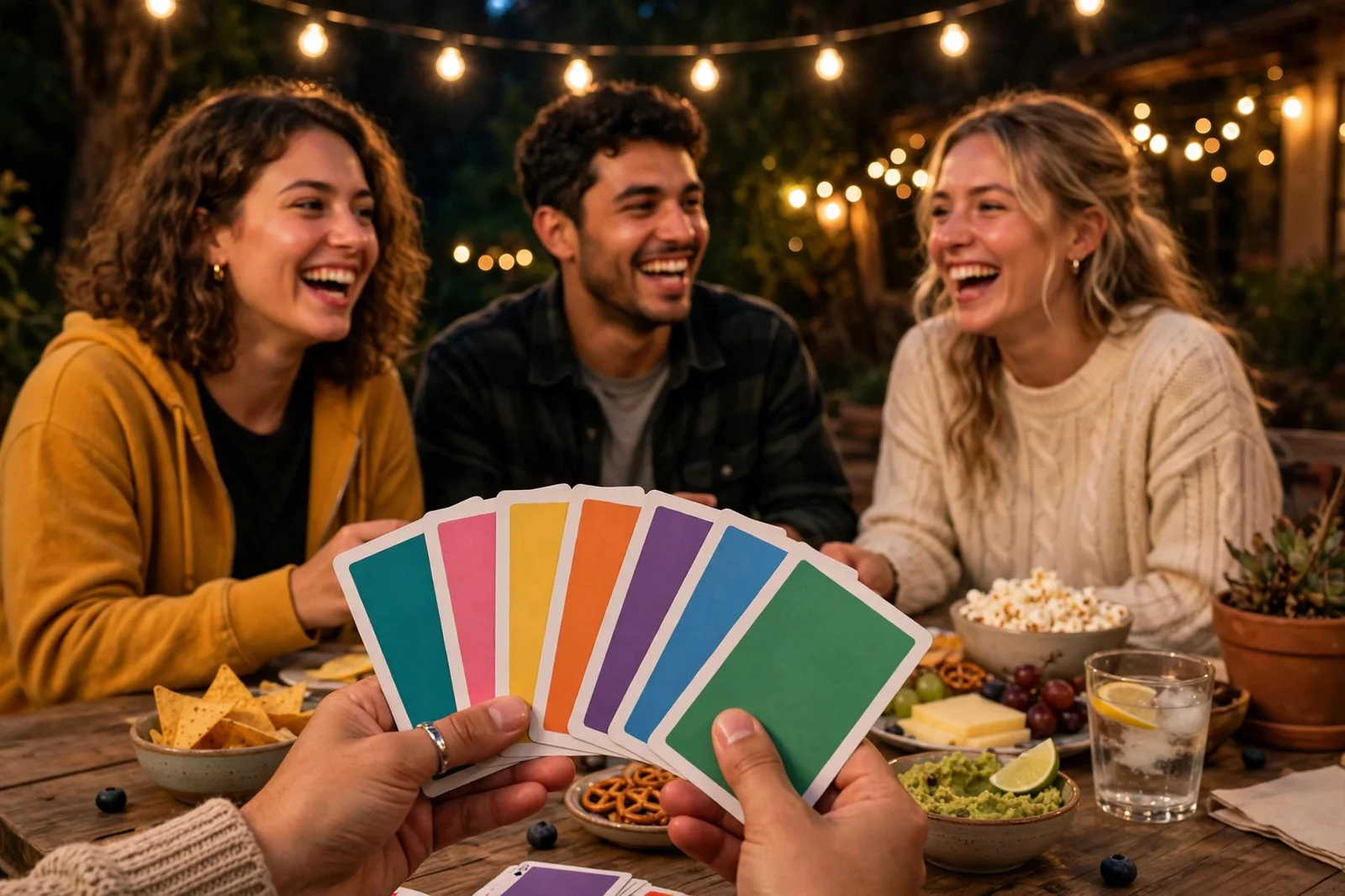
Exploding Kittens is a card game for 2 to 5 players, and a typical game takes about 15 minutes. Players take turns drawing cards from a deck that hides exploding kitten cards. If you draw one and you have no Defuse card, you are out. If you have a Defuse card, you stay in and secretly put the kitten back in the deck.
At a glance
Players: 2 to 5
Play time: About 15 minutes
Best for: Warm ups and quick filler rounds
The rest of the deck is full of ways to dodge danger. Skip cards end your turn without drawing, Attack cards force the next player to take two turns, and Peek cards let you look at the top of the deck. The art is silly, the rules take about two minutes to explain, and a game is short enough to play again right away.
It is perfect as a warm up, a filler between longer games, or a late night game when energy is fading. Kids aged 7 and up can play the original edition, and adults enjoy the bluffing just as much.
Tip for first timers: save your Defuse card if you can, and use a Skip or Attack card when the deck feels dangerous. The player who panics early often runs out of options late.
7. Uno
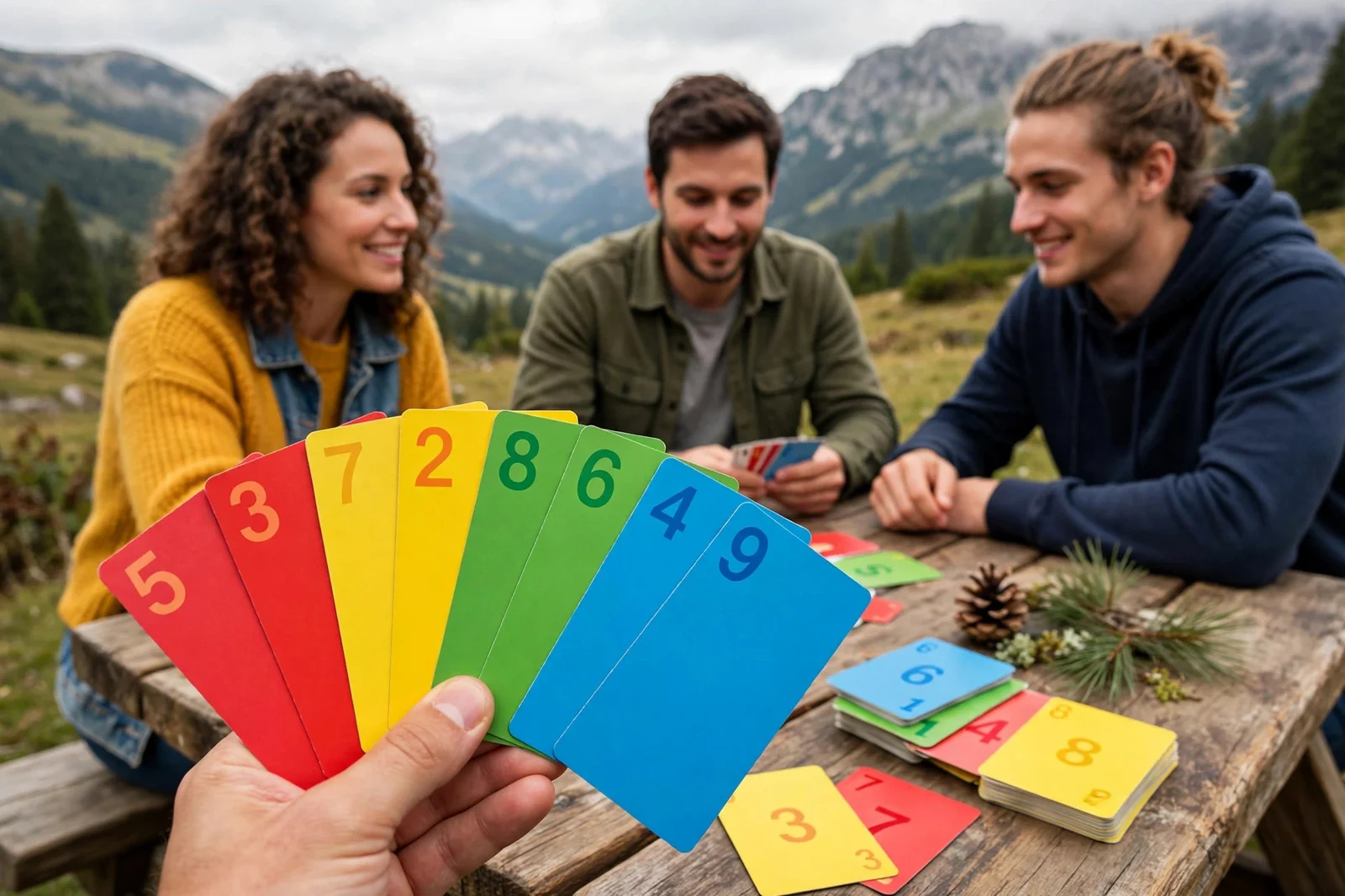
Uno is a card matching game for 2 to 10 players, and a typical game takes about 30 minutes. Players match the color or number of the top card, and the first player to get rid of all their cards wins the round. Special cards shake things up: Skip, Reverse, Draw Two, Wild, and Wild Draw Four can change the direction of play or force a rival to draw cards.
At a glance
Players: 2 to 10
Play time: About 30 minutes
Best for: All ages, travel, and closing a night
Almost everyone already knows Uno, and that is its greatest strength. You can teach it in three minutes, play it with grandparents and kids at the same table, and pack the deck in a pocket for a trip. With two players it is a quick duel, and with ten players it is cheerful chaos. Just agree on house rules before you start, especially for stacking Draw cards, so nobody argues mid game.
Tip for first timers: hold on to a Wild card for the end. It can change the color to match your last card, and that one move often wins the round.
8. Scrabble

Scrabble is a word building game for 2 to 4 players, and a typical game takes about 50 to 60 minutes. Players place letter tiles on a 15 by 15 grid, forming words across and down in crossword style. Each letter has a point value, and premium squares on the board can double or triple a letter or a whole word.
At a glance
Players: 2 to 4
Play time: About 50 to 60 minutes
Best for: Word lovers and calm smaller groups
The game rewards a wide vocabulary, but it also rewards smart placement. A short word on a triple word square can beat a long word played in the open. That balance keeps it fair: a quiet player with a good eye for the board can beat a fast talker with a big vocabulary.
Scrabble suits a smaller, calmer group, and it works well as the second game of the night, after a lively party game. Keep a dictionary nearby for challenges, agree on the word list before you start, and let slow thinkers take their time. Rushing ruins the fun.
Tip for first timers: look for a premium square before you look for a long word. Points come from the board, not just from the letters in your hand.
9. Clue
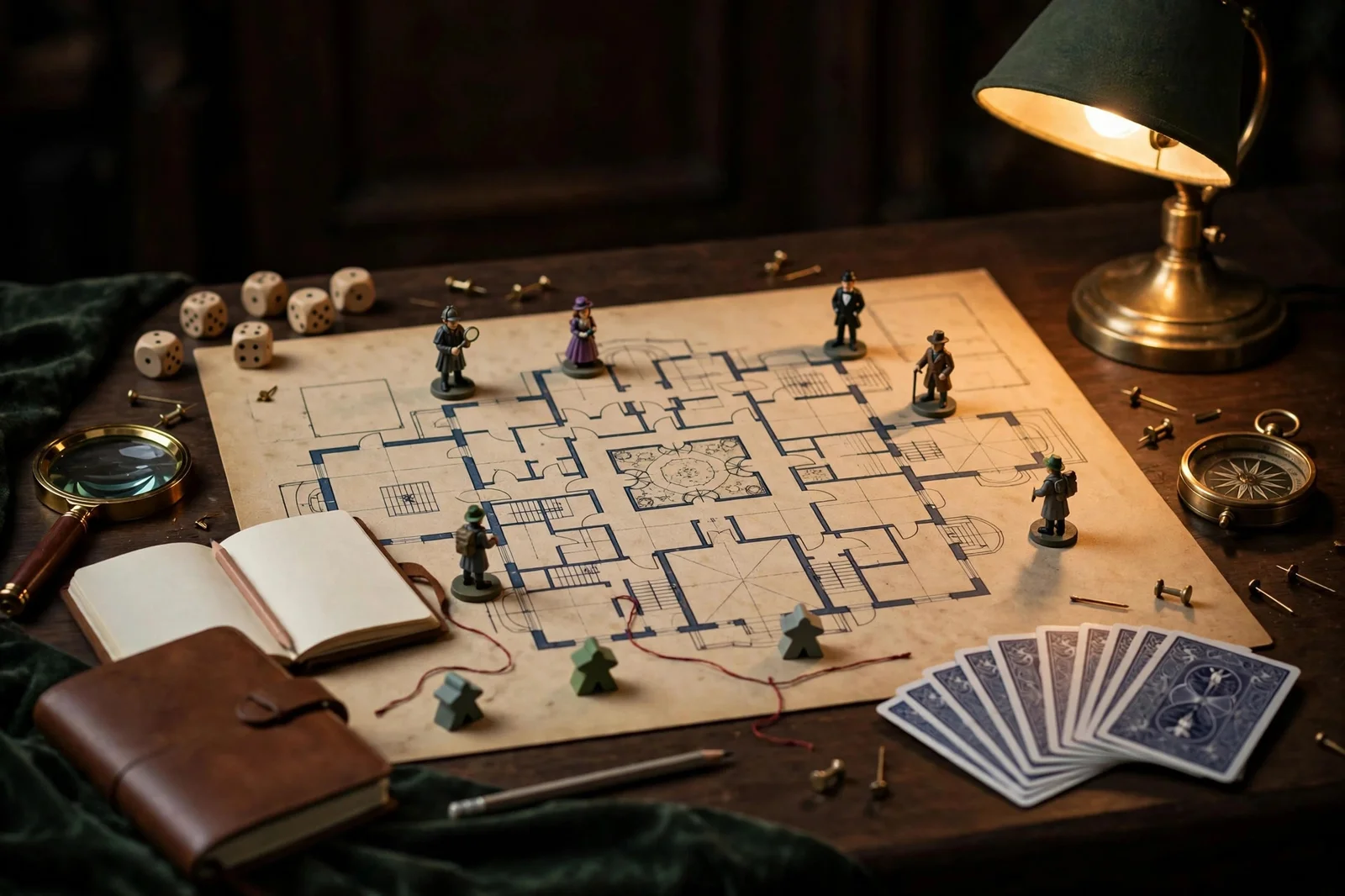
Clue is a deduction game for 2 to 6 players, and a typical game takes about 45 minutes. Players move around a mansion board, gather clues, and try to solve a mystery: who did it, with what weapon, and in which room. Each player holds secret cards, and by making suggestions and watching what others can or cannot show, you narrow down the answer.
At a glance
Players: 2 to 6
Play time: About 45 minutes
Best for: Families who love deduction and mystery
The fun is in the detective work. You track every clue on your notepad, cross off suspects one by one, and wait for the moment when only one answer is left. Then you make your final accusation. Get it right and you win. Get it wrong and you are out of the running, though you still hold cards that others must work around.
It is a great pick for families who love a story, and for friends who enjoy logic puzzles. It plays best with at least three players, so there are enough secret cards in circulation to make the deduction interesting.
Tip for first timers: write down every card you see, not just your own hand. The game is won on the notepad, not on lucky guesses.
10. Monopoly
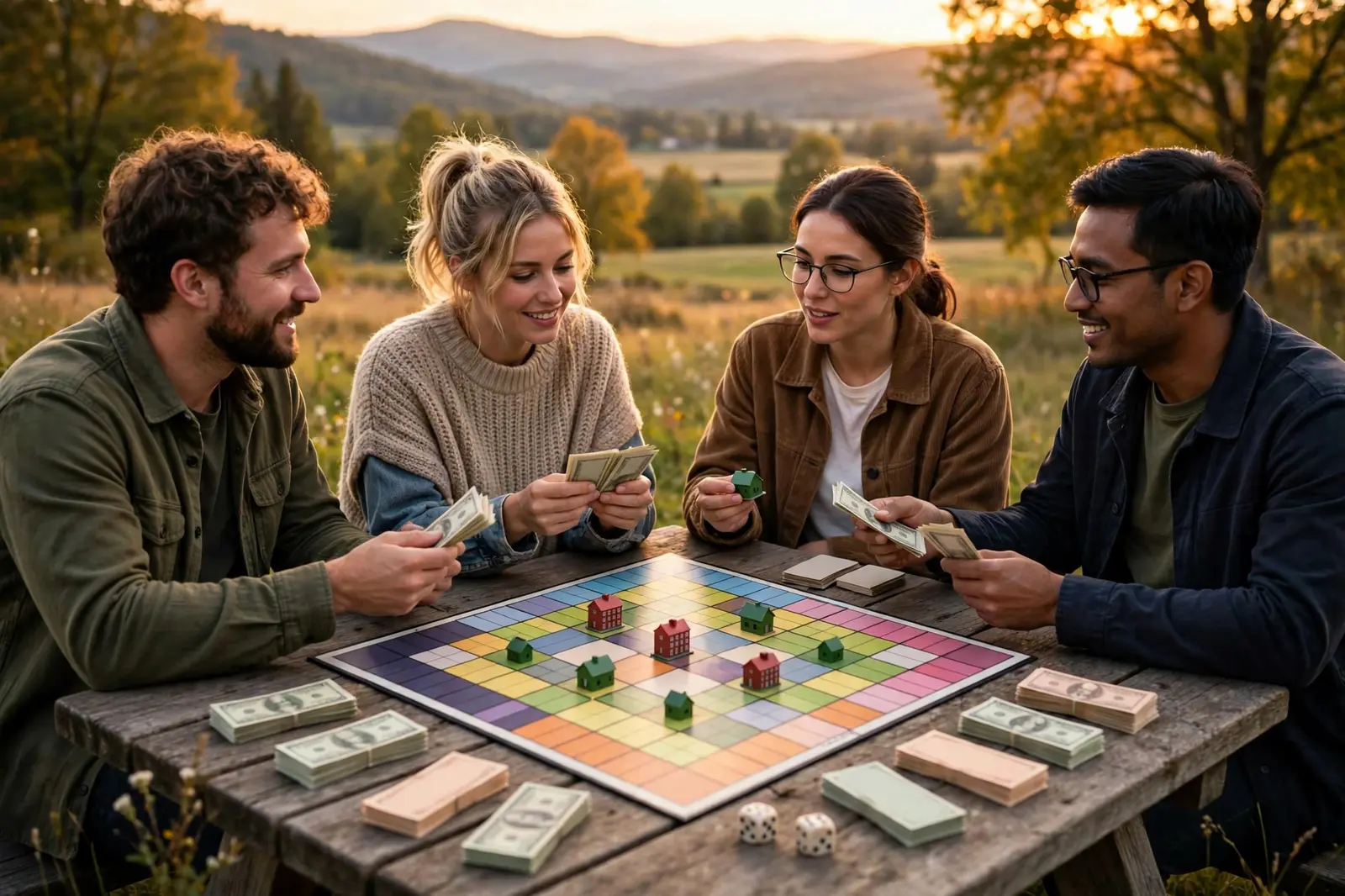
Monopoly is a property trading game for 2 to 6 players, and a typical game takes 60 to 120 minutes. Players roll dice, move around the board, buy properties, and charge rent when rivals land on them. Build houses and hotels on a full color set, and the rent climbs fast. The last player with money left wins.
At a glance
Players: 2 to 6
Play time: 60 to 120 minutes
Best for: Classic long nights with lots of trading
Shop: Monopoly on Amazon
Monopoly has a reputation for long games, and that reputation is earned when nobody trades. The game moves much faster when players deal with each other. Trade to complete your color sets, even if the deal helps a rival a little, because an incomplete set earns almost nothing.
This is the game for a group that wants a classic and a long night. Set a time limit before you start if you need to, with the richest player winning at that hour. A clear end time keeps the game friendly.
Tip for first timers: buy every property you land on early, unless it would leave you broke. Owning a lot gives you something to trade, and trading is how you win.
11. How to Build Your Game Night

You do not need all ten games in one night. Build your night in the order that matches your group.
Start quick, with Codenames or Exploding Kittens, games that teach in minutes and get everyone laughing. Move to a main game next, such as Ticket to Ride, Azul, or Pandemic. Save Catan and Monopoly for a night when nobody is watching the clock. Scrabble and Clue make a calm second game, and Uno is the perfect closer.
Keep the snacks close, the rules short, and the phones away. The best game night is not about winning. It is about the table, the talk, and the moment someone says, can we play that again?
Your three game starter set
Codenames to warm up the roomMain
Ticket to Ride for a calm classicLast
Uno for one more quick round
Ten games. One quick word game to break the ice. One calm train game that anyone can learn. One long trading game that fills an evening with deals and laughter.
None of them needs a perfect strategy. They need a table, a few friends, and someone brave enough to suggest the first game.
So pick your three and let the first game set the tone. The room is waiting to play. All you have to do is clear the table.

John Smith is the founder and CEO of Karaoke Machines Guru. He is a karaoke tutor and karaoke enthusiast and has been passionate about karaoke since he was a child. He also writes about karaoke-related tips, guides, and product reviews on this website.
He overlooks the whole website and makes sure that everything is running smoothly. Learn more!