

Every guitar teacher tells the same truth. The students who improve are not always the most talented. They are the ones who practise a little, often, without a battle of willpower every single time.
That is where gadgets earn their money. Not the flashy kind. The small, smart tools that remove friction, fix bad habits early, and make a ten minute practice session feel easy to start and hard to stop.
A tuner that lives on your headstock. A metronome that keeps your timing honest. A looper that turns one chord into a whole band.
This guide walks through the six gadgets that do the most for a learner, why each one works, and how to use it from day one. None of them costs a fortune. Together, they cost less than a few months of lessons, and they quietly protect every minute you spend practising.
The starter kit at a glance
One job each, no fillerFirst buy
Clip on tuner, under twenty dollarsDaily win
Ten honest minutes beats one long slog
Look for a chromatic tuner, which simply means it can read any note, not just the six standard guitar strings. That matters the first time you try a different tuning or stretch a tired old string back toward pitch. A clear screen you can read at arm’s length helps too, as does a display that changes colour when you land on the note. Small details, but you will use this gadget more than all the others combined.
1. A Clip-On Tuner That Lives on Your Headstock
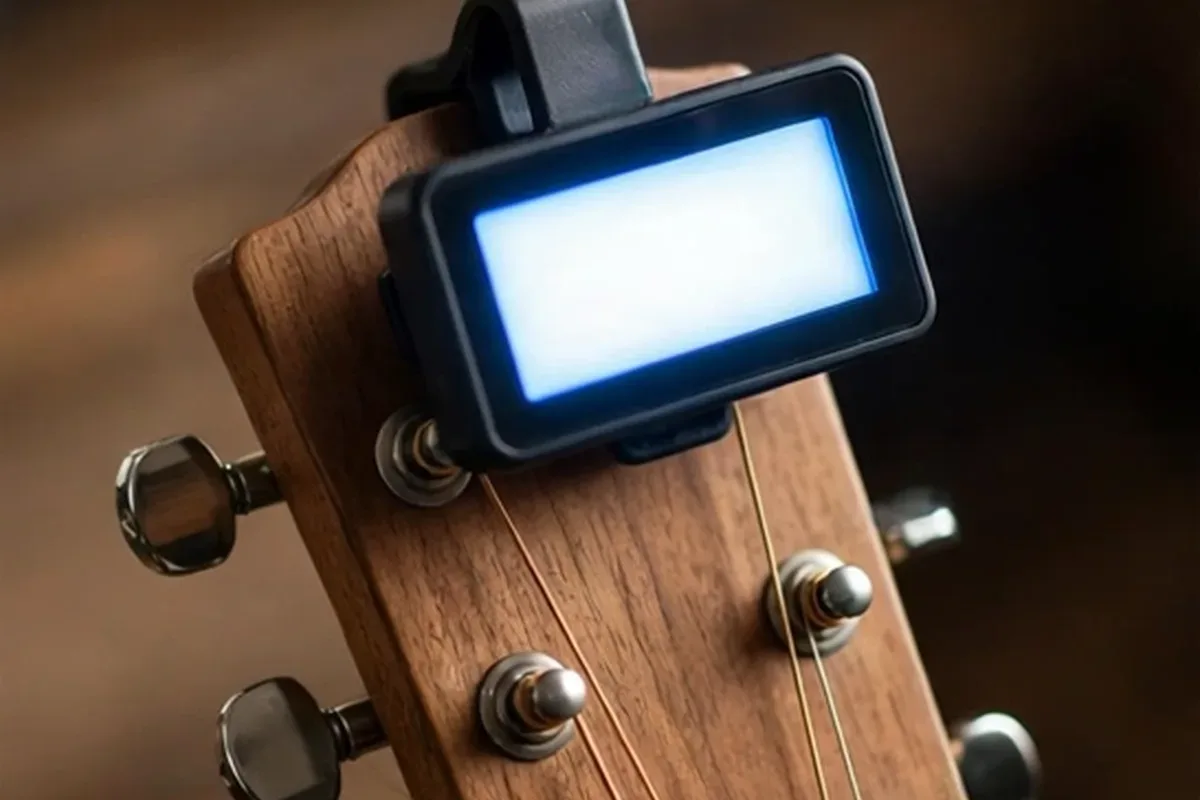
Playing an out of tune guitar is the fastest way to train your ear wrong. Chords sound muddy, progress feels invisible, and beginners often blame their fingers for a problem that is really six strings drifting a little further out every day.
At a glance
Best for: Fast, silent tuning for beginners, even in a noisy room | Key thing to check: Chromatic mode and a bright screen you can read at any angle
See a popular clip-on tuner on Amazon
A clip on tuner fixes that in twenty seconds. It reads the vibration of the wood through your headstock, so it works in a noisy room, and it shows you clearly when each string is sharp, flat, or right on the note.
The real trick is placement. Clip it on and leave it there. A tuner that lives on the guitar gets used at the start of every session. A tuner buried in a drawer gets used almost never.
Build the habit in week one. Tune every time you pick the guitar up, even if you played an hour ago. New strings stretch, weather shifts wood, and your ear quietly learns what correct sounds like.
This is the cheapest gadget on the list and the one teachers name first. Buy it before anything else, and your practice sounds better from the very first chord.
Placement matters more than most beginners expect. Rest the capo just behind the fret wire, on the side closer to the headstock, and centre it so all six strings get even pressure. Too far back and chords buzz. Squeeze it in the middle of the fret space and strings pull sharp. Thirty seconds of care here saves a song’s worth of wobble, and your ear will thank you every time. Check the low and high strings ring cleanly before you play.
2. A Capo That Opens a Hundred Songs
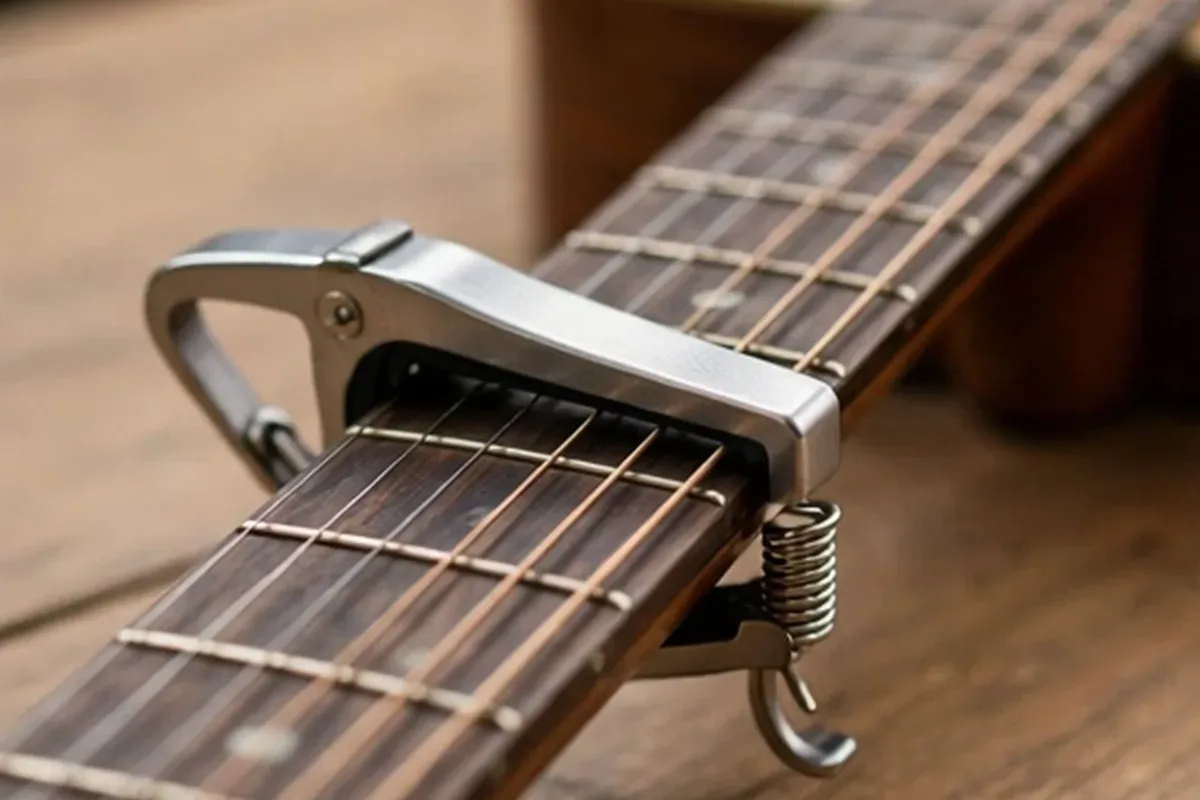
A capo is a small clamp that presses all six strings down at one fret, raising the pitch of the guitar without changing the chord shapes under your fingers. It sounds simple. For a learner, it feels like a cheat code, because it is one.
At a glance
Best for: Playing favourite songs in easier keys with familiar chord shapes | Key thing to check: Pad shape matches your neck type, pressure stays even, no buzzing strings
See a popular guitar capo on Amazon
Many favourite songs were recorded in keys that demand hard barre chords, the ones where one finger must flatten across all six strings. With a capo, you can play those same songs using the easy open chords you already know, moved up the neck until the pitch matches the recording.
That means you can play along with real music in your first month, which is rocket fuel for motivation. Singers love it too, because moving the capo lets them match a song to their own voice without learning new shapes.
Choose a spring or trigger style capo first. They go on and off with one hand, they suit most acoustic and electric necks, and they hold pressure evenly so your strings stay in tune.
One warning, learned the hard way by many players. Always retune quickly after clamping a capo on. Even a good one nudges pitch a tiny amount, and your new tuner habit makes the fix painless.
When the click feels comfortable, try a small upgrade. Set the metronome to accent the first beat of each group of four, which teaches your strumming hand where the bar begins. Many apps also offer a tap tempo button, where you tap along to a song and the app finds its speed. That trick lets you practise along with recordings at their true pace, then slow them down honestly instead of guessing and hoping.
3. A Metronome That Keeps Your Timing Honest
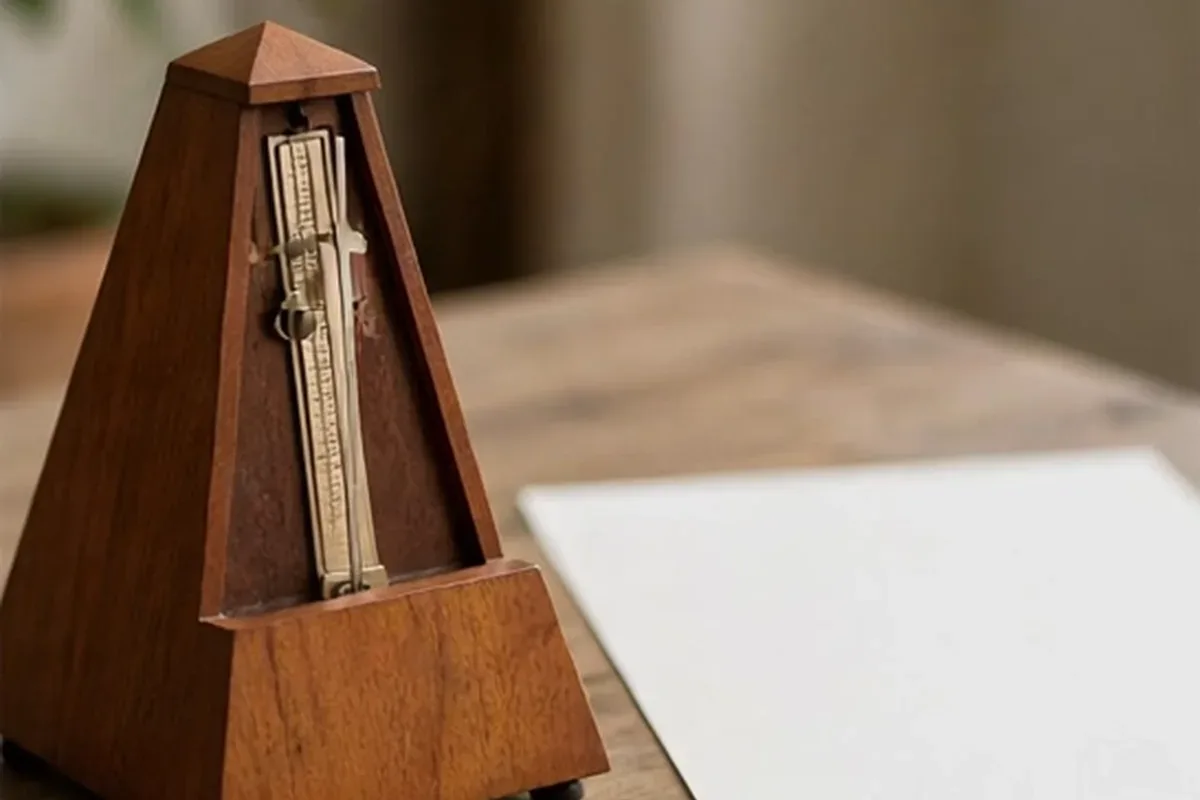
Every learner believes they are playing in time. Then they meet a metronome, a device that clicks a perfectly steady beat, measured in beats per minute, and shows them the truth. It can be humbling. It is also the single fastest route to sounding like a real musician.
At a glance
Best for: Building steady timing in daily practice | Key thing to check: A wide tempo range, a loud clear click, and an accent on the first beat
See a popular metronome on Amazon
Timing problems hide when you play alone. You speed up on the easy parts, stumble and slow down on the hard parts, and your brain politely edits out the gaps. A steady click edits nothing. It exposes exactly where your chord changes arrive late.
Use it kindly. Set a slow speed where you can change chords cleanly, even if that feels almost silly. Play there until the changes feel boring. Then nudge the speed up a little. That slow, steady climb is how fast, clean playing is actually built.
Classic wooden pyramid metronomes look beautiful and never need batteries. Free and paid phone apps do the same job and add accents and subdivisions when you grow into them.
Ten minutes a day with a click will do more for your playing than an extra hour of random strumming. Teachers have said it for a century because it keeps being true.
The ten minute practice loop
Tune with the clip on tunerMinute 1 to 7
Chord changes to the metronomeMinute 7 to 10
Play over your looper. Smile
Many simple loopers add quiet superpowers worth learning. An undo button rescues a take ruined by one bad chord. A clear all gesture, usually a double tap or a held button, wipes the slate for the next idea. Some models store a handful of loops, so a chord progression you built on Tuesday is still waiting for you on Friday. None of this needs a manual deep dive. Ten curious minutes will teach you the basics.
4. A Looper Pedal That Turns Practice Into a Band
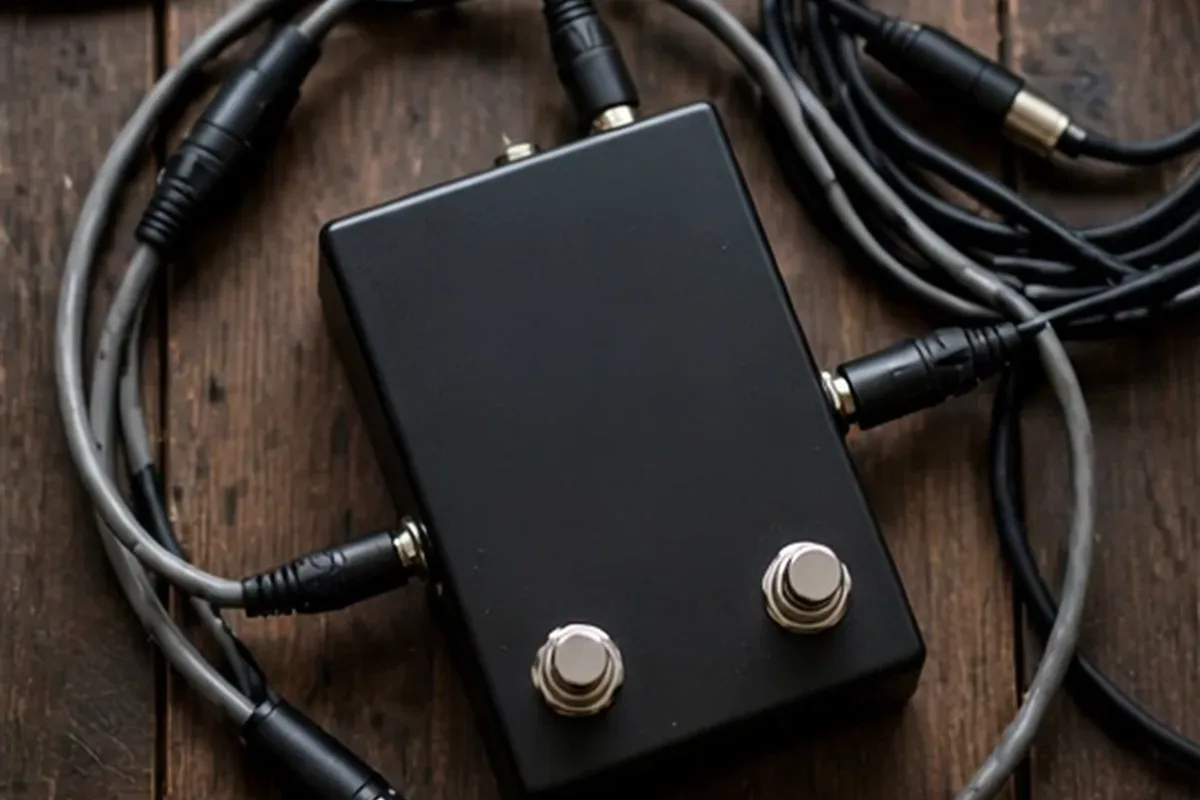
A looper pedal records a short piece of your playing, then plays it back on repeat while you play something else on top. Strum four chords once, and the pedal plays them back forever. Suddenly you are not practising alone. You are playing lead over your own band.
At a glance
Best for: Soloing and scale practice over your own chord loops | Key thing to check: Simple one button control with undo, and check whether a power supply is included
See a popular looper pedal on Amazon
For learning, this is gold. Scales stop being dry exercises when you can hear them against real chords. You can test which notes sing and which ones clash, and your ear starts making musical choices instead of just running patterns.
Loopers also expose timing honestly, in a friendlier way than a metronome. If your recorded loop drifts or rushes, the join where it restarts will stumble every time, and you will hear exactly what to fix.
Keep it simple at first. A one button looper is enough for years of learning. Record clean, short loops, two or four chords, and keep the volume of the loop a touch lower than your live playing.
Small warning. Loopers are fun in a way that eats evenings. More than one learner has sat down for ten minutes of scales and stood up an hour later, grinning, having accidentally written a song.
One small habit upgrades this kit from spare parts to a system. Write the date on each new string packet when you fit it, with any pen, on the paper envelope. In three months you will know exactly how long your strings live under your hands, and dull tone will never sneak up on you again. Keep a soft cloth in the pouch too. A ten second wipe after playing slows corrosion and keeps fresh strings fresh for longer.
5. A Spare Strings and Winder Kit That Saves the Session
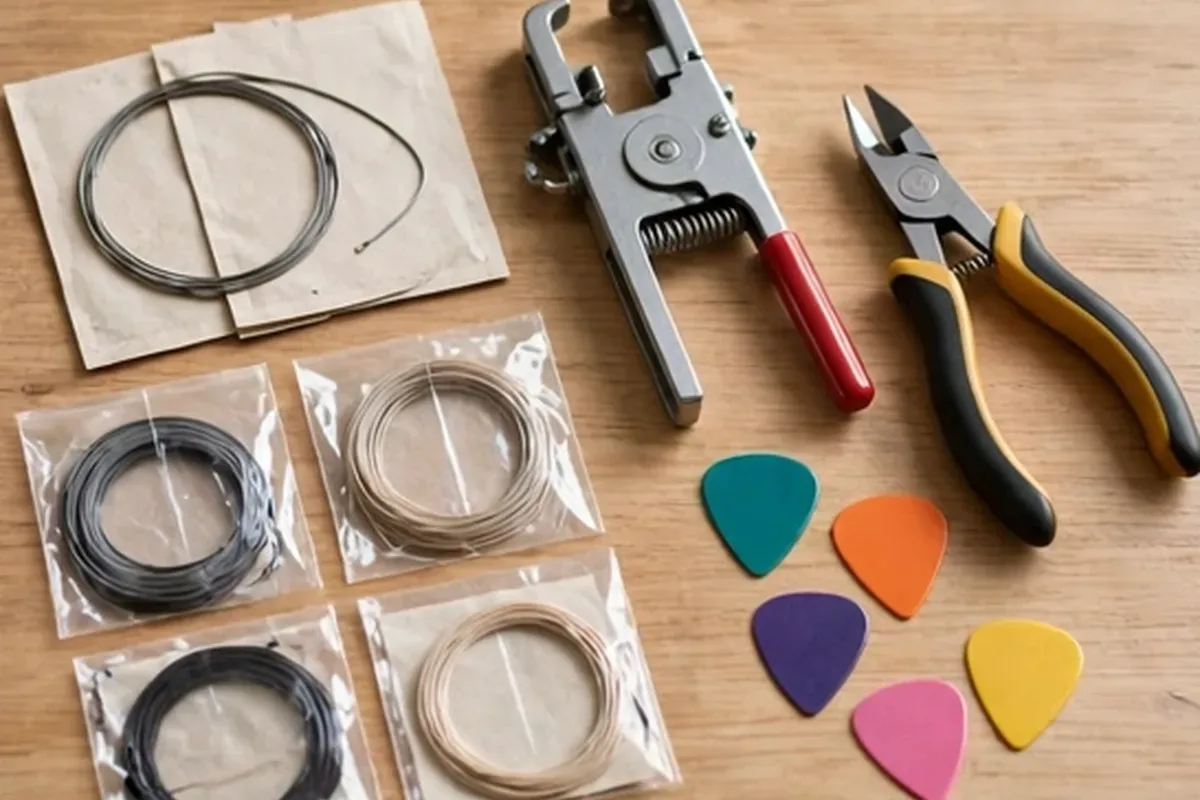
Strings go dull. Then one day, usually mid song, one snaps. Without spares, practice stops dead, motivation leaks away, and the guitar sits silent until someone gets to a shop. A simple string care kit prevents the whole sad story for very little money.
At a glance
Best for: Keeping spares ready so a snapped string never ends practice | Key thing to check: String type and gauge match your guitar, and the winder includes a cutter
See a popular guitar strings and winder kit on Amazon
The kit is small. Two spare sets of strings in your guitar’s usual gauge, meaning the thickness of the set you already play. A string winder, a little crank that makes winding new strings fast instead of fiddly. A cutter for trimming the sharp ends. A few picks in different thicknesses, because the pick you love at month one is rarely the pick you love at month six.
Changing strings is a skill worth learning early, from a video, slowly, with the old set as your guide. Fresh strings ring brighter, stay in tune better, and make an affordable guitar sound noticeably more alive.
Keep the whole kit in one pouch, in or on your guitar case. When a string pops on a Sunday night, you will be playing again in fifteen minutes, feeling quietly smug.
Boring gadget? Completely. Session saver? Absolutely.
Headphones deserve a word of their own. Comfortable, over ear headphones with a long enough cable let you move and play naturally, and they reveal small mistakes that a quiet unplugged guitar hides, which is exactly what honest practice needs. Many mini amps also include an aux input, so you can feed in songs or backing tracks and play along inside your own private mix. It feels like a studio, costs very little, and works at midnight.
6. A Small Practice Amp and Headphones for Quiet Hours
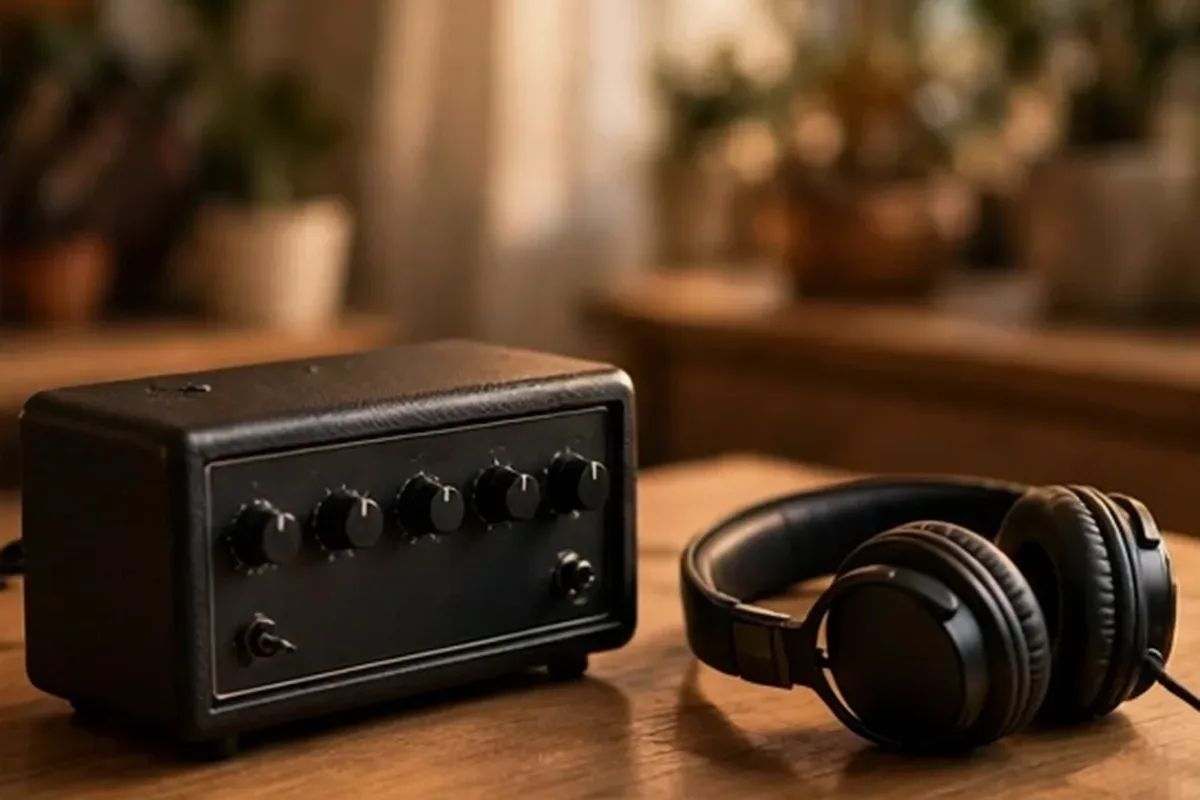
The biggest enemy of practice is not difficulty. It is timing. The hours when you most want to play are often the hours when a household, a flatmate, or a thin apartment wall says no. A small practice amp with a headphone socket removes that excuse completely.
At a glance
Best for: Quiet home practice at any hour | Key thing to check: A headphone socket for silent practice, plus clean and driven sounds
See a popular small practice amp on Amazon
Modern mini amps are tiny, cheap, and far better than their size suggests. They model, meaning they digitally imitate, the sounds of bigger amplifiers, from clean and sparkly to warm and crunchy. Plug in headphones and you hear a big, satisfying guitar sound while the room hears almost nothing.
That freedom changes habits. Early morning scales before work. Late night chord practice after everyone is asleep. Electric guitar learners especially need this, because an unplugged electric is quiet and thin, and playing it that way teaches your hands to work far too hard.
Choose simple controls you will actually use. A clean sound, a driven sound, a volume knob, and a headphone output cover ninety percent of learning.
Pair it with your looper and metronome app, and your quiet practice rig can follow you to any room, any hour, any mood.
Buy them in this order
Tuner, capo, spare strings kitMonth 2
Metronome app and a looperMonth 3
Mini amp and headphones for quiet hours
A final test before you buy anything new. Ask what problem it solves in your next ten practice sessions. If you can name the problem, the gadget is probably a good buy. If you are really just enjoying the shopping, close the tab and go and play. The guitar on its stand, in tune and in sight, is the best practice gadget ever designed, and you already own it. Everything in this guide exists to serve that simple view.
7. Build Your Kit in the Right Order
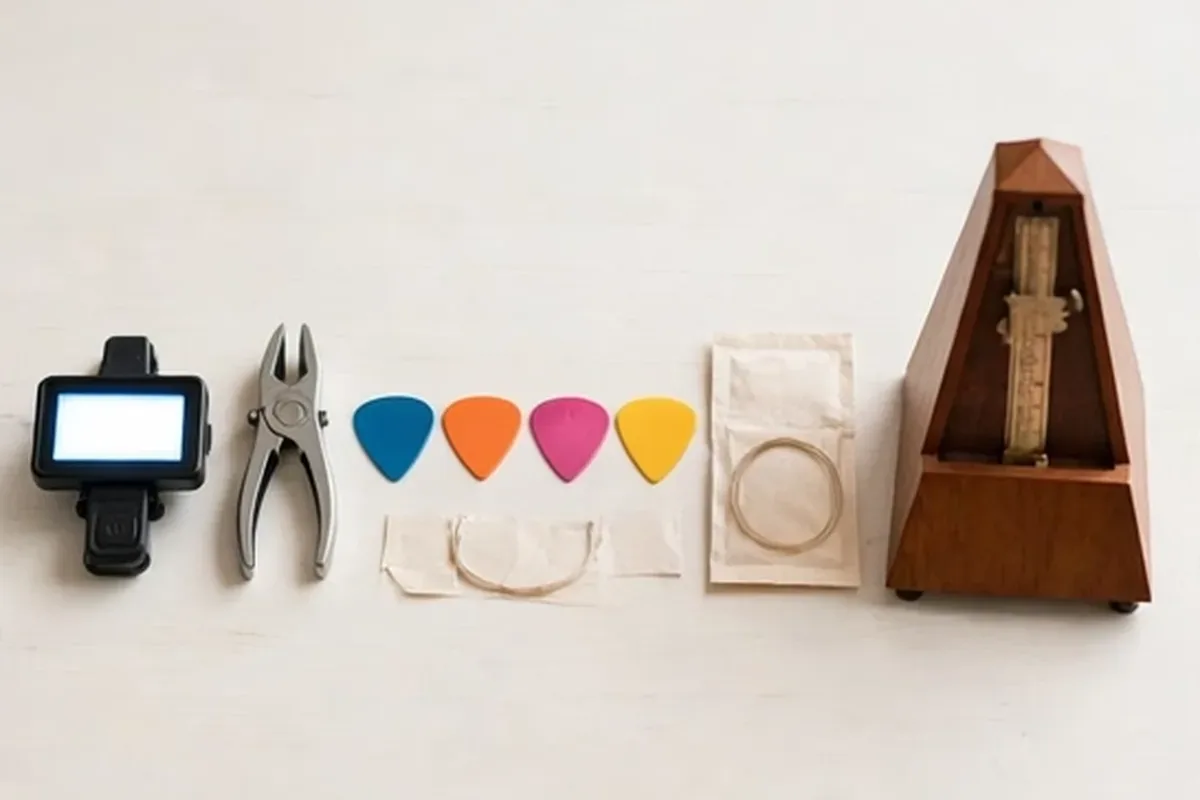
You do not need all six gadgets on day one, and buying everything at once is a fine way to own a drawer of guilt. Build the kit in the order that matches your playing.
Week one is survival. Tuner, capo, and the strings kit make the guitar sound right, unlock real songs, and keep you playing when a string snaps. That trio costs little and gets used every session.
Month two is growth. Add timing and company. A metronome app costs nothing to start, and a simple looper turns lonely exercises into music. This is the stage where learners usually feel the biggest jump, because their practice starts sounding musical instead of mechanical.
Month three is freedom. If quiet hours are your only practice hours, the mini amp and headphones move to the top of the list. Buy for your real life, not for an imaginary one.
One rule ties the whole kit together. A gadget only earns its place if it makes you pick the guitar up more often. Judge every future purchase by that standard, and your kit will stay small, useful, and loved.
Six small tools. One tuner that never leaves the headstock. One little clamp that unlocks a hundred songs. One honest click, one tireless loop, one pouch of strings, and one quiet amp for midnight practice.
None of them will practise for you. That part is still beautifully, stubbornly yours.
What they do is remove every small excuse between you and the guitar. Set them up tonight, keep the guitar where you can see it, and give tomorrow ten honest minutes. That is how players are made.

John Smith is the founder and CEO of Karaoke Machines Guru. He is a karaoke tutor and karaoke enthusiast and has been passionate about karaoke since he was a child. He also writes about karaoke-related tips, guides, and product reviews on this website.
He overlooks the whole website and makes sure that everything is running smoothly. Learn more!