
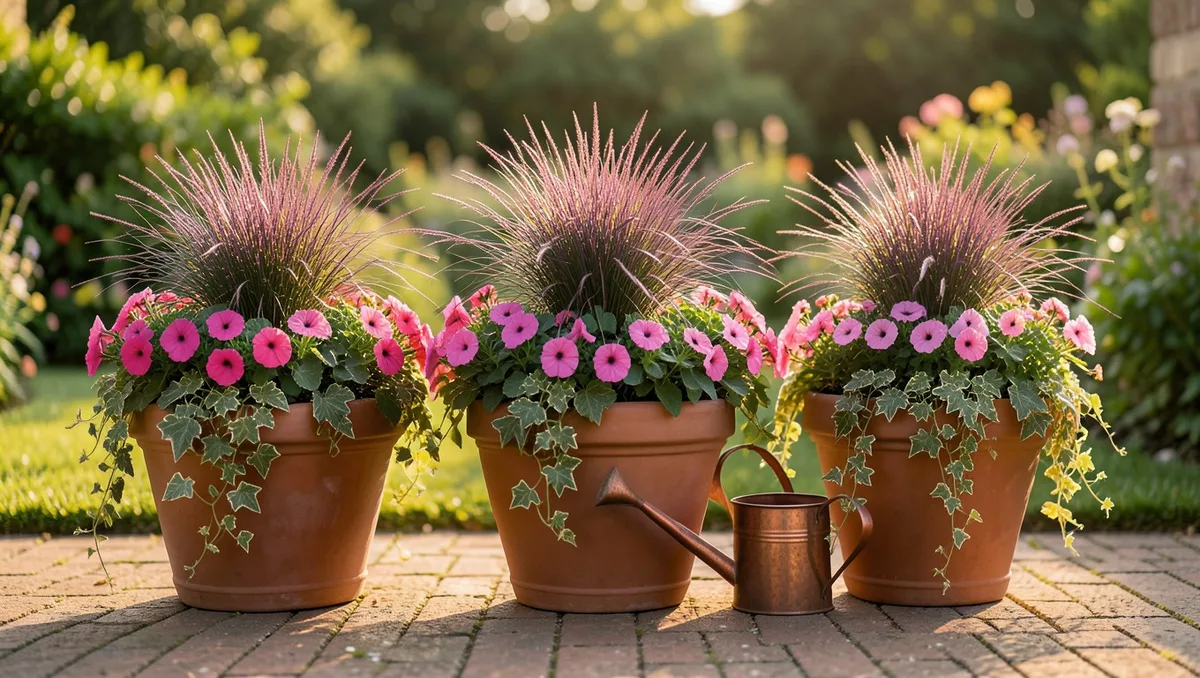
Every spring, the temptation is the same: walk into the local nursery, grab whatever catches your eye, pack it all into a container, and hope for a magazine-worthy display. I used to do exactly that, and by mid-July, my containers looked like a tangled, overgrown mess where the aggressive plants choked out the delicate ones. Container gardening is not about random selection; it is about choreographing a performance where every single plant understands its role.
The classic design formula breaks down into three distinct jobs: a show-stopping focal point that grabs the eye, mid-height workhorses that pack the middle ground with dense color, and trailing beauties that cascade over the rim to soften the hard edges. Over the last fifteen years of trial and error in my own backyard, I have dialed in the exact variety combinations, pot sizes, and soil amendments that make this three-part system foolproof. This guide lays out twenty specific, highly deliberate combinations that stay balanced, vibrant, and stunning from May through the first hard frost.
Quick Tips Before You Start
Pot Size Matters
Never attempt a three-part design in a pot smaller than 14 inches in diameter; plants need root space.
Check the Holes
Drill extra drainage holes if your pot only has one small center opening; standing water kills root systems.
Pack with Purpose
Plant your thriller slightly off-center toward the back if the pot faces one way, or dead center if viewed from all sides.
Pinch Early
Snip the growing tips of your fillers and spillers at planting time to force dense branching instead of leggy growth.
1. The Sun-Drenched Red and Purple Dramatic Statement
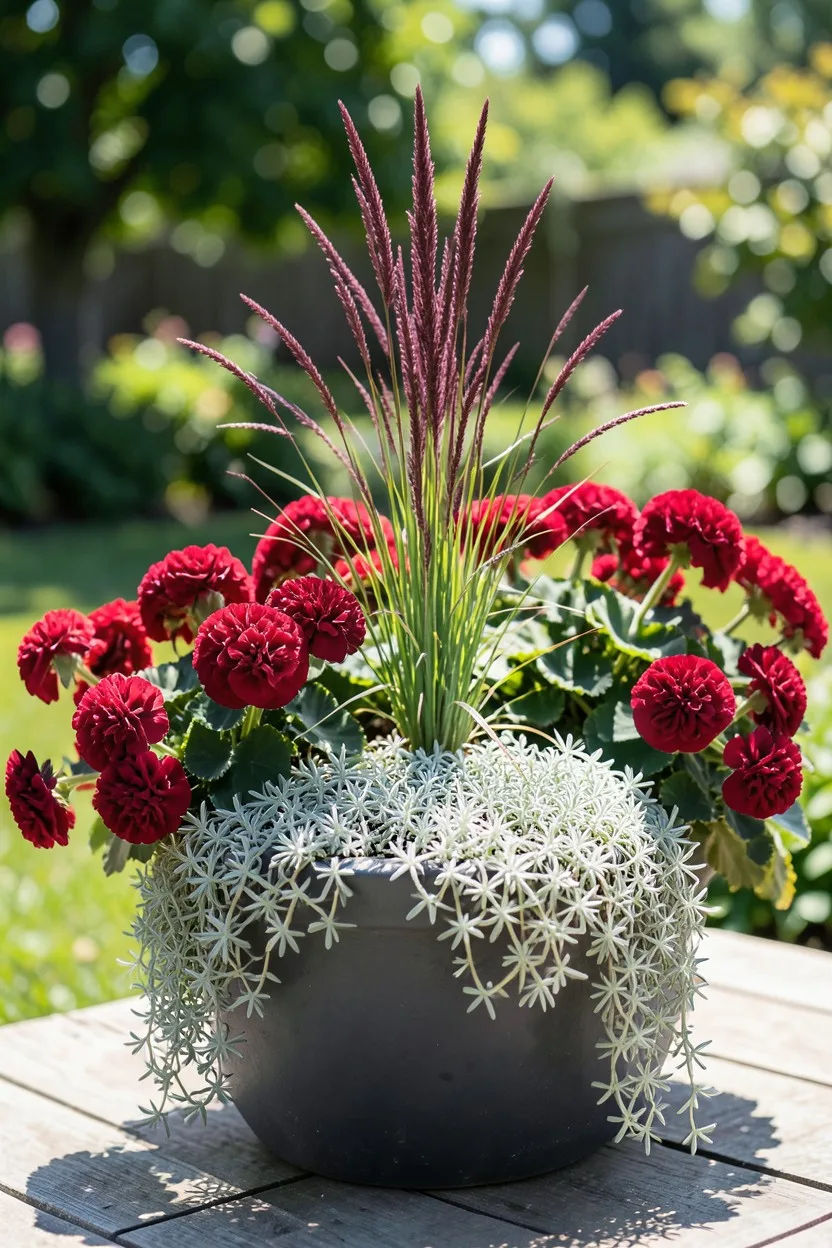
Everyone tells you to use purple fountain grass as a thriller because it is easy, but they skip how to balance its intense texture. Pair a robust Pennisetum setaceum 'Rubrum' with deep red 'Calliope Large Dark Red' geraniums to build a dense, saturated mid-layer. The geraniums provide structural bulk and a heavy color block that anchors the airy texture of the grass above it.
Complete the arrangement by packing the rim with 'Silver Falls' dichondra, which drops like a liquid metal waterfall over the edge of a dark charcoal pot. This combination requires a massive 18-inch container to accommodate the aggressive root system of the grass, which will easily outcompete smaller plants if cramped. Give this pot at least six hours of direct blasting sun, and water deeply only when the top two inches of potting mix feel bone dry.
💡 Tip: Snip off faded geranium flower heads down to the main stem every single week to trigger continuous, heavy bud production.
The Dramatic Statement — At a Glance
☀️ Sun Exposure
Full Sun (6+ hours)
🏺 Minimum Pot Size
18-inch diameter
🎨 Color Palette
Burgundy, Crimson, Silver
💧 Watering Frequency
Moderate — let dry between waterings
Superpower
Extreme heat tolerance that maintains intense, high-contrast color throughout the dog days of August.
2. The Deep Shade Neon Chartreuse and Fuchsia Contrast
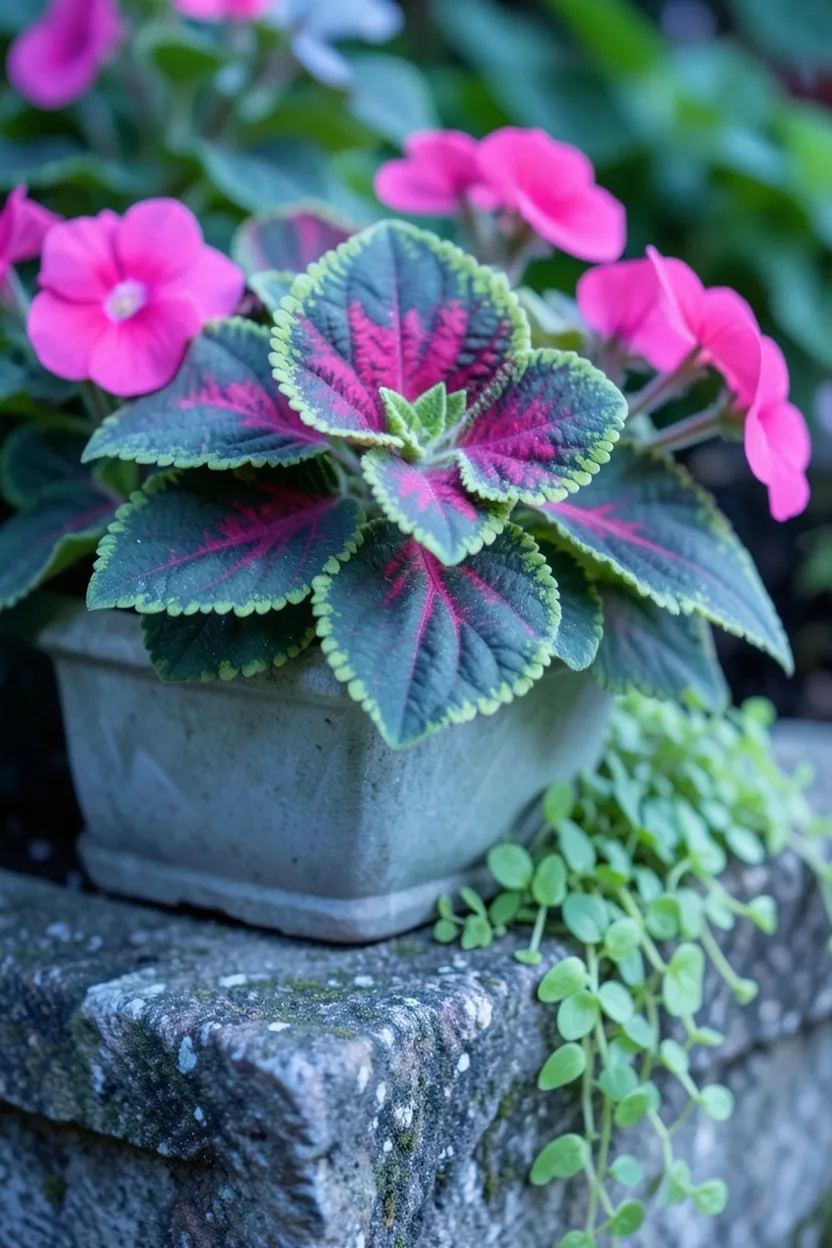
You do not need a single ray of direct sunlight to create a jaw-dropping container display. Start with 'Gator Hide' or 'Kong Rose' coleus as your structural centerpiece; its massive, velvet-textured leaves act as a bold, structural thriller that easily replaces traditional grasses. The neon magenta centers and lime-green borders of the leaves set a vivid color roadmap for the rest of the pot.
Surround the base of the coleus with 'Beacon Rose' impatiens to form a thick, solid ring of electric pink blossoms that bloom continuously without deadheading. Finish the composition by tucking 'Goldilocks' creeping Jenny into the edge, allowing its round, chartreuse coins to trail down the sides. This plant combination thrives on bright, indirect northern exposure or deep shade under a covered porch cover, where harsh afternoon light would otherwise scorch the delicate foliage.
3. The Hummingbird Magnet Hot Tropic Combo
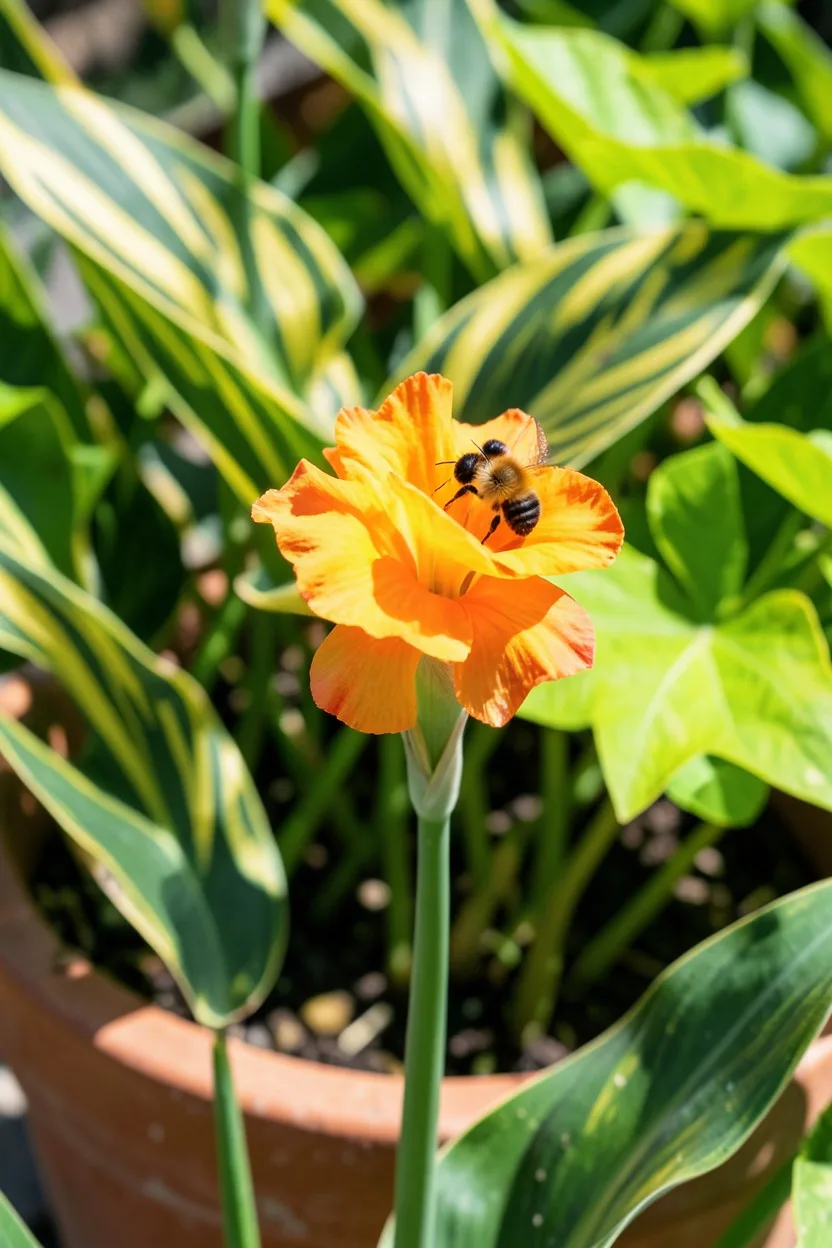
Plant a Canna 'C भी Tropican' or 'Aureomarginata' in the center of your pot and watch the local pollinator traffic change overnight. Cannas deliver bold, architectural, banana-like leaves striped with gold and green, topped with fiery orange blossoms that scream for attention. This heavy-feeding thriller demands a rich, organic potting soil packed with compost to sustain its explosive growth rate.
Layer the middle with 'Gartenmeister Bonstedt' fuchsia, a unique upright variety featuring bronze-green foliage and long, tubular brick-red flowers that hummingbirds track from miles away. Soften the rim with 'Marguerite' sweet potato vine, whose aggressive, lime-green hand-shaped leaves will spill out and scramble down the sides of the container. This trio loves intense humidity and damp, well-draining soil, making it the ultimate selection for hot, sticky summer regions.
🌱 GROWING TIP
Heavy Feeders Need Weekly Fuel
Tropical plants like Cannas and sweet potato vines exhaust the nutrients in standard potting soil within four weeks. Mix a slow-release organic fertilizer into the top layer of soil at planting, then follow up with a liquid fish emulsion every single Friday morning.
4. The Cool Season Soft Pastel Textural Mix
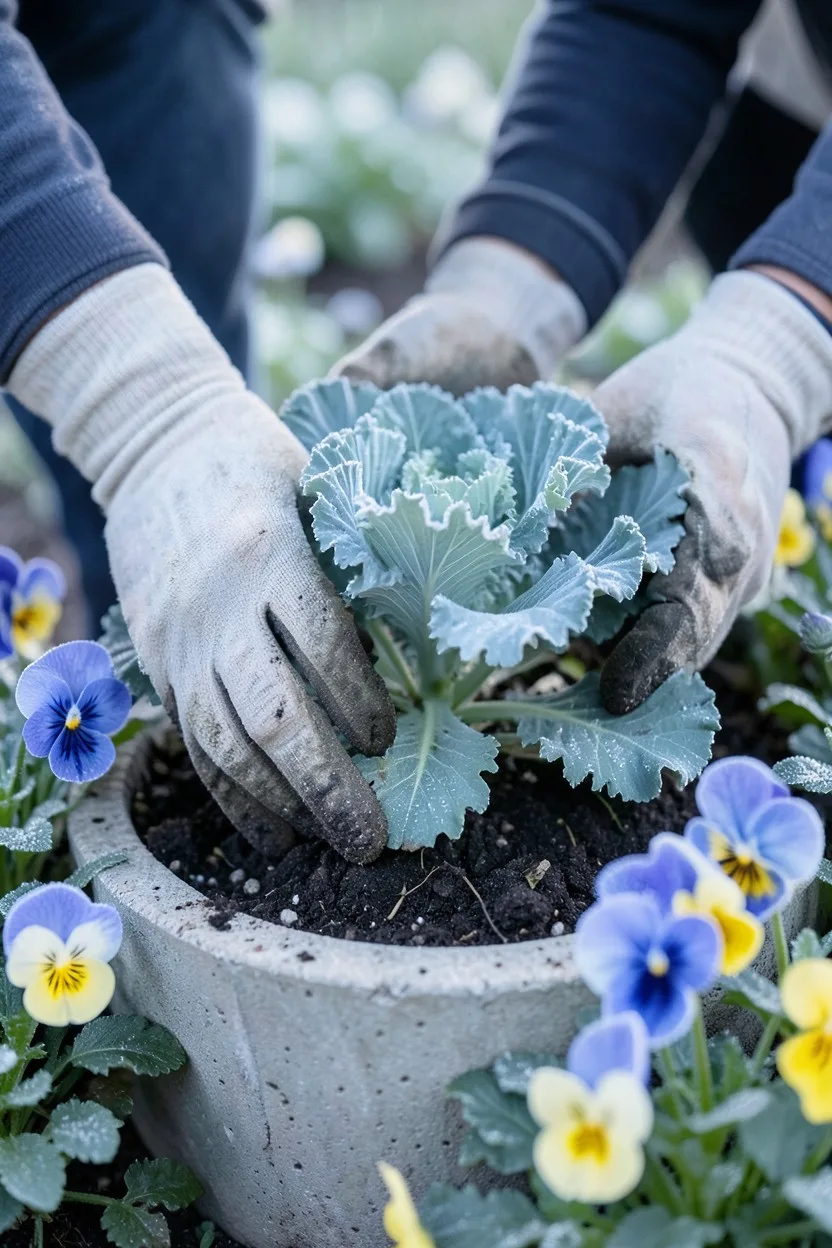
Back in my early gardening days, I thought container season started in May and ended in September, which resulted in bare, sad porches for half the year. You can plant this cool-weather combination in early April or late September when night temperatures consistently drop into the low 40s. Use a silvery-blue 'Cardoon' or a structural 'Dynasty White' ornamental kale as your frost-tolerant centerpiece.
Pack the surrounding space with a tight ring of 'Matrix Morpho' pansies, which show off a stunning combination of deep blue and bright yellow petals that bounce back effortlessly after a hard morning freeze. Thread 'Glacier' English ivy through the outer edge to spill over the sides with its clean, white-edged variegated leaves. This arrangement holds its shape beautifully for months because cool temperatures naturally slow down plant growth, maintaining a pristine, tailored appearance.
5. The Fragrant Mediterranean Midnight Blue Texture
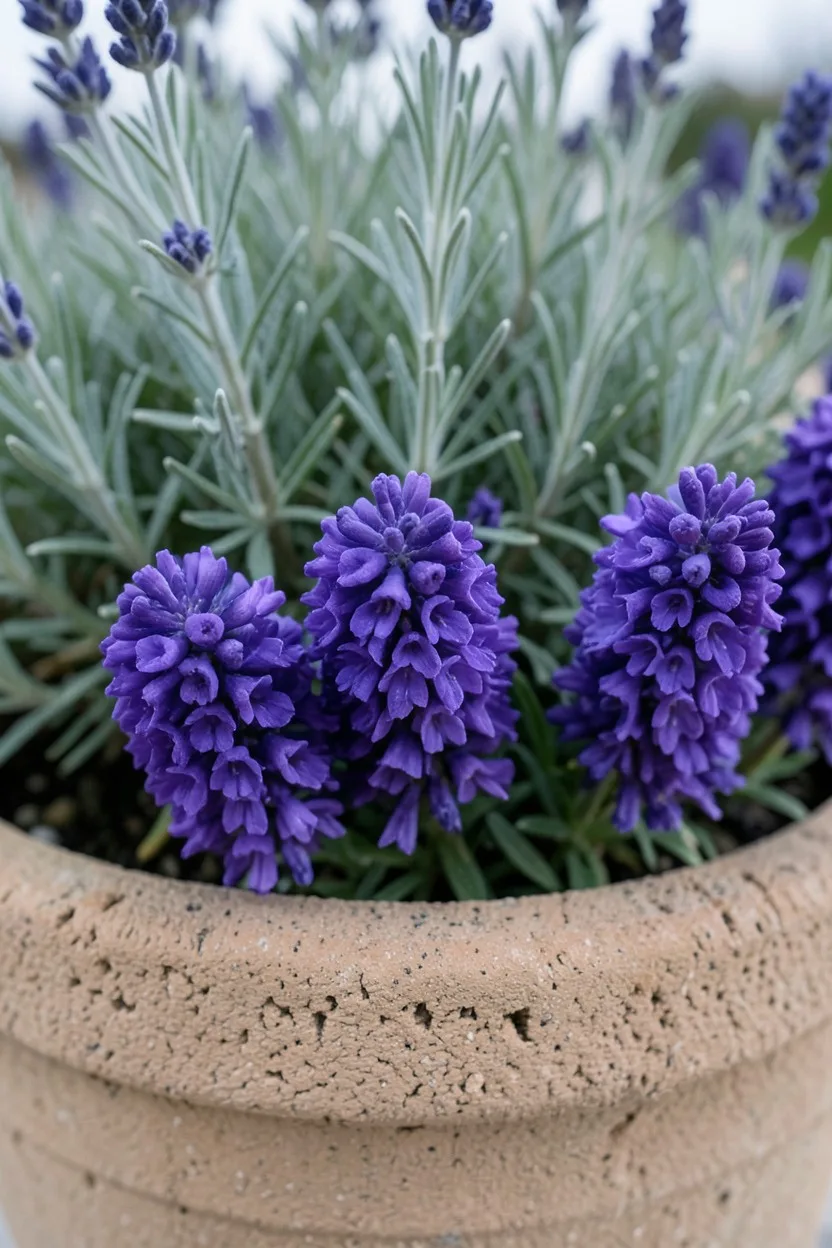
Most people focus entirely on visual impact and completely forget that a container can scent an entire backyard patio space. Plant a structural, upright culinary lavender variety like 'Grosso' or 'Phenomenal' right in the center to serve as an aromatic, silver-leafed thriller. Lavender requires an incredibly sharp-draining potting mix, so dump a few generous handfuls of coarse perlite or chicken grit into your standard soil blend before planting.
Surround the lavender base with 'Blueberry Thrill' heliotrope, an old-fashioned filler plant that pumps out dense clusters of deep purple blooms smelling exactly like warm vanilla or cherry pie. Accent the perimeter with trailing 'Silver-Edge' thyme, which drops down the rim while releasing a bright, clean herbal fragrance whenever guests brush past the container. Place this pot right next to your favorite outdoor seating area or main walkway where its olfactory impact can actually be enjoyed.
Best For
6. The Structured Architectural Monochromatic Modernist
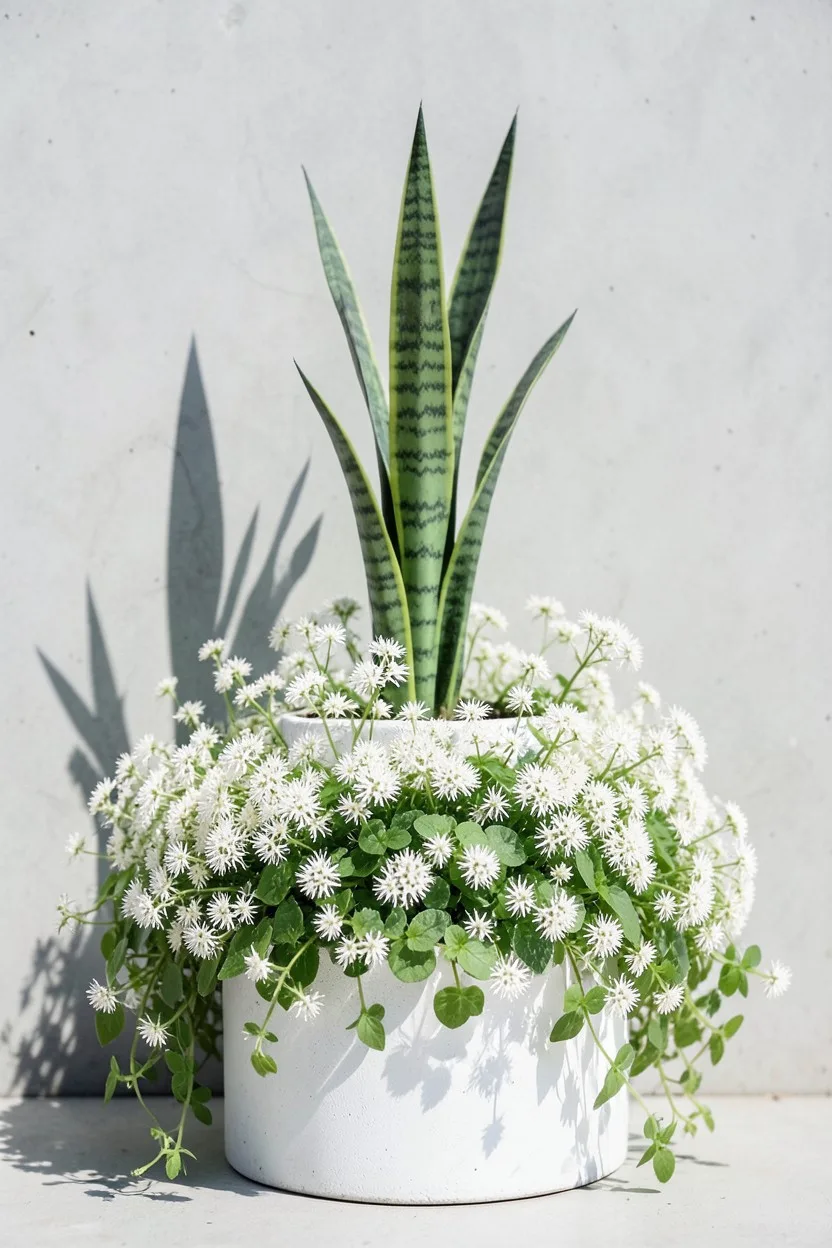
If you hate the wild, chaotic look of traditional cottage containers, this clean, architectural, hyper-tailored design is your solution. Anchor the center with a striking Sansevieria trifasciata 'Laurentii' snake plant; its stiff, sword-like, yellow-edged leaves provide an unyielding modern silhouette. Yes, it is traditionally a houseplant, but it thrives outdoors in hot, dry summer weather and gives an instant clean-lined look.
Fill the middle layer with crisp, pure-white 'Diamond Frost' euphorbia, which looks like a delicate cloud of white lace wrapped around the base of the structured snake plant leaves. Finish the minimal look with 'Cerveza 'n Lime' plectranthus spilling over the edges, providing fuzzy, rounded, scallop-edged mint-green leaves that contrast sharply with the rigid lines above. Use a sleek, straight-sided cylindrical ceramic pot in white or concrete gray to reinforce the high-design aesthetic.
7. The Desert Succulent Ultra Low-Water Trio
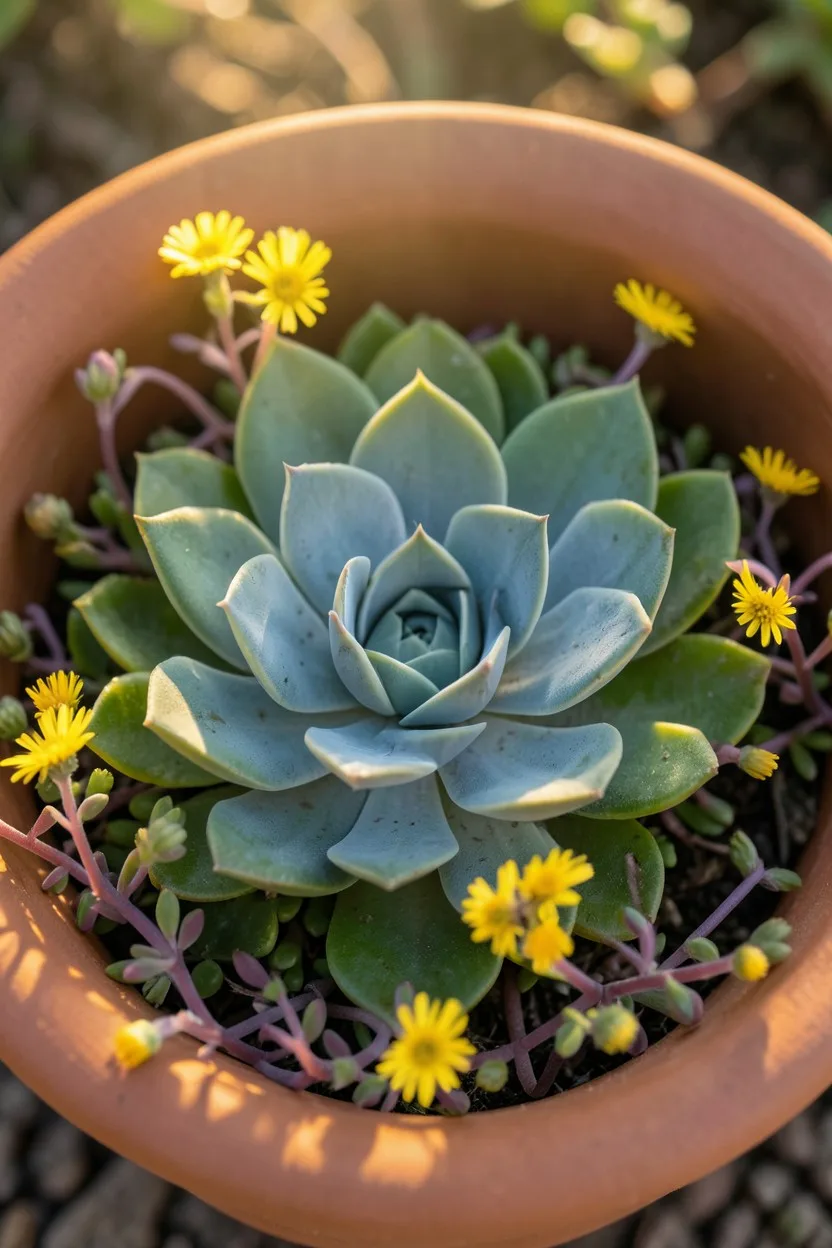
I have killed more plants by overwatering than underwatering, and this combination is built for the gardener who forgets the hose for weeks at a time. Plant a bold, blue-gray 'Blue Glow' Agave or an upright 'Prickly Pear' cactus as your dramatic, structural thriller centerpiece. Use a shallow, wide bowl-shaped terra-cotta pot rather than a tall container, which holds too much moisture at the bottom.
Tuck 'Autumn Joy' sedum around the sides of the agave; its thick, rubbery green leaves will slowly form tight pink flower buds that open beautifully in late summer. Spill 'Ruby Necklace' (*Othonna capensis*) over the edges, allowing its bean-like purple stems and bright yellow daisy flowers to trail down like living jewelry. Water this container exactly once every two weeks, soaking it completely and then letting the midday sun bake the soil dry.
⚠️ COMMON MISTAKE
Do Not Use Standard Potting Soil
Succulents planted in regular peat-based potting soil will rot within a month due to trapped moisture. Mix your potting soil 50/50 with coarse poultry grit, pumice, or crushed volcanic rock to provide the rapid drainage these desert roots require.
8. The Jewel-Toned Cottage Garden Pollinator Party
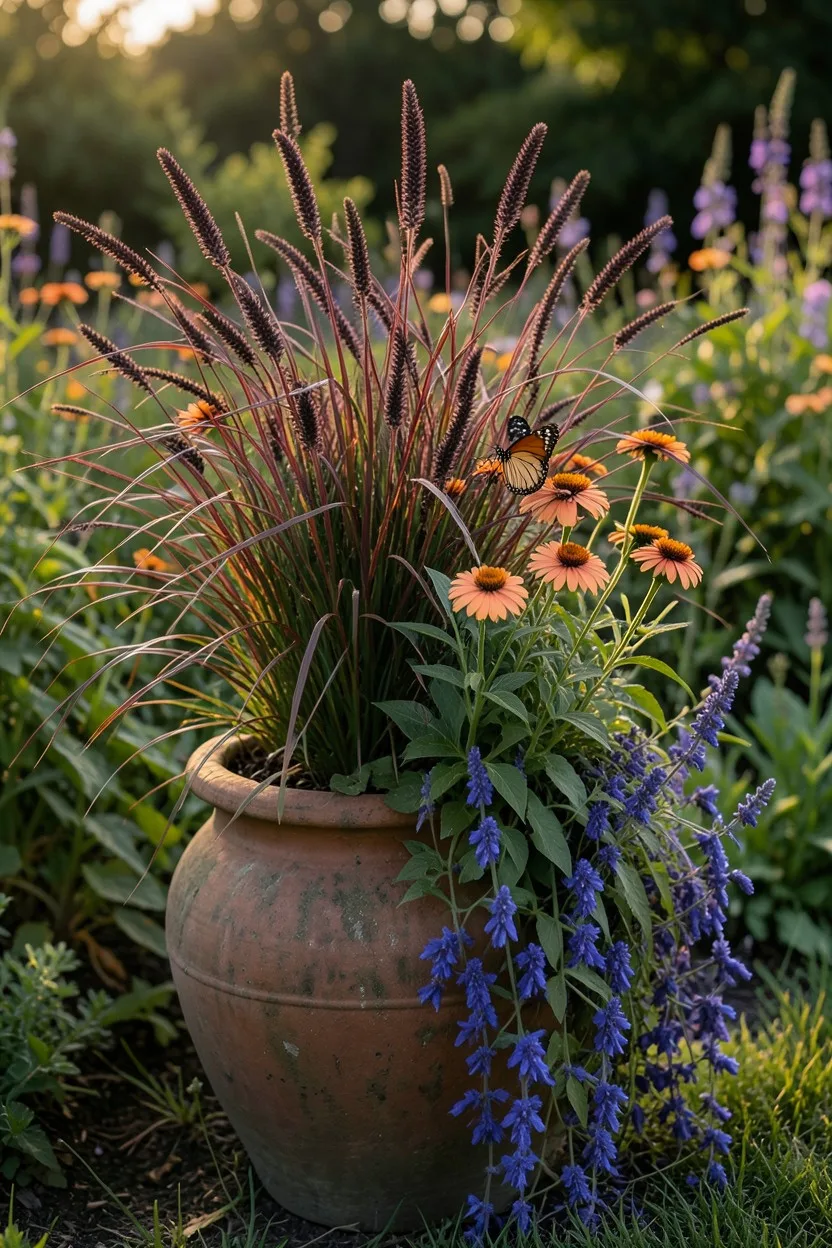
Everyone tells you to plant marigolds and leaves it there. The part they skip is that standard bedding marigolds look stubby and flat in a large, sophisticated container display. Instead, choose an upright, airy 'Purple Majesty' millet grass as your dark, almost-black architectural center thriller to draw the eye upward from a distance.
Surround the millet with 'Profusion Double Deep Salmon' zinnias and 'Victoria Blue' salvia to create a dense, buzzing middle layer packed with contrasting textures and fiery jewel tones. Finish with trailing 'Midnight Blue' lobelia pouring over the rim like a rich sapphire ribbon. This combination acts as a magnet for native bees and swallowtail butterflies, requiring full sun and an occasional snipping of old zinnia heads to keep the blossom production heavy.
9. The Woodlands Elegant Bleeding Heart Classic
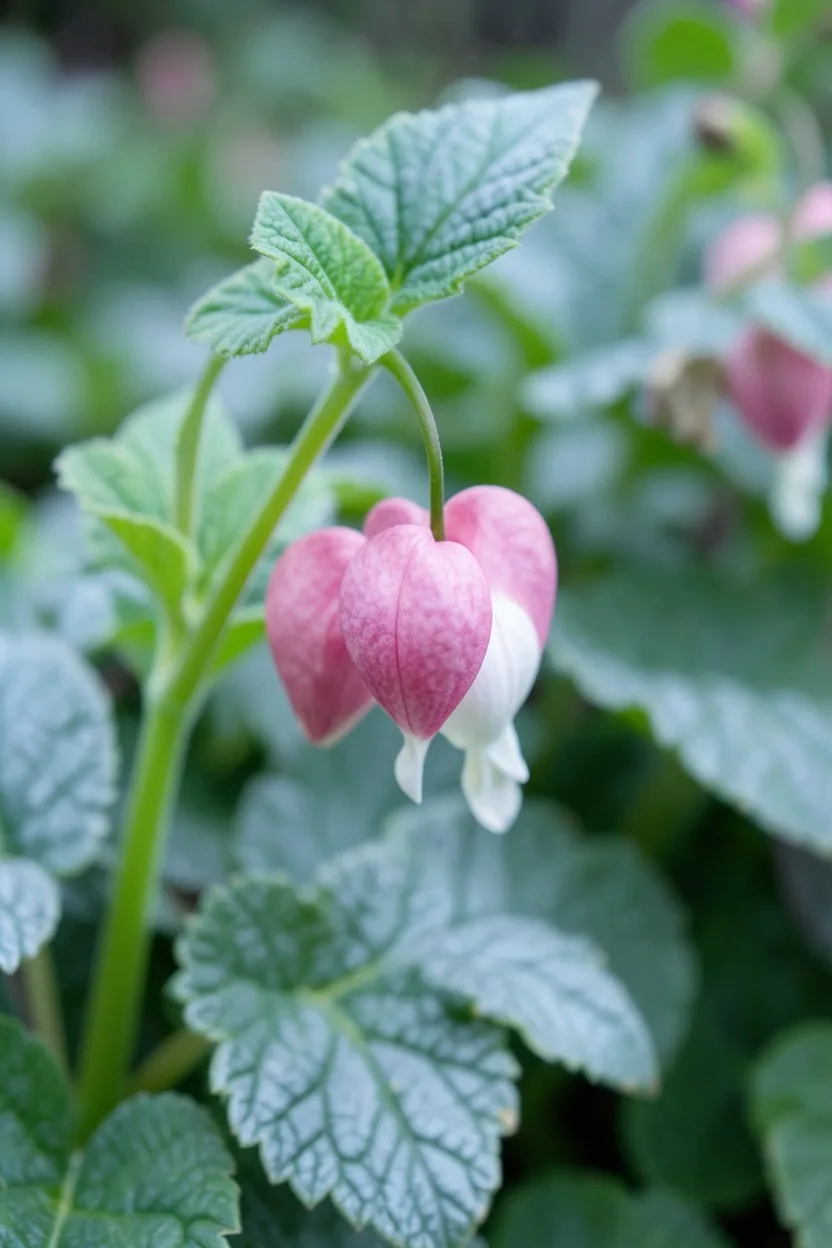
This combination is one of those designs that makes you feel like an estate gardener on an historic property—it is soft, delicate, and full of classic texture. Use an upright, arching 'Gold Heart' bleeding heart (*Dicentra spectabilis*) as your early-season thriller, showcasing bright pink hearts hanging from luminous, chartreuse-yellow stems.
Layer the middle with 'Jack Frost' Brunnera, whose large, heart-shaped leaves look like they have been sprayed with intricate silver frosting, topped with tiny forget-me-not blue flowers. Spill a variegated ivy like 'Goldchild' over the rim to tie the chartreuse tones of the bleeding heart down through the design. This trio requires total protection from hot afternoon sun and loves rich, woodsy soil that stays consistently damp like a forest floor.
🪴 How to Properly Assemble Your Three-Part Container
Fill the base and amend
Fill your container up to three inches below the rim with high-quality potting soil mixed with organic slow-release fertilizer.
Position the thriller first
Place your tallest plant slightly off-center toward the back or dead center, loosening its roots gently before pressing it into the soil.
Pack the filler layer tightly
Arrange your mid-height filler plants in a ring around the thriller, leaving no more than two inches of space between their root balls.
Tuck the spillers under the rim
Angle your trailing plants slightly outward along the inner edge of the pot rim so they immediately grow down the sides.
Water until it drains freely
Soak the completed pot slowly until water streams out of the bottom drainage holes to settle the soil around all roots.
10. The Autumn Harvest Vibrant Copper and Bronze Mix
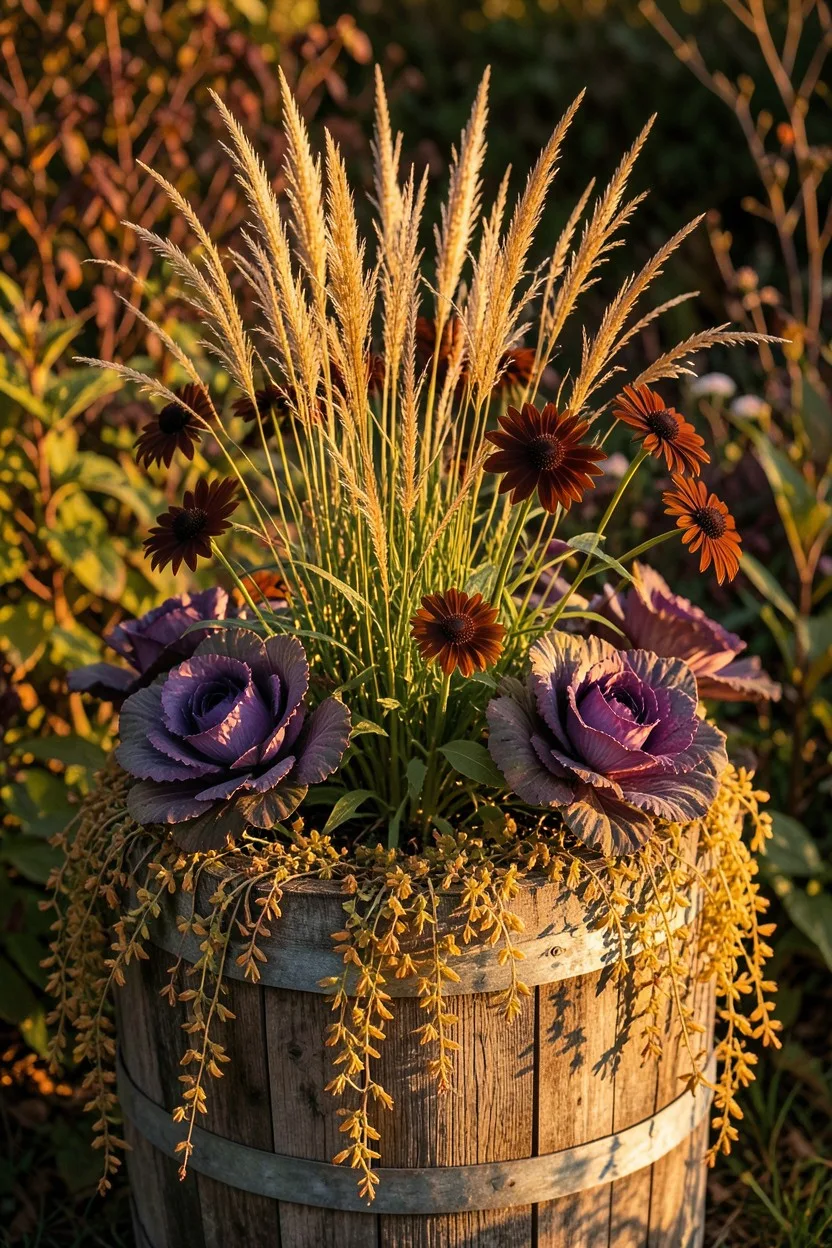
When September rolls around, do not settle for a basic grocery store mum dropped inside a plastic bucket. Create a long-lasting autumn masterpiece by planting an upright 'Karl Foerster' feather reed grass in the center of a rustic half-barrel or heavy copper planter.
Surround the grass with bronze-petaled 'Cherokee Sunset' rudbeckia and deep purple 'Chidori' ornamental cabbage to form a rich, chunky, textured middle layer that laughs at light frosts. Drop 'Angelina' sedum over the rim to spill out with its needle-like golden-orange foliage that turns amber as the weather chills. This pot looks spectacular alongside pumpkins on a front porch step, requiring very little attention as the natural autumn temperatures drop.
11. The Moon Garden Night-Blooming Luminous Display
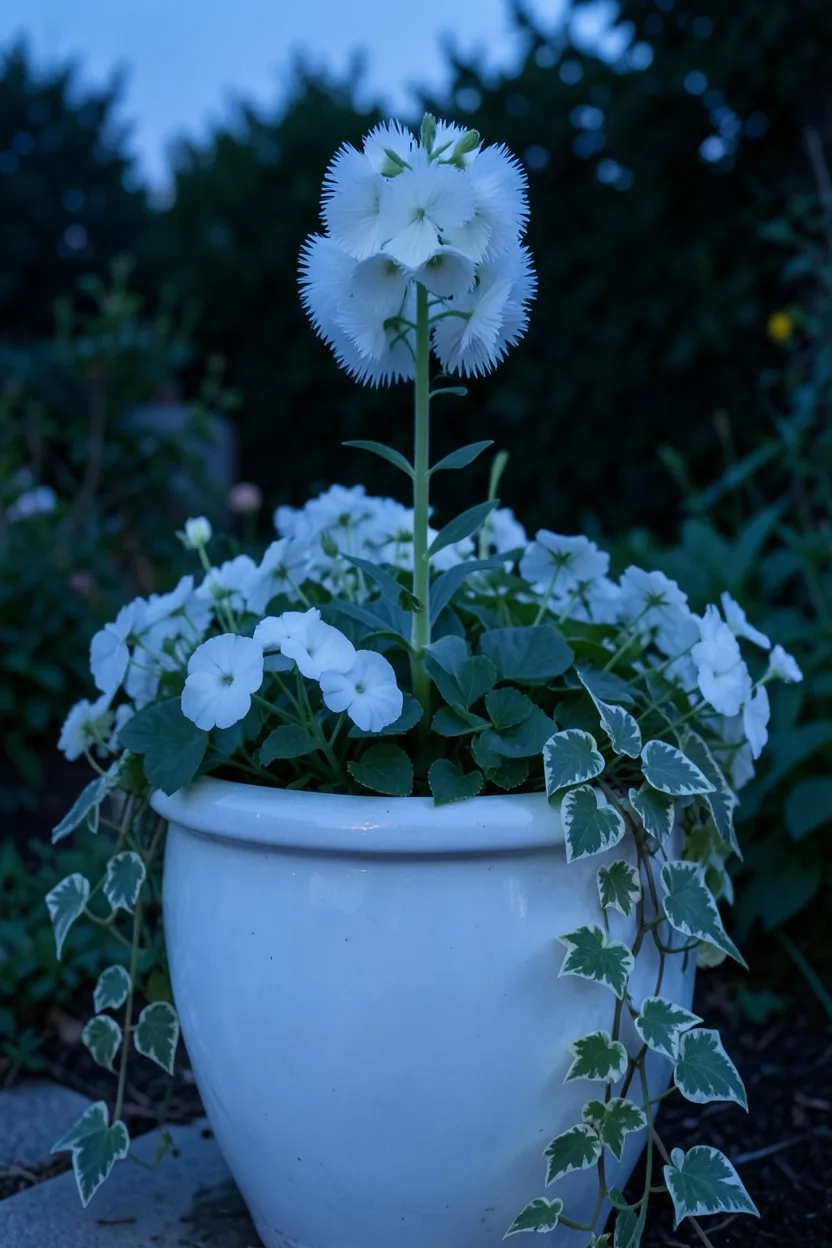
You know what nobody tells you about white flowers? They completely transform a garden after dark, practically glowing under simple moonlight or porch lighting while dark colors fade to black. Plant a clean, architectural dwarf white canna lily like 'Baby Angel' or a tall white 'Alba' cleome to act as your bright, nighttime focal point.
Flesh out the midsection with 'Cora Cascade White' vinca, which forms a dense carpet of pristine white flowers with thick, glossy dark green leaves that resist summer diseases perfectly. Wrap the edges in 'Variegata' trailing periwinkle (*Vinca major*), allowing its white-and-green splashed leaves to cascade down. Place this container directly along your back patio edge where you sit during warm summer evenings to enjoy its glowing architectural silhouette.
12. The Gourmet Edible Herb and Flower Showpiece
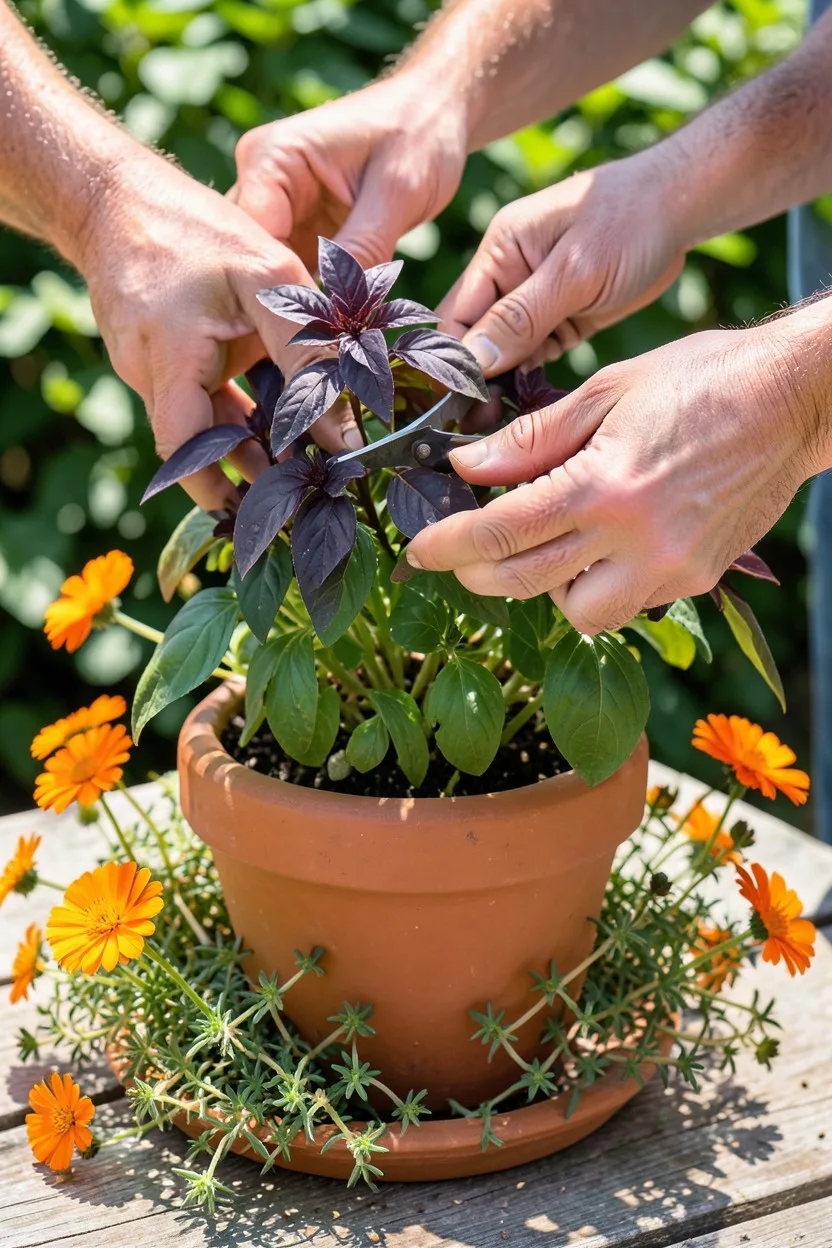
Containers do not have to be purely ornamental to earn their space on your patio deck. Use an upright, dark purple 'Amethyst Improved' or structural 'Red Rubin' basil as your aromatic, deep-toned centerpiece thriller. Basil loves baking heat and direct sun, making it an excellent anchor for a summer kitchen container.
Layer the middle ground with orange 'Bon Bon' calendula and upright 'Variegated' golden lemon thyme to provide continuous color while giving you handfuls of edible petals for salads. Let 'Tumbling Tom Yellow' trailing cherry tomatoes cascade over the rim, dropping bright yellow, bite-sized fruits right down the sides of the pot. It is beautiful, productive, highly fragrant, and lives happily right outside your kitchen back door.
The Edible Showpiece — At a Glance
🌱 Soil Blend
Rich organic compost mix
✂️ Harvesting Style
Cut from top to encourage bushy side growth
🦟 Pest Defense
Basil scent naturally deters flies and mosquitoes
🥗 Edibility
100% — leaves, flowers, and fruit
Superpower
Combines high-density kitchen production with a striking contrast of dark purple and neon orange foliage.
13. The Elegant Southern Classic Caladium and Hydrangea Mix
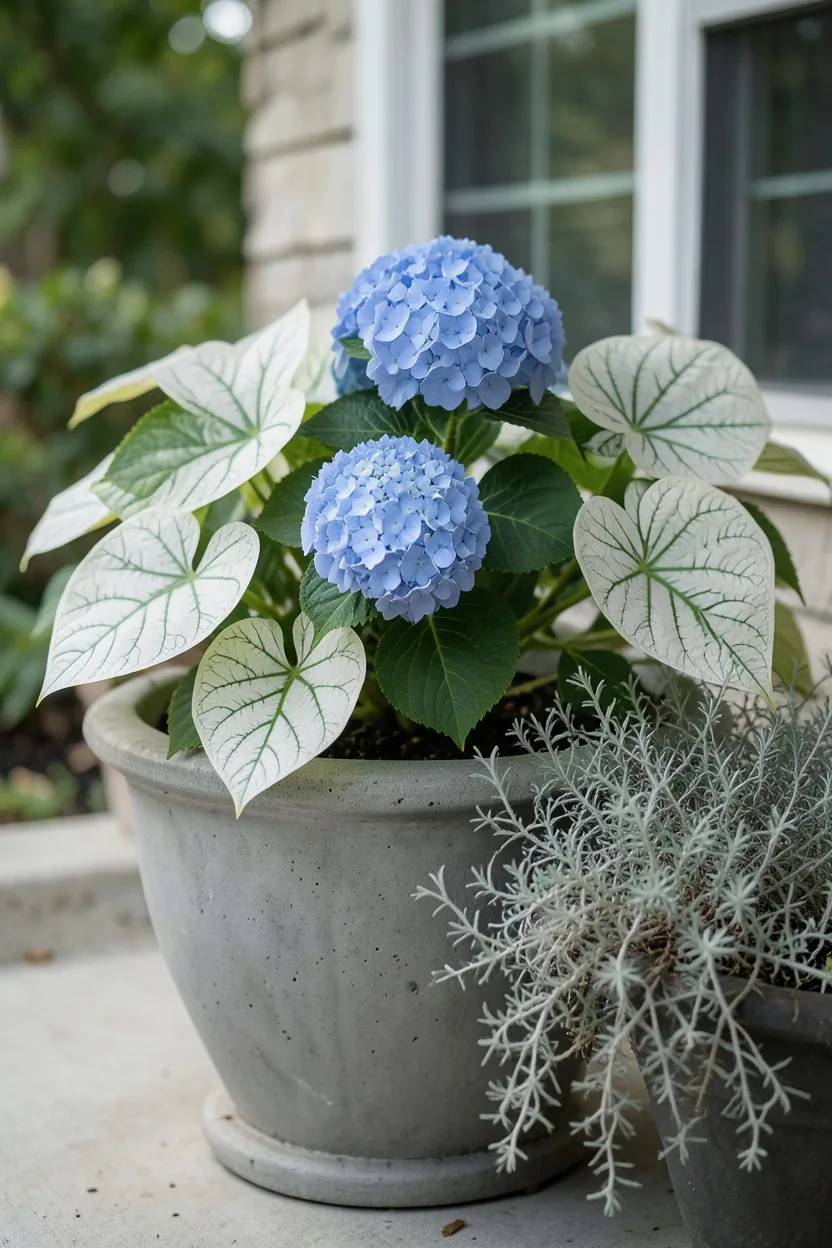
I used to think hydrangeas belonged exclusively in the open landscape, until I realized how beautifully dwarf varieties perform in a shaded container. Plant a dwarf 'Pop Star' or 'Tuff Stuff' mountain hydrangea in the center of a stately cast-iron or concrete urn to establish a permanent, structural centerpiece.
Surround its woodsy stems with 'White Christmas' caladiums, whose massive, paper-thin white leaves with dark green veins look like stained glass panels illuminating the middle layer. Spill trailing 'Silver Brocade' artemisia over the edges to soften the heavy lines of the urn with its deeply scalloped, dusty-gray foliage. This classic combination prefers cool morning light, heavy afternoon shade, and a soil mix that never completely dries out.
14. The Neon Fireworks Electric Fuchsia and Violet Trio
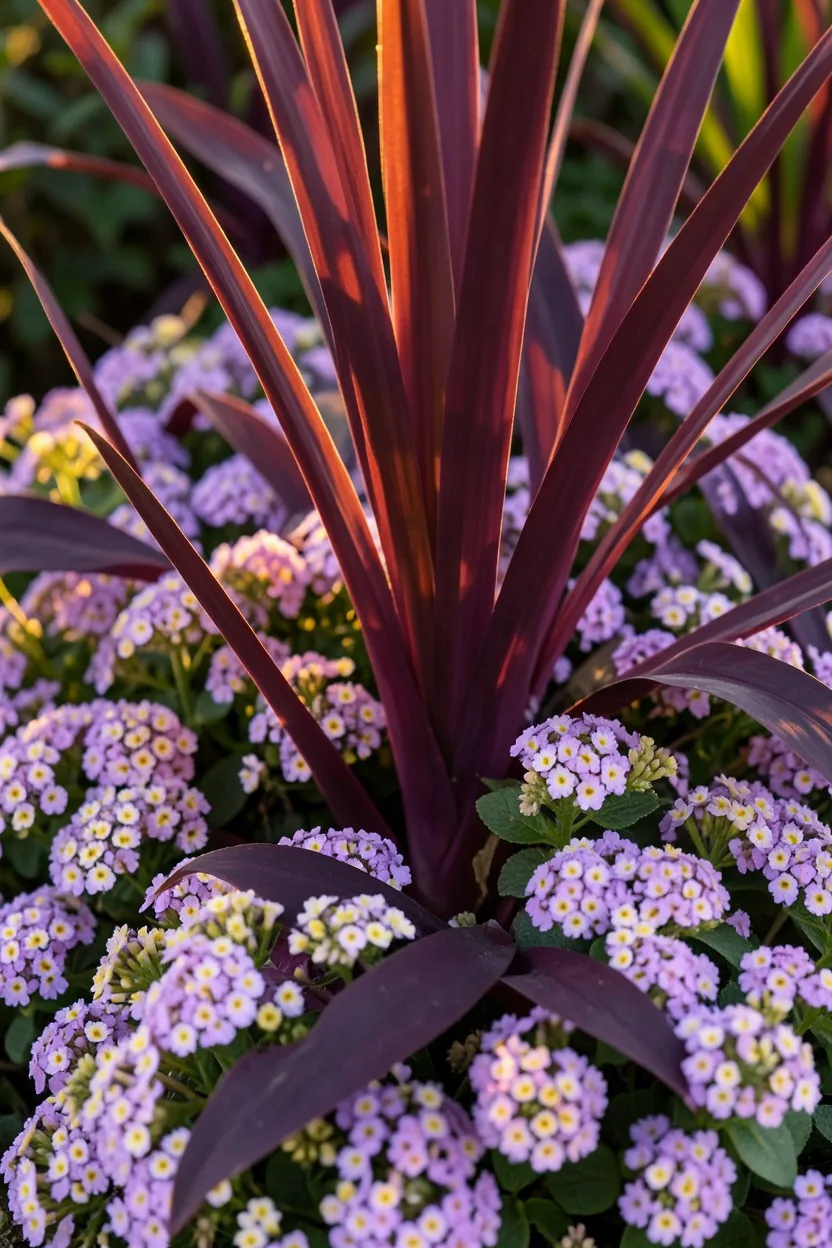
If your goal is to make neighbors stop their cars and look at your driveway, this high-octane color palette is your best ticket. Anchor the center with an upright 'Cordyline australis' 'Red Star' spike; its stiff, burgundy-purple leathery fronds shoot upward like an explosion of dark architectural lines.
Ring the cordyline base with 'Superbells Holy Smokes!' calibrachoa, which packs the midsection with hundreds of mini petunia-like blooms splashed with lavender, yellow, and deep violet. Cascade 'Purple Heart' (*Tradescantia pallida*) over the edge, letting its thick, succulent purple stems drop straight down while showing off tiny three-petaled pink flowers. This heat-loving combination handles blistering asphalt heat easily, making it the ultimate selection for hot driveways or exposed front walks.
💡 PRO TIP
Trim Spillers to Prevent Legginess
By mid-summer, trailing plants like calibrachoa and tradescantia can start looking thin and stringy at the top. Use clean garden snips to cut back the longest trailing stems by one-third in mid-July; this forces immediate new growth back at the crown.
15. The Delicate Meadow-Style Textures of Gaura and Verbena
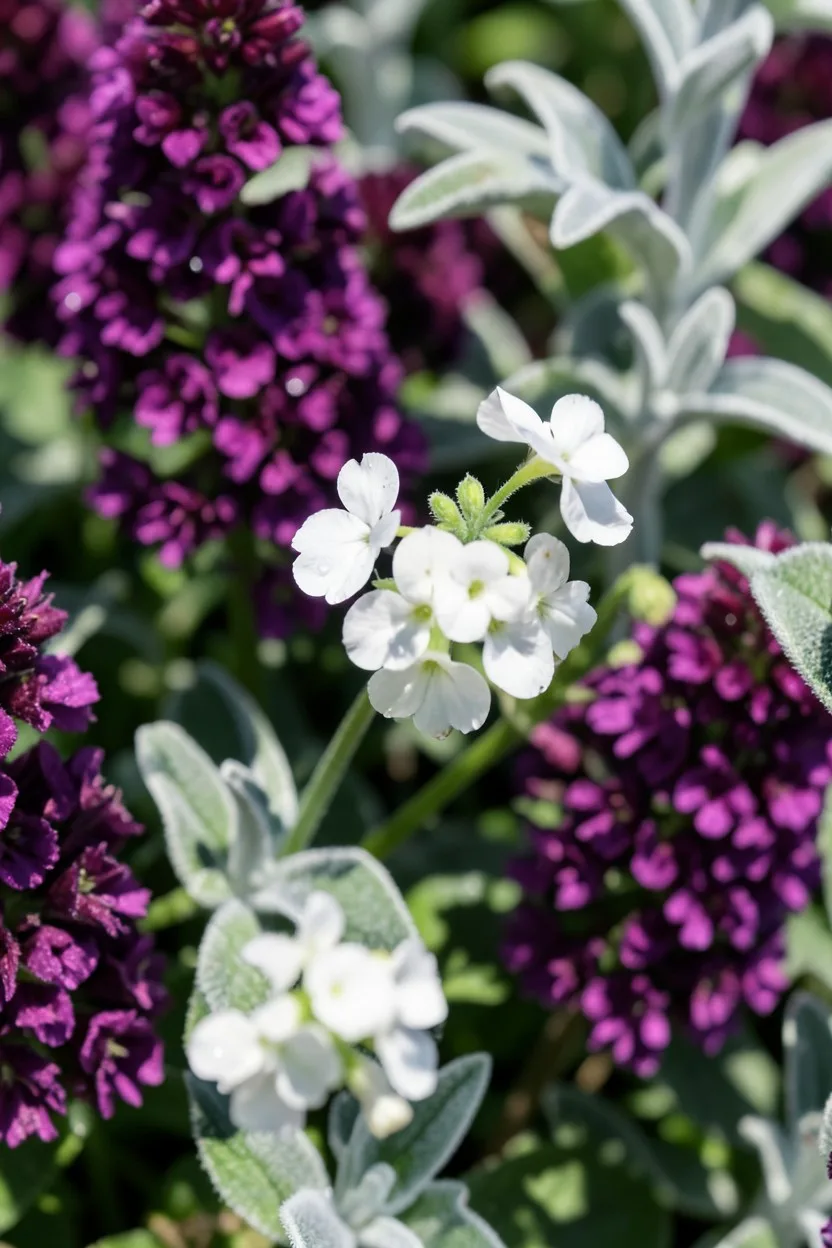
You do not always need massive, heavy elephant ears or stiff grasses to create a compelling container thriller. Plant an upright Gaura lindheimeri 'Whirling Butterflies' in the center; its long, wire-thin stems produce delicate white flowers that dance constantly in the slightest breeze, looking like a cloud of insects hovering in mid-air.
Weave 'Superbena Royal Plum Wine' verbena through the gaura stems to establish a dense, rich purple flooring that anchors the airy movement above. Allow trailing 'Licorice Plant' (*Helichrysum petiolare*) to spill down the sides, offering small, oval, felt-textured silvery-blue leaves that soften the hard lines of a rustic stone pot. This soft, meadow-inspired aesthetic is perfect for sunny decks where you want a natural, unmanicured cottage garden look.
16. The Elegant Victorian Begonia and Fern Shadow Box
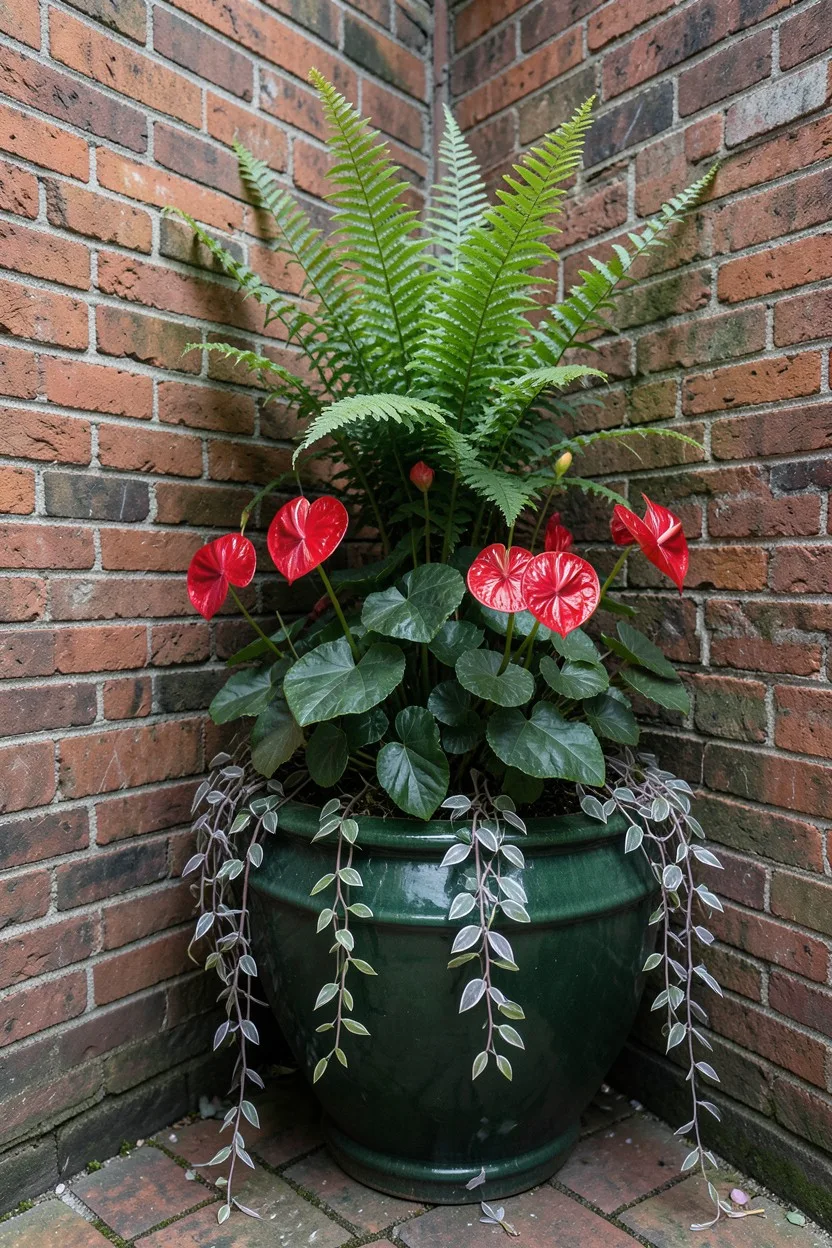
This container feels like stepping into an old European glasshouse—it is dark, textured, rich, and handles the deepest, darkest corners of a north-facing patio with grace. Use a structural, upright 'Kimberley Queen' fern as your central thriller; its stiff, sword-shaped dark green fronds offer a clean, arching architectural shape that never sheds messy leaflets.
Pack the middle ground with 'Dragon Wing Red' cane begonias, which fill the dark space with large, glossy, wing-shaped leaves and heavy dangling clusters of scarlet blossoms that bloom nonstop. Finish the dark composition with trailing 'Wandering Dude' (*Tradescantia zebrina*), allowing its striking silver-and-purple striped leaves to trail down the side. Keep this soil evenly damp, and never let direct afternoon sun touch the delicate leaves.
17. The High-Contrast Lemon and Cobalt Vivid Pair
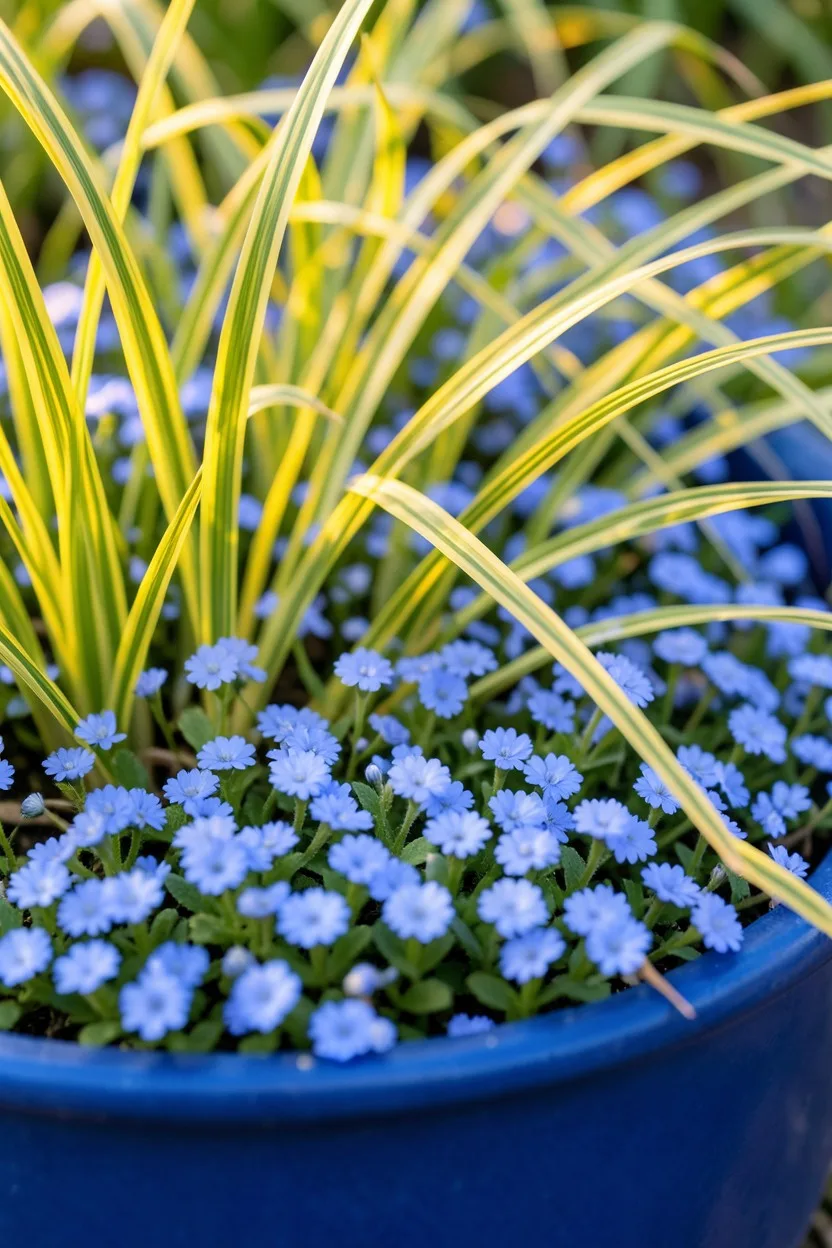
Yellow and blue sit directly across from each other on the color wheel, meaning they create the highest natural visual vibration possible when placed side-by-side. Plant an upright, Golden Japanese Forest Grass (*Hakonechloa macra* 'Aureola') as your luminous, arching centerpiece thriller. Its variegated yellow-and-green blades cascade softly like a golden fountain over the middle layer.
Layer the base with 'Laguna Sky Blue' lobelia and cobalt-blue 'Aura' evolvulus to create a solid, intense ring of electric blue that looks incredibly striking beneath the yellow grass blades. Let a clean, variegated creeping charlie or 'Variegated' ground ivy trail heavily over the pot rim to blend the green tones down. This pot shines brightest in bright, dappled morning light with total protection from scorching 3 PM sun.
18. The Autumn Jewel-Toned Heuchera and Grass Blend
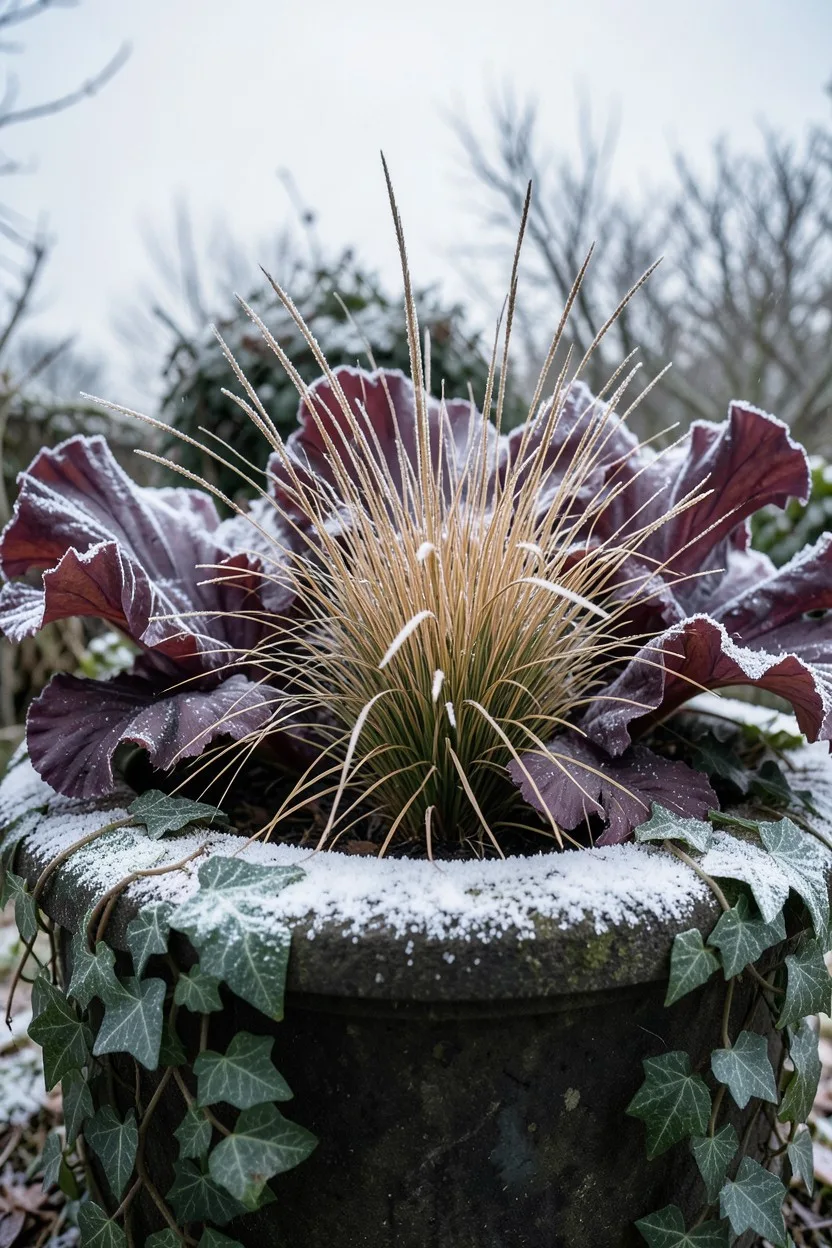
Most gardeners completely give up on their containers once October hits, leaving dead summer annuals rotting in dry soil until spring. Instead, assemble this tough, cold-tolerant design that looks stunning even through early winter snows. Use a structural, copper-colored sedge grass like Carex comans 'Bronze' as your fine-textured centerpiece thriller.
Surround its base with a mix of 'Wildberry' coral bells (Heuchera) for intense glossy purple foliage and 'Forever Purple' heuchera to build a solid, leaf-driven mid-layer. Drop cold-hardy 'English Ivy' over the side to spill down with its evergreen structure. This container skips flowers entirely, relying instead on high-contrast foliage textures that handle freezing temperatures without losing a single drop of color.
Container Maintenance: What Works vs. What Fails
The Right Approach
- Water the soil directly until it runs out the bottom drainage holes.
- Check soil moisture by sticking your finger two inches deep into the pot.
- Apply liquid fertilizer every two weeks to sustain high-density blooming.
- Pinch back aggressive spillers by half in mid-summer to force new buds.
The Common Mistakes
- Sprinkling the foliage lightly with water every day, leaving deep roots dry.
- Watering on a strict calendar schedule regardless of rain or heat.
- Relying entirely on pre-mixed soil nutrients to last all summer long.
- Letting trailing plants grow long and stringy until they choke themselves out.
19. The Bold Dramatic Elephant Ear and Lantana Sun-Baker
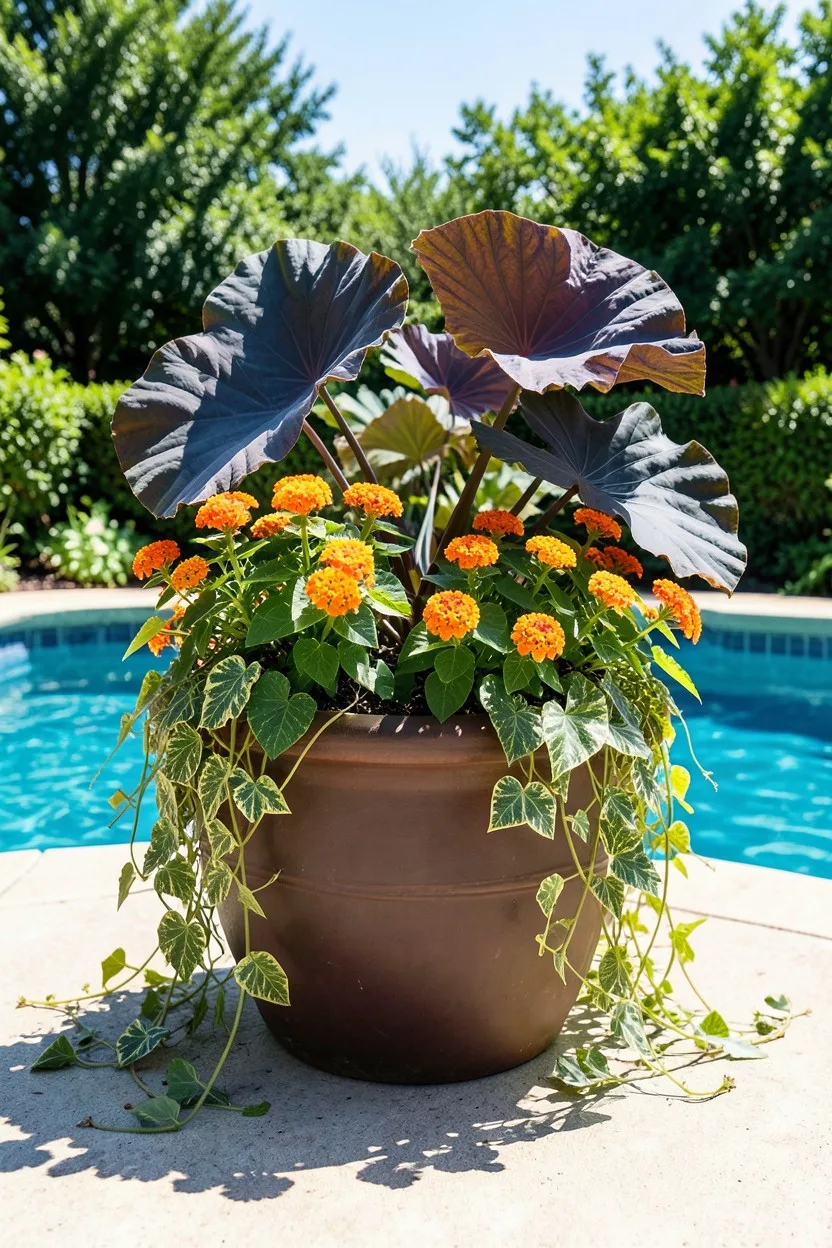
If you have a large, empty corner on a concrete pool deck or unshaded patio that acts like an oven all summer, this is your solution. Plant a dark, brooding 'Black Magic' Elephant Ear (*Colocasia esculenta*) as your massive, leaf-driven center thriller. Its massive, charcoal-purple leaves create an instant tropical focal point that commands attention.
Ring the base of the elephant ear with 'Bandana Trailing Gold' lantana; its rough, sandpaper-textured leaves and bright yellow-orange flower clusters will thrive in the blistering heat that would wilt other fillers. Spill 'Variegated' sweet potato vine over the edge to complete the high-contrast tropical look with its bright green-and-white hand-shaped leaves. This combination requires a massive 20-inch container and daily heavy waterings during July and August.
20. The Zen Minimalist Grass and Wire Vine Composition
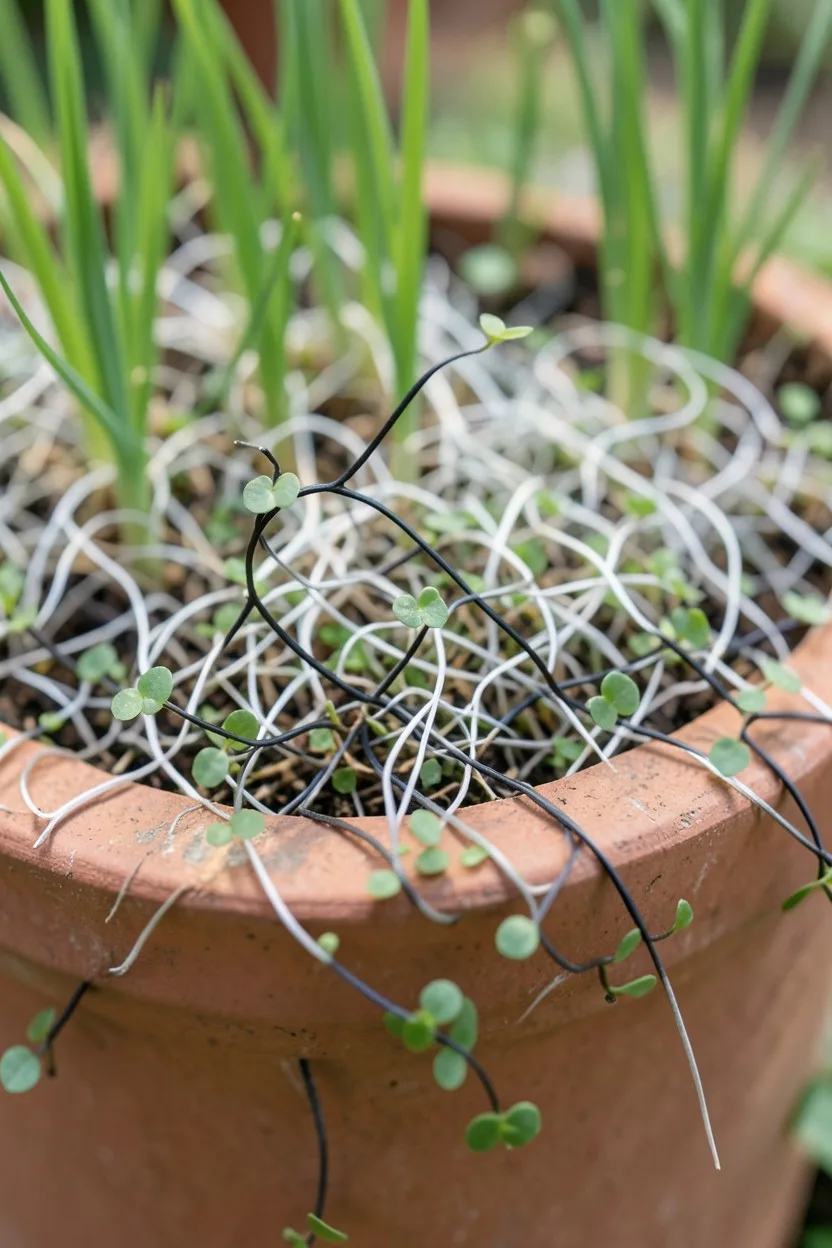
For a quiet, calming entry display that focuses purely on subtle textures rather than loud, screaming flower colors, look to this simple palette. Plant a structural 'Equisetum hyemale' horsetail or a clean 'Little Bunny' dwarf fountain grass in the center of a simple, unglazed gray clay cylinder pot.
Surround the grass base with 'Silver Falls' dichondra and delicate, dark-stemmed 'Creeping Wire Vine' (*Muehlenbeckia axillaris*) to form a low, tangled, highly textured carpet over the soil. The tiny, round, glossy green leaves of the wire vine mingle with the silver dichondra strands as they spill over the rim together. This minimalist design requires full sun to part shade and looks pristine with minimal trimming or cleanup throughout the entire season.
Frequently Asked Questions
Can I reuse my potting soil from last year for these combinations?
Absolutely not. High-density thriller filler spiller designs exhaust all available nutrients and structure within a single season, leaving the old soil compacted and stripped. Dump old soil into your vegetable beds and fill your pots with fresh, peat-based potting mix packed with perlite and compost.
How do I water a pot that contains plants with slightly different water needs?
Always group plants with identical water profiles together, as done in this guide. If you mix a desert succulent with a thirsty canna lily, one will inevitably die of root rot or dehydration. Use the finger test: insert your finger two inches deep, and water only when that specific depth feels dry for your chosen combination.
What should I do if my filler plant starts choking out the trailing spiller?
Do not be afraid to use your garden shears aggressively. Fast-growing fillers like geraniums or coleus can occasionally cast too much shade over the rim. Snip away the lower branches of the filler plant to allow sunlight to reach the crown of your trailing spillers.
How do I prevent my heavy pots from blowing over during summer storms?
Before adding a single scoop of soil, place two or three heavy bricks or flat stones directly into the bottom of your container. This lowers the center of gravity significantly, ensuring that tall, top-heavy thrillers like purple fountain grass or cannas act as a sail without tipping the entire pot over.
Final Thoughts
If you only add one combination from this list to your garden this weekend, make it the Deep Shade Neon Chartreuse and Fuchsia Contrast. Most gardeners struggle with dark, north-facing porches or covered patios, leaving them bare or stuck with sad, struggling geraniums. This specific mix of coleus, impatiens, and creeping Jenny acts like a literal neon sign for dark brick or wood siding, bouncing ambient light into dull spaces while remaining completely immune to the typical summer wilting that plagues full-sun pots.
Ready to design your own high-impact containers?
Grab our step-by-step potting blueprint to perfectly match container sizes, soil mixes, and fertilizer schedules for continuous summer blooms.

John Smith is the founder and CEO of Karaoke Machines Guru. He is a karaoke tutor and karaoke enthusiast and has been passionate about karaoke since he was a child. He also writes about karaoke-related tips, guides, and product reviews on this website.
He overlooks the whole website and makes sure that everything is running smoothly. Learn more!