
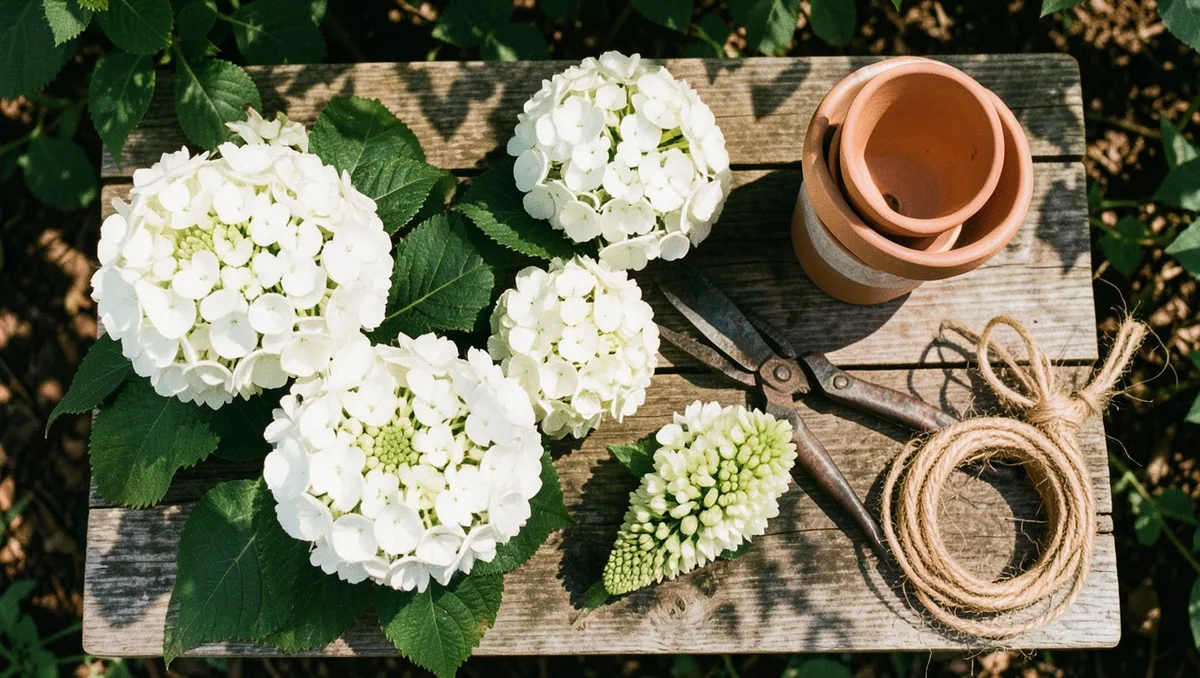
White hydrangeas are the design anchors of a classic garden, but simply dropping a random pot from the nursery into a hole in your lawn will not give you that high-end, estate-like structure. If your green space feels a bit disjointed or lacks visual weight, these large-scale architectural blooms provide an immediate solution by creating clean lines and brightening up heavy shade. Over the years, I have planted them along crumbling stone walls, packed them into tight urban courtyards, and used them to soften stiff property fences, discovering exactly which varieties handle the midday heat and which ones flop at the first sign of a summer storm.
To get that crisp, curated look you see in high-end gardening design, you need a deliberate strategy for grouping, layering, and supporting these heavy bloomers. This guide skips the generic plant care fluff and delivers fifteen specific layout blueprints, precise variety recommendations like Incrediball and Limelight, and structural companion pairings. Let us get your soil prepped and map out a design that looks established, intentional, and beautiful for decades.
Quick Tips Before You Start
Track the Sun
Map your yard's morning sun and afternoon shade before choosing between smooth and panicle varieties.
Check Soil pH
True white hydrangeas stay white regardless of soil acidity, but they still require rich, well-draining organic matter.
Drip Irrigation
Lay down half-inch drip tubing at the base of your plants to keep water off the heavy blooms and prevent fungal spots.
Mulch Heavily
Apply a three-inch layer of shredded pine bark or leaf mold to keep shallow root systems cool and consistently moist.
1. Symmetrical Foundation Rows for Stately Curb Appeal
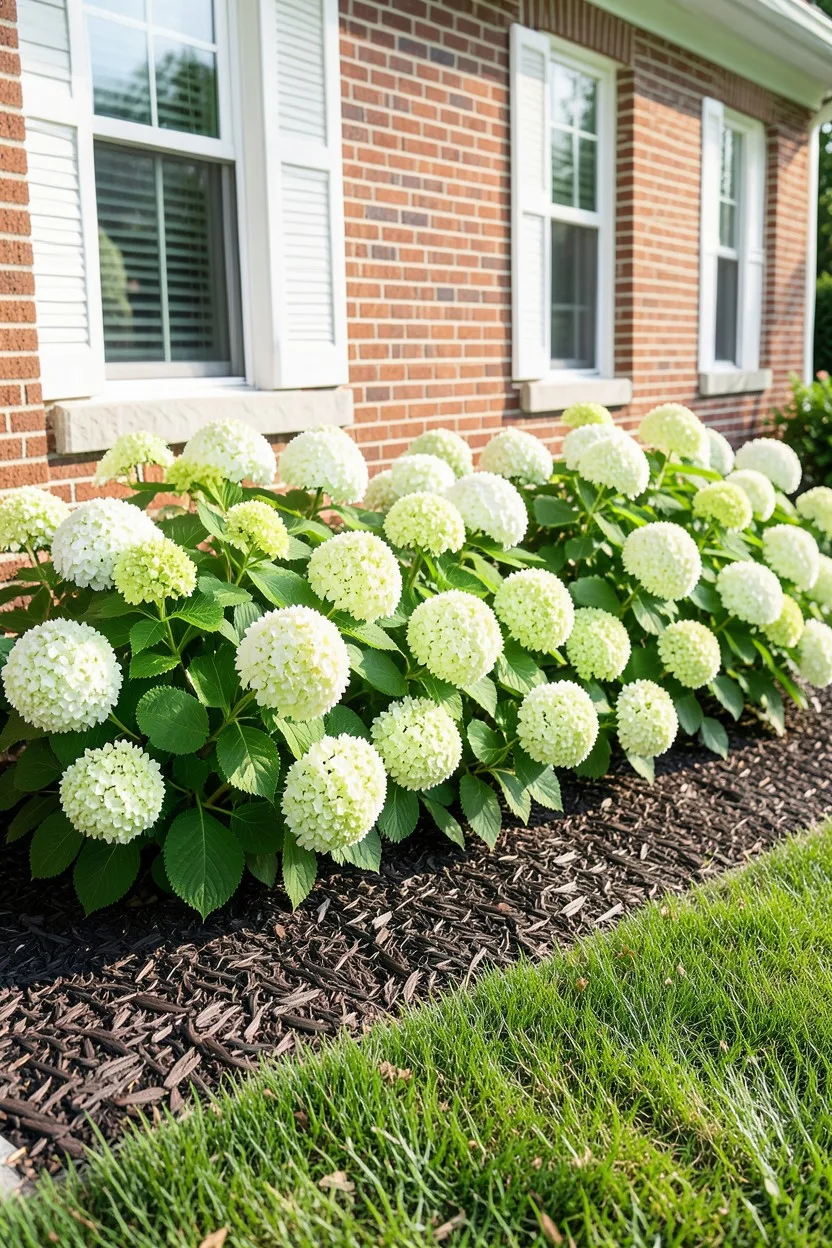
Everyone tells you to plant foundation shrubs, but they rarely tell you how to handle the corners and windows of a classic home. For a formal, high-end look, plant a single-variety row of Limelight panicle hydrangeas directly along your front porch or foundation wall. Space them exactly four feet apart on center to ensure they grow into a solid, unbroken hedge of white within three seasons.
This layout works because the clean, straight lines of the hedge mimic traditional architecture while the soft, massive blooms break up the harshness of concrete or brick foundations. Cut them back by one-third every March to keep the line uniform and prevent the shrubs from blocking low windows. This creates a crisp look that stays structured from June until the first hard freeze.
2. Layered Cottage Borders with Deep Purple Companions
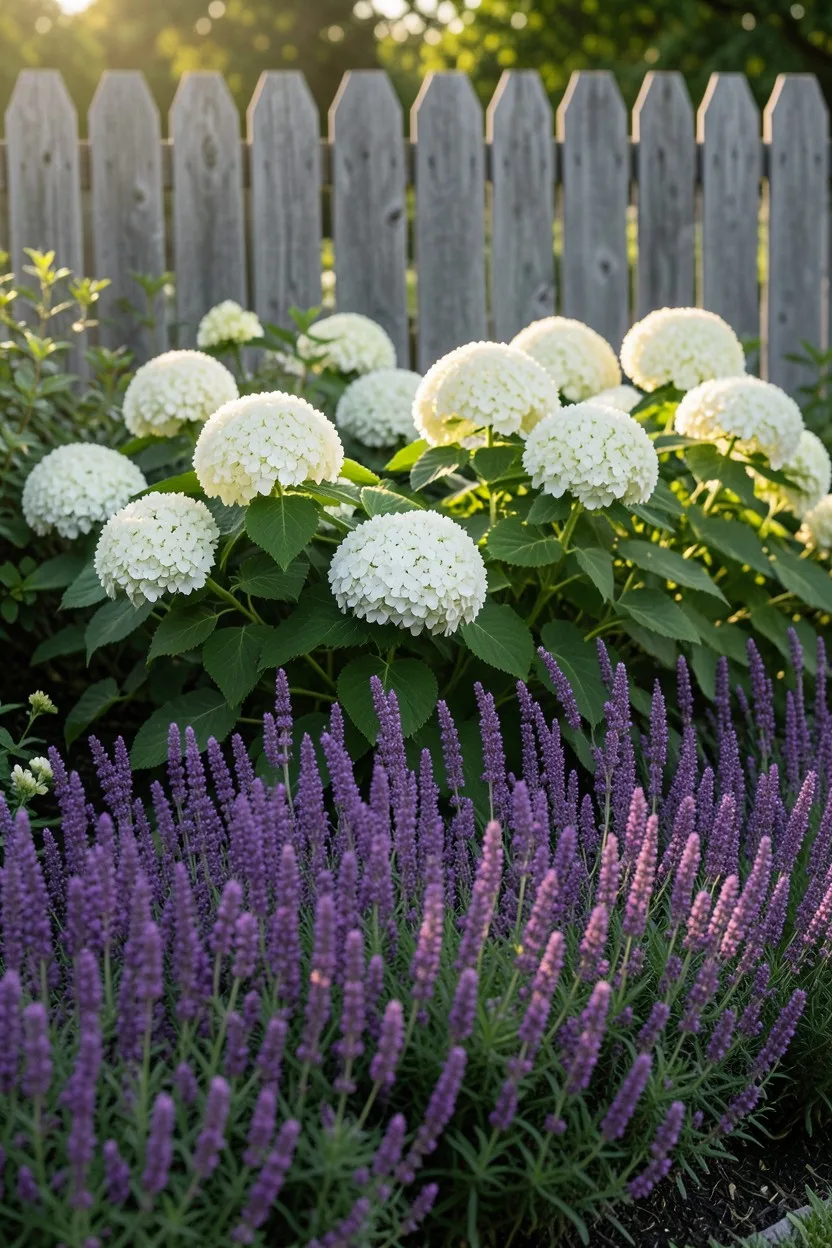
I used to plant white shrubs completely on their own, and honestly? The design looked flat, washed out, and boring against light-colored garden fences. Everything changed when I started layering them with dark, saturated foliage to make the white petals pop. Place a row of smooth Annabelle hydrangeas in the middle of your border, then plant deep purple perennials directly in front of them.
Contrast mechanics: The stark white of the hydrangea heads needs a visual anchor so it does not blend into the sky or a pale fence. Specific pairings: Use Walker's Low catmint or Caradonna salvia as a low foreground layer. The intense violet-purple spikes bloom at the exact same time as the hydrangeas, creating a striking contrast that catches the eye from across the yard.
Annabelle Smooth Hydrangea — At a Glance
🌡️ Hardiness
USDA Zones 3–9
🌱 Bloom Style
Large round corymbs
📏 Mature Size
4–5 feet tall & wide
☀️ Sun Exposure
Morning sun, afternoon shade
✂️ Pruning Time
Late winter / early spring
🏡 Best Layout
Layered cottage borders
Superpower
Blooms reliably on brand new wood every year, completely escaping late spring frost damage.
3. Shaded Understory Groupings Beneath Mature Tree Canopies
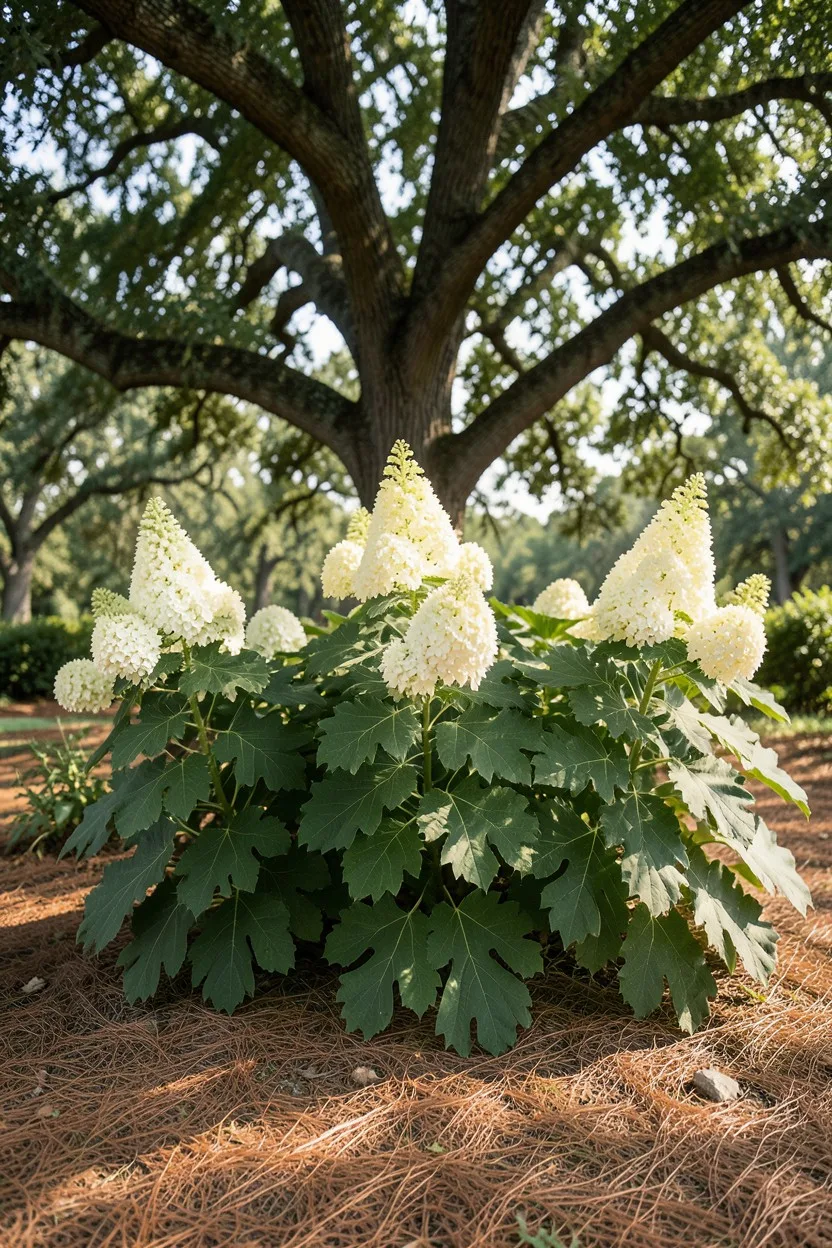
You know what nobody tells you about planting under large trees? The intense root competition will starve your shrubs of water before they ever have a chance to bloom. To solve this, look for areas under deep-rooted trees like oaks or maples, and choose the classic oakleaf hydrangea variety called Snowflake or Alice.
Oakleaf hydrangeas are tough, native woodland plants that actually prefer dappled canopy shade and handle drier soils far better than their smooth cousins. Dig your planting holes twice as wide as the nursery pots, fill them with organic compost, and plant the shrubs in informal groupings of three. This layout mimics a natural woodland edge, filling bare, dark spaces beneath trees with bold textured leaves and long white flower panicles.
4. Terraced Stone Wall Overhangs for Vertical Drama
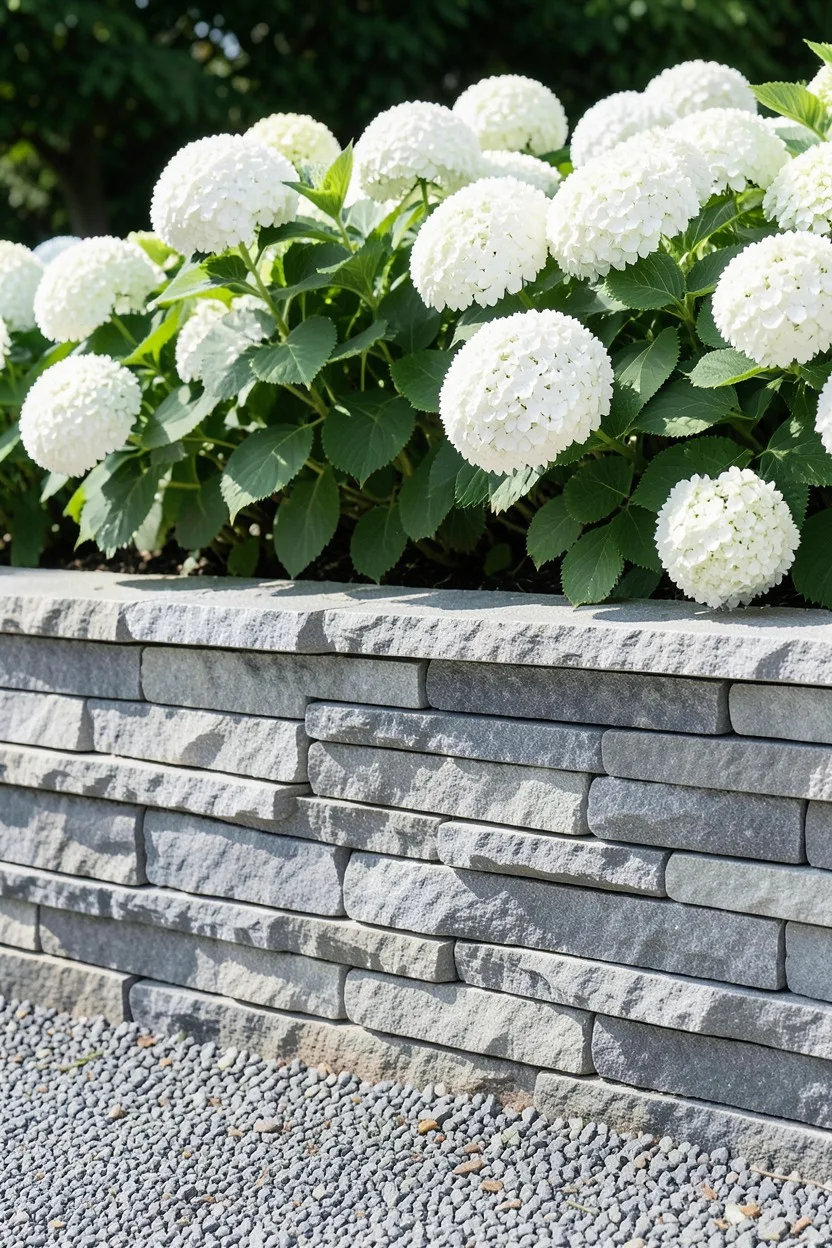
Compact. Low-maintenance. Cascading blooms all summer. Yes, you can achieve this on a sloped yard by planting right along the top edge of a dry-stack stone retaining wall. Choose a weeping or heavy-headed variety like Incrediball, which expands on the classic Annabelle genetics with much stronger, sturdier stems.
Plant them twelve inches back from the edge of a natural stone or flagstone wall that stands two to three feet high. As the summer progresses, the sheer weight of the massive white flower heads will cause the stems to arch gracefully over the face of the stone. This softens the hard lines of the masonry, hiding ugly gaps and creating a fluid, multi-level landscape feature that looks like it belongs in an English estate.
🌱 GROWING TIP
Prevent Flower Flop on Stone Terraces
Avoid over-fertilizing your stone-wall hydrangeas with high-nitrogen commercial fertilizers. Too much nitrogen forces rapid, weak, watery stem growth that collapses under the weight of the summer blooms. Stick to a single application of slow-release organic compost in early spring for thick, sturdy woody framework.
5. Flanking Gateways to Create Welcoming Garden Entries
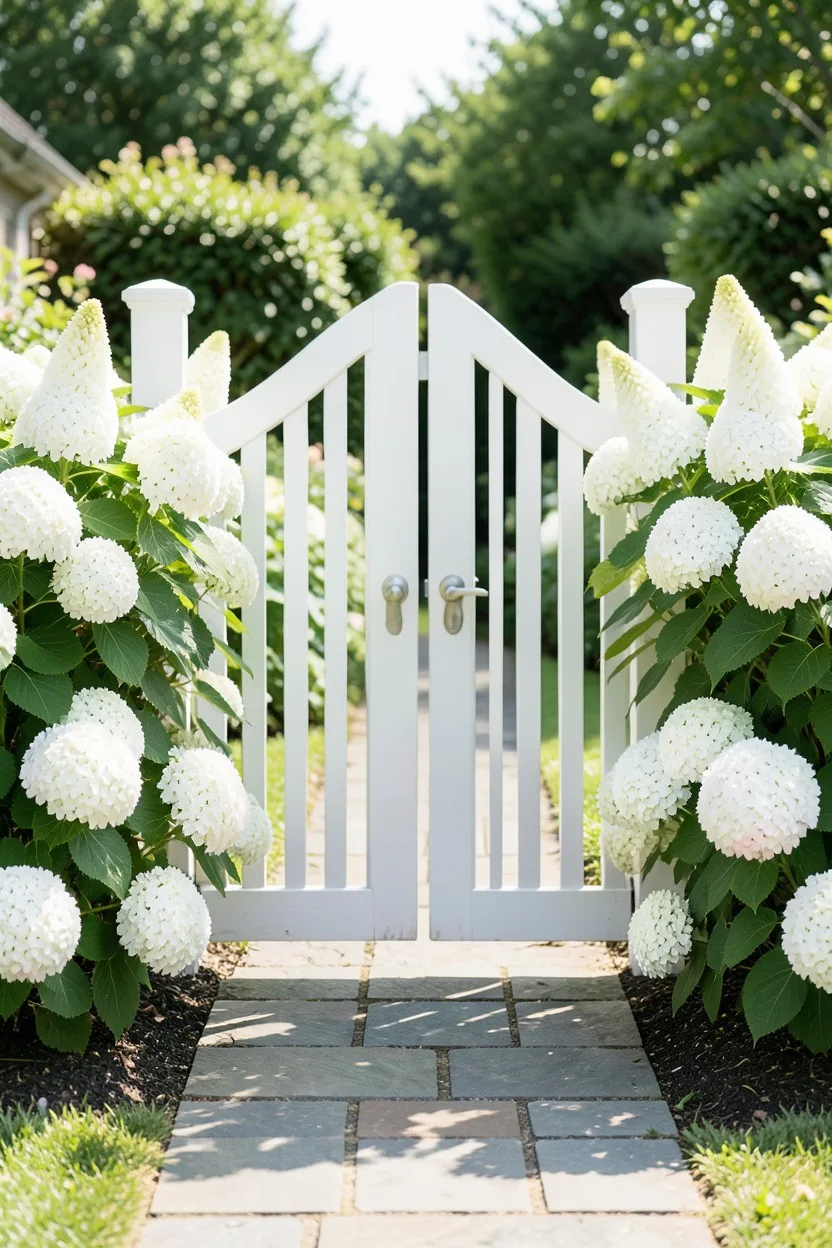
Planting a single shrub next to a gate looks like an afterthought, leaving the entrance feeling unbalanced and incomplete. Instead, create an intentional transition zone by anchoring both sides of a garden gate or arbor with a matched pair of Bobo panicle hydrangeas.
Bobo is a dwarf variety that tops out at just three feet tall, making it the perfect choice for high-traffic entryways where larger shrubs would spill over and block the path. Space each plant two feet away from the gateposts so they have room to breathe without crowding the hardware. In mid-summer, they turn into solid white mounds of blossoms, drawing guests into the next section of your yard like a formal white carpet.
6. Textural All-White Borders with Glossy Evergreen Backdrops
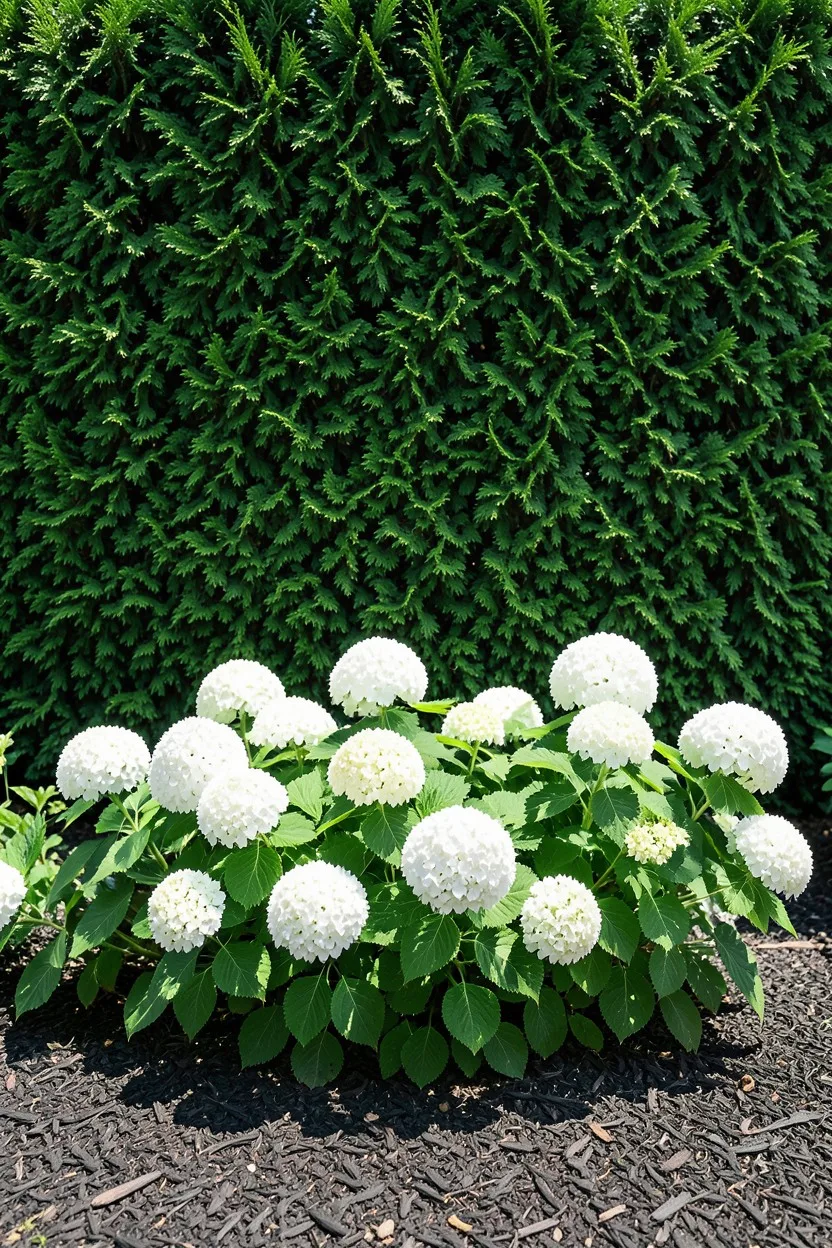
If you want your white hydrangeas to look like a crisp, intentional design feature rather than a chaotic jumble, you must control the background. Plant a solid wall of dark green, glossy evergreen shrubs along your property line first, then set your hydrangeas directly in front of them.
Background varieties: Use a dense hedge of Nellie Stevens holly, skip laurel, or dark green yews like Taxus x media Hicksii. The visual payoff: When the white lacecap or mophead flowers open in July, the dark, solid green backdrop acts like a velvet curtain, forcing the eye to focus entirely on the delicate, bright white petals. This layout also maintains structural interest during winter when the hydrangeas drop their leaves.
Best Evergreen Backdrops
7. Formal Walkway Allee Formed by Matched Standards
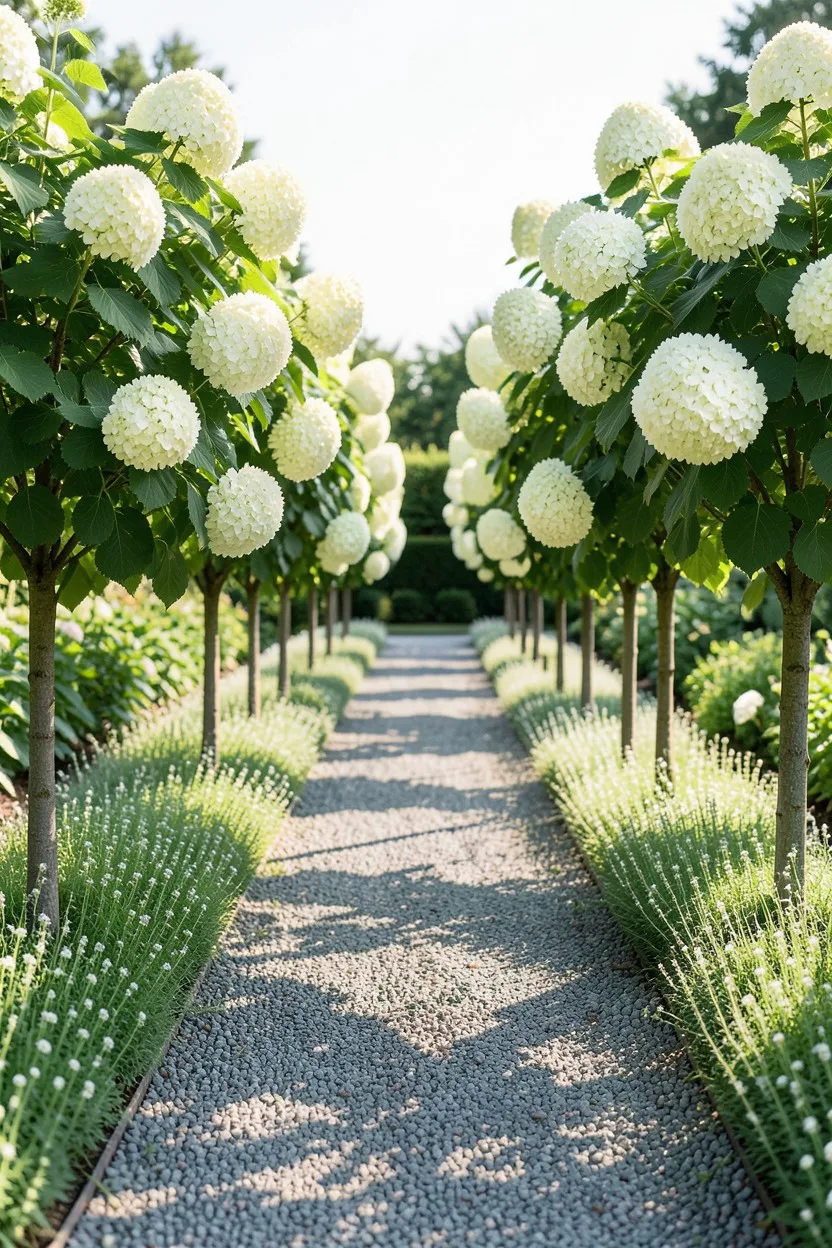
Most people grow hydrangeas exclusively as low, multi-stemmed shrubs, completely missing out on the architectural elegance of standard tree-form varieties. To elevate a long garden path or driveway, line the route with tree-form Limelight or Phantom hydrangeas pruned to a single, clear central trunk.
Space these hydrangea trees exactly six feet apart along both sides of your walkway. This layout lifts the massive blooms up to eye level, creating a grand, formal breezeway experience. Underplant the base of each trunk with a low, solid carpet of dark green English ivy or white-blooming annuals like sweet alyssum to hide bare soil and anchor the vertical trunks.
8. Relaxed Woodland Paths with Mixed Native Ferns
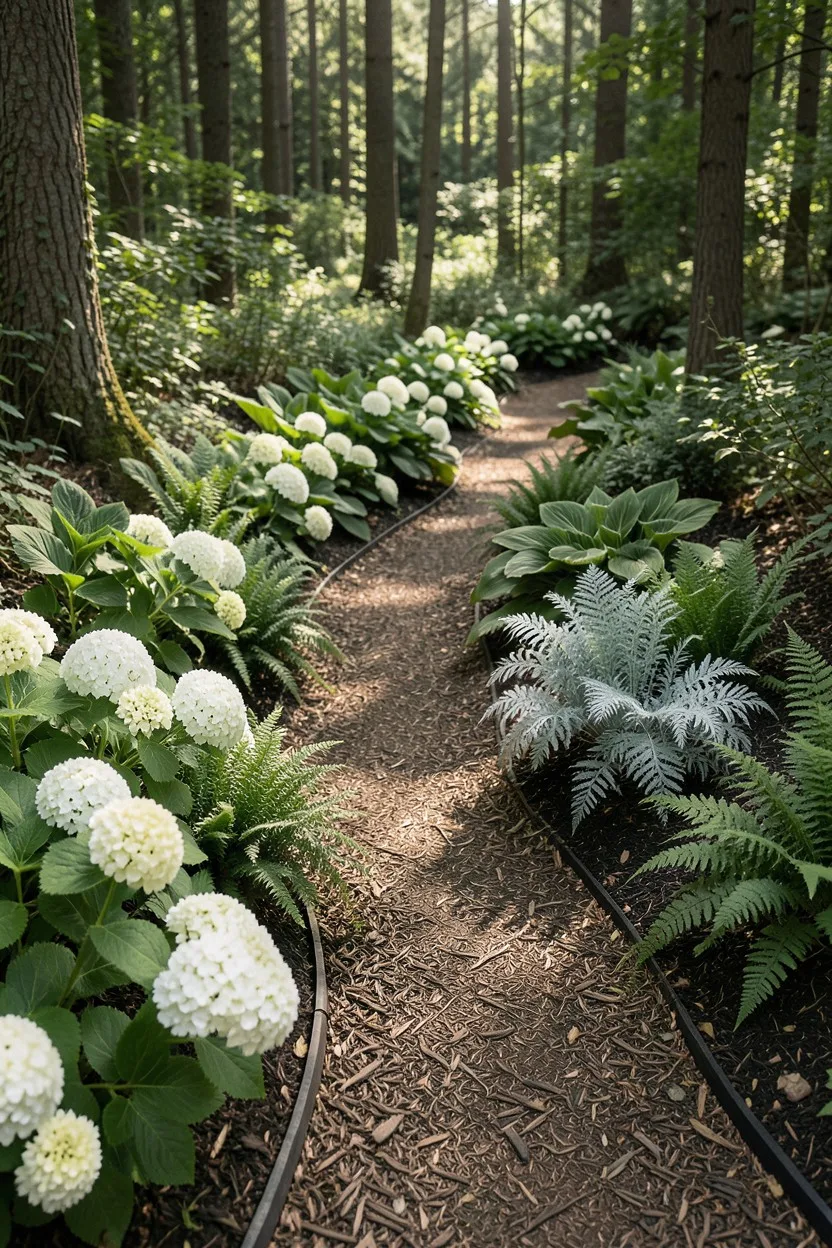
For a softer, less structured garden zone, skip the straight lines and create a winding gravel or woodchip path through a shaded area of your yard. Plant a wild, irregular mixture of native smooth hydrangeas and delicate shade-loving perennials right along the path edges.
Specific companions: Group wild Annabelle hydrangeas with Christmas ferns, Japanese painted ferns, and large-leafed hostas like Sum and Substance. Why this works: The contrasting leaf textures—massive round hydrangea leaves mixed with fine, feathery fern fronds—keeps the shaded bed visually interesting even when the plants are not in bloom. This layout requires zero pruning or staking, letting the plants naturally spill into the walking space.
⚠️ COMMON MISTAKE
Avoid Dense Overhead Overhead Watering
Never use oscillating lawn sprinklers over the top of your shaded hydrangea beds. Heavy overhead water traps moisture inside the dense flower heads, causing the delicate white petals to rot, turn a muddy brown, and develop powdery mildew long before the season ends. Use soaker hoses instead.
9. Cozy Patio Enclosures with Potted Architectural Specimens
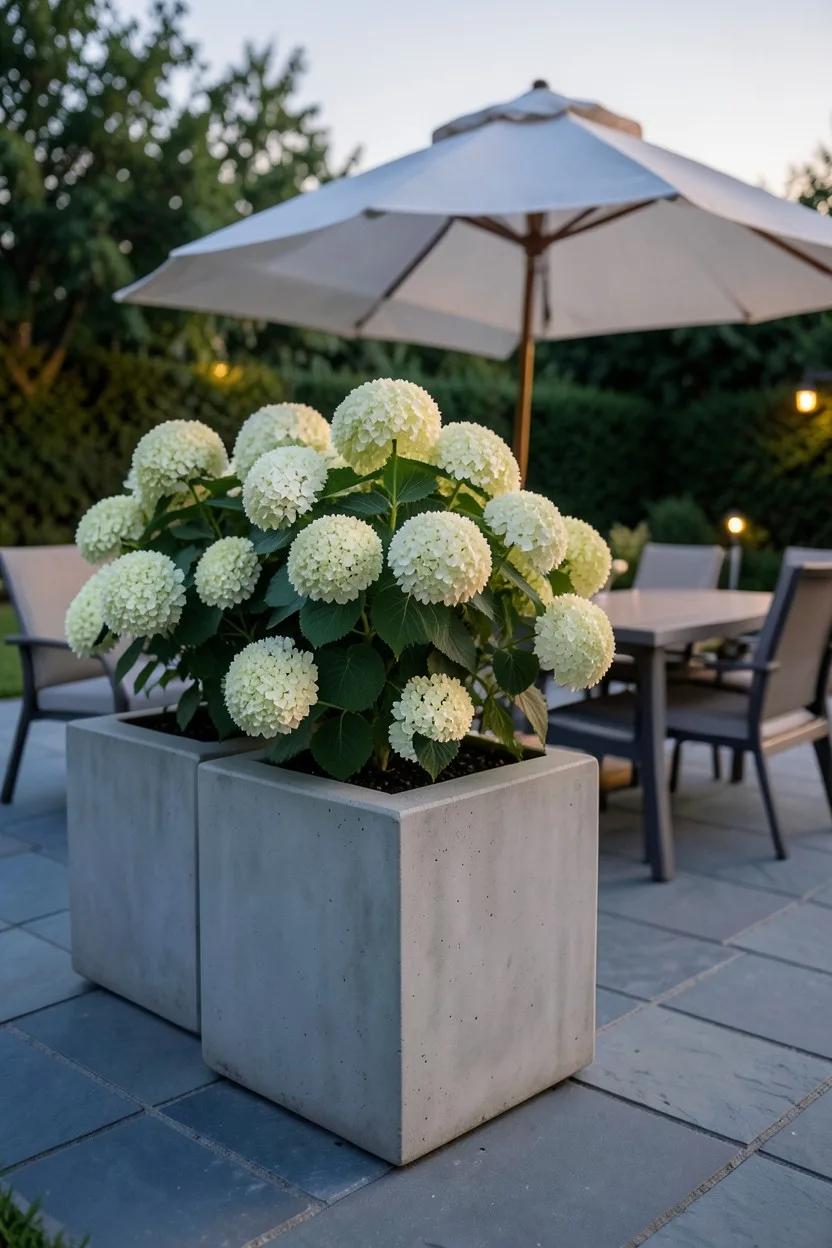
You do not need a massive suburban yard or an open acre of soil to grow high-impact white hydrangeas. If you have a paved stone patio, deck, or urban brick courtyard, use oversized, weatherproof containers to create a movable, living privacy screen.
Choose heavy, large-scale frost-proof containers like 20-inch concrete or thick terracotta planters to prevent the top-heavy shrubs from blowing over in summer storms. Plant a compact panicle variety like Little Lime or Fire Light Tidbit. Position three or four pots in a tight row along the edge of your seating area to block unwanted views with a solid wall of white blooms and clean green leaves.
10. Softening Harsh Corner Fences with Tiered Triangle Clusters
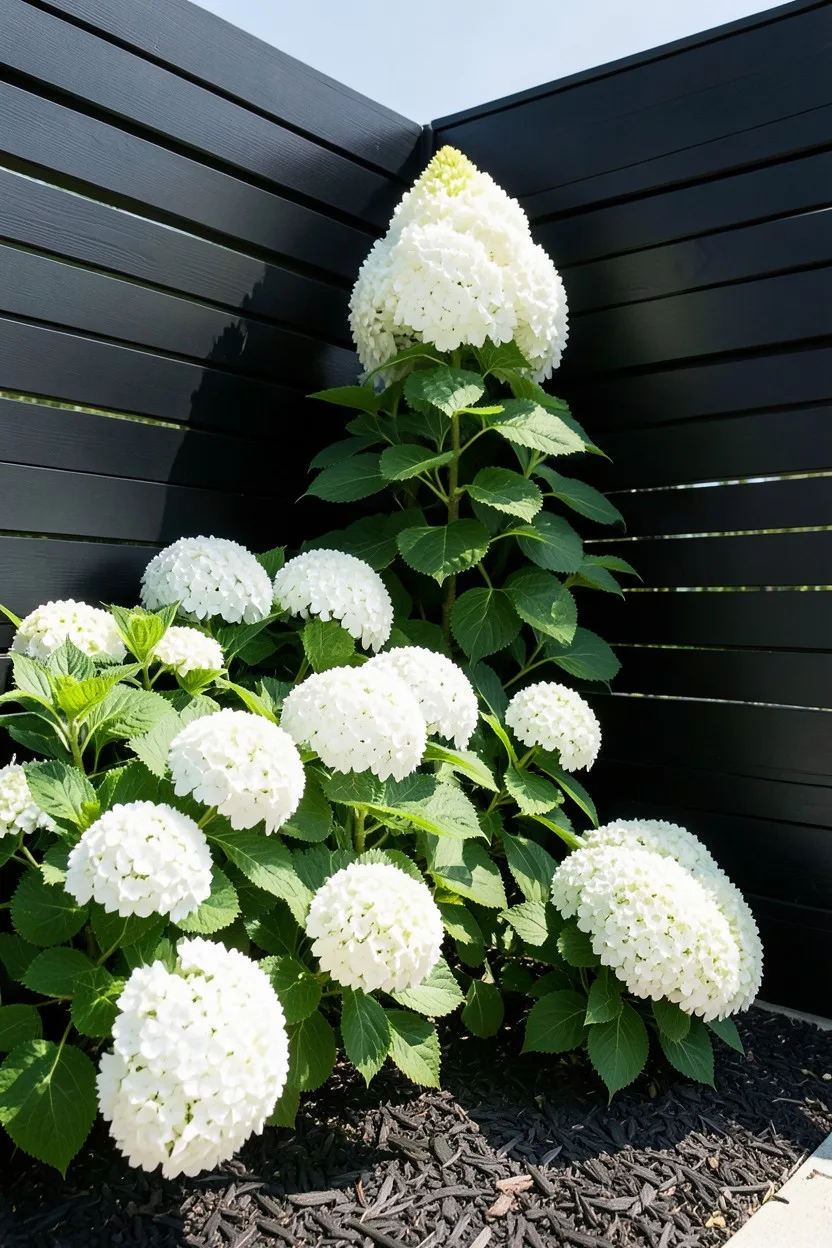
Leaving the corners of your property lines bare or stuck with a single generic evergreen tree creates a harsh, boxed-in feeling that makes small yards look even smaller. Break up those rigid 90-degree angles by planting a tiered triangular cluster of three white hydrangeas directly into the corner.
Place one tall panicle variety like Phantom or Quick Fire right in the deep corner point to act as the highest vertical element. Then, plant two shorter smooth varieties like Incrediball three feet in front of it, spacing them to the left and right. This triangular layout creates a smooth, blooming curve that pushes the visual boundaries of your yard outward, turning a dead corner into a soft focal point.
Limelight Panicle Hydrangea — At a Glance
🌡️ Hardiness
USDA Zones 3–9
🌱 Bloom Style
Large conical panicles
📏 Mature Size
6–8 feet tall & wide
☀️ Sun Exposure
Full sun to partial shade
✂️ Pruning Time
Late winter before leaf-out
🏡 Best Layout
Symmetrical foundation rows
Superpower
Possesses exceptionally thick, rigid woody stems that never flop, even under heavy downpours.
11. Textural Mixed Shrub Hedges with Structural Boxwood Globes
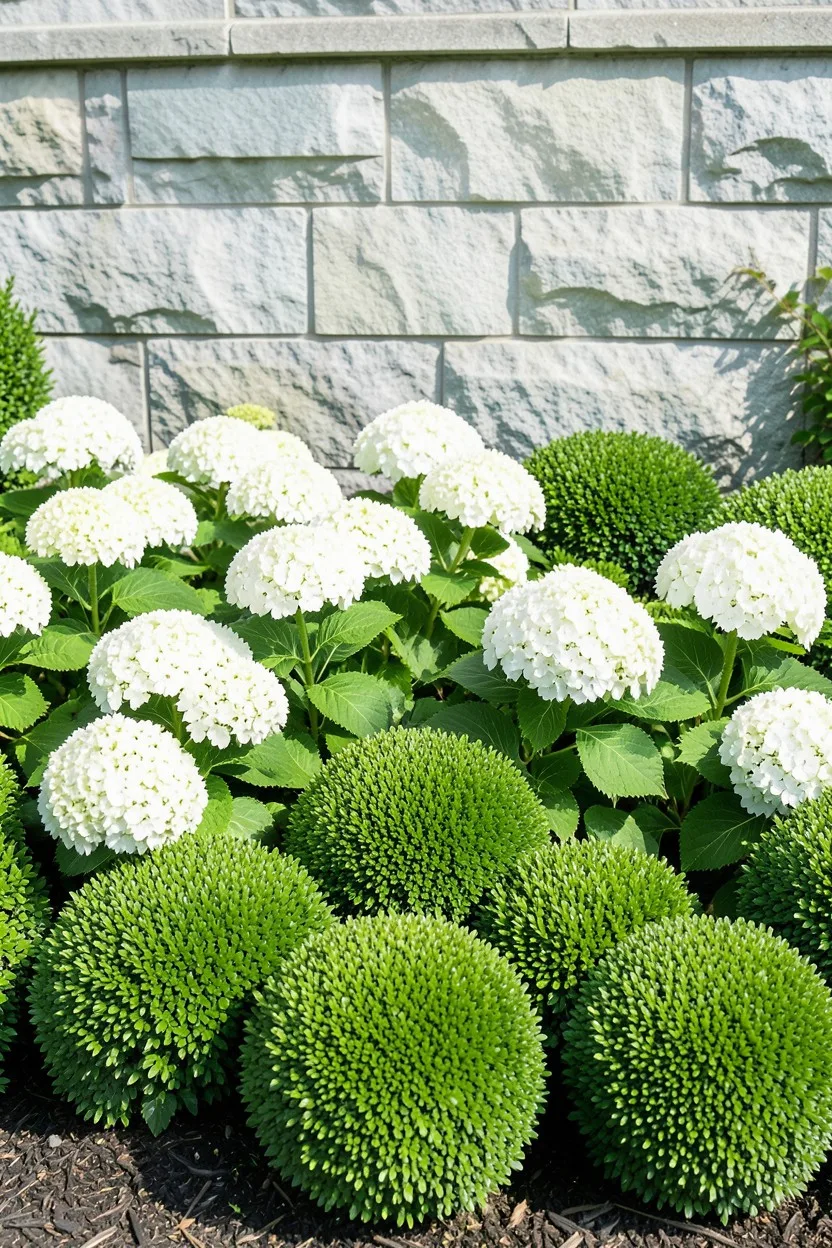
A common mistake is planting an entire hedge of hydrangeas and forgetting that they turn into bare, twiggy sticks during winter. To keep your landscaping looking expensive and structured all year long, interweave your white hydrangeas with tightly sheared evergreen spheres.
Plant your white mophead hydrangeas at four-foot intervals, and drop a structural, two-foot rounded boxwood globe (like Green Velvet or Winter Gem) into the gaps between each shrub. During summer, the wild, blowing white flowers will contrast beautifully with the stiff, formal green globes. When winter arrives and the hydrangeas drop their leaves, the green boxwood spheres remain, maintaining a clean, intentional design pattern.
12. Picturesque Climbing Displays Against Whitewashed Brick Walls
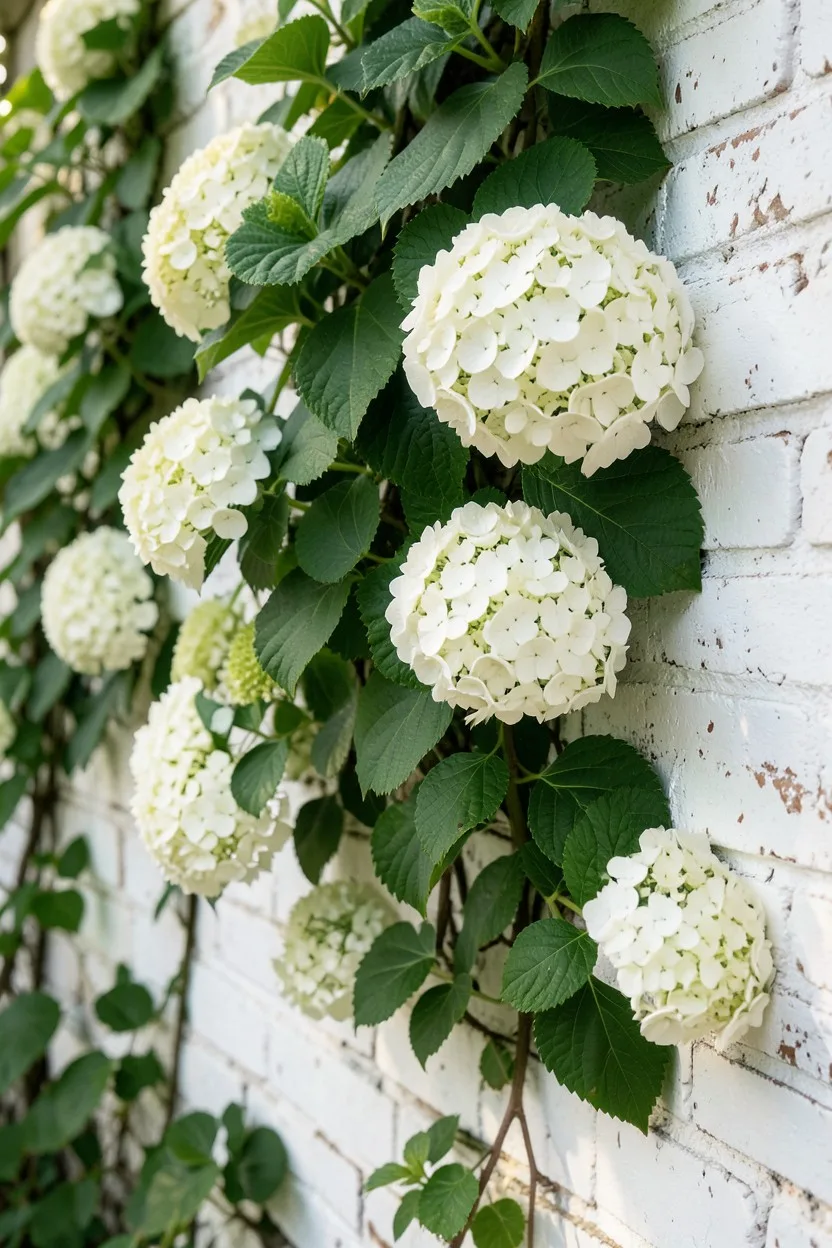
When people think of hydrangeas, they usually picture freestanding bushes, completely overlooking the incredible vertical power of true climbing varieties. If you have a bare brick wall, a sturdy chimney structure, or a heavy wooden pergola, use a climbing hydrangea called Hydrangea anomala subsp. petiolaris.
Unlike standard vines that require messy wire trellises, climbing hydrangeas produce tiny aerial rootlets that cling directly to brick, stone, and rough wood on their own. Plant one at the base of your wall in rich, organic soil. Within a few seasons, it will climb up to thirty feet high, covering the brick with glossy green foliage and flat, lacy white flower clusters that look like antique lace cascading down the masonry.
💡 PRO TIP
Establish Climbing Hydrangeas Quickly
Climbing hydrangeas are notoriously slow starters during their first two years in the ground—a phase gardeners call the sleep period. To speed up their growth, secure the main stems flat against the brick wall using heavy-duty outdoor masonry clips and keep the root zone consistently moist with regular watering.
13. Gravel Courtyard Anchors for a Clean Mediterranean Feel
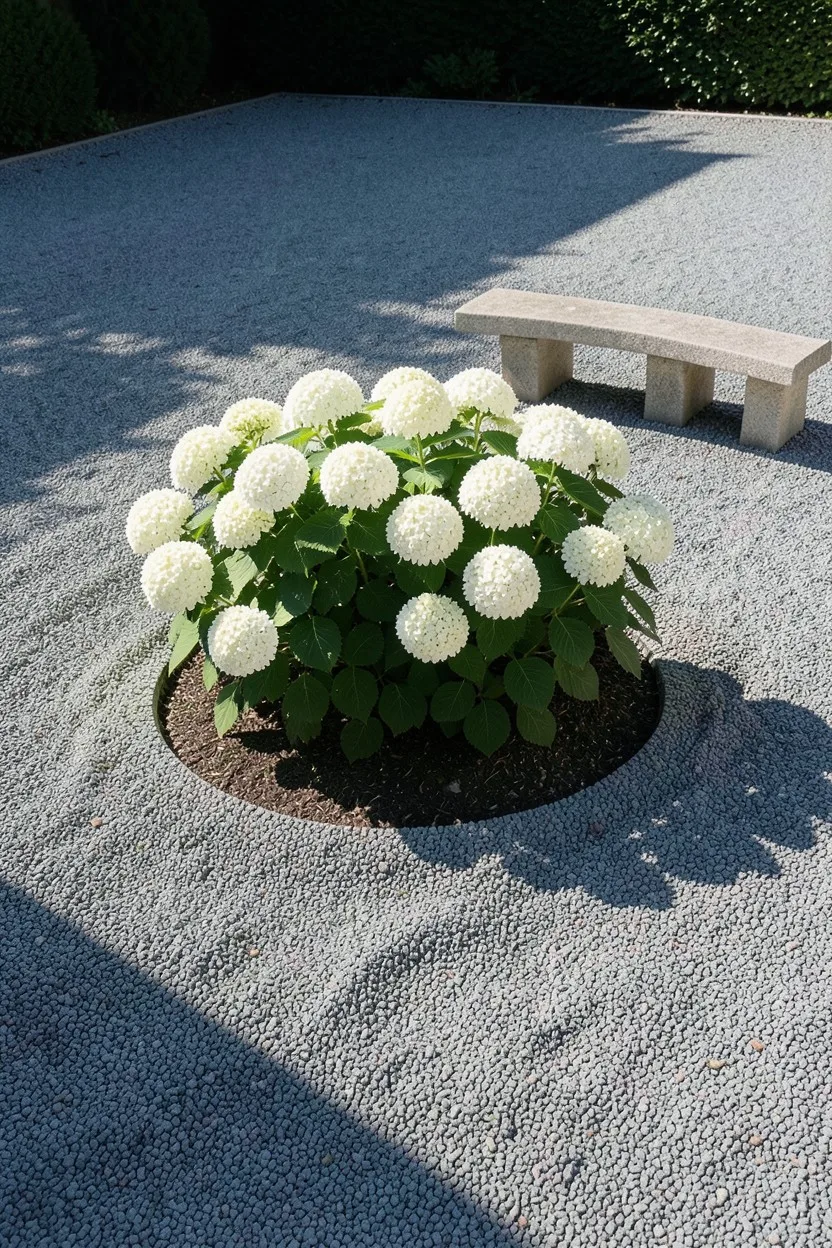
If you want to design a low-water, high-style space that feels like a quiet courtyard in Europe, skip the traditional open green lawn entirely. Convert a sunny section of your yard into a flat expanse of clean gray pea gravel or crushed granite, and use white hydrangeas as structural anchors.
Cut out large, circular planting pockets directly into the gravel layout, space them six feet apart, and plant a heat-tolerant panicle variety like Tardiva or Unique. Mulch the interior of the planting rings with dark compost to retain moisture, leaving the surrounding gravel stark and clean. The massive white flower heads look striking against the minimalist stone floor, giving you a high-contrast, modern landscape that needs minimal weeding.
14. Relaxed Border Groupings with Soft Blue Companion Accents
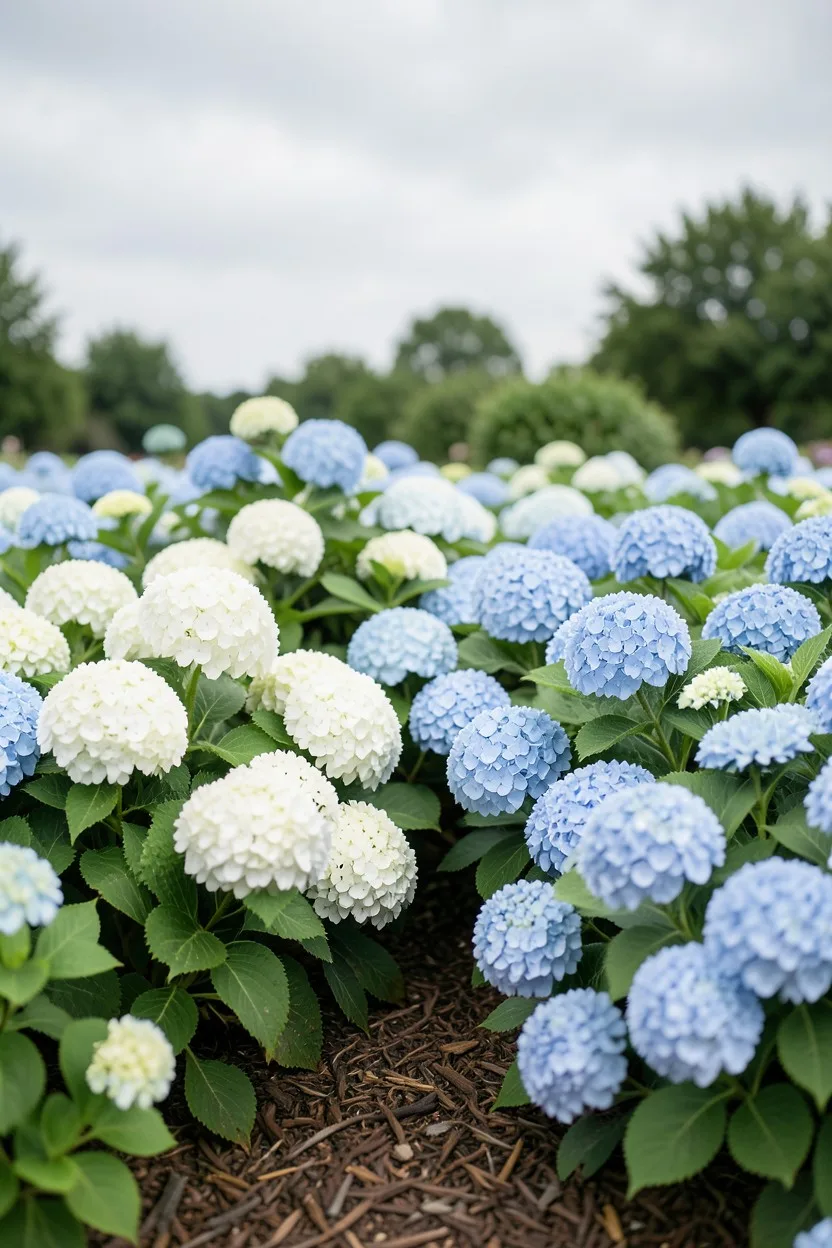
While bold contrast looks great from the street, sometimes you want a softer, more peaceful color palette for a private backyard patio or a quiet bedroom window view. Create a classic, cool-toned oasis by mixing white mophead hydrangeas with soft sky-blue varieties.
Variety selection: Use white Incrediball hydrangeas alongside a reliable reblooming blue variety like Endless Summer or Nikko Blue. Soil adjustment: Keep your soil pH acidic (around 5.2 to 5.5) by adding aluminum sulfate to the bed. This does not change the color of your white hydrangeas, but it forces the neighboring blue varieties to turn an intense, clear sky-blue, creating a gorgeous pastel blend that looks cool and inviting during the hottest weeks of July.
🌱 Your Weekend Hydrangea Planting Blueprint
Dig the Pit
Dig a planting hole exactly twice as wide as the nursery container and just as deep.
Amend the Soil
Mix two inches of organic leaf compost directly into the native soil at the bottom of the hole.
Loosen Root Balls
Score the sides of the container root ball with a clean knife to encourage outward growth.
Set the Level
Place the shrub into the hole, ensuring the soil line matches the container depth exactly.
Drench and Mulch
Water the base thoroughly with five gallons of water, then apply three inches of shredded pine mulch.
15. Graceful Poolside Backdrops for Cool Summer Reflections
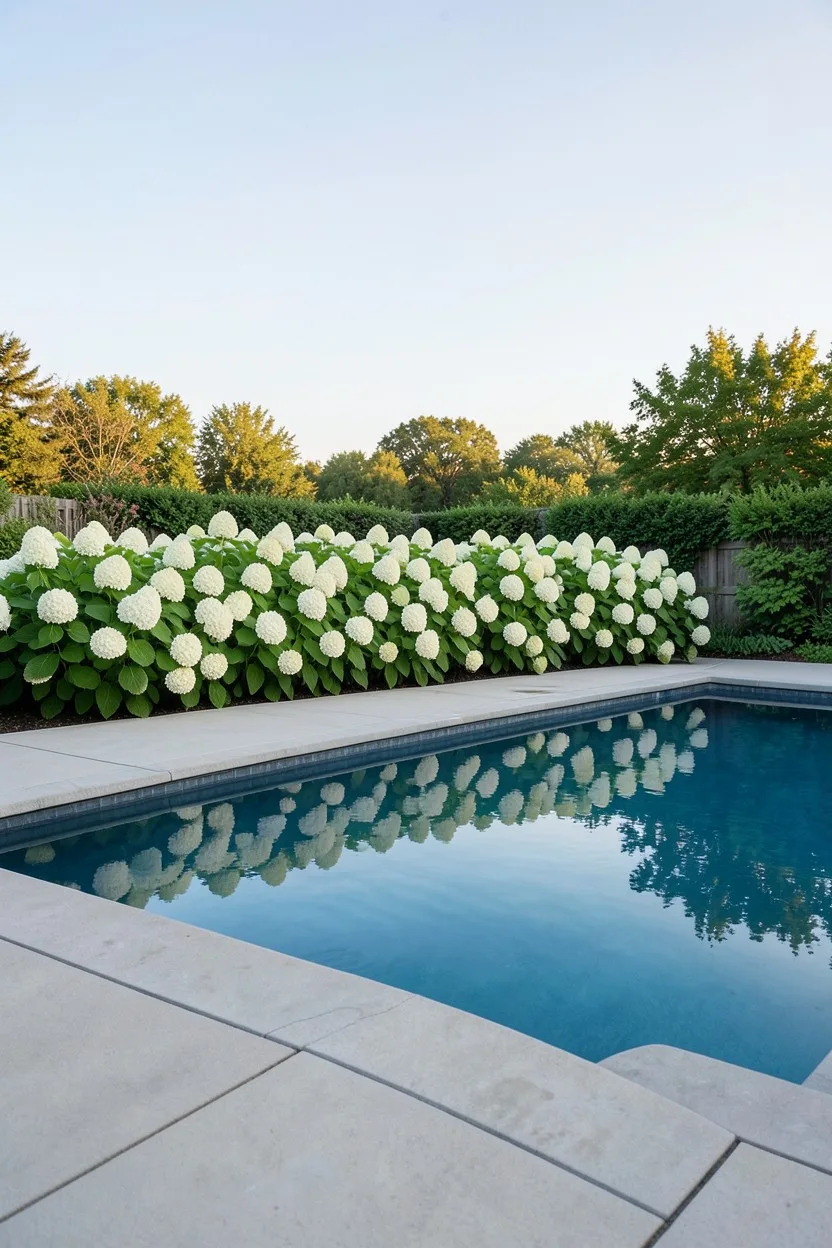
Planting around a swimming pool is tricky because you need shrubs that offer privacy and summer color without dropping messy berries, sticky sap, or constant small leaves into your filtration system. White panicle hydrangeas are the ultimate solution for clean, poolside luxury.
Plant a continuous row of Limelight or Little Lime hydrangeas five feet back from your pool concrete decking. The massive white flower heads bloom continuously through the peak swimming season, providing a lush privacy barrier that blocks neighbors' views. As an added bonus, the heavy white blooms reflect beautifully in the calm blue water on quiet summer evenings, doubling the visual impact of your landscaping.
Final Thoughts
If you only add one layout from this list to your yard this season, make it the evergreen backdrop pairing with a solid row of panicle hydrangeas. This specific combination solves the classic mistake of winter bareness while giving the large summer blooms the deep green contrast they need to truly pop. Skip the generic multi-color assortments, invest in high-quality varieties like Limelight or Incrediball, and place them where they can structuralize your garden boundaries for decades to come.

John Smith is the founder and CEO of Karaoke Machines Guru. He is a karaoke tutor and karaoke enthusiast and has been passionate about karaoke since he was a child. He also writes about karaoke-related tips, guides, and product reviews on this website.
He overlooks the whole website and makes sure that everything is running smoothly. Learn more!