
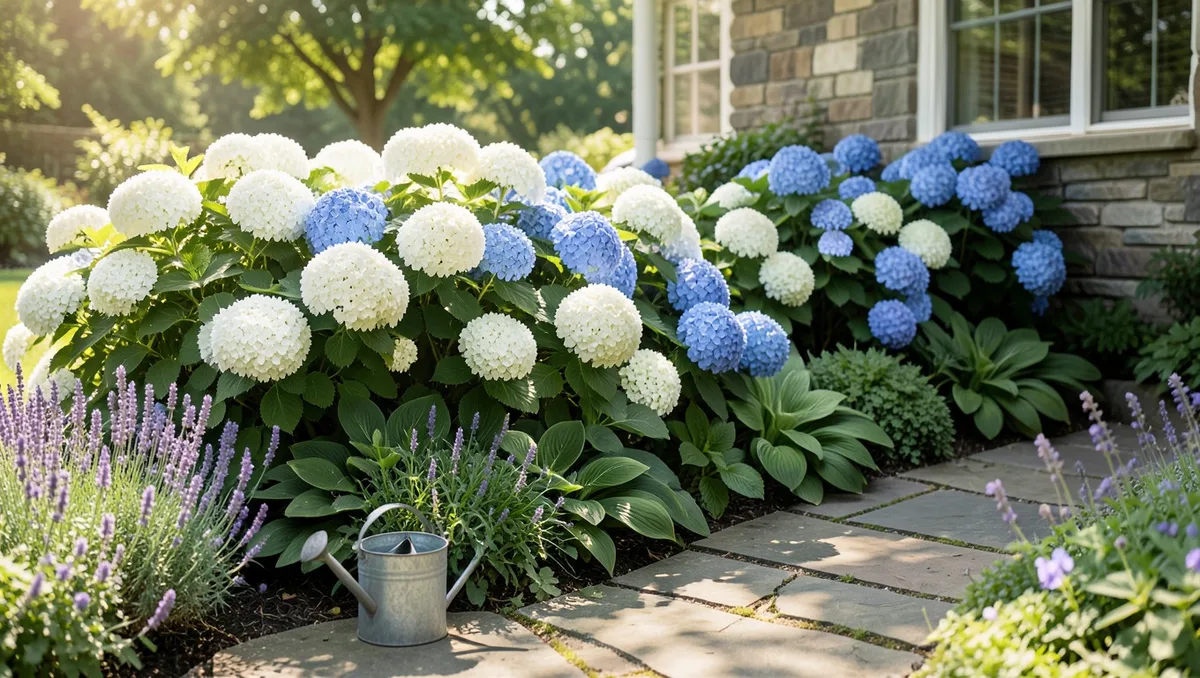
Most front-yard foundation plantings are entirely forgettable: a predictable row of clipped boxwoods, a lonely dwarf conifer, and maybe some tired mulch. If you want your home to look like an architectural feature rather than a suburban cookie-cutter house, you need substantial volume, evolving texture, and intense color. Hydrangeas provide exactly that kind of designer impact, acting as a living frame that softens harsh foundation lines and anchors your house to the surrounding landscape.
Over the years in my own gardens, I have made every classic mistake with these shrubs, from planting sun-loving panicles in deep, dank shade to crowding soft macrophyllas right against hot concrete walkways. Here is what I learned through trial and error: a professional-looking border requires careful layering, deliberate choice of variety, and a strict refusal to settle for a single, lonely plant. Let us break down how to design a high-impact border using real design principles that work for your specific home layout.
Quick Tips Before You Start
Measure Spacing
Always space hydrangeas based on their mature width, not their size in the nursery pot.
Check Sunlight
Track your border's sun exposure for one full day before selecting your specific varieties.
Test Your Soil
Determine your soil pH if you plan to grow blue or pink bigleaf varieties.
Plan Irrigation
Install drip lines before planting to keep these water-loving shrubs consistently hydrated.
1. The Classic Monochromatic Limelight Hedge
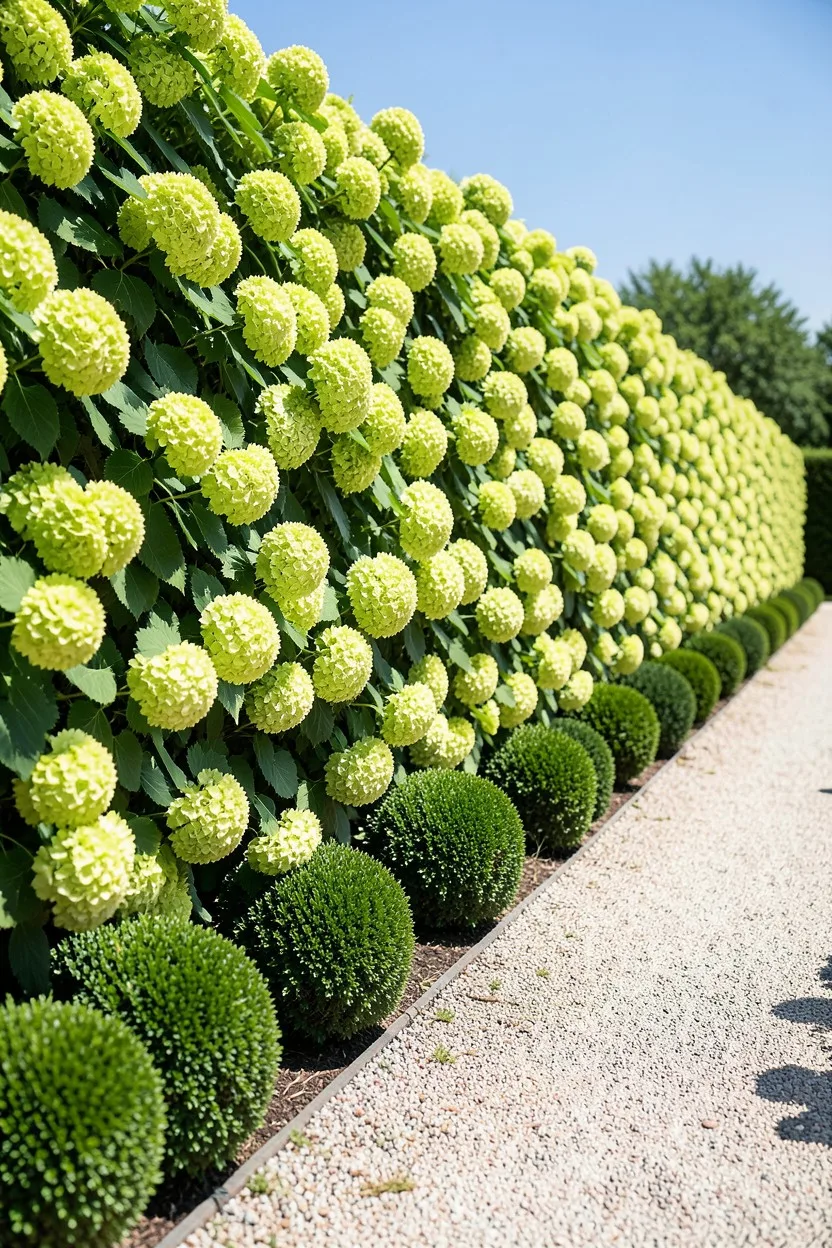
Everyone tells you to mix and match colors in a border, but a solid, uninterrupted line of a single variety creates a formal architectural statement that stops traffic. The 'Limelight' panicle hydrangea is the absolute gold standard for this technique because its stiff, woody stems hold massive flower heads high without a hint of flopping.
Plant a straight row of these shrubs spaced exactly 4.5 feet apart along a long driveway or a blank foundation wall. In mid-summer, they burst into a solid wall of crisp, chartreuse-green blooms that gradually mature to a brilliant white, then age to a dusty rose by October. This single-variety approach works exceptionally well against dark charcoal or classic red-brick homes, providing a clean, deliberate contrast that looks incredibly high-end.
💡 Tip: Prune Limelights back by one-third every spring to encourage sturdier stems and larger blooms.
Limelight Hydrangea — At a Glance
🌡️ Hardiness Zones
Zones 3–9
☀️ Sun Exposure
Full sun to part shade
📏 Mature Size
6–8 feet tall and wide
✂️ Pruning Time
Late winter or early spring
Design Superpower
Stiff, upright wood that never flops under the weight of heavy summer rains.
2. Layered Heights with Dwarf Panicles
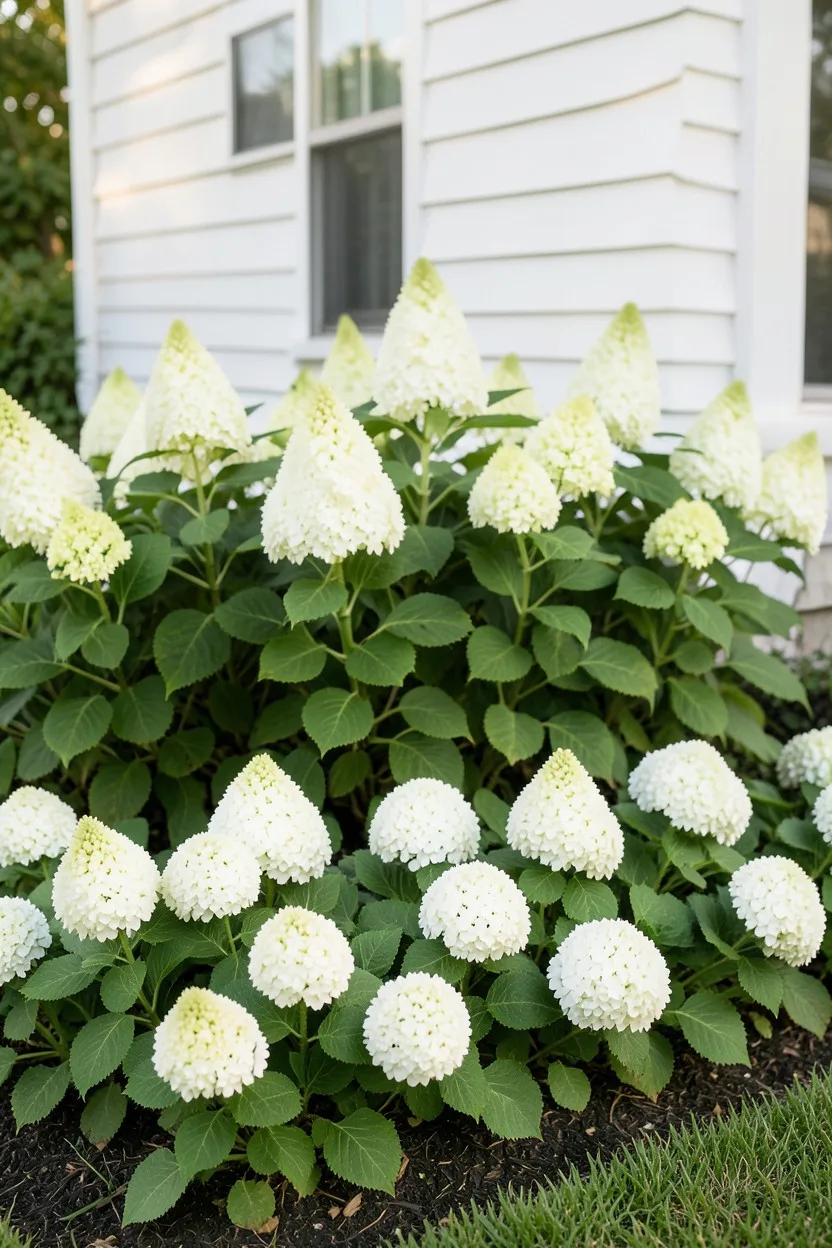
Acknowledge the variation in your space by stepping down your heights like a staircase. If you put standard six-foot shrubs right at the front of your border, you bury your walkway and block your windows. Instead, establish a clear multi-tiered hierarchy using dwarf varieties.
Place standard 'Limelight' or 'Phantom' hydrangeas directly against the house wall as your tall back row. Then, offset a second row of 'Little Lime' or 'Bobo' hydrangeas directly in front of them, spaced in a zigzag pattern. 'Bobo' maxes out at a compact three feet, meaning it will create a dense apron of white flowers that completely hides the bare wooden legs of the taller shrubs behind it without blocking the view.
3. The Woodland Frame Under Mature Trees
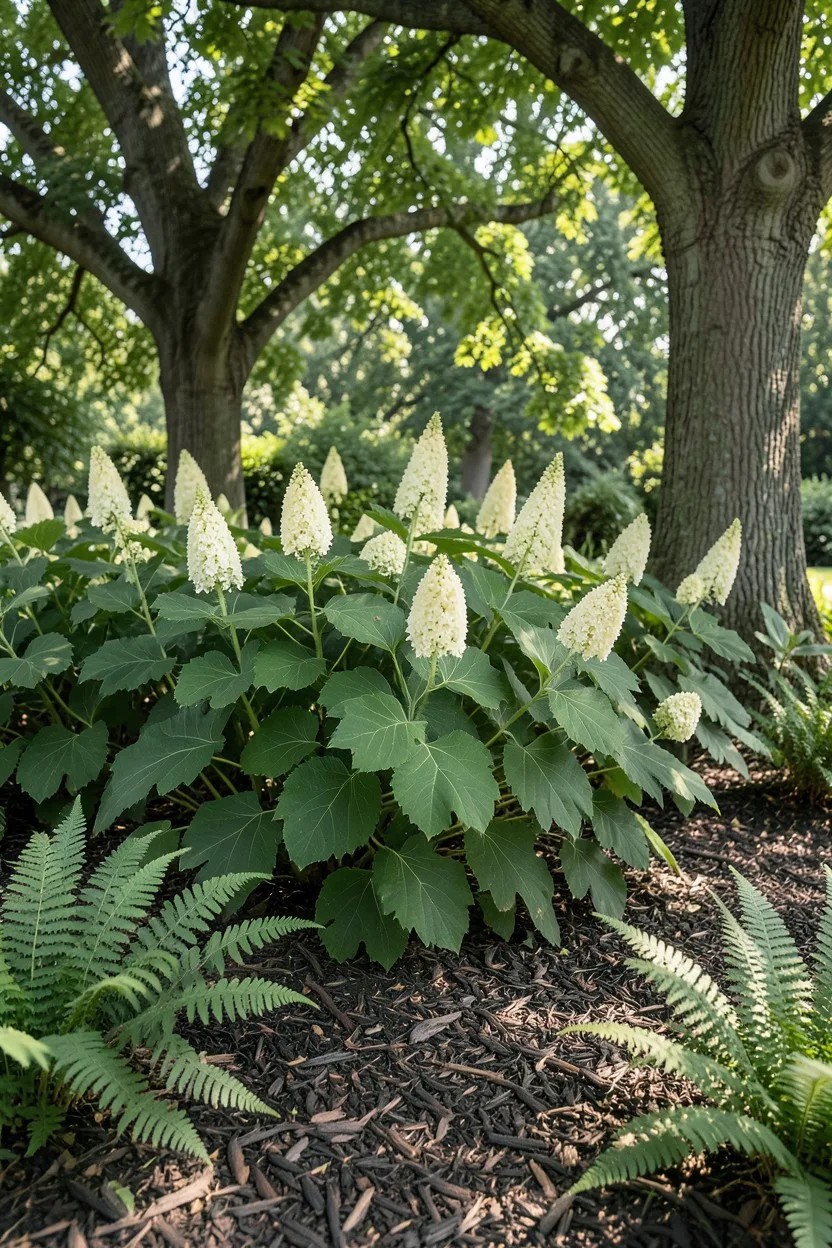
You know what nobody tells you about trying to grow bigleaf hydrangeas under old oak or maple trees? The tree roots will steal every drop of water before the shrub can taste it, and the deep shade results in zero flowers. If you have a shaded border beneath a heavy canopy, you must shift your plant choice entirely to native oakleaf hydrangeas.
Varieties like 'Alice' or the compact 'Ruby Slippers' thrive in dappled woodland light and possess a much tougher, drought-tolerant root system once established. Their deeply lobed, oak-like leaves offer a dramatic textural contrast to standard garden foliage, and their long, creamy panicles age to a stunning deep pink. As a major bonus, their leaves turn brilliant shades of mahogany and crimson in November, giving your border a whole second life when other hydrangeas look dead.
🌱 GROWING TIP
Watering Requirements Under Tree Canopies
When planting oakleaf hydrangeas beneath established trees, run a dedicated soak line at the base of the shrubs. Supplement with deep watering twice a week during the first two summers to help them successfully compete with aggressive tree roots.
4. Soft Cottage Transitions Using Smooth Hydrangeas
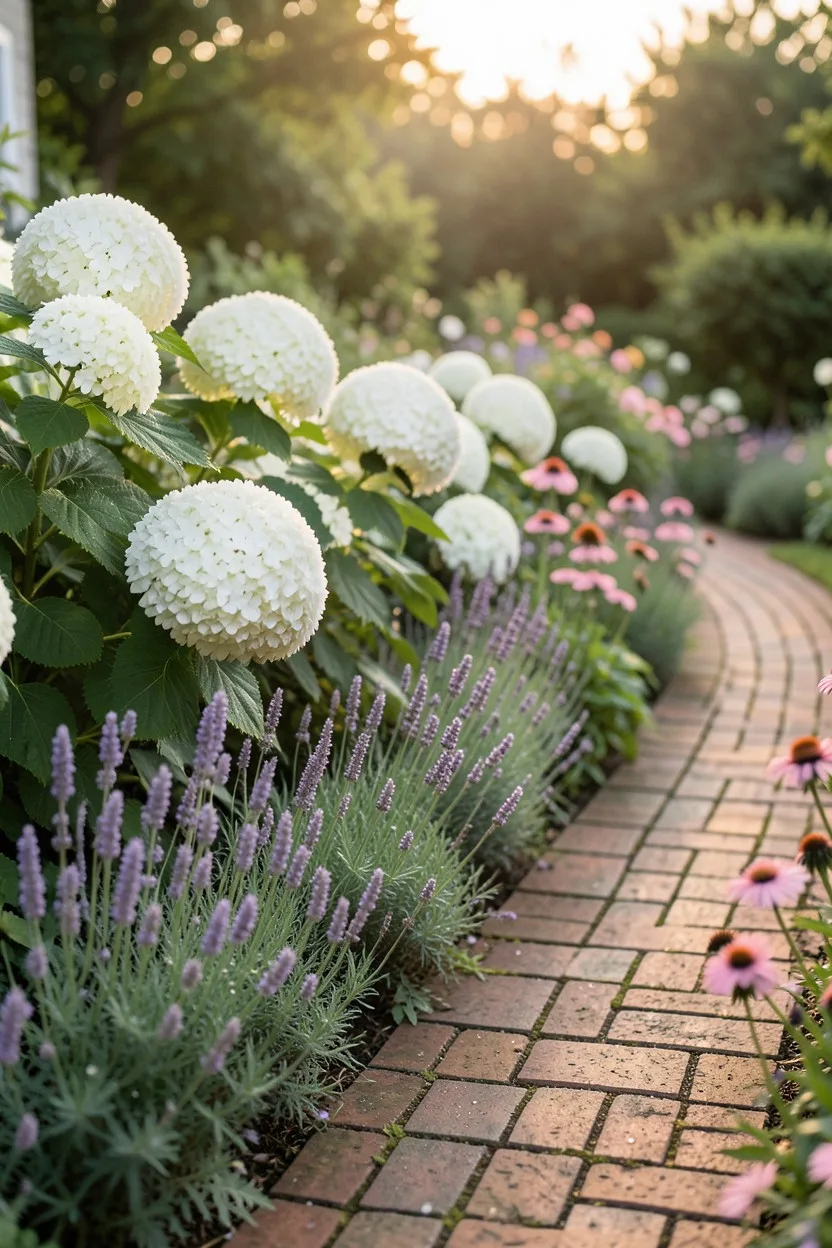
Back in my early gardening days, I tried to build a soft, romantic walkway border using stiff panicle varieties, and it looked way too aggressive and rigid. For that classic, loose cottage-garden aesthetic that spills gently over walkways, you need the delicate, thin stems of smooth hydrangeas like 'Annabelle' or 'Incrediball'.
These plants produce massive, perfectly spherical flower heads that look like floating snowballs. Because their stems are naturally more pliable, they bow slightly under the weight of the blooms, creating an organic, undulating soft edge along a brick or gravel path. Plant them alongside airy perennials like lavender, purple coneflower, and 'Walker's Low' catmint to create a dynamic, pollinator-heavy border that feels completely natural and unforced.
5. The High-Contrast Jeweled Foundation Wall
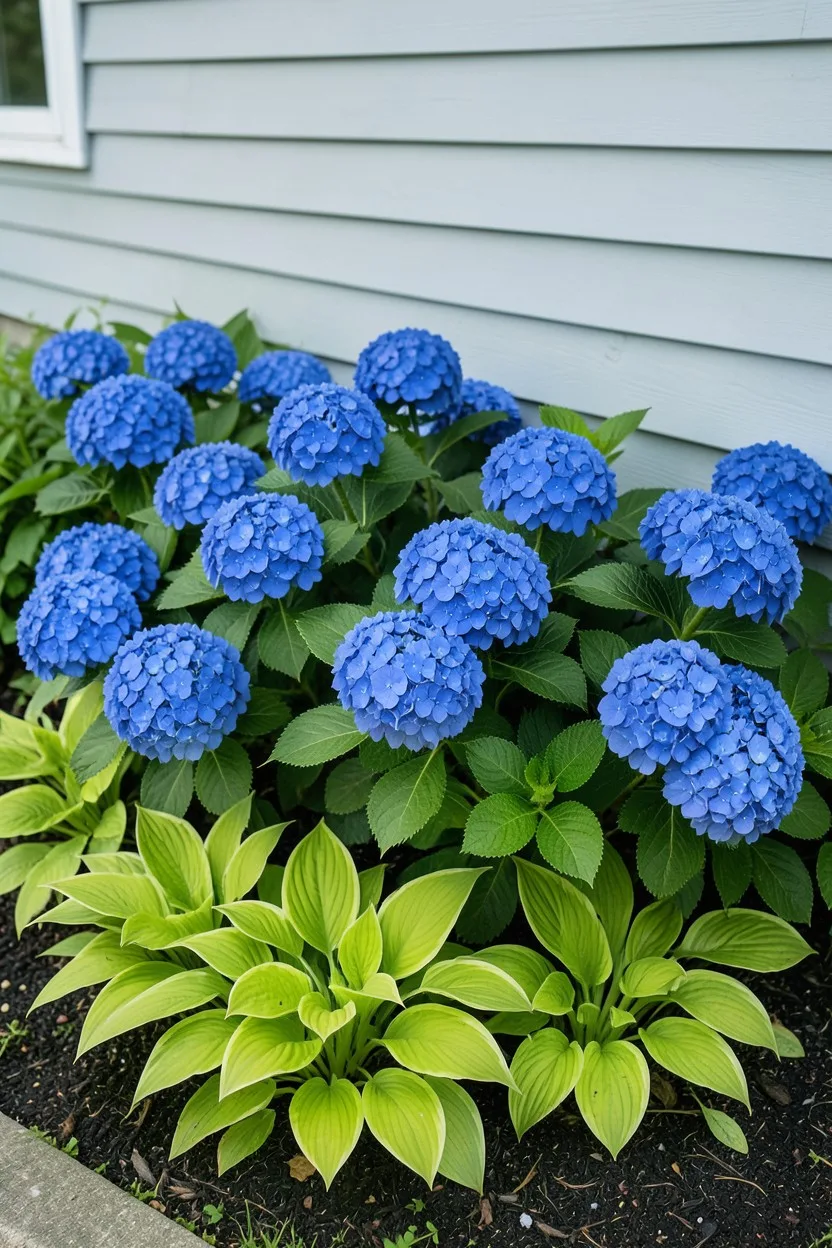
Everyone tells you to plant white hydrangeas because they are safe, but if your home features light gray stucco or pale beige siding, white blooms completely disappear against the background. State your opinion boldly by utilizing the saturated, jewel-toned colors of bigleaf hydrangeas to anchor your foundation.
Varieties like 'Nikko Blue' or the intense magenta 'Glowing Embers' provide an immediate focal point that anchors a pale house to the earth. To make this work, you must group them in clusters of three or five; a single colored shrub looks accidental and weak. Surround the base of these deep-toned shrubs with lime-green hostas like 'Sum and Substance' to make the blue or pink petals pop with an almost electric intensity.
💡 Tip: Keep bigleaf hydrangeas protected from harsh afternoon sun to prevent their intense colored petals from bleaching or burning.
6. Symmetrical Entryway Framing with Stately Standards
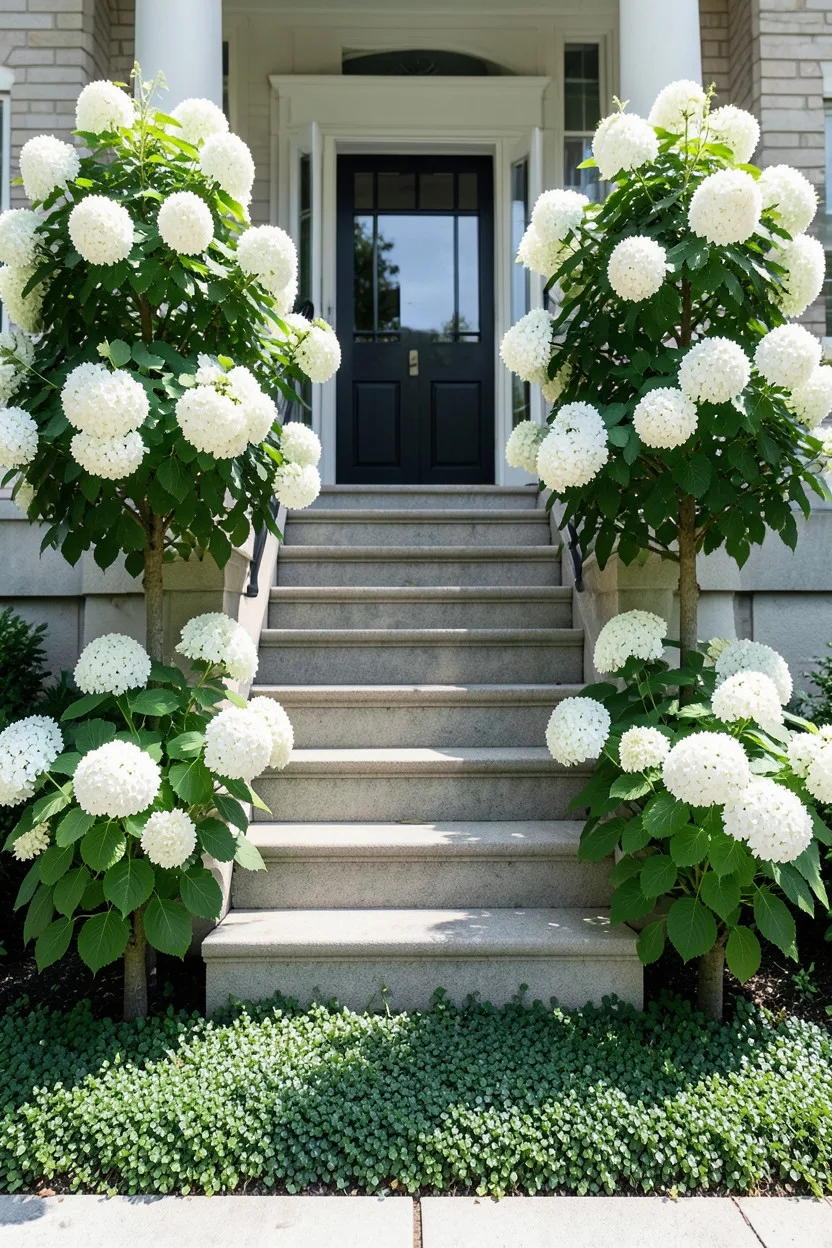
If your home features a prominent front porch, a central doorway, or a formal set of steps, standard bush hydrangeas can quickly turn into a chaotic, overgrown mess that eats up your walkway. For a clean, architectural look that mimics high-end estate design, bypass the traditional shrubs entirely and plant trained hydrangea standards instead.
A standard is simply a panicle hydrangea, such as 'Limelight' or 'Quick Fire', that has been grafted onto a single, straight woody trunk to look like a small tree. Plant one standard on exact opposite sides of your front steps to create perfect, formal symmetry. Underneath the canopy of these mini-trees, underplant with a dense, low carpet of dark green groundcovers like 'Pachysandra' or 'PJM' dwarf rhododendrons to accentuate the clean, elevated trunk lines.
Best For
7. The Extended-Season Changing Color Border
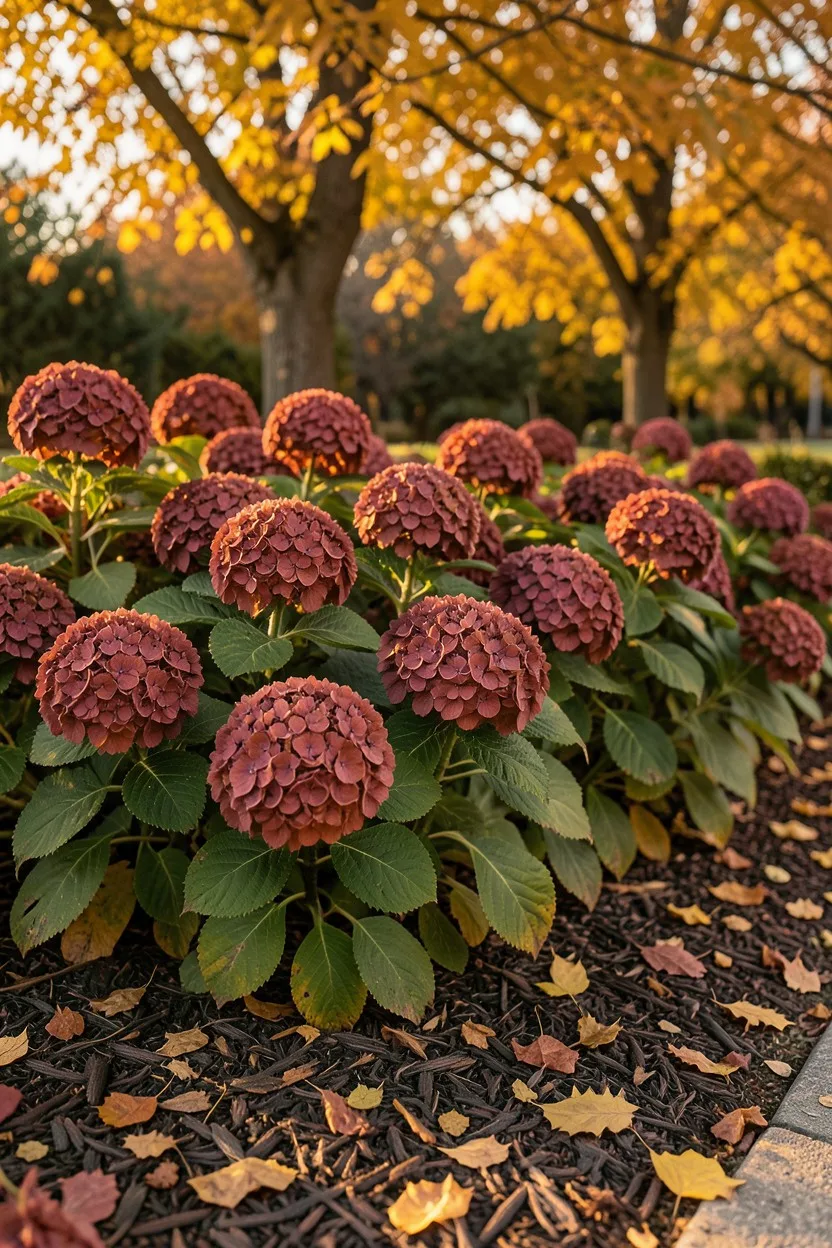
Most people pick hydrangeas based entirely on what looks prettiest at the garden center in June. That is a massive mistake because you miss out on the incredible autumn color transitions that happen later in the season. To get a border that evolves dramatically over six months, you need to plant early-blooming panicles.
Choose 'Quick Fire' or 'Little Quick Fire' as the backbone of your border. These varieties open their lacy blooms a full month before other panicles, showing off a crisp white in early summer. By August, the flowers shift to a distinct, rich pink, and by October, they deepen into a magnificent burnished copper-red. Mixing these with late-blooming 'Tardiva' hydrangeas ensures your border changes color gradually, avoiding a sudden mid-summer fade.
⚠️ COMMON MISTAKE
The Pruning Misstep with Early Bloomers
Never prune early-blooming panicles like 'Quick Fire' late in the spring. Doing so pushes their bloom time back significantly, completely ruining their ability to provide that coveted early-summer white frame.
8. The Multi-Texture Lacecap and Mophead Mix
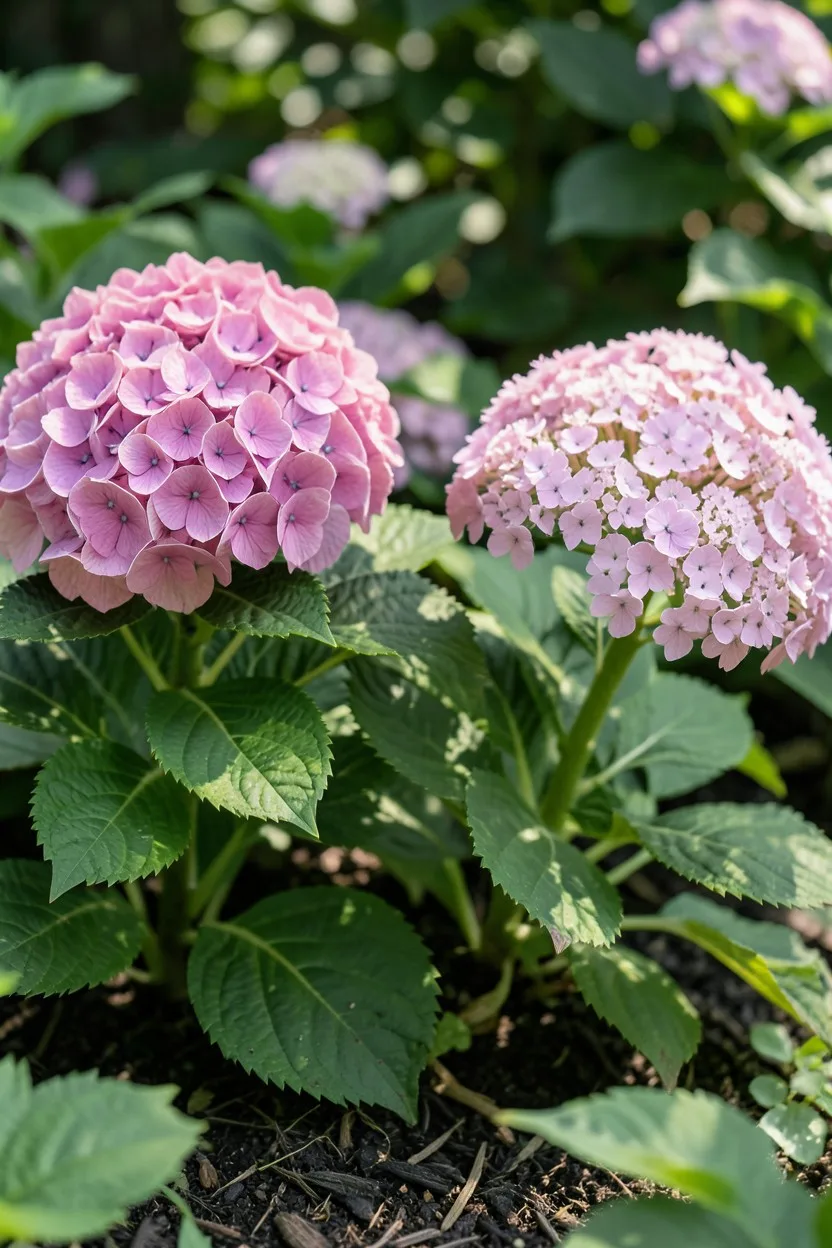
A border made entirely of heavy, round mophead hydrangeas can end up looking incredibly dense, blocky, and visually exhausting to the eye. You can break up that heavy weight by intentionally pairing them with the delicate, airy structure of lacecap hydrangeas.
Lacecaps, like 'Twist-n-Shout' or 'Blue Wave', feature a flat center of tiny, fertile buds surrounded by an outer ring of showy petals, creating a delicate, starry look. Plant them in a alternating 1-to-1 pattern along your foundation with classic, dense mopheads like 'Endless Summer'. The contrasting flower shapes create immediate visual rhythm, making your border look like it was curated by a master botanist rather than grabbed off a big-box store clearance rack.
9. Vertical Framing with Climbing Hydrangeas
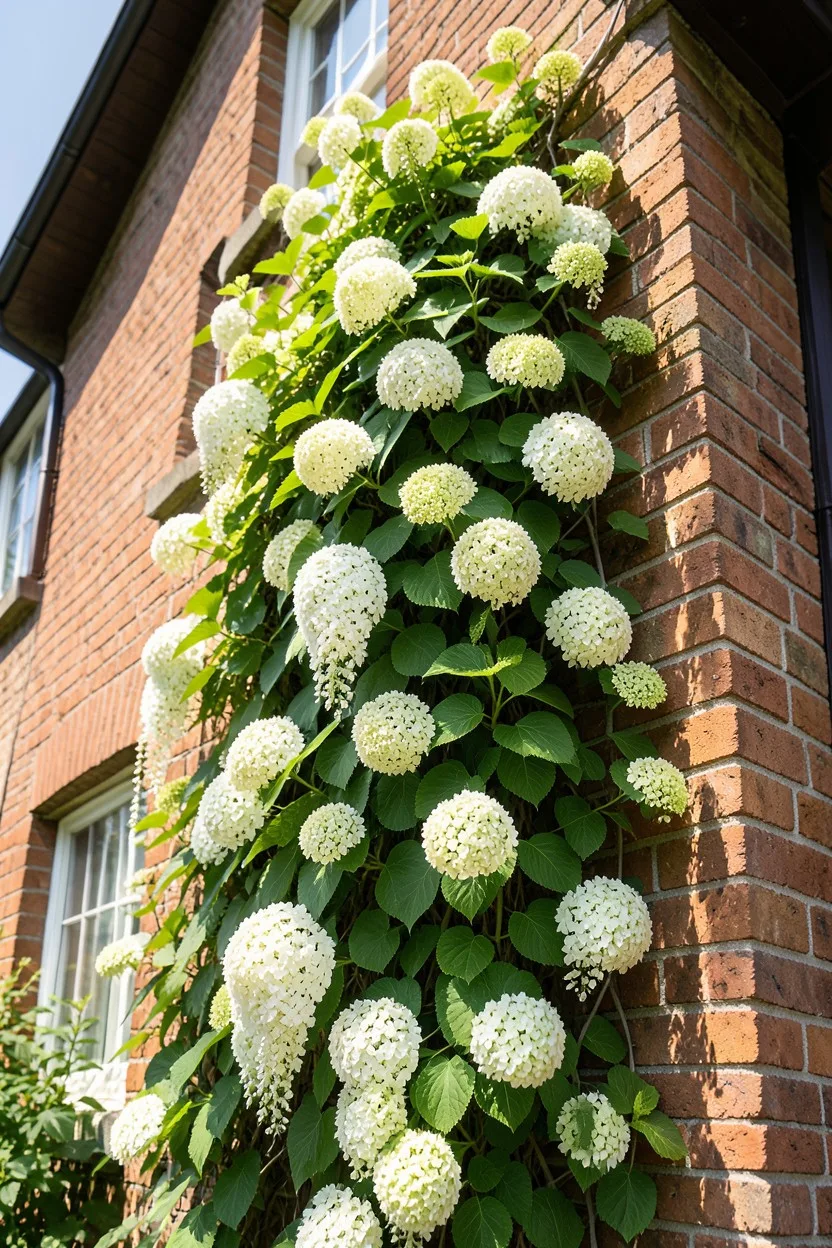
If you only focus on ground-level shrubs, you miss a massive opportunity to frame the actual architecture of your home. If you have a bare brick chimney, a stone pillar, or a sturdy wooden pergola anchoring the corner of your border, you need to introduce *Hydrangea anomala subsp. petiolaris*—the climbing hydrangea.
Unlike aggressive vines that tear up siding, climbing hydrangeas use structural aerial rootlets to cling gently to masonry or rough wood without causing structural damage. They take a couple of seasons to establish their root system, but once they do, they will scale a two-story wall, covering it in glossy green leaves and magnificent, flat white lacecap flowers that drape downwards. It creates a stunning vertical frame that seamlessly ties your ground border directly into your roofline.
Climbing Hydrangea — At a Glance
🧱 Best Surface
Brick, stone, or sturdy wood trellis
⏳ Growth Rate
Slow start, vigorous after year 3
📏 Max Height
30–40 feet with support
🍂 Winter Interest
Peeling, cinnamon-colored bark
Structural Use
Perfect for softening large, bare expanses of two-story masonry.
10. The Safe Everlasting All-White Border
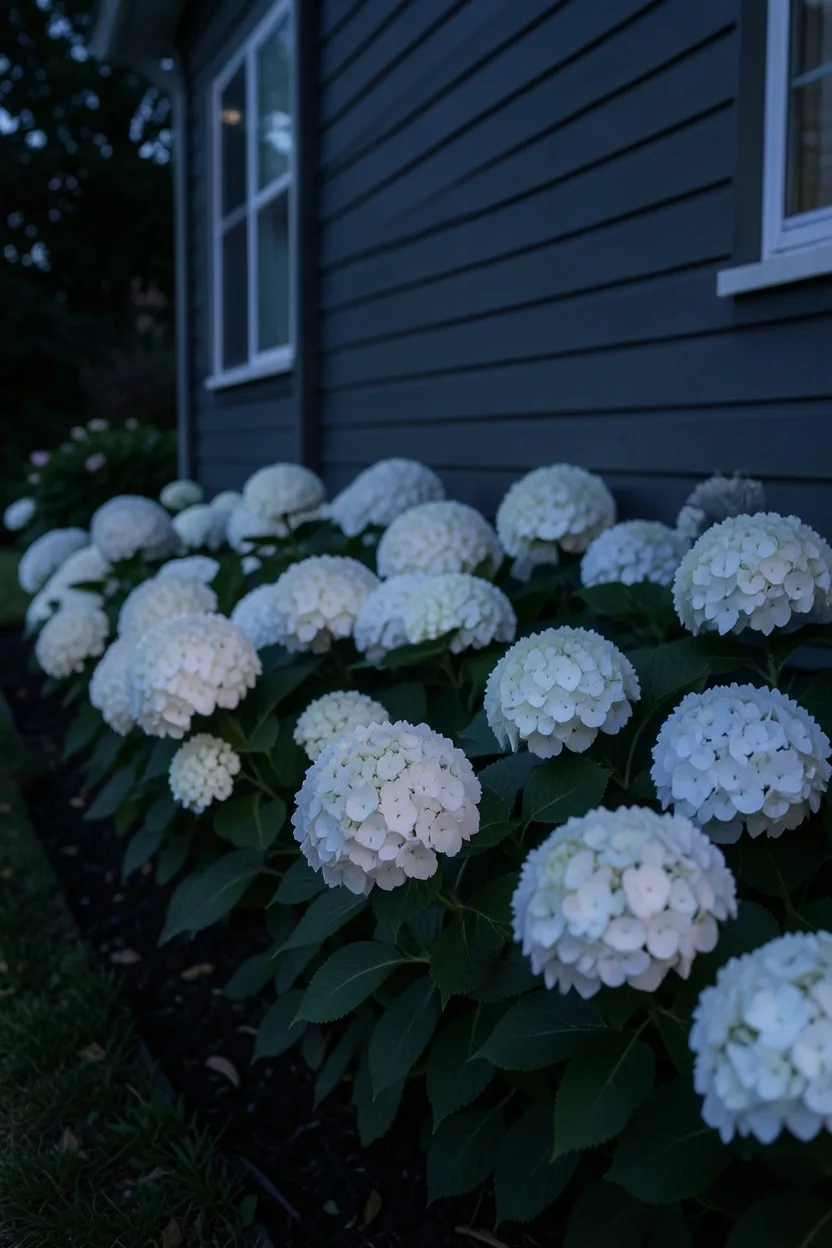
I will make an opinion confession here: I used to find all-white borders incredibly boring and devoid of creativity. But then I watched a client's multi-colored blue and pink border turn into an ugly, muddy purple mess because their soil pH fluctuated wildly, and I completely changed my mind. If you want guaranteed elegance without checking soil chemistry, go pure white.
An all-white scheme using 'Incrediball' smooth hydrangeas and 'White Wedding' panicles acts as a clean visual canvas. It brightens up deep architectural shadows along shady foundation walls and glows like a beacon during the evening twilight hours. To keep an all-white border from looking flat, vary the flower shapes: mix the massive globes of 'Incrediball' with the sharp, vertical cones of 'Gatsby Gal' oakleaf hydrangeas.
11. The Tight-Space Container Border
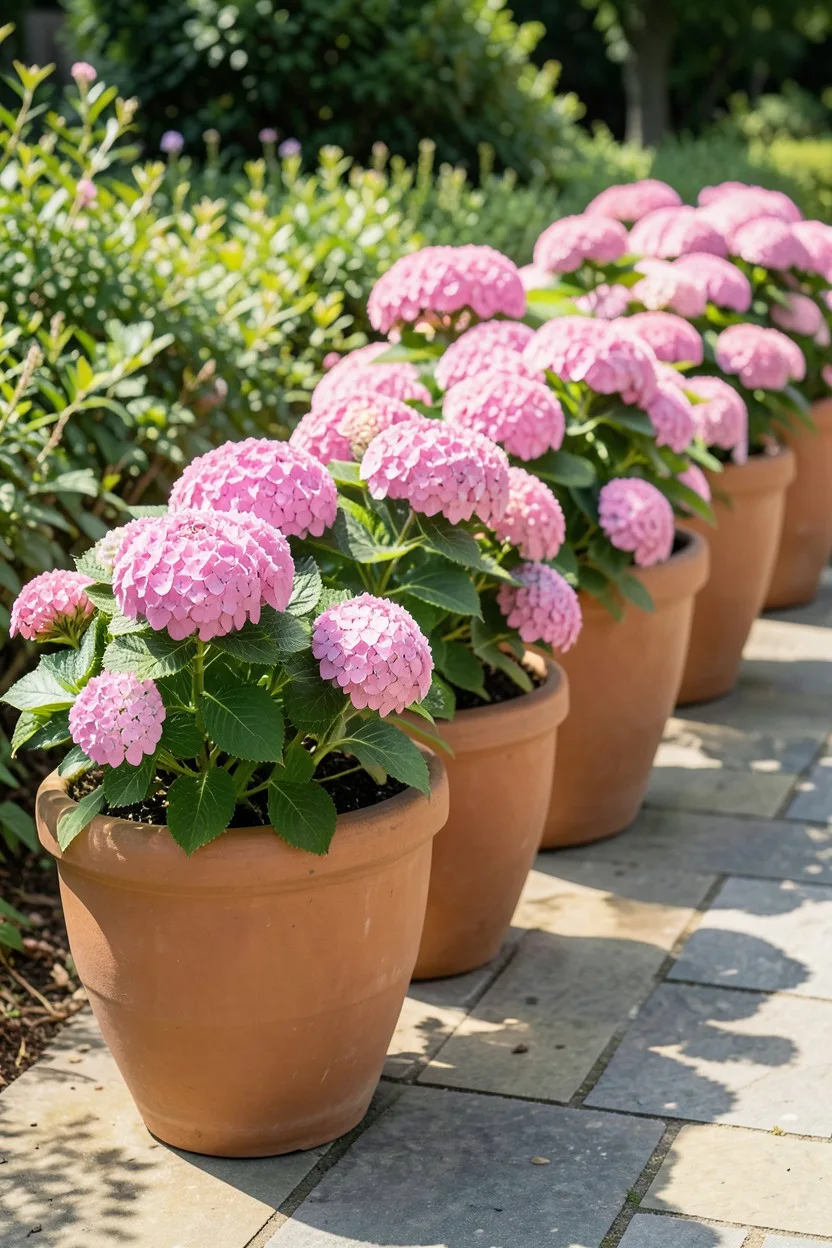
Do this, not that: do not try to squeeze a standard six-foot 'Limelight' hydrangea into a narrow side-yard border or a tiny patio cutout. It will constantly outgrow its space, and you will spend your life pruning away your flower buds. If your layout is tight, build your border entirely within premium containers.
Purchase massive, weather-proof terracotta or heavy cast-concrete pots that are at least 20 inches in diameter. Plant them with compact varieties engineered specifically for container life, like the 'Invincibelle Wee White' or the 'Pop Star' bigleaf hydrangea. Line up these pots in a flawless row along a narrow walkway or a porch edge to create a structured, movable border that looks incredibly clean and architectural.
12. The Structural Evergreen and Shrub Layer
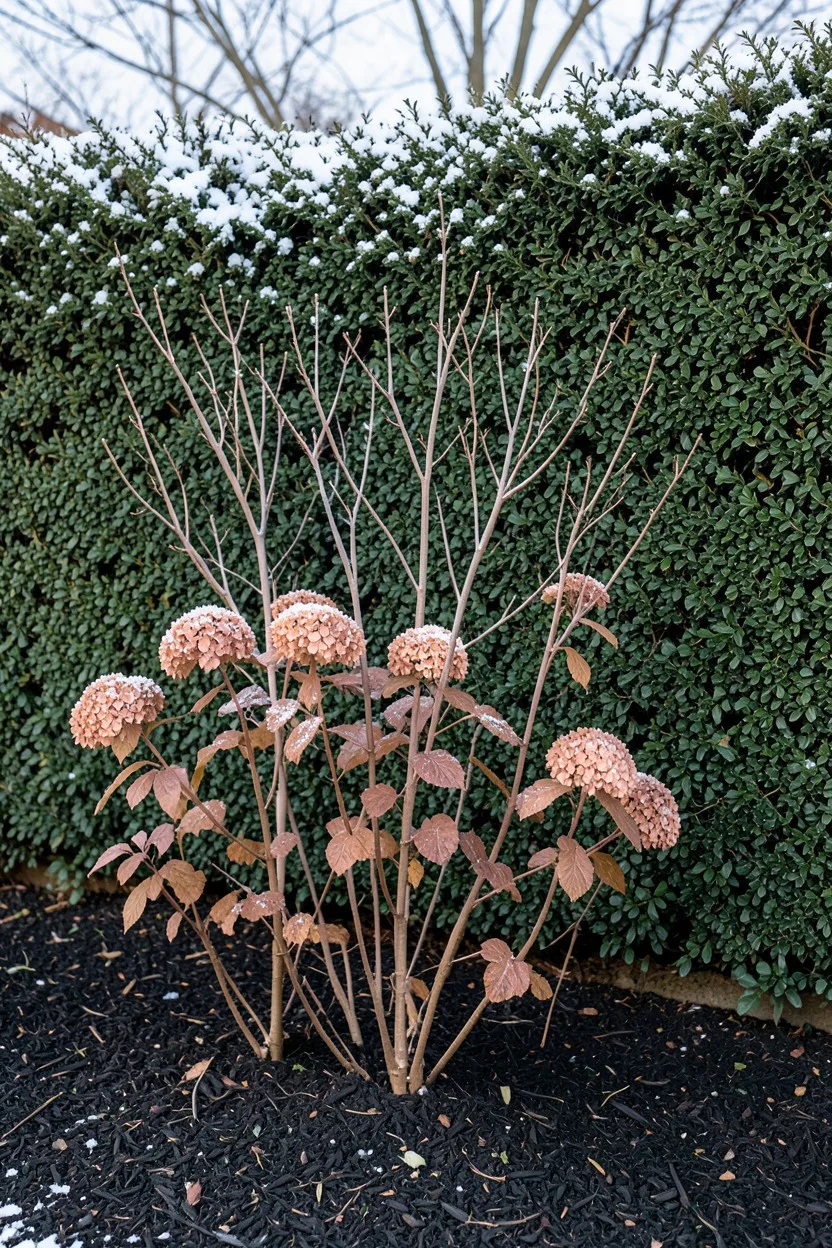
The biggest problem with an all-hydrangea border is what happens in January: your stunning wall of flowers transforms into a collection of bare, brown, dead-looking sticks. To prevent your front yard from looking desolate for five months of the year, you must backstop your hydrangeas with a solid row of structural evergreens.
Plant a permanent structural spine of 'Green Velvet' boxwoods or 'Sky Pointer' hollies directly against the foundation wall. Then, place your hydrangeas in the row directly in front of them. When the hydrangeas lose their leaves in late autumn, the dark, rich green leaves of the evergreens stay full and lush, providing a beautiful backdrop that keeps your border looking structured and expensive all winter long.
💡 Tip: Leave at least 2 feet of space between your evergreen hedge and your hydrangeas to ensure both root systems have room to expand.
13. The Deeply Saturated Color-Blocked Border
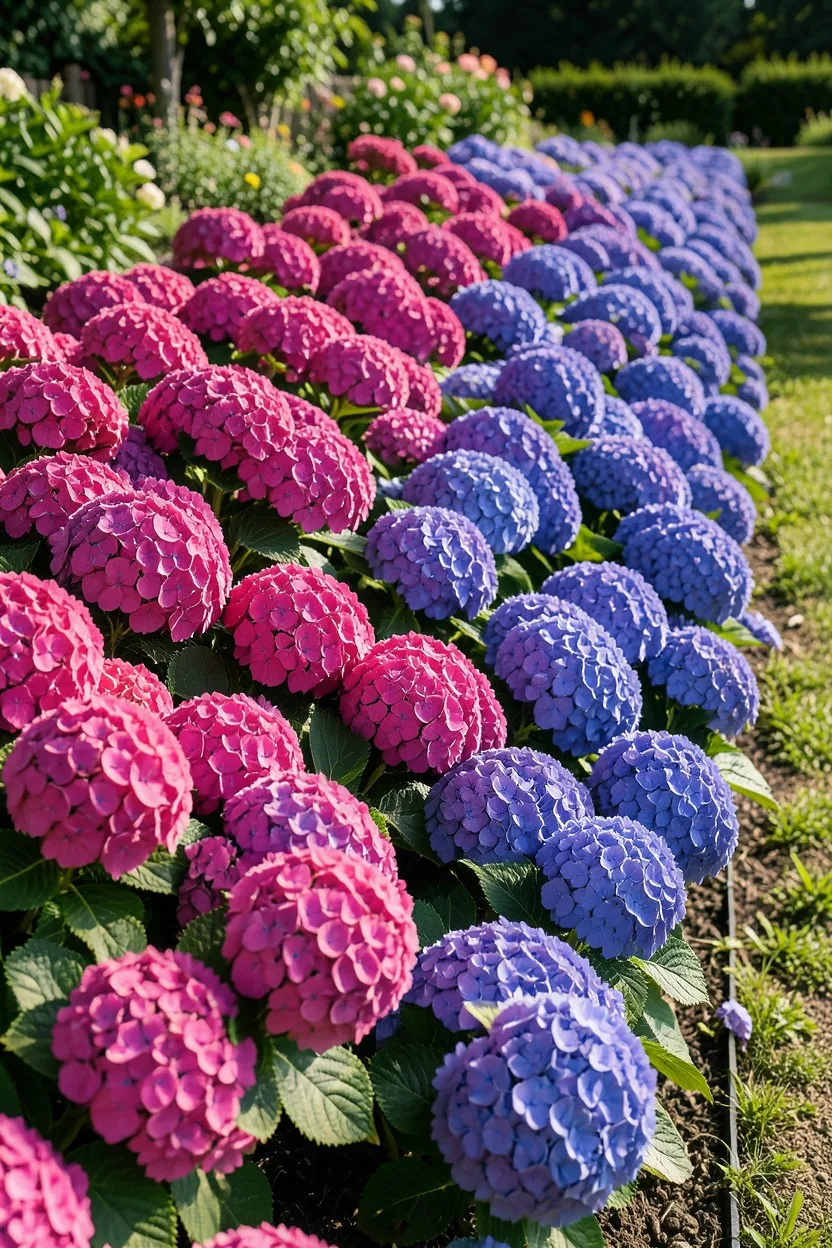
Science-backed entry: Research into landscape color theory proves that human eyes find large blocks of uniform color much easier to process and more visually striking than a chaotic hodgepodge of alternating colors. Instead of mixing one pink plant with one blue plant, use a technique called color-blocking.
Dedicate the first 10 feet of your border entirely to a deep pink variety like 'Summer Crush'. Then, transition abruptly into a 10-foot block of an intense blue variety like 'Original Endless Summer'. This intentional grouping mimics the sweeping color fields found in professional botanical gardens, giving your home border an undeniable sense of scale and artistic purpose.
💡 PRO TIP
Maintaining Saturated Flower Colors
To keep your color blocks distinct, apply pelletized aluminum sulfate to the soil around the blue blocks to lower the pH, and apply garden lime around the pink blocks to keep the soil alkaline.
14. The Sun-Drenched Low-Maintenance Edge
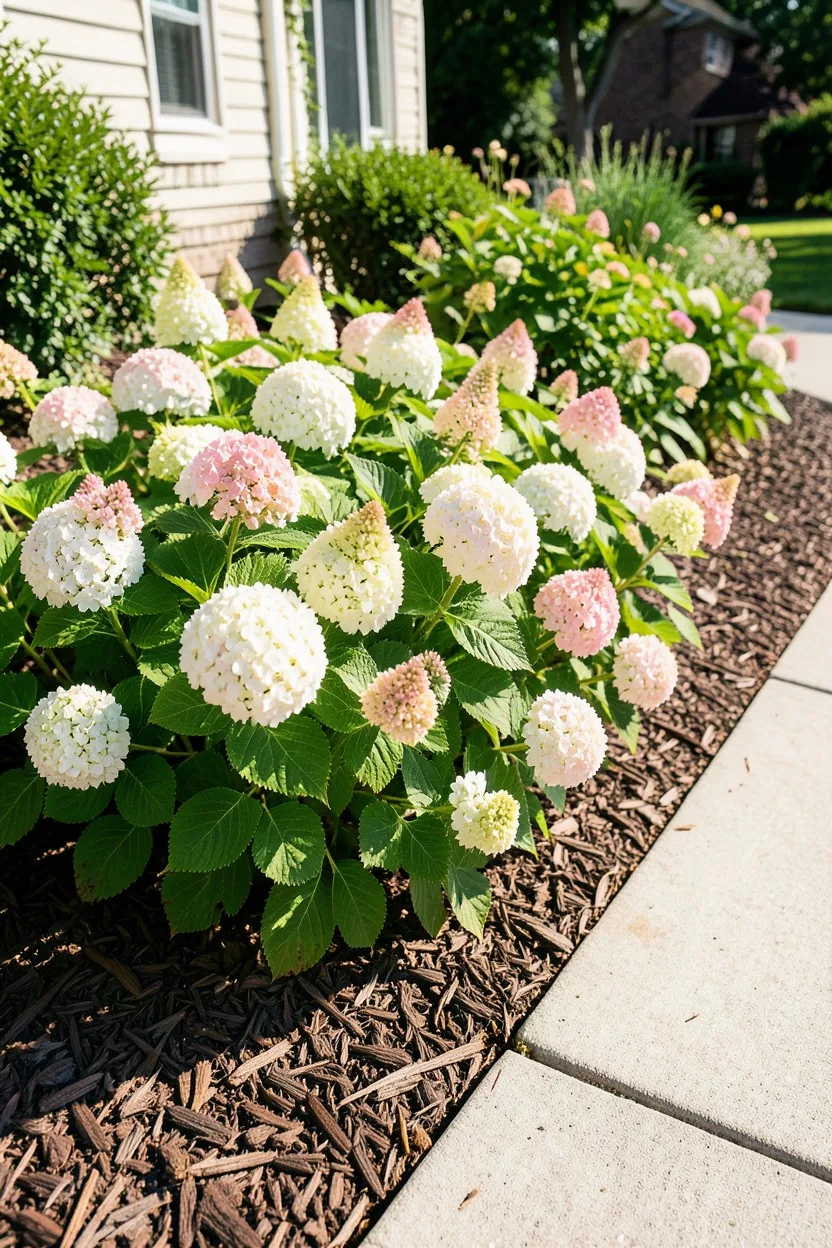
If your front yard faces due south and sits in full, baking sun all day long, bigleaf hydrangeas will wilt into sad, crispy brown rags within an hour. For hot, sun-exposed borders along concrete driveways or asphalt roads, you must rely entirely on tough, sun-loving panicle cultivars.
Varieties like 'Strawberry Sundae' or 'Fire Light' thrive on intense heat and sun exposure, provided they get a solid layer of mulch at their base. Their flower stems grow incredibly thick and woody, easily withstand heavy summer thunderstorms, and require a fraction of the water that traditional shade-loving varieties demand. Plant them with a thick groundcover of 'Angelina' sedum to keep the soil cool.
15. Grouped Honorable Mentions for Border Edges
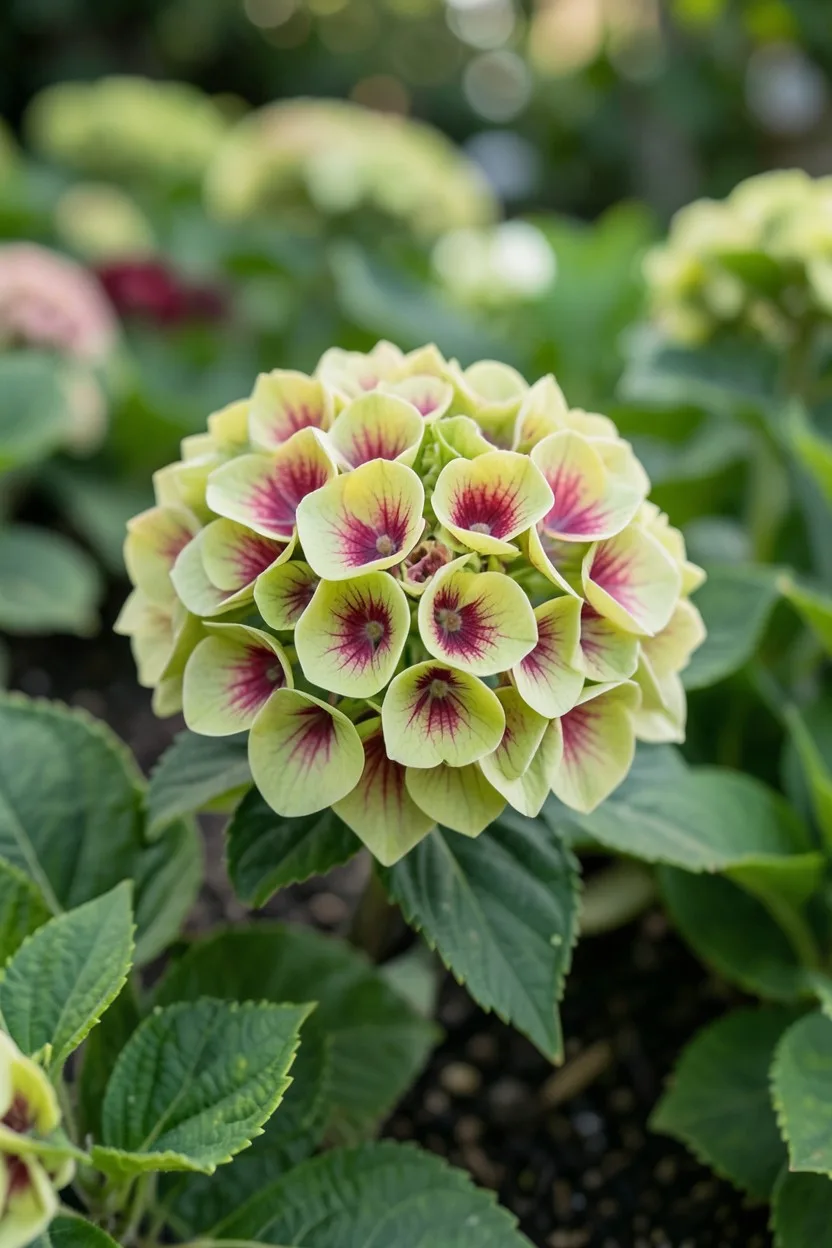
If you want to fill small gaps at the very ends of your main border or need a low-growing accent to taper the ends of your beds down to lawn level, use compact specialized varieties rather than stretching out your main shrubs. These selections add final polish to the layout.
'Little Quick Fire' is a stellar choice if you need early-season red tones in a tight spot under three feet tall. 'Invincibelle Mini Mauvette' offers a unique, deep plum-purple shade on highly resilient, sturdy stems that fit beautifully into tight corners. Choose 'Pistachio' bigleaf hydrangea if you want a bizarre, conversation-starting accent plant that features multi-colored petals of chartreuse-green and bright scarlet pink centered on a single head.
🌱 How to Plant Your Hydrangea Border
Dig the Trench
Dig a continuous planting trench twice as wide as the nursery pots to allow roots to spread horizontally.
Amend the Soil
Mix a generous three-inch layer of organic compost into your native soil to improve drainage and moisture retention.
Set the Depth
Place the shrubs in the trench making sure the top of the root ball sits exactly flush with the surrounding ground level.
Backfill and Tamp
Fill the holes with your amended soil mix and tamp down gently with your hands to destroy air pockets.
Mulch Heavily
Apply a solid three-inch layer of shredded hardwood mulch across the entire border, keeping it away from the woody stems.
Final Thoughts
If you only add one variety from this entire list to your home exterior this season, make it the 'Limelight' or its compact sibling, 'Little Lime'. Its absolute refusal to flop under heavy summer downpours, coupled with its ability to handle full baking sun, makes it the single most forgiving and high-impact shrub for framing a house foundation. Skip the delicate, high-maintenance varieties until you have established this tough, architectural green-and-white framework across your front yard.

John Smith is the founder and CEO of Karaoke Machines Guru. He is a karaoke tutor and karaoke enthusiast and has been passionate about karaoke since he was a child. He also writes about karaoke-related tips, guides, and product reviews on this website.
He overlooks the whole website and makes sure that everything is running smoothly. Learn more!