
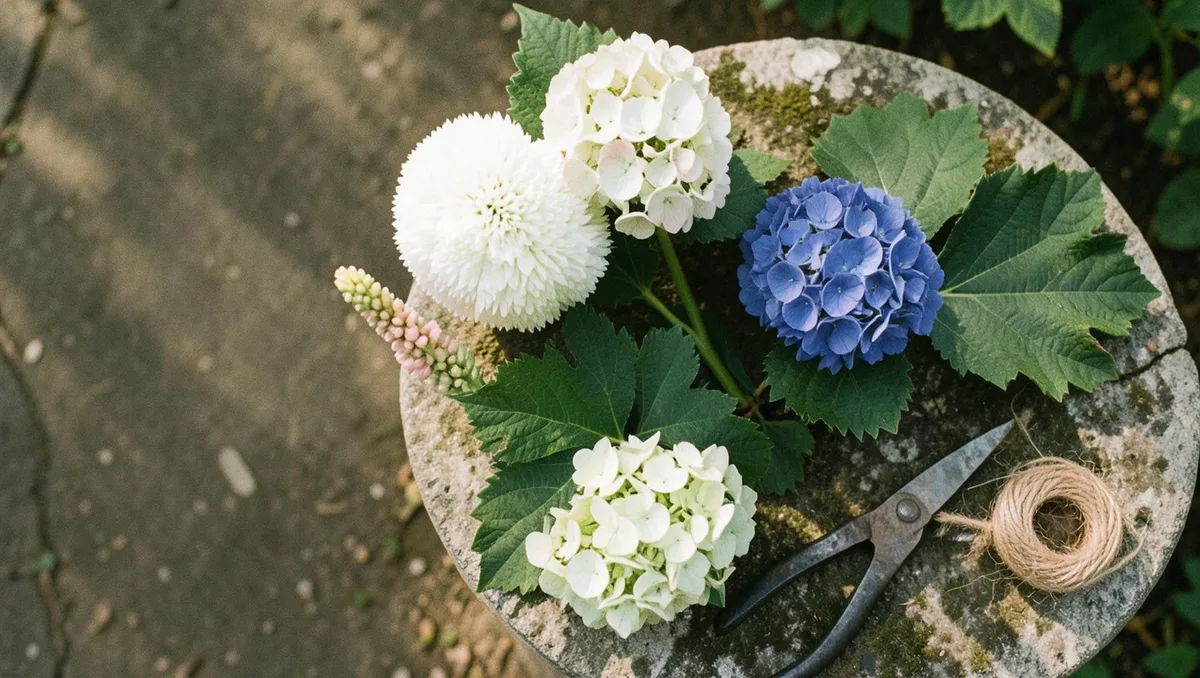
Every neighborhood has that one front yard that stops traffic every June. You drive past slowly, staring at dense, cloud-like drifts of white and blue blooms that look like they belong on the cover of a high-end design catalog. Nine times out of ten, that jaw-dropping display is built entirely on hydrangeas. But here is the secret: those gorgeous yards did not just happen by accident, and they did not come out of a generic big-box store garden center flyer. They are the result of deliberate design choices, specific variety selections, and strategic structural staging.
After years of trial, error, and plenty of scorched leaves in my own gardening endeavors, I have learned that creating a high-end look is about texture and layering. If you simply plant a lone, sad shrub in the middle of a sparse mulch bed, it will never look right. You need to treat these plants like architectural elements. By combining the right cultivars with intentional companion plantings, sharp structural edging, and proper height transitions, you can easily replicate that coveted editorial aesthetic right up against your own porch step.
Quick Tips Before You Start
Track the Sun
Map your front yard light before buying; panicles take full sun, but mopheads need afternoon shade.
Test Soil pH
Amplify blue tones with aluminum sulfate or shift macrophylla varieties to pink with garden lime.
Know Pruning Rules
Never cut back macrophyllas in spring because they bloom on old wood and you will lose your flowers.
Mulch Deeply
Lay down a three-inch layer of shredded pine bark to keep shallow roots consistently cool and moist.
1. Symmetrical Foundation Rows with Limelight Panicles
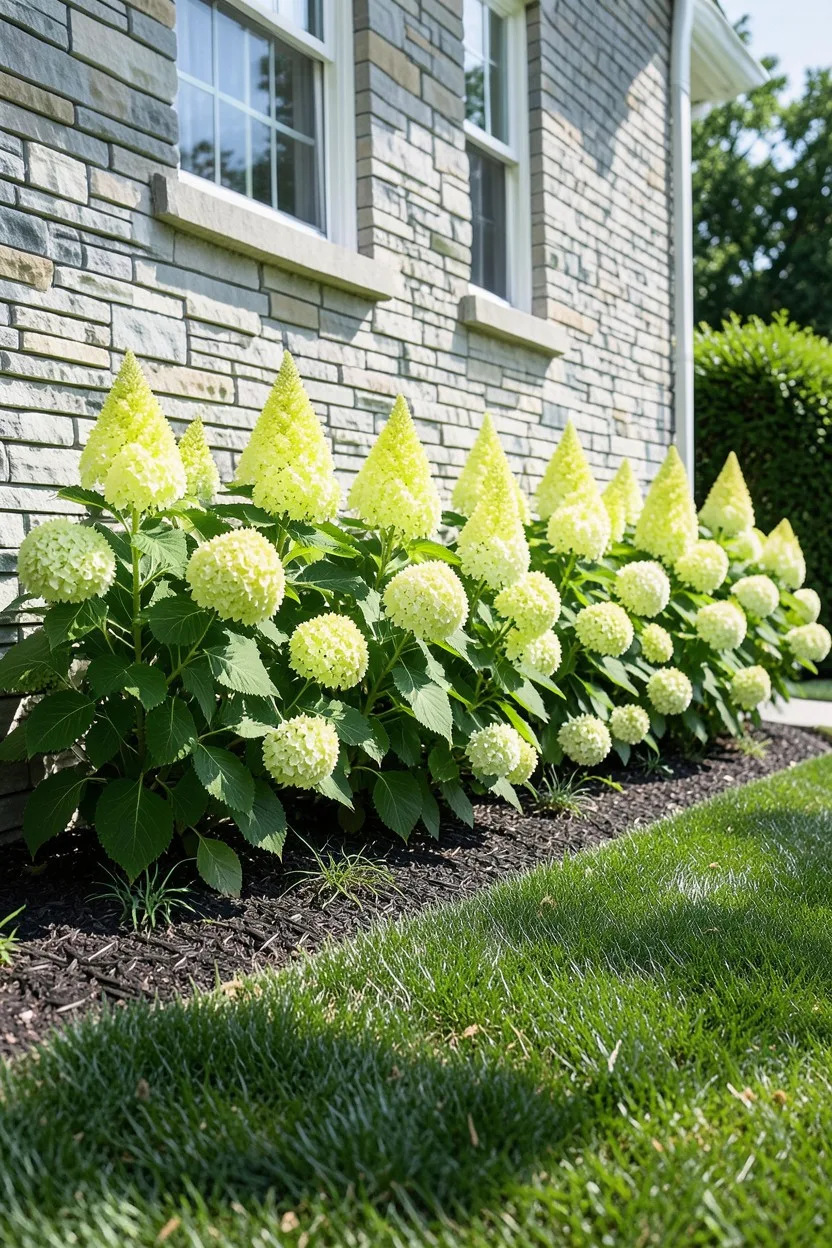
Everyone tells you to plant a mix of shrubs along your foundation, but honestly? That advice creates a chaotic, messy look in a small front yard. The part they skip is that bold, repetitive symmetry is what actually triggers that high-end architectural feel. Line your front porch with a uniform row of Limelight panicle hydrangeas spaced exactly four feet apart. This variety stands erect, handles intense full sun without wilting, and forms an unbreakable green wall by mid-summer.
As the huge conical blooms emerge in July, they start a crisp chartreuse green before aging to a clean, brilliant white. This clean color palette anchors your home structure perfectly. Plant them in a perfectly straight line behind a low stone retaining wall to accentuate the sharp, clean lines of your architecture.
2. Low-Growing Border Drifts Using Bobo Cultivars
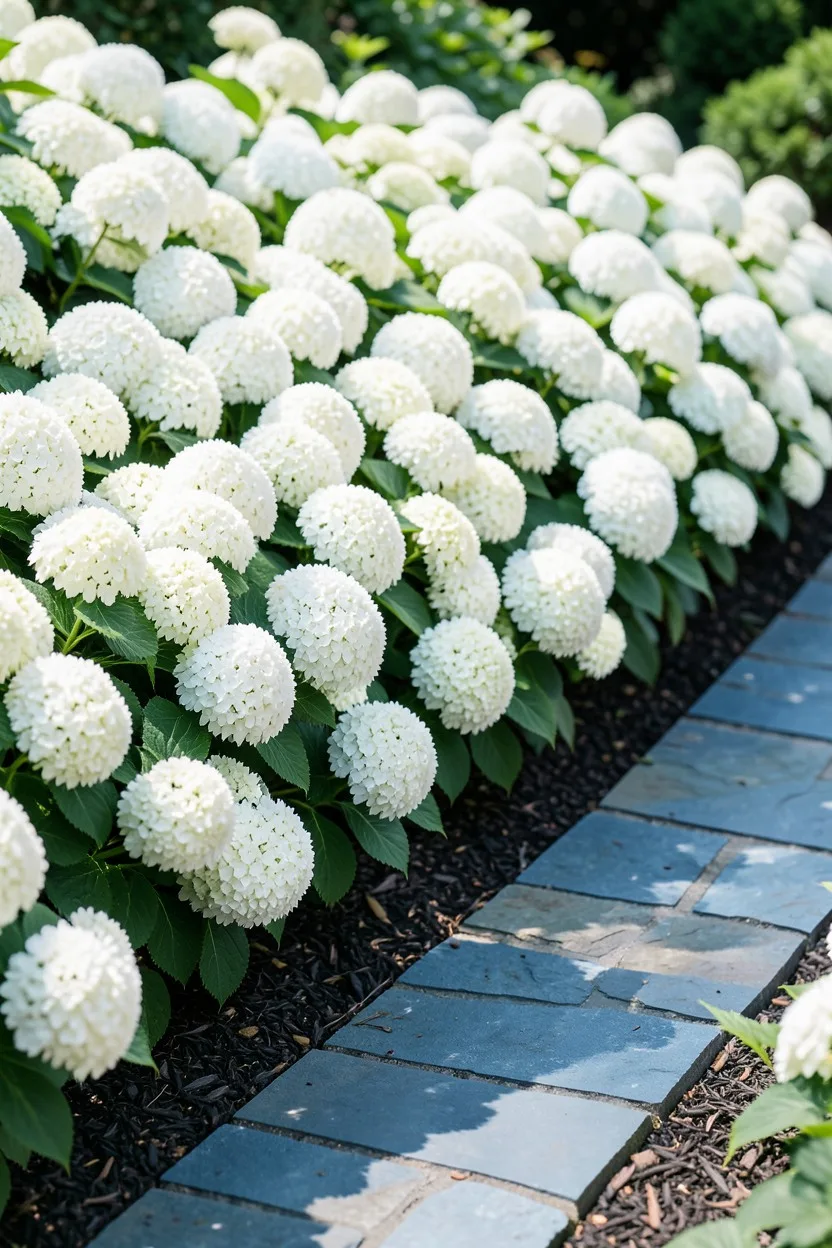
Compact. Low-maintenance. Blooms all summer from the ground up. Yes, Bobo hydrangeas are the ultimate solution for tight spaces along walkways where taller varieties would completely swallow your path. Most people mistake standard panicles for dwarf varieties and end up hacking them back into ugly stumps every spring. Do not do that.
Instead, plant a continuous, single-variety drift of Bobos right at the border edge. They max out at just three feet tall and three feet wide, meaning they stay perfectly contained without a single pair of pruners touching them. They pack so many white blooms onto their short stems that you can barely see the green foliage by early August. Space them thirty inches on center so they knit together into one seamless, low-lying cloud that softens your concrete or flagstone walkways.
Works Best With
3. Textural Contrasts with Boxwood and White Wedding
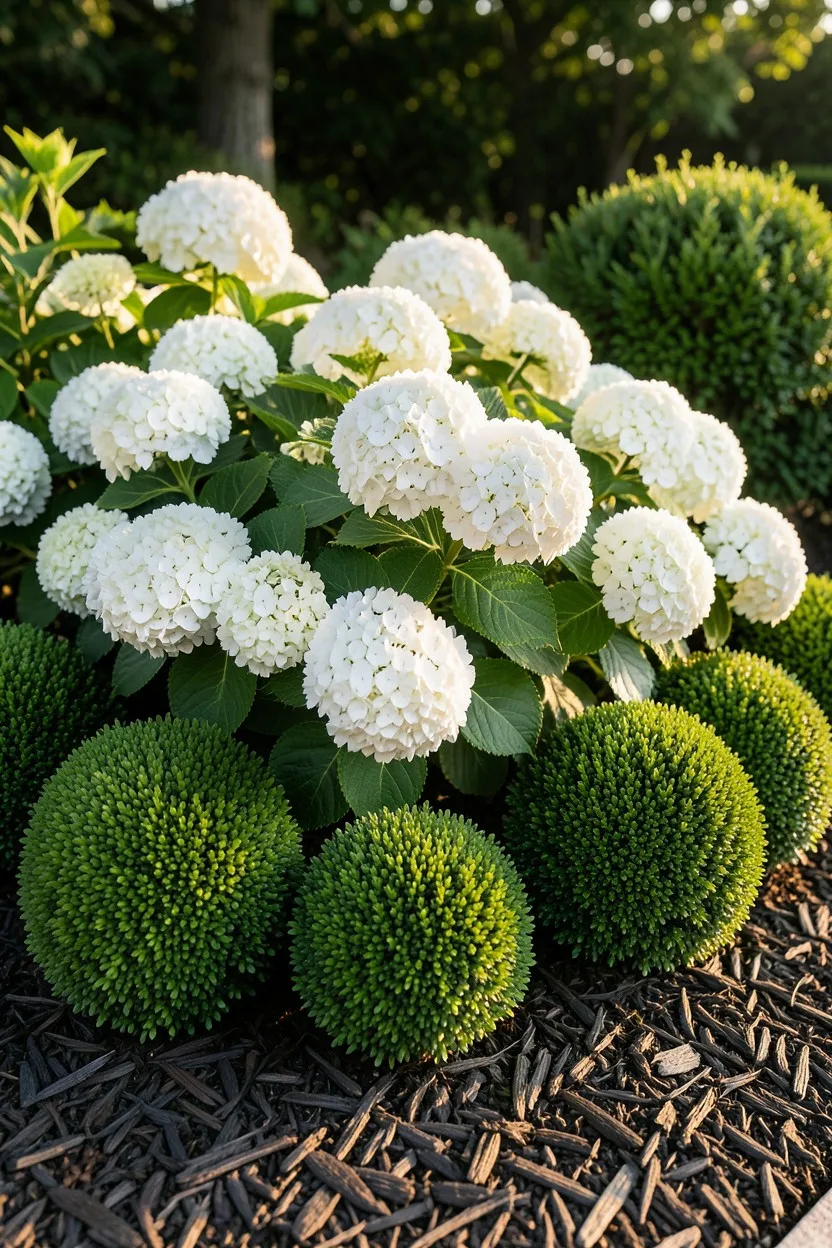
You know what nobody tells you about growing big, showy hydrangeas? If you do not pair them with fine-textured evergreens, your winter yard will look like a sad collection of dead sticks. To avoid that bleak off-season look, create a permanent structural framework using dwarf English boxwoods clipped into tight, formal spheres. Scatter them directly among your White Wedding panicle hydrangeas.
The stark contrast between the rigid, small-leafed evergreen globes and the wild, billowing white flower heads of the hydrangea gives your landscape immediate designer tension. In June, the bright white blooms pop against the deep forest green of the boxwoods. In January, the boxwoods maintain the yard's formal shape while the dried tan hydrangea seed heads dance above them in the winter wind.
4. Monochromatic White Gardens with Incrediball Clusters
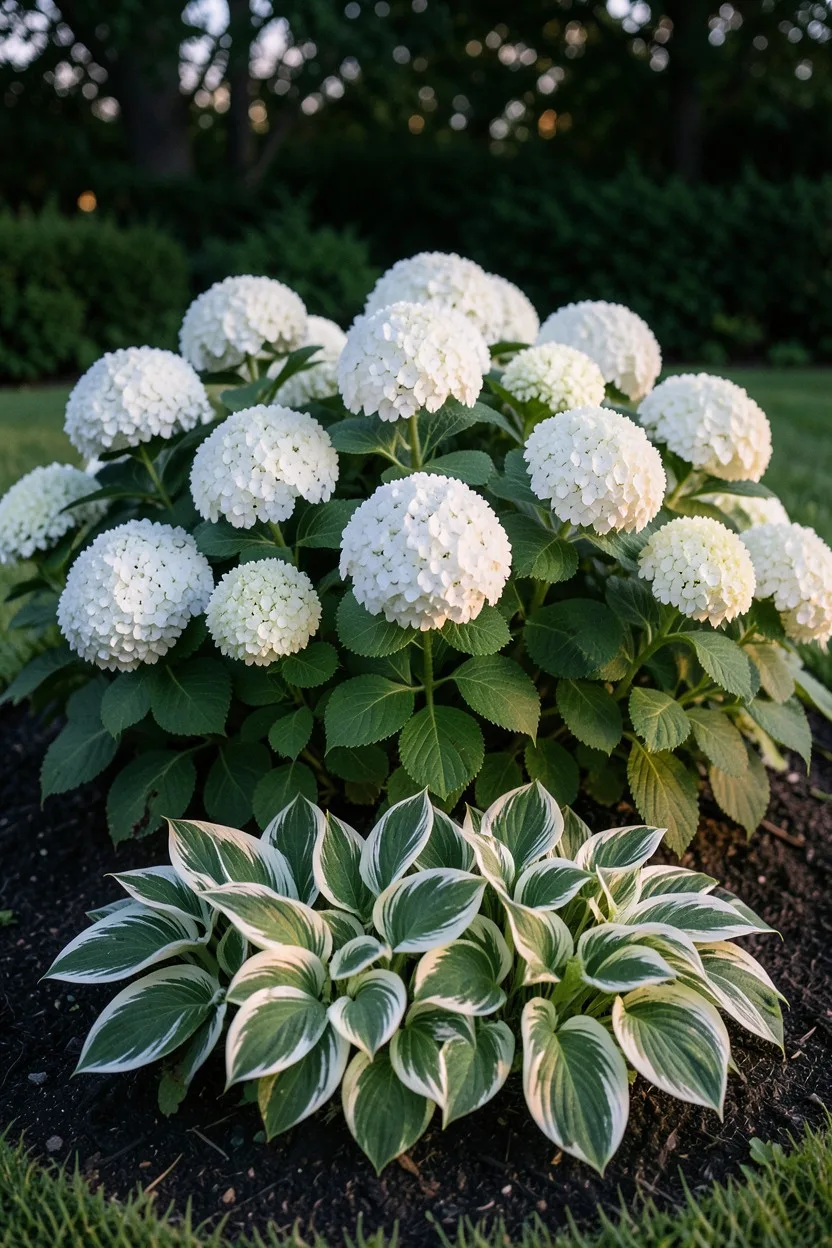
Back in my early gardening days, I tried mixing pink, blue, purple, and white hydrangeas all in one front yard bed, and it looked like a total clown car disaster. If you want that refined, ultra-high-end look that mimics luxury coastal estates, stick to a strict monochromatic white color palette. Lean on Incrediball arborescens hydrangeas to carry the show.
This improved smooth hydrangea variety produces massive, basketball-sized flower heads held up by exceptionally thick, sturdy stems that will not flop over in a heavy summer downpour. Group them in odd-numbered clusters of three or five right in the center of your front yard island beds. Surround them exclusively with white-variegated hostas like Patriot and pure white caladiums to build a sophisticated garden that practically glows in the evening twilight.
🌱 GROWING TIP
Support Heavy Arborescens Blooms Early
Push grow-through peony rings over young Incrediball shoots in early April. As the stems grow through the grid, the metal frame becomes completely hidden, providing invisible support for massive summer flower heads.
5. Bold Foundation Layering with Deep Blue Macrophyllas
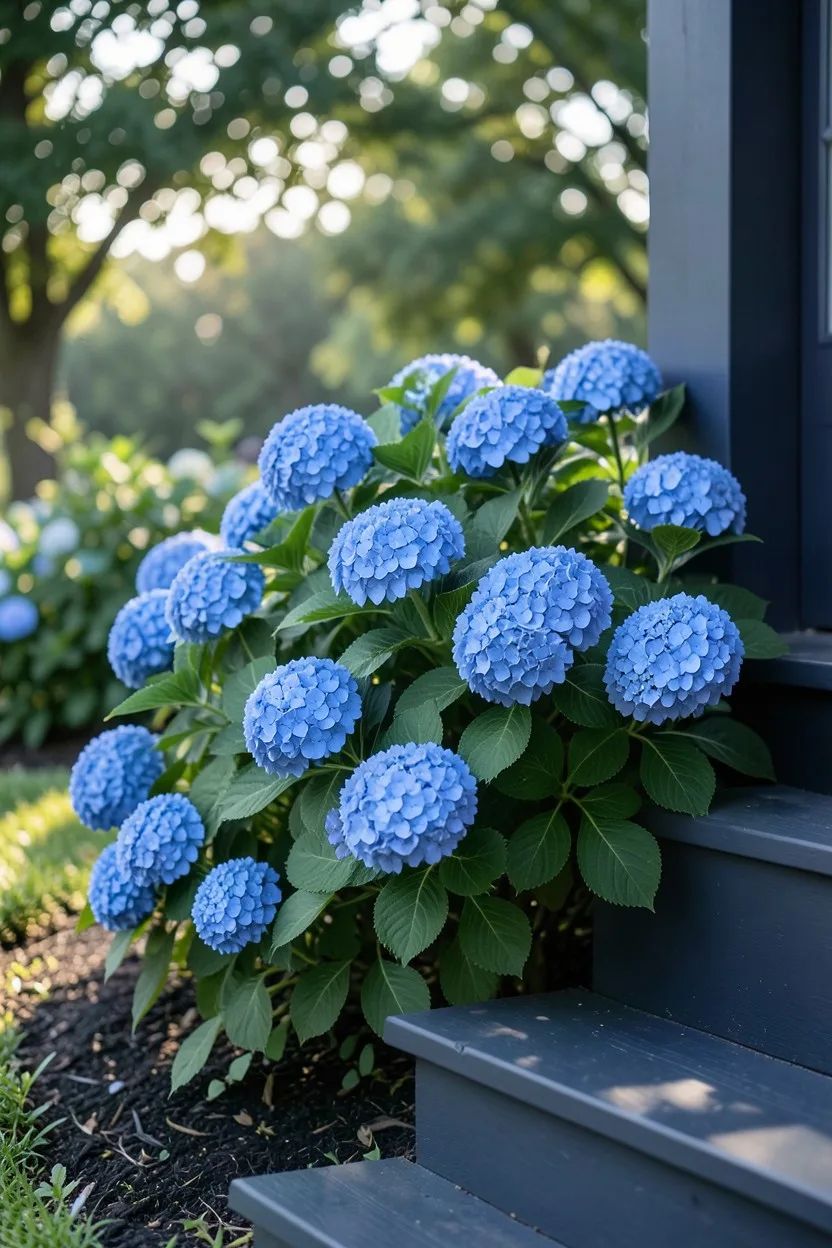
Plant one striking blue Nikko Blue macrophylla next to your front steps and watch your curb appeal transform overnight. Mopheads need specific conditions to deliver that rich, saturated blue tone that people love. They must have rich, acidic soil and a reliable break from the punishing afternoon heat.
Tuck these magnificent shrubs on the north or east side of your home so they receive gentle morning sun but remain fully shaded after 1:00 PM. To maximize the color impact, apply a heavy dose of granular aluminum sulfate to the soil in early spring. This lowers your soil pH below 5.5, which is the exact chemical trigger that coaxes the plant into pulling aluminum from the earth to turn the petals that vibrant, deep electric blue.
Nikko Blue Hydrangea — At a Glance
🌡️ Sun Exposure
Morning sun, afternoon shade
🧪 Soil Condition
Acidic pH 5.0–5.5 for blue
📏 Mature Size
4–6 feet tall and wide
✂️ Pruning Time
Immediately after summer bloom
Color Secret
True blue flowers require active aluminum availability in highly acidic soil.
6. Shaded Understory Beds Featuring Ruby Blossom Oakleafs
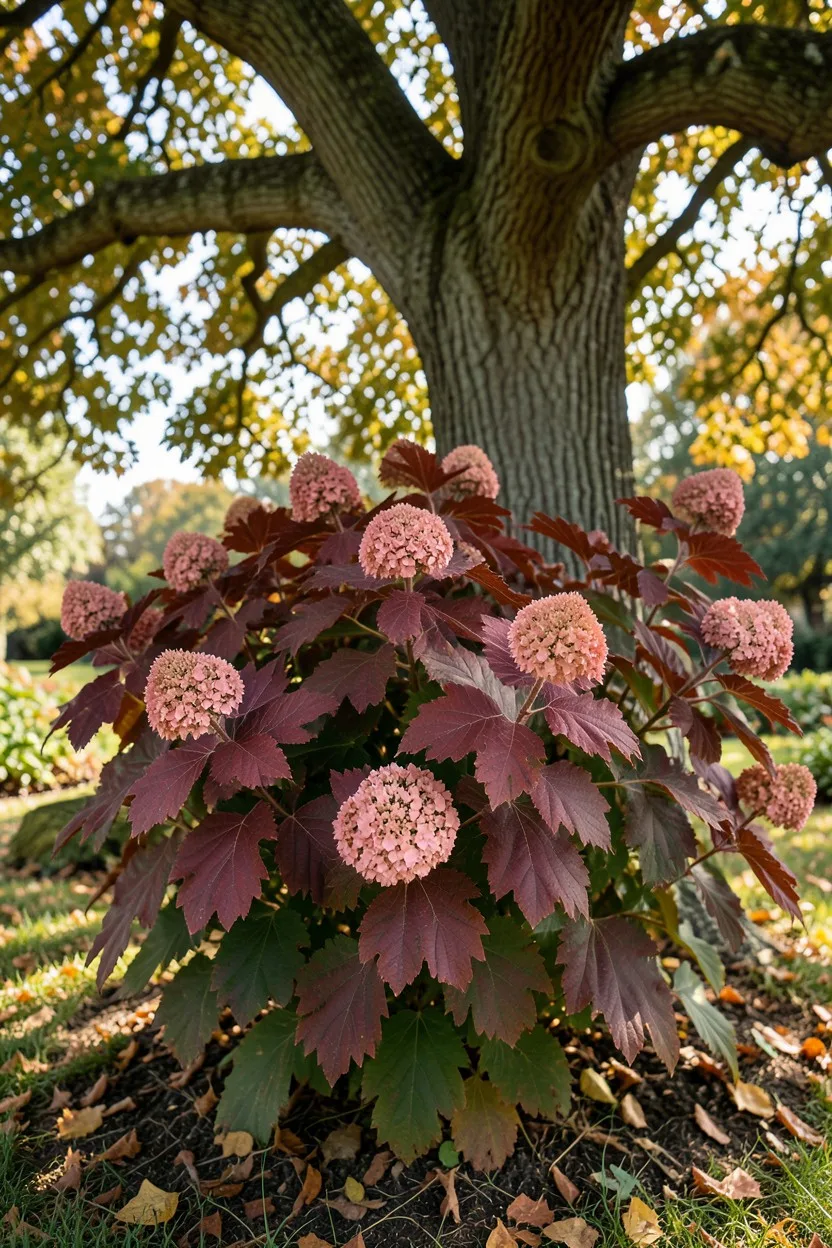
Most people focus entirely on mopheads and panicles, completely ignoring native varieties. That is a massive design mistake. Oakleaf hydrangeas are the true chameleons of the shade garden, offering incredible multi-season interest that standard varieties simply cannot touch. Plant the Ruby Blossom cultivar directly beneath the dappled canopy of large oak or maple trees in your front yard.
In May, they open with long, creamy-white panicles that gradually shift to a deep, antique ruby pink as summer progresses. But the real magic happens in October. While other hydrangeas turn a crispy, boring brown, the large, oak-like leaves of this variety erupt into brilliant shades of mahogany, scarlet, and deep purple, giving you a striking autumn display right by your front door.
7. Framing Front Entryways with Elegant Potted Tree-Forms
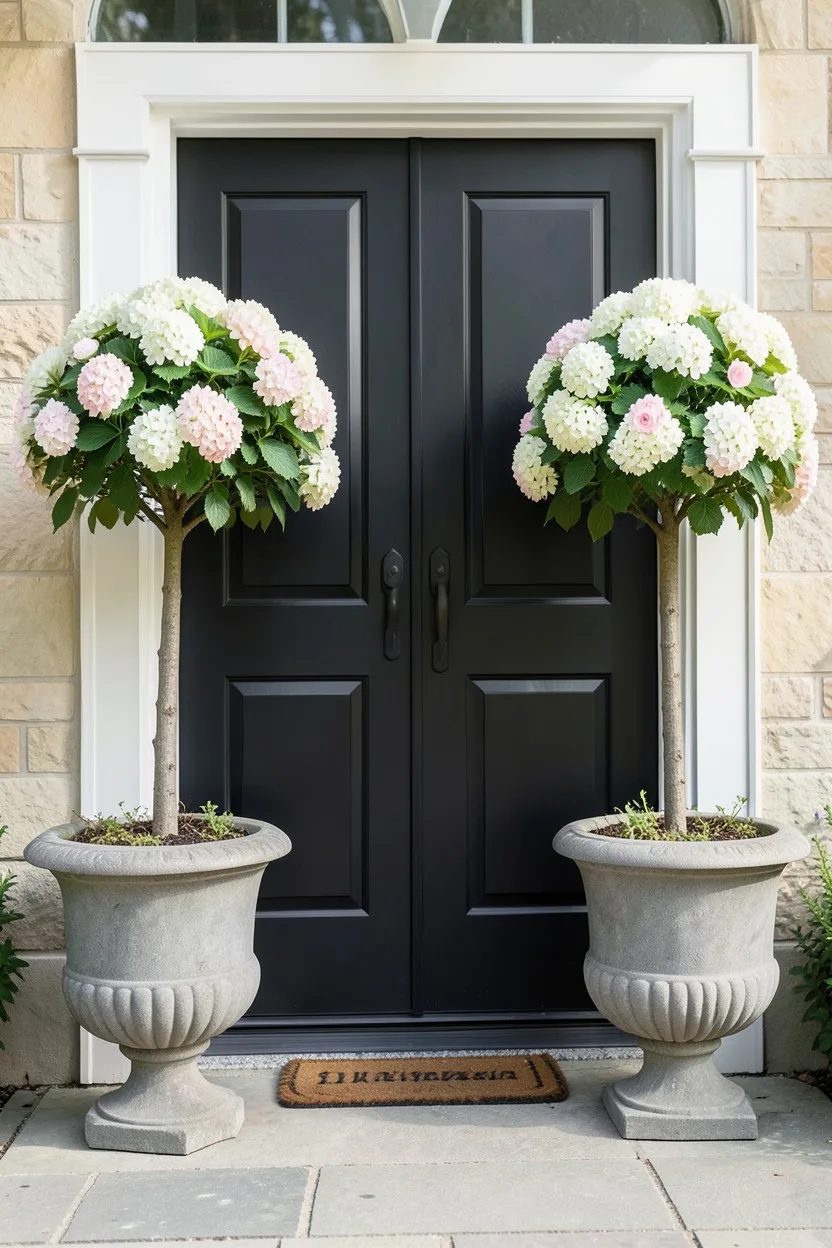
If you want to instantly make a standard ranch or suburban home entrance look like an upscale boutique hotel, pull your hydrangeas out of the ground entirely. Buy two matching, high-quality stone or heavy resin planters that are at least twenty inches in diameter. Plant a topiary tree-form Quick Fire hydrangea into each container.
These specialized tree-forms feature a straight, woody trunk with a dense, rounded canopy of blooming branches grafted at the top. Position one container on each side of your front door. Tree-forms elevate the blooms right to eye level, creating a dramatic, grand entrance. Because containers dry out fast, install a simple drip irrigation line directly into the pots to keep the soil consistently damp.
⚠️ COMMON MISTAKE
Do Not Let Containers Freeze Solid
Potted hydrangea roots are highly vulnerable to freezing temperatures. If you live in Zone 6 or colder, move your potted tree-forms into an unheated garage or basement in November after they drop their leaves to protect the root ball.
8. Cottage Style Softening Using Endless Summer Mopheads
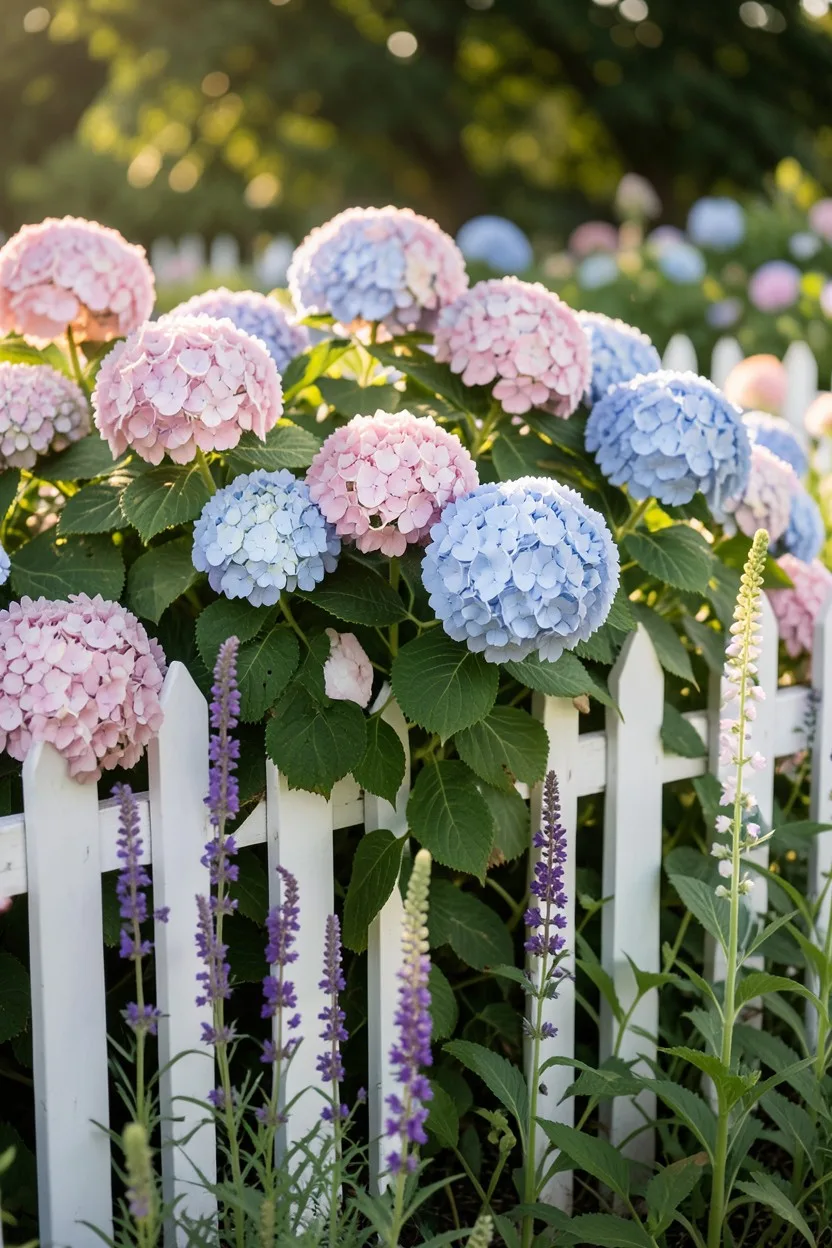
If your front yard is dominated by a stark wood picket fence or a harsh vinyl perimeter line, you need to break up those hard angles. Endless Summer reblooming hydrangeas are the definitive tool for creating that classic, romantic cottage garden feel. This game-changing variety sets buds on both old wood from last year and new green growth from this spring.
Plant them directly against your fence line, spacing them four feet apart. As the heavy pink or blue flower heads grow, they naturally drape over and through the fencing slats, softening the hard architecture with loose, romantic curves. Mix in a few tall pink foxgloves and purple salvia plants between the shrubs to complete the classic, English-cottage look.
9. Sloped Lawn Transformation with Dense Invincibelle Spirit
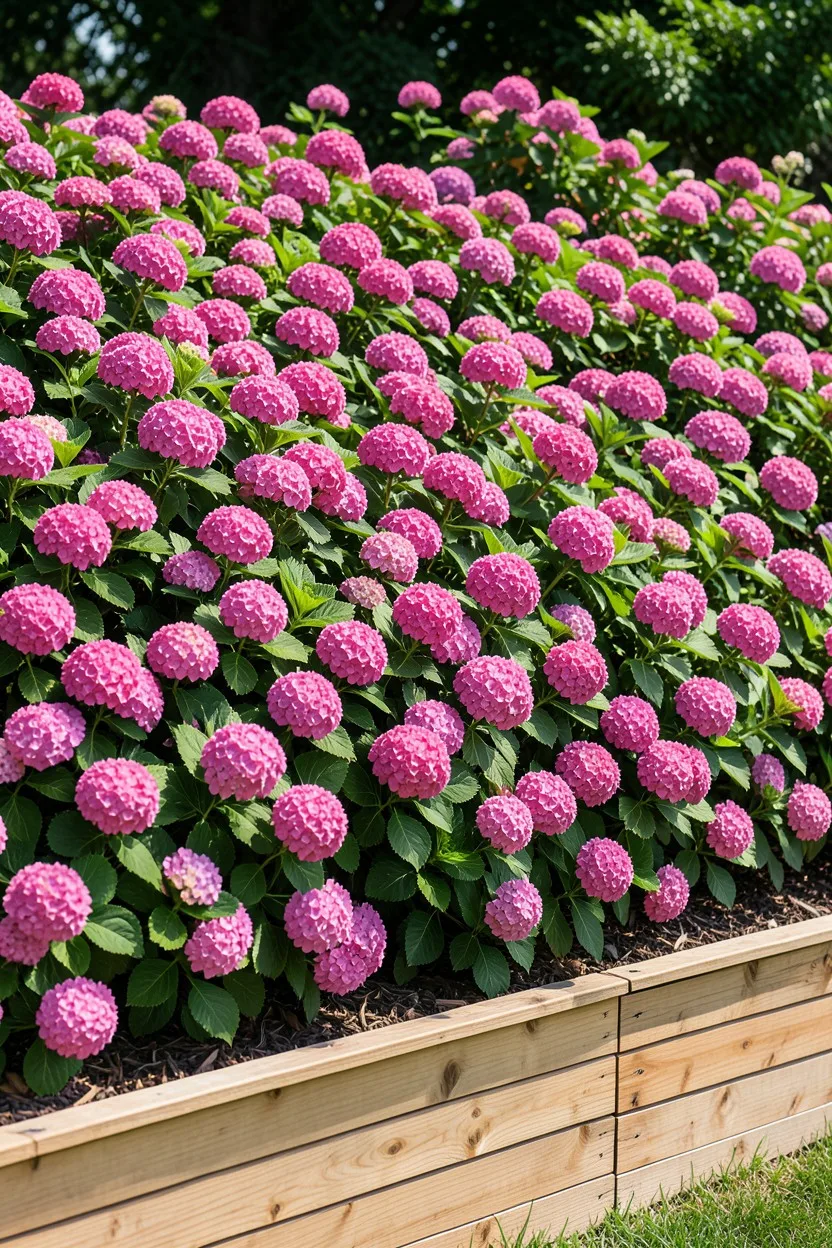
Mowing a steep slope in a front yard is dangerous and annoying. Stop struggling with the mower and completely replace that patchy grass incline with a mass planting of Invincibelle Spirit smooth hydrangeas. Mass planting means using one single variety across a large area to create a high-impact blanket of color.
This tough, adaptable variety handles slopes beautifully because its wide root systems help bind and stabilize shifting topsoil. They produce hundreds of rich, hot-pink mophead flowers that slowly fade to a soft green-pink over the summer. Space your plants three feet apart across the entirety of the slope. Within two seasons, they will knit into a solid, weed-suppressing groundcover that eliminates mowing duties forever.
10. Stunning Porch Enclosures Using Pinky Winky Screeners
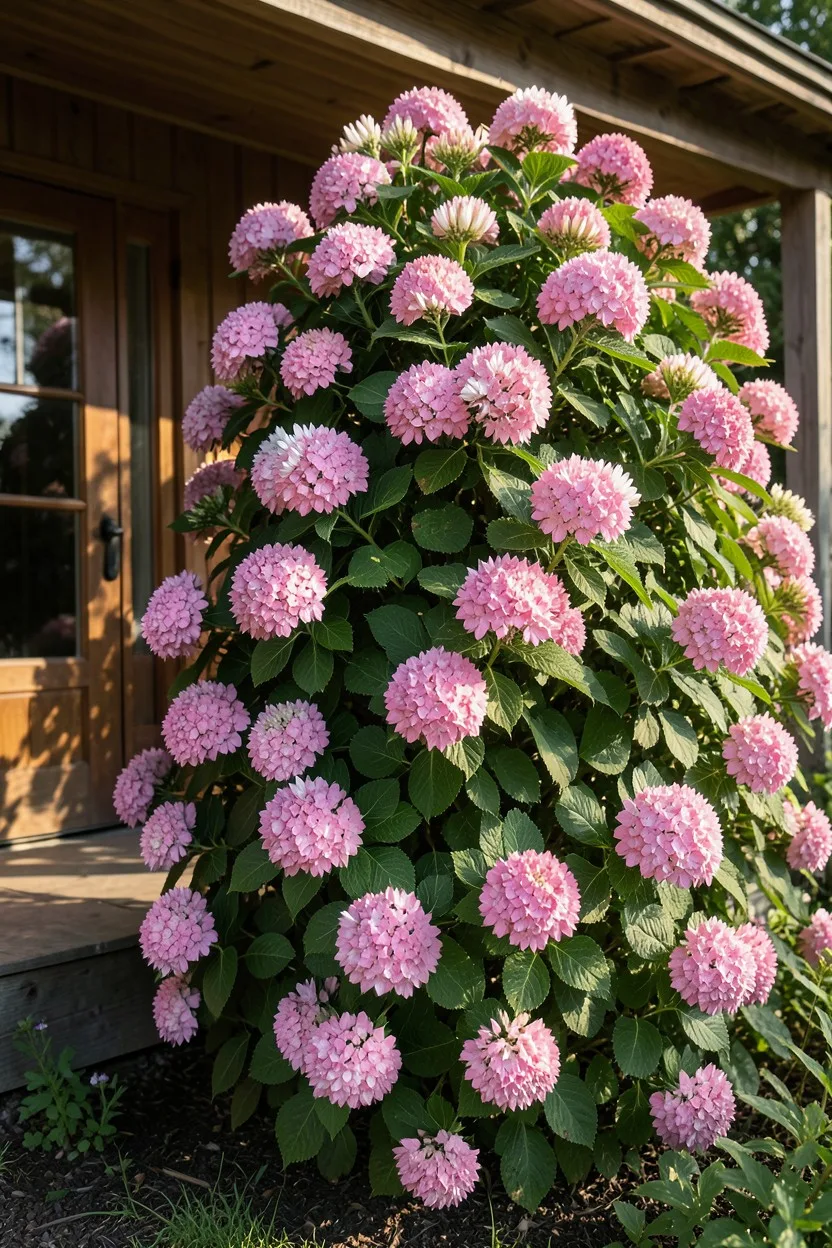
If your front porch feels a little too exposed to the street or your neighbors, do not install a tacky plastic privacy screen. Grow a living, blooming wall instead. Pinky Winky panicle hydrangeas are massive, aggressive growers that easily reach eight feet tall if you let them. Plant a dense privacy row directly in front of your porch deck.
The unique feature of Pinky Winky is its giant, two-toned flower spikes. The blooms open pure white at the top while the base of the panicle quickly matures to a deep, dark pinkish-red. This creates a spectacular, bi-color look throughout August. By planting them tight against the deck, you gain a thick summer screen that provides total privacy while you enjoy your morning coffee.
11. Backdropping Vibrant Perennials with Tall Phantom Stems
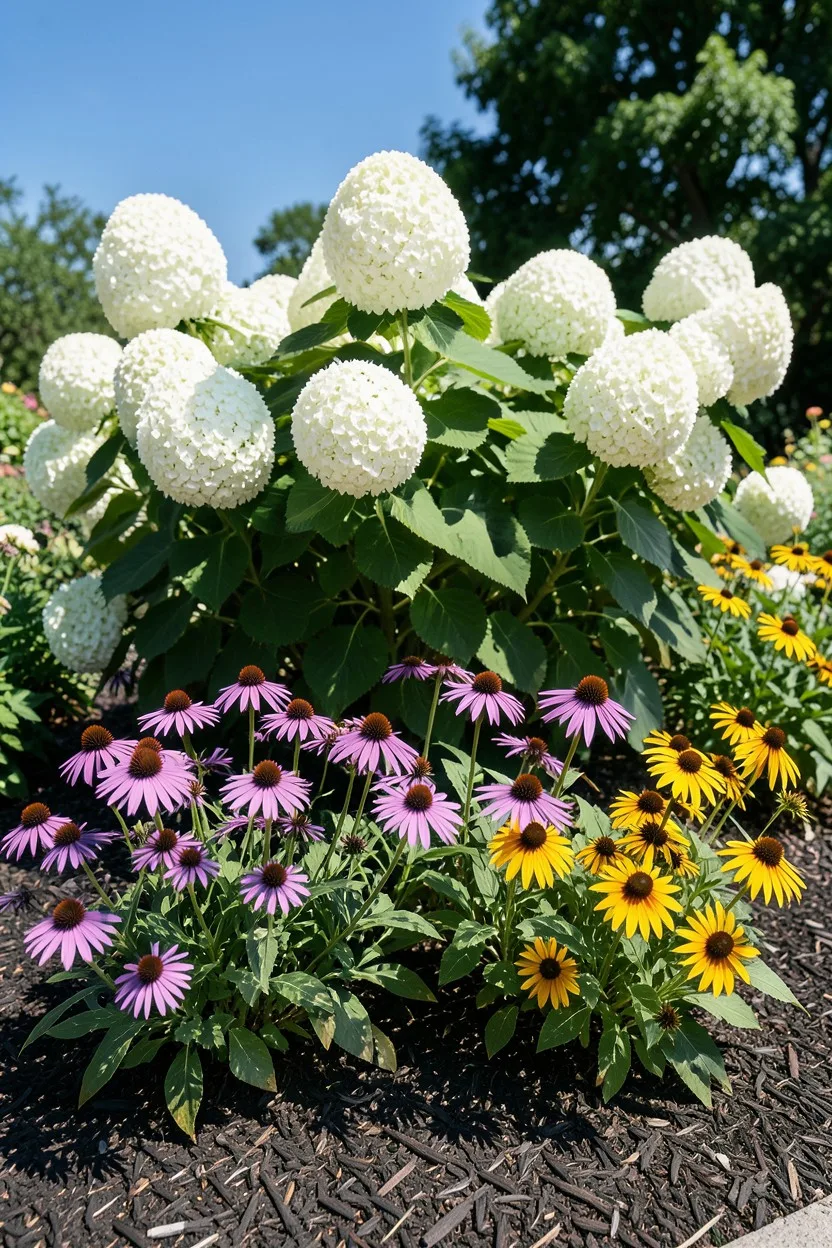
A common mistake is planting hydrangeas completely by themselves in an empty sea of bark mulch. This makes your yard look sparse and incomplete. To fix this, use Phantom panicle hydrangeas as a massive, structural backdrop plant at the very rear of your deepest garden beds. This variety grows up to ten feet tall and produces the largest white panicles in the plant world.
Once your tall background framework is established, layer shorter perennials directly in front of them. Plant a middle row of deep purple Magnus coneflowers, followed by a front border ribbon of golden Black-Eyed Susans. The stark white background of the Phantom blooms makes the rich purple and gold jewel tones of the perennials stand out with incredible clarity.
12. Softening Hard Stone Driveways with Little Lime Hedges
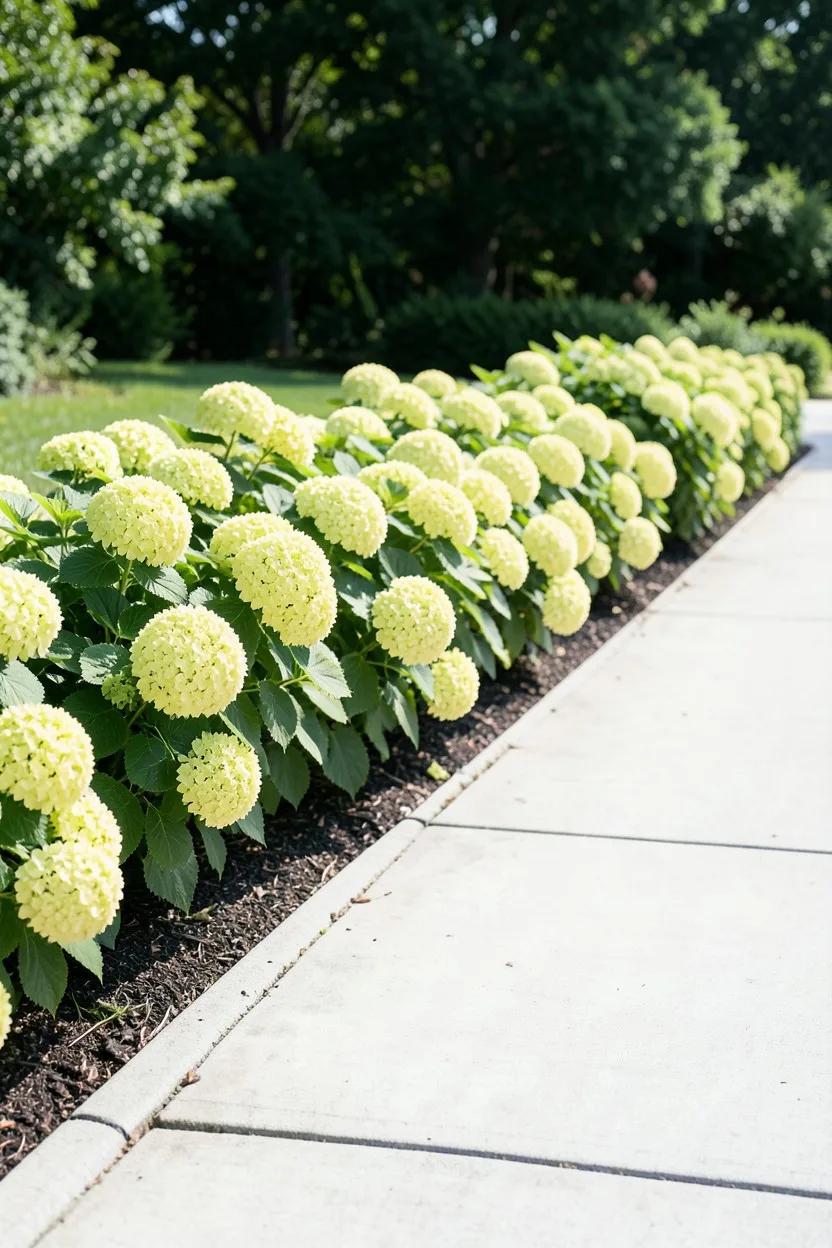
Driveways are a functional necessity, but a giant swath of black asphalt or gray concrete completely kills your home's curb appeal. Soften those harsh, industrial edges by planting a dense, formal low hedge of Little Lime hydrangeas along the entire length of your driveway. Little Lime gives you all the color-shifting beauty of the classic Limelight but in a much more manageable four-foot frame.
Space the individual shrubs exactly three feet apart down your property line. As they grow, their soft, mounded shapes will spill slightly over the hard concrete edges, breaking up the straight line and instantly guiding visitor eyes directly toward your front door rather than your parked cars.
13. Dramatic Mailbox Surrounds with Compact Cityline Paris
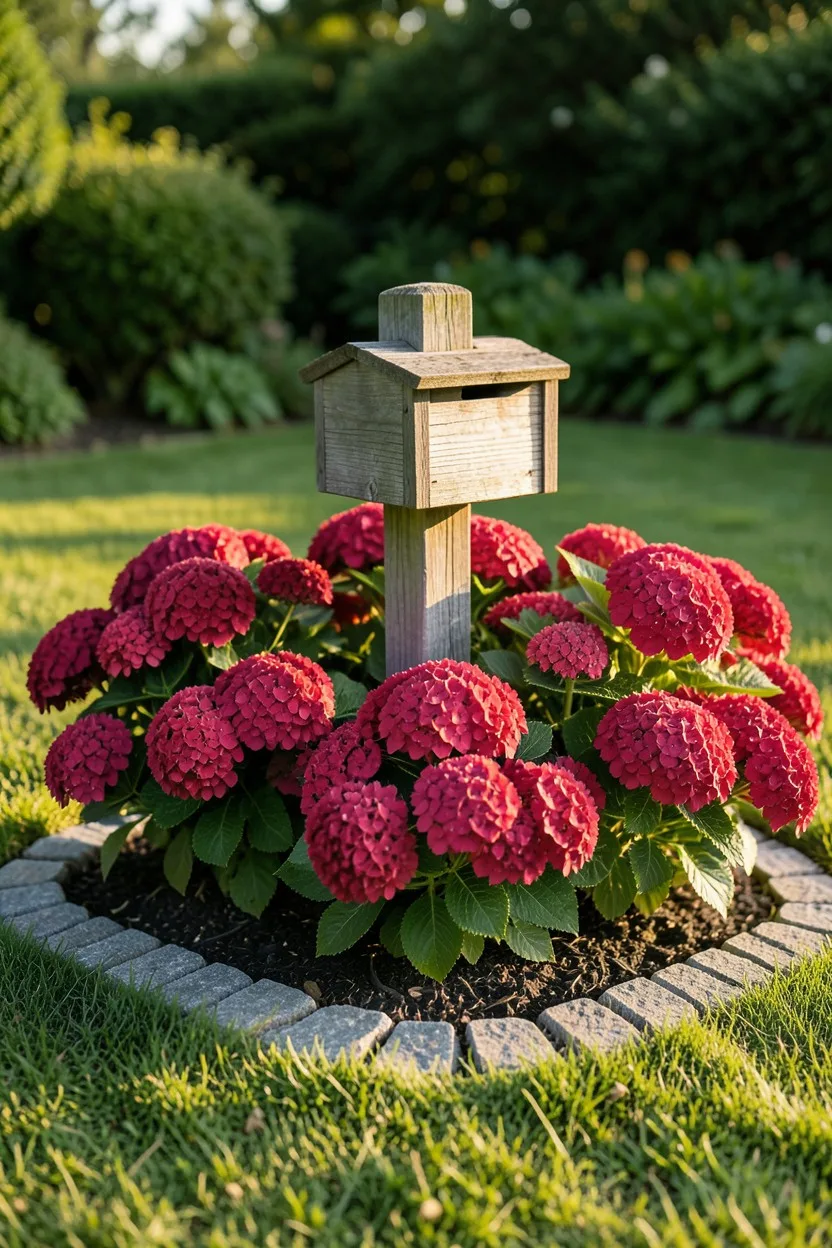
Your mailbox is the very first thing people see when they pull up to your home, yet most sit inside an uninspired ring of weeds or basic annuals. Wipe out that tired bed and plant a trio of Cityline Paris mophead hydrangeas around the post. This dwarf macrophylla tops out at a minuscule two feet tall, making it completely safe for sightlines.
Cityline Paris is famous for its incredibly intense, deep red-pink flowers that hold their brilliant color for months without fading into muddy tones. Line the base of the mailbox bed with sharp cobblestone edging to prevent lawn mowers from nicking the stems, and pack the center with dark organic compost to fuel those intense red pigments.
💡 PRO TIP
Protect Mailbox Roots from Road Salt
Road salt from winter plows will ruin macrophylla soil chemistry. Flush your mailbox garden bed with deep, heavy waterings for ten minutes in early April to wash away residual sodium before new spring root growth starts.
14. Multi-Layered Textures Using Fine-Leafed Fern Companions
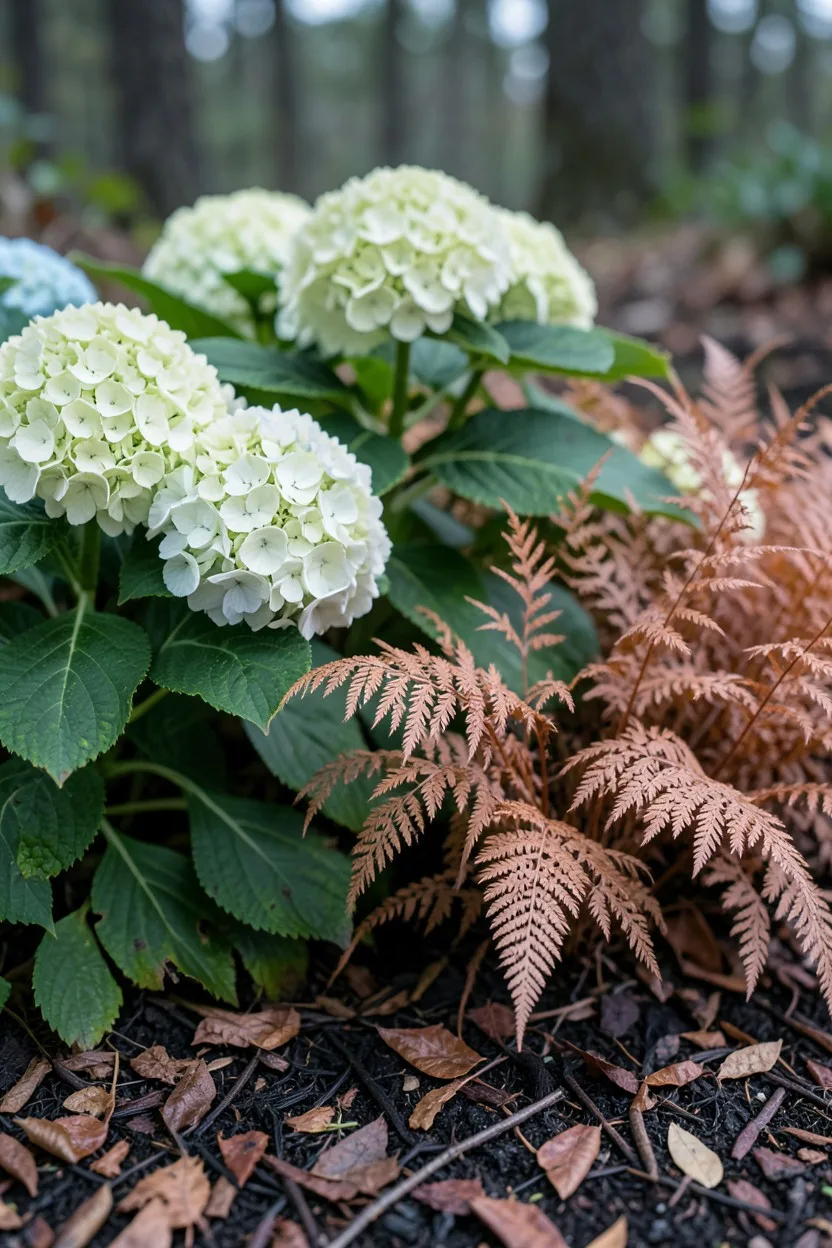
High-end landscaping is completely dependent on contrasting leaf textures. If every leaf in your front bed is the same size and shape, your eye gets bored and skips right over the design. Create an intentional texture clash by underplanting large-leafed mophead hydrangeas with delicate, airy Autumn Ferns.
Tuck the ferns directly around the bare lower stems of your hydrangeas. The bold, dinner-plate foliage of the hydrangea contrasts beautifully with the fine, feathery fronds of the ferns. As an added bonus, Autumn Ferns emerge in spring with a striking copper-bronze color that perfectly complements emerging spring hydrangea leaves before shifting to a rich forest green for the summer.
15. Textured Winter Interest with Dried Unique Panicles
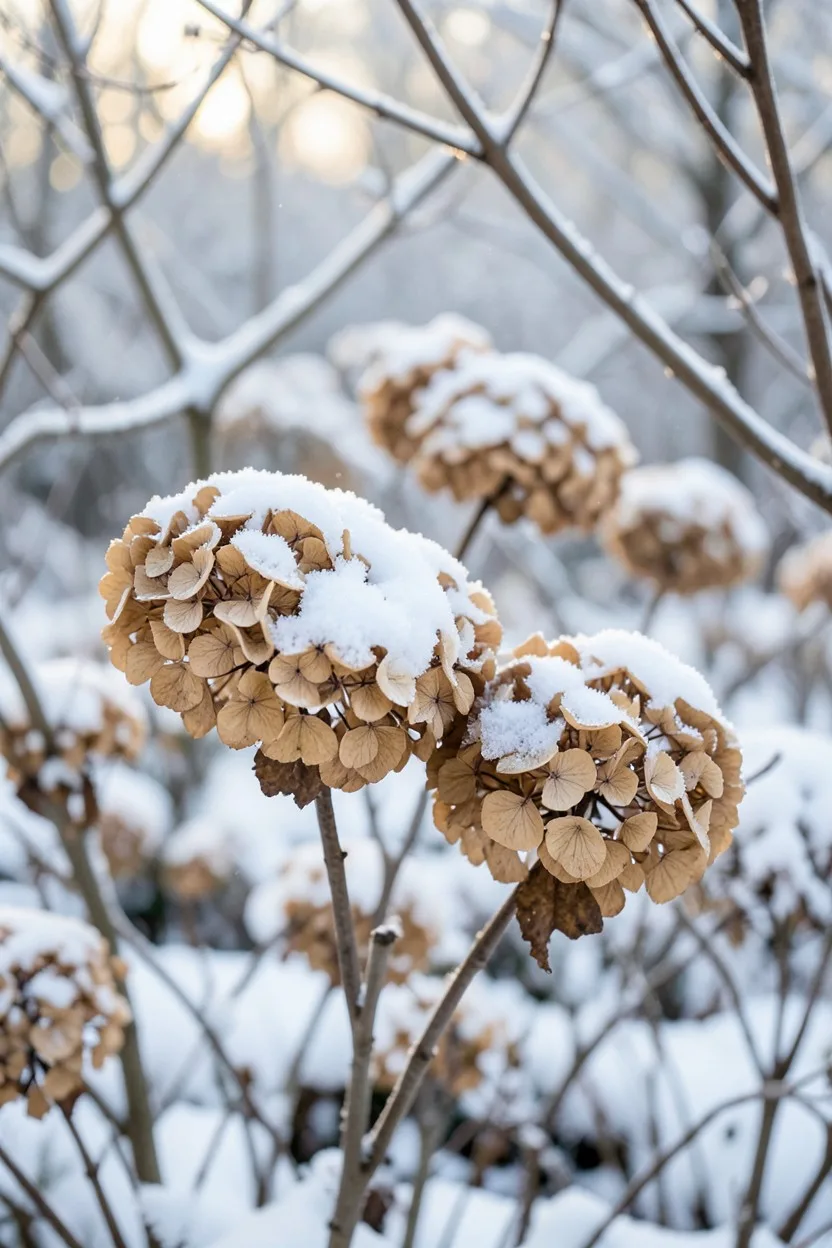
The absolute biggest mistake you can make with a hydrangea-focused landscape is cutting all your flower heads off in October. Magazine-quality yards look stunning twelve months a year because they embrace winter structure. Leave the spent flower heads of your Unique panicle hydrangeas completely intact through the winter season.
As freezing temperatures set in, the large blooms dry directly on the stems, transforming from antique pink into a beautiful, papery tan-bronze color. When winter snow falls, it rests lightly on top of these dried flower clouds, creating gorgeous structural shapes when the rest of the garden is completely flat and bare. Wait until late March to cut them back, right as the new green buds begin to swell.
📅 Your Annual Hydrangea Care Roadmap
Early April
Apply a balanced organic fertilizer and aluminum sulfate around the root zones as new green shoots start pushing through the soil.
Late May
Lay down a fresh three-inch layer of shredded hardwood mulch to lock in soil moisture before summer heat hits.
July & August
Provide deep, thorough root watering twice a week during hot spells, avoiding overhead spraying on the delicate leaves.
Late October
Leave spent flower heads on the stems to provide winter structure and protect delicate stem buds from frost damage.
March
Prune your panicle and smooth varieties down by one-third to encourage massive new blooms on the incoming summer growth.
Final Thoughts
If you are looking to narrow down your choices from this list for a quick front yard upgrade, skip the complicated color-changing mopheads and make your very first investment a trio of standard Limelight or compact Bobo panicle hydrangeas. They are virtually indestructible, tolerate imperfect soil, handle full blazing sun without a single complaint, and deliver that clean, structured white-and-green aesthetic that instantly makes any front yard look like an intentional, high-end design piece.

John Smith is the founder and CEO of Karaoke Machines Guru. He is a karaoke tutor and karaoke enthusiast and has been passionate about karaoke since he was a child. He also writes about karaoke-related tips, guides, and product reviews on this website.
He overlooks the whole website and makes sure that everything is running smoothly. Learn more!