
Some novels scare us because they are invented. These six scare us for a different reason. Each one grew out of a real crime, a real killer, or a real case file. The names changed. The settings shifted. The horror stayed close to the truth.
That is why they last. Readers keep coming back to them decades after publication, not just for the stories but for the questions behind them. How much did the author invent? How much really happened? Where does the record end and the imagination begin?
This list answers those questions book by book. For each novel you get the real case behind it, what the author kept, what the author changed, and the rating readers give it today. Start at the top and work down, or jump straight to the case you already know.
One rule runs through the whole list. Every entry separates what is documented from what is invented, and says so in plain words. A book that calls itself a true story gets checked against the record. A book that invents freely gets credit for being honest about it. The fact box under each title gives you the details first, so you can judge the story for yourself.
The Six Cases in One View
| Book | Published | Real crime | What happened to the case |
|---|---|---|---|
| In Cold Blood | 1966 | Clutter family murders, 1959 | Killers caught, tried, executed |
| Psycho | 1959 | Ed Gein, 1957 | Gein arrested, died in an institution |
| The Silence of the Lambs | 1988 | Bundy, Gein, Heidnik | All three killers caught |
| The Black Dahlia | 1987 | Elizabeth Short murder, 1947 | Still unsolved |
| The Exorcist | 1971 | Roland Doe exorcism, 1949 | Rites documented, possession disputed |
| The Amityville Horror | 1977 | DeFeo family murders, 1974 | DeFeo convicted, haunting disputed |
Only one of the six cases is still officially unsolved: the murder of Elizabeth Short.
1. In Cold Blood
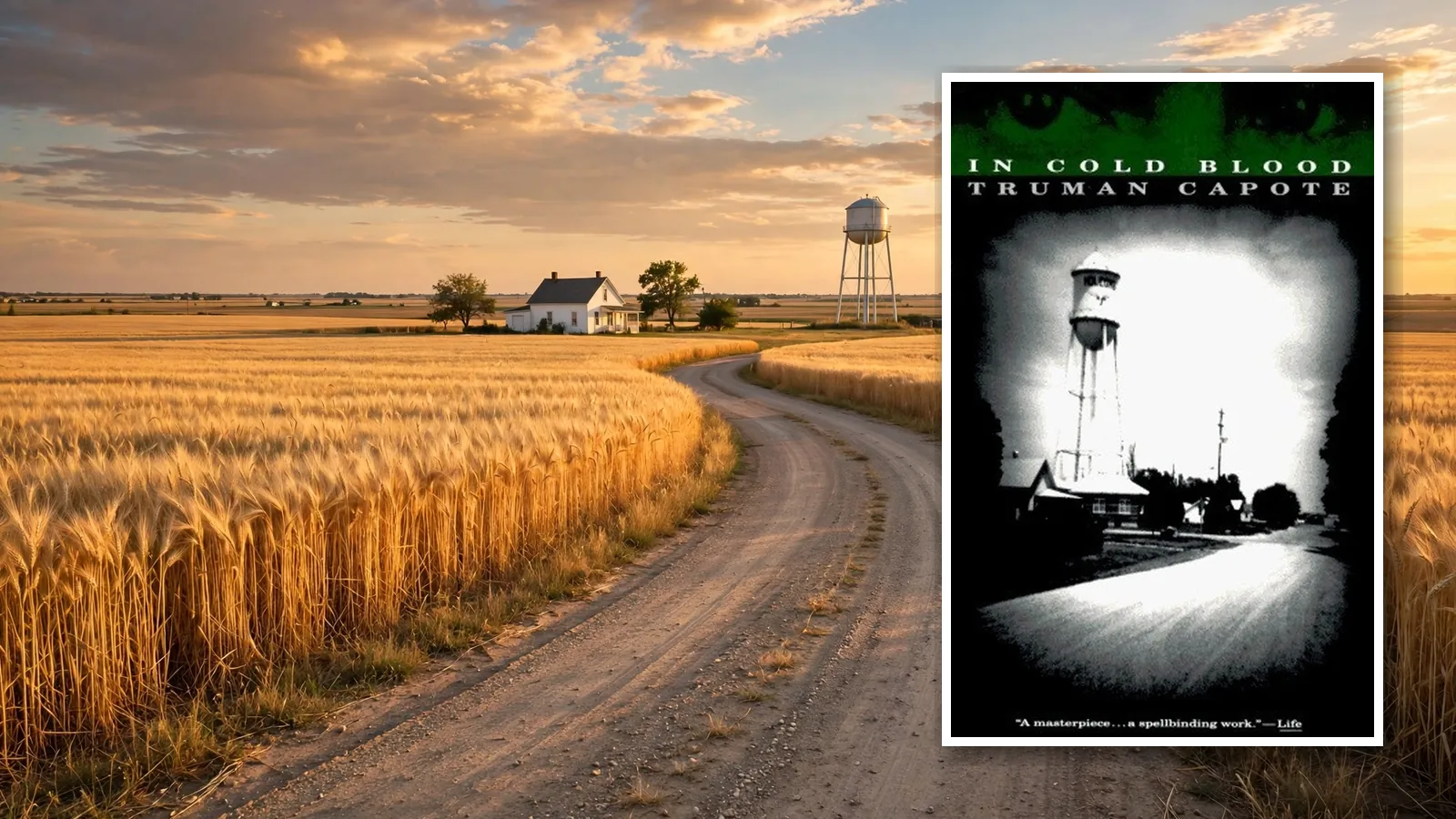
On the morning of November 15, 1959, four members of the Clutter family were found dead in their farmhouse in Holcomb, Kansas. Herbert Clutter, his wife Bonnie, and their teenage children Nancy and Kenyon had been shot at close range. There was no clear motive and almost no clues. Two weeks later Truman Capote read a short newspaper item about the murders and traveled to Kansas with his friend Harper Lee. He stayed for years, interviewing townspeople, detectives, and finally the killers themselves.
At a glance
Genre: True crime, nonfiction novel
Author: Truman Capote
Year: 1966
Goodreads rating: 4.09/5
Real crime: The Clutter family murders in Holcomb, Kansas, 1959
Richard Hickock and Perry Smith were arrested six weeks after the murders. Both men were tried, convicted, and sentenced to death. Capote watched their execution by hanging on April 14, 1965. The book that came out of it, published in 1966 after running in The New Yorker, reads like a novel but is built from interviews, court records, and Capote’s own notes. He called it a nonfiction novel, and the label stuck.
Readers should know that later researchers found places where Capote shaped the facts for effect. Scenes were compressed and dialogue was rebuilt from memory. The core of the story stands. The murders, the manhunt, the trial, and the executions all happened as described. It remains the second best-selling true crime book in history, behind only Helter Skelter.
Start here if you want the truest book on the list. It is also the saddest. Capote gives the Clutter family a full life before the night of the murders, so the loss lands hard. The killers get the same close treatment, which makes the book uncomfortable in the best way. Few true crime books since have matched it.
2. Psycho
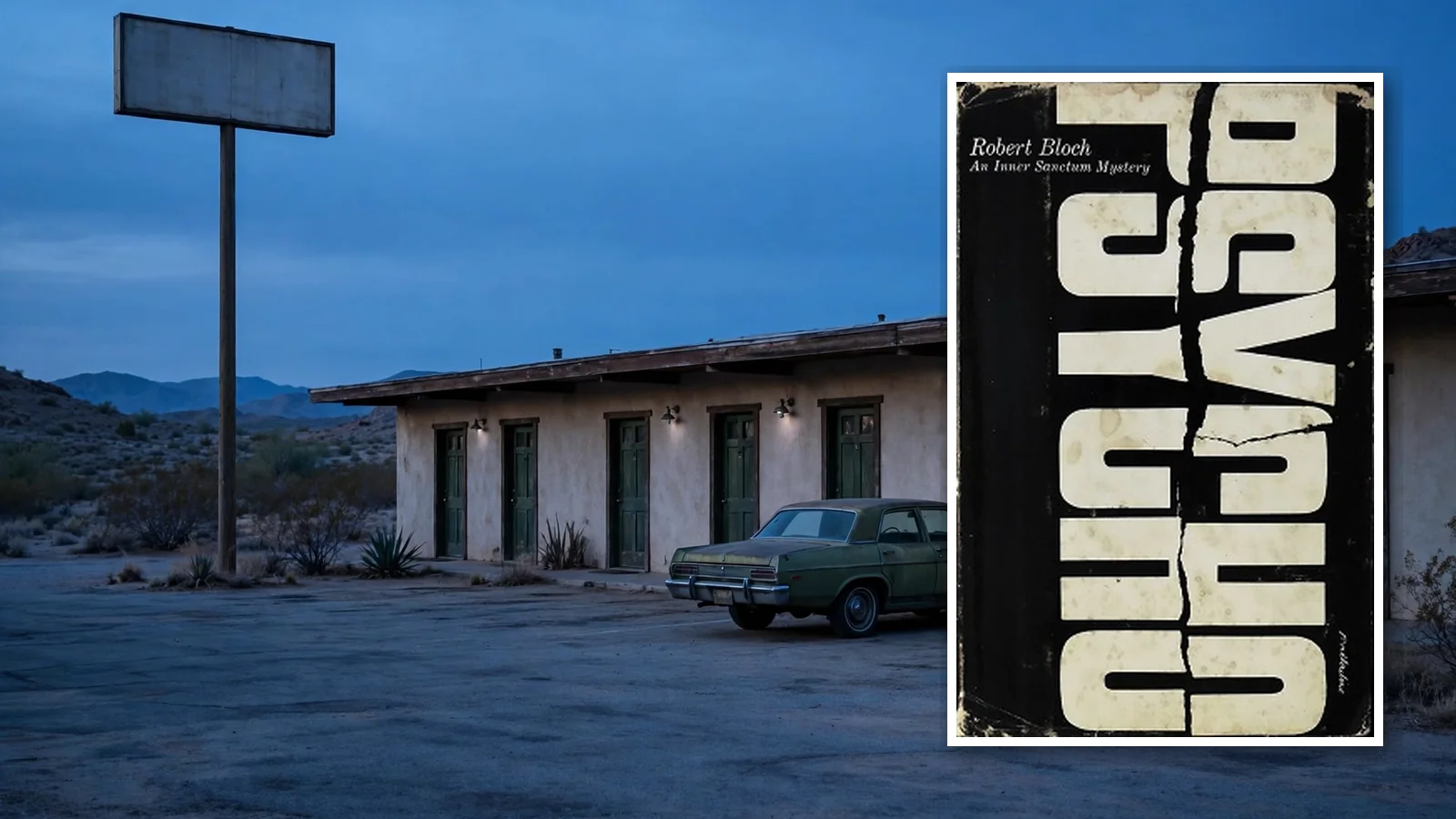
Mary Crane steals money from her employer and runs. She stops for the night at the Bates Motel, a lonely place run by a shy young man named Norman Bates. She never checks out. That is the whole setup of Robert Bloch’s Psycho, published on April 10, 1959, and it still works because Bloch keeps the story small. One motel, one guest, one man who talks to his mother in the next room.
At a glance
Genre: Horror thriller
Author: Robert Bloch
Year: 1959
Goodreads rating: 4.10/5
Real crime: The Ed Gein case in Plainfield, Wisconsin, 1957
Buy: Psycho on Amazon
The real spark came from Plainfield, Wisconsin. In November 1957 police arrested Ed Gein for the murders of two women and found furniture, silverware, and clothing made from human skin in his farmhouse. Bloch lived only 35 miles away in Weyauwega. His novel was almost finished when the Gein news broke, so he added a line that points to Gein in one of the final chapters. Years later he admitted how closely his invented killer matched the real one.
The match is loose, and that matters. Gein never ran a motel. He never killed anyone in a shower. He never kept his mother’s body in the house or dressed in her clothes. Those details are pure Bloch. What Gein gave him was the idea itself: a quiet man in a small town, living a double life nobody suspected. Alfred Hitchcock turned the book into a film in 1960, and the Bates Motel has haunted readers ever since.
The book and the film differ in small ways that fans love to argue about. In the novel the heroine is Mary Crane, not Marion Crane. Her boyfriend Sam gets more time on the page, and the ending leans harder on a psychiatrist who explains Norman in plain terms. Hitchcock cut much of that explanation and let the images do the work. Read the book first and the film plays differently. You will notice how much Hitchcock kept, and how little he needed to change.
3. The Silence of the Lambs
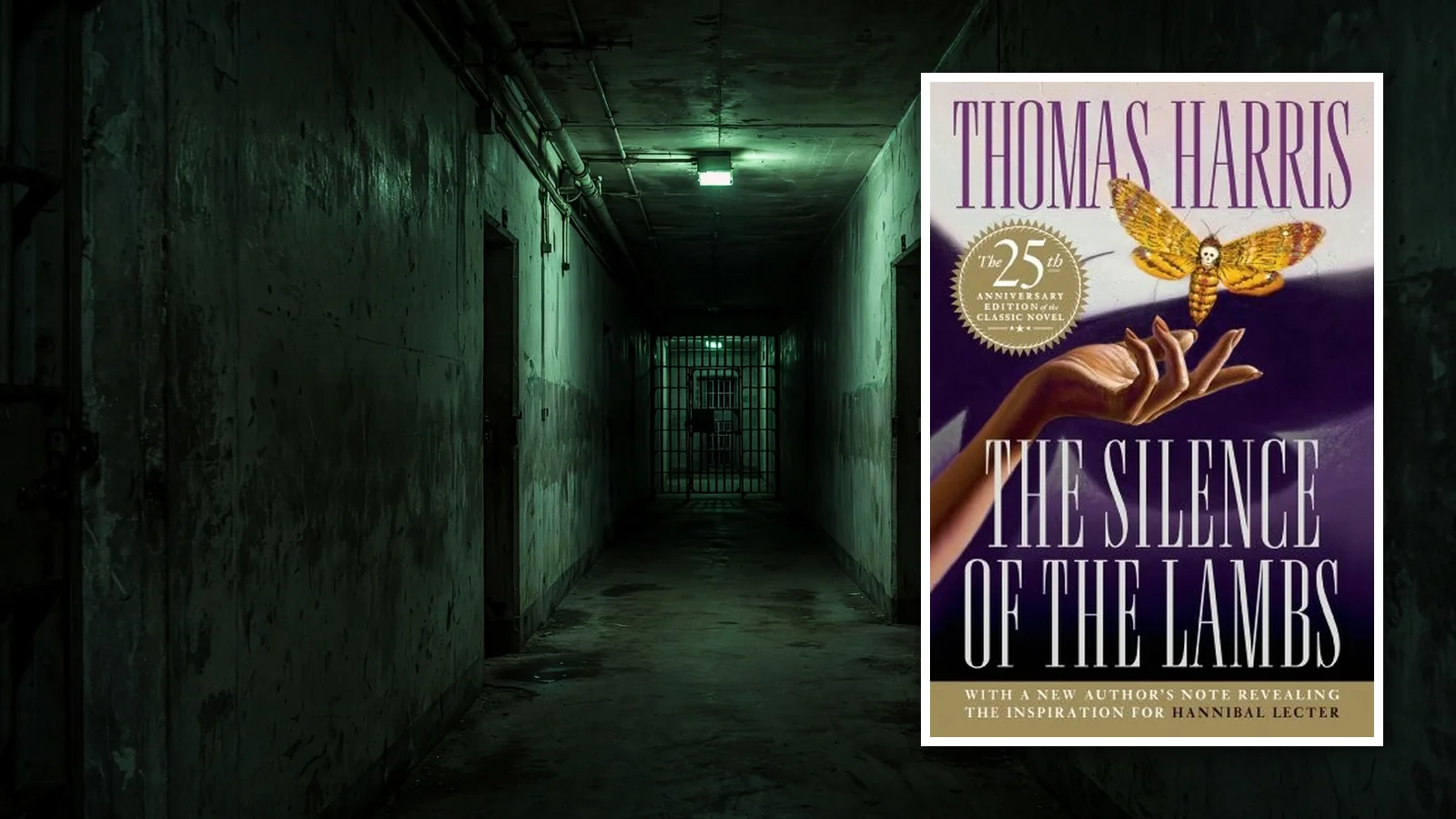
FBI trainee Clarice Starling needs help catching a killer who skins his victims. Her only lead is a prisoner who understands killers better than anyone: Dr. Hannibal Lecter, a brilliant psychiatrist who murders and eats his victims. Thomas Harris published The Silence of the Lambs on August 29, 1988, and it became the book that defined the modern serial killer thriller. The 1991 film won all five major Academy Awards.
At a glance
Genre: Psychological thriller
Author: Thomas Harris
Year: 1988
Goodreads rating: 4.25/5
Real crime: Ted Bundy, Ed Gein, and Gary Heidnik, plus the Alfredo Balli Trevino case
Neither villain comes from one real person. Buffalo Bill, real name Jame Gumb, is a mosaic. The fake cast he uses to lure a victim comes from Ted Bundy, who used the same trick. The skinning comes from Ed Gein. The pit in the basement where he keeps his victims comes from Gary Heidnik, who held six women captive in his Philadelphia basement. Lecter has his own source. Harris met a murderer he calls Dr. Salazar in a Mexican prison in the 1960s and later identified him as Alfredo Balli Trevino, a doctor jailed for killing his boyfriend in 1959.
Harris spent days with the FBI’s Behavioral Science Unit while researching the book, and it shows. The profiling scenes, the interviews, and the way Clarice works a case all feel grounded in real procedure. That grounding is what makes the invented parts land. When Lecter talks about a killer’s mind, readers believe him, because much of what he says comes from real case files.
Lecter first appeared in Harris’s earlier novel Red Dragon, published in 1981, but it was this book that made him a legend. Harris himself is famously private. He gives almost no interviews and rarely talks about his work in public. That silence only adds to the mystery around the books. Readers have spent decades tracing his sources, and the 25th anniversary edition finally gave them a gift: a new note from Harris revealing how he met the real doctor behind Lecter.
How Much Is True?
In Cold Blood: almost all real. Capote interviewed the killers, but some scenes were shaped for effect.
Psycho: only the spark is real. Norman Bates, the motel, and the shower are all invented.
The Silence of the Lambs: a mosaic. No single real killer matches Buffalo Bill or Lecter.
The Black Dahlia: a real victim and a real unsolved case, with fictional detectives and a fictional ending.
The Exorcist: a real 1949 exorcism report, with a fictional girl and fictional priests.
The Amityville Horror: real murders, while the haunting claims are disputed to this day.
4. The Black Dahlia
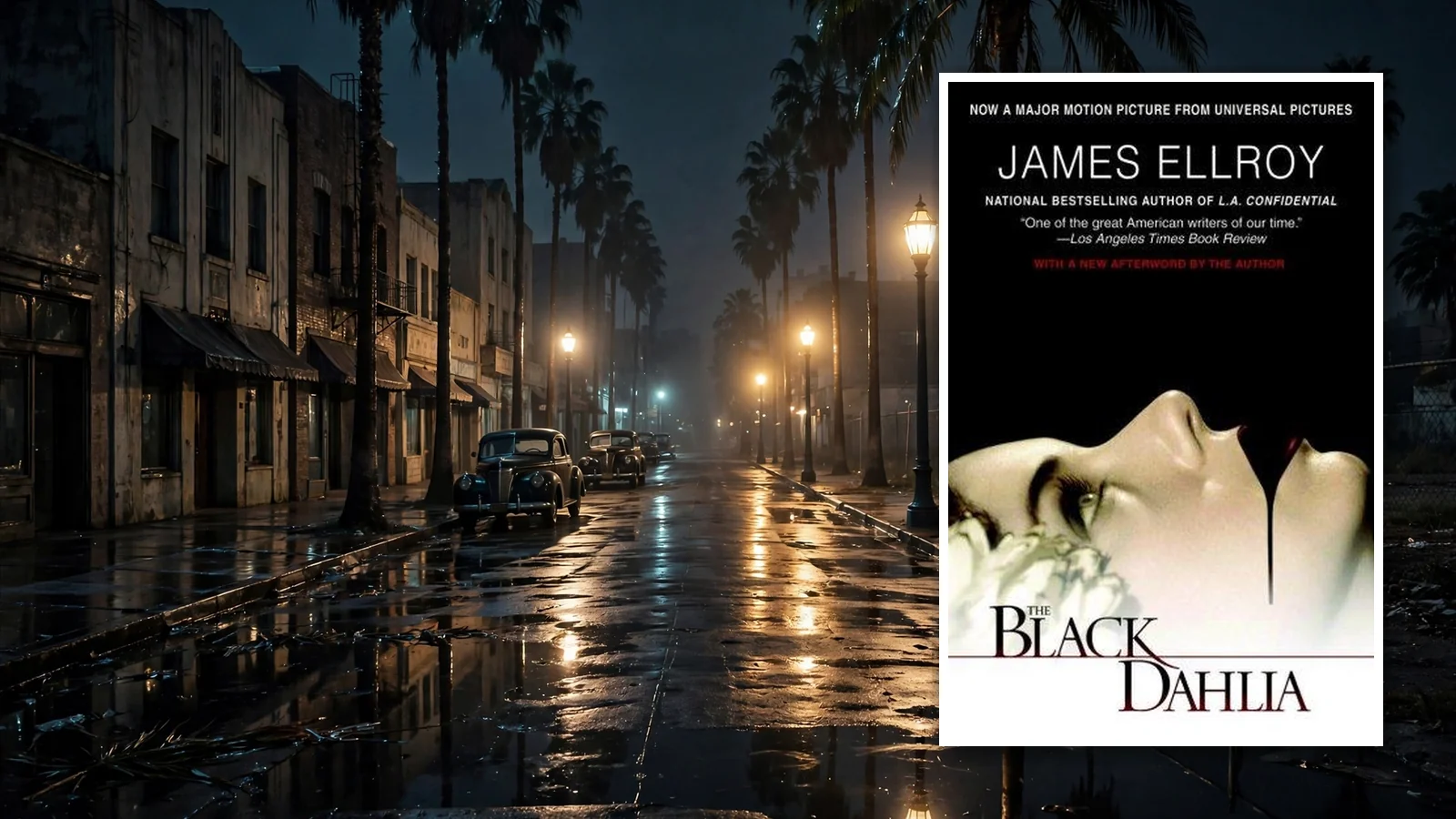
On January 15, 1947, a woman’s body was found in a vacant lot in Los Angeles. She had been cut in two and left on display. The victim was Elizabeth Short, a 22-year-old who had drifted to Hollywood hoping for a film career. The press named her the Black Dahlia, and the case became the most famous unsolved murder in American history. James Ellroy built his 1987 novel around it, and the book made his name.
At a glance
Genre: Crime noir
Author: James Ellroy
Year: 1987
Goodreads rating: 4.20/5
Real crime: The murder of Elizabeth Short in Los Angeles, 1947
Ellroy’s detectives, Dwight Bleichert and Lee Blanchard, are invented. So is the ending. In the novel they find the killer and deliver their own justice. In real life nobody was ever charged, and the case is still open. What is real is the city around them: the corrupt postwar LAPD, the press feeding frenzy, and the way a young woman’s death became public entertainment. Ellroy knew the material in a personal way. His own mother, Geneva Hilliker Ellroy, was murdered in 1958, and he dedicated the book to her.
Read it for the atmosphere as much as the mystery. Ellroy writes Los Angeles like a place that eats people, and the Short case gives him the perfect subject. Just remember which parts are history and which parts are invention. The victim was real. The detectives were not. The ending is the one Ellroy wished the real case had.
The novel was filmed in 2006 by Brian De Palma, with Josh Hartnett as Bucky Bleichert. The film was a disappointment, and most fans will tell you to read the book instead. Ellroy returned to real murder again in My Dark Places, a nonfiction book about his mother’s unsolved killing. Read together, the two books show the same obsession from two sides: one dressed as fiction, one told straight.
5. The Exorcist
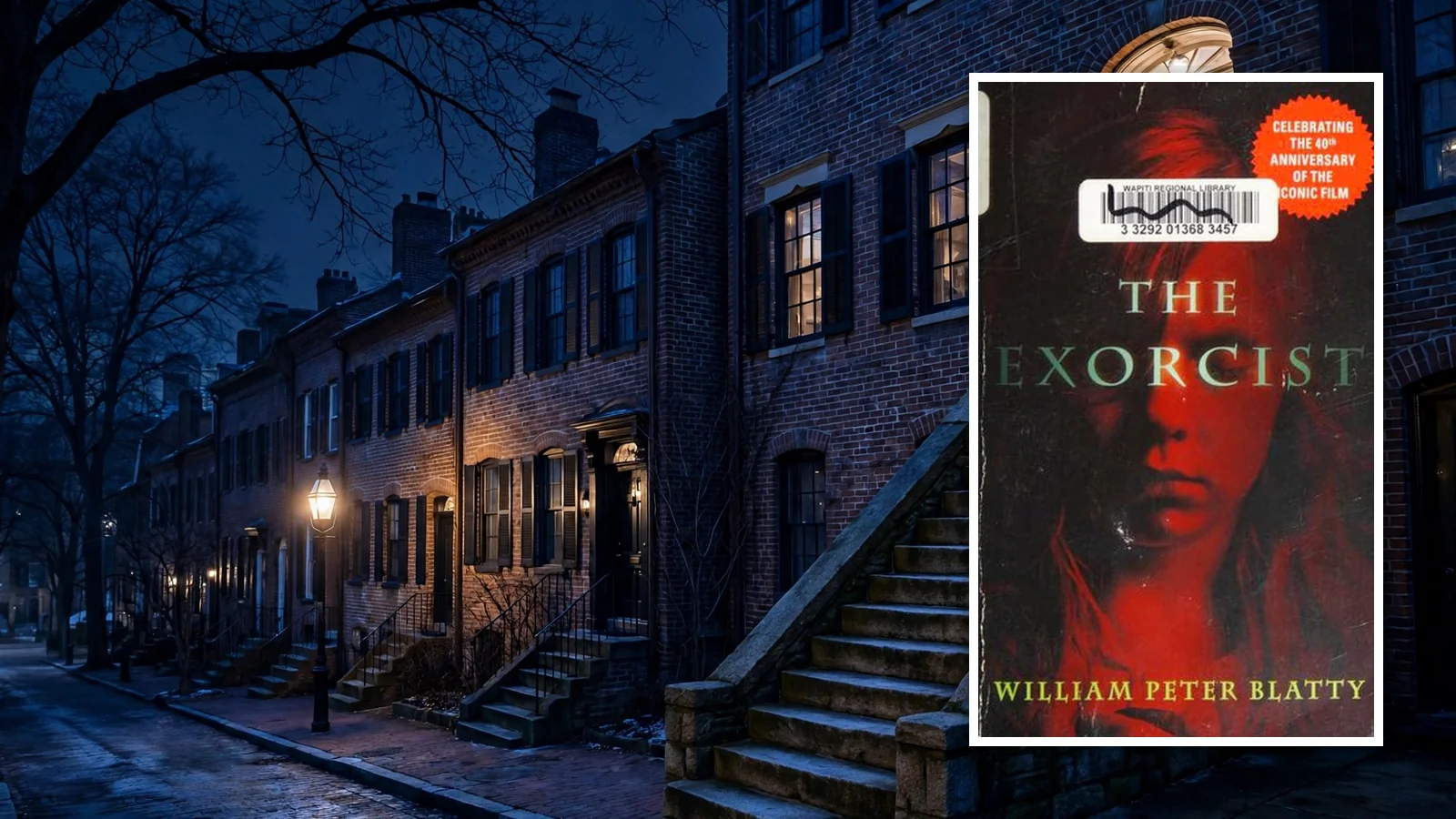
Twelve-year-old Regan MacNeil starts acting strange. Her voice changes. Her body twists. Doctors find nothing wrong. Her mother, a famous actress living in Washington, turns to the church, and two priests agree to perform an exorcism. William Peter Blatty published The Exorcist on May 5, 1971. It spent 57 weeks on the New York Times bestseller list, 17 of them at number one.
At a glance
Genre: Horror
Author: William Peter Blatty
Year: 1971
Goodreads rating: 4.05/5
Real crime: The 1949 Roland Doe exorcism case
Blatty heard about the case that inspired him while he was a student at Georgetown University. In 1949 a boy known by the pseudonym Roland Doe, later identified by researchers as Ronald Hunkeler of Cottage City, Maryland, was the subject of a series of exorcisms led by the Jesuit priest William Bowdern, mostly in St. Louis. Blatty changed the boy into a girl, moved the story to Washington, and invented the priests. The bones of the case, a child, a desperate family, and a church ritual, stayed the same.
Honesty matters here. The 1949 case is documented as a series of exorcism rites, but there is no hard evidence that a possession took place, and later research points to a troubled boy from a troubled home. Blatty never claimed his novel was a record. He used a real report as the seed for a story about faith, doubt, and a mother’s love. The book still tops lists of the scariest novels ever written.
Blatty wrote the screenplay for the 1973 film himself and won an Academy Award for it. He later wrote a sequel novel, Legion, and a 40th anniversary edition of The Exorcist that restores scenes cut from the first printing. The story has never really left the culture. New editions, stage versions, and television series keep returning to the same house in Georgetown, and each one starts from the same 1949 report that first caught Blatty’s attention as a student.
6. The Amityville Horror
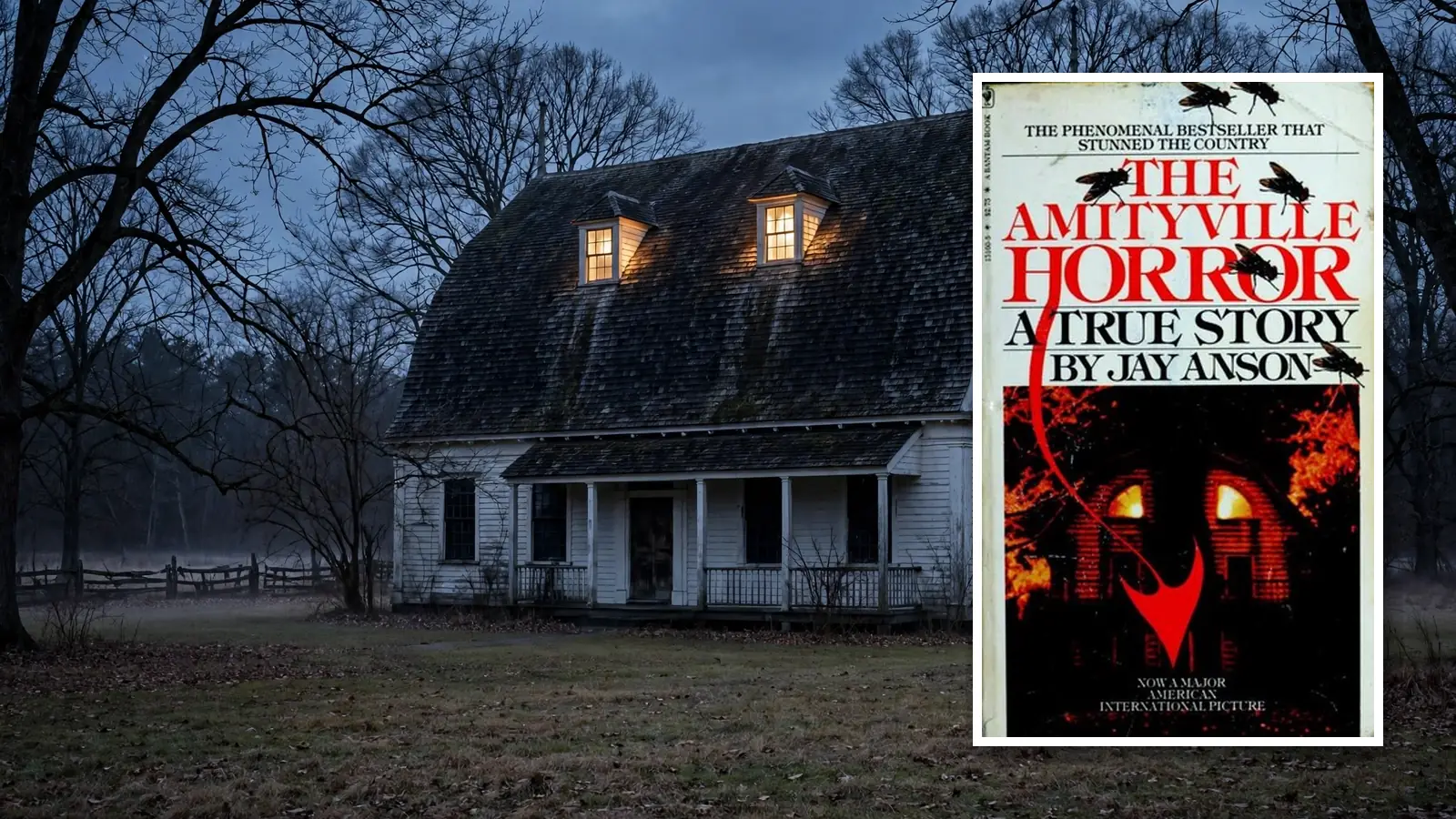
On November 13, 1974, 23-year-old Ronald DeFeo Jr. shot and killed six members of his family at 112 Ocean Avenue in Amityville, New York. He was convicted of murder in November 1975. Thirteen months after the killings, George and Kathy Lutz moved into the same house with their three children. Twenty-eight days later they fled, saying the house was haunted. Jay Anson turned their account into The Amityville Horror, published on September 13, 1977.
At a glance
Genre: Horror
Author: Jay Anson
Year: 1977
Goodreads rating: 3.83/5
Real crime: The DeFeo family murders in Amityville, New York, 1974
The murders are a matter of public record. The haunting is not. Anson built the book from the Lutzes’ own tapes and interviews, and the story became a phenomenon, selling around 10 million copies and spawning a film in 1979. But the claims have been challenged from the start. DeFeo’s own lawyer later said the haunting story was invented over bottles of wine, and skeptics have picked apart details in the book for decades. Anson himself would never say plainly whether he believed it.
That split is what makes the book worth reading with care. The first chapters, about the DeFeo murders and the house standing empty, are grounded in fact. The rest is the Lutzes’ story as they told it, and readers have to decide for themselves how much to trust it. Go in knowing the murders were real and the ghosts are disputed, and the book works as a strange piece of American folklore rather than a record.
A Reading Order for the Brave
First, In Cold Blood. The truest book here, and the one that sets the standard.
Second, Psycho. Short, sharp, and the fastest read on the list.
Third, The Silence of the Lambs. The most gripping, and the best written thriller of the six.
Fourth, The Black Dahlia. The darkest and the densest, best read slowly.
Fifth, The Exorcist. Save it for a cold night when the house is quiet.
Last, The Amityville Horror. Read it as folklore, and argue about it after.
Six books, six real crimes, and not one of them reads the same way twice.
Six books, six real crimes, six different answers to the same question. Capote barely invented anything. Bloch invented almost everything except the spark. Harris stitched three killers into one. Ellroy solved a case that is still open. Blatty turned a disputed rite into a story about faith. Anson sold a haunting that may never have happened.
If you read only one, make it In Cold Blood. If you want the scariest night, pick The Exorcist. If you want the smartest thriller, pick The Silence of the Lambs. Whichever you choose, read the fact box first. Knowing what is real before you start changes every page that follows.
Read them in that order and you will see how the trick works. The best of these books never hide the seam between fact and fiction. They show it to you and let you decide what to believe. That is why readers still argue about them, still rate them, and still pass them to friends with the same warning: this one really happened, more or less.

John Smith is the founder and CEO of Karaoke Machines Guru. He is a karaoke tutor and karaoke enthusiast and has been passionate about karaoke since he was a child. He also writes about karaoke-related tips, guides, and product reviews on this website.
He overlooks the whole website and makes sure that everything is running smoothly. Learn more!