

On November 21, 2026, Wicked: For Good opens in cinemas, and one story finally gets its ending. The film completes the tale Gregory Maguire began in his novel Wicked, and millions of people will watch the last chapter land. Not every story is so lucky.
The eight books below never got the ending their authors planned. Some were cut short by death, one by war, and one by a story that simply outgrew its writer. Three of them were finished by other hands, and the rest stop where they stop: mid-sentence, mid-journey, or mid-war.
That is what makes them worth reading. An unfinished book shows you how a writer thinks, because the scaffolding is still up. You can see the plan, the second thoughts, and the places where the story was about to turn. A finished book hides all of that.
Fans have tried to finish these books for centuries. Dickens readers wrote their own endings to Edwin Drood within months of his death, and Sanditon has been continued by other writers and turned into a television series. The Wheel of Time got a real ending only because Jordan left notes and a family willing to hand them to another writer. Every one of these books has a second story: the story of what happened to it after its author stopped writing.
A note on the list: the rating and buy link for The Wheel of Time belong to The Eye of the World, the first book, because the series itself has no single rating. Three books on this list carry no verified Goodreads rating and three carry no buy link, because no verified figure or link could be found. They are left out rather than guessed.
Six centuries of unfinished books: when each story stopped
Six centuries separate the oldest book from the newest, and the same thing stopped them all: a life, or a war, running out before the story did.
1. The Wheel of Time

Robert Jordan planned The Wheel of Time as a trilogy. It grew into fourteen volumes plus a prequel, and it was still growing when he died. He was working on what was meant to be the twelfth and final book when he died on September 16, 2007. The story had become too big for one lifetime, and the ending existed only in notes and in conversations with his wife and editor.
Brandon Sanderson took those notes and finished the job. The final volume split into three books: The Gathering Storm in 2009, Towers of Midnight in 2010, and A Memory of Light on January 8, 2013. Readers argue about the seams, but the series has a real ending, and it has sold more than 100 million copies. A television version now runs on Prime Video. The rating and buy link below are for The Eye of the World, the 1990 first book, the one Jordan wrote alone.
If you have never read Jordan, start at the beginning. The road from the Two Rivers is long, and it is worth every step.
2. The Silmarillion
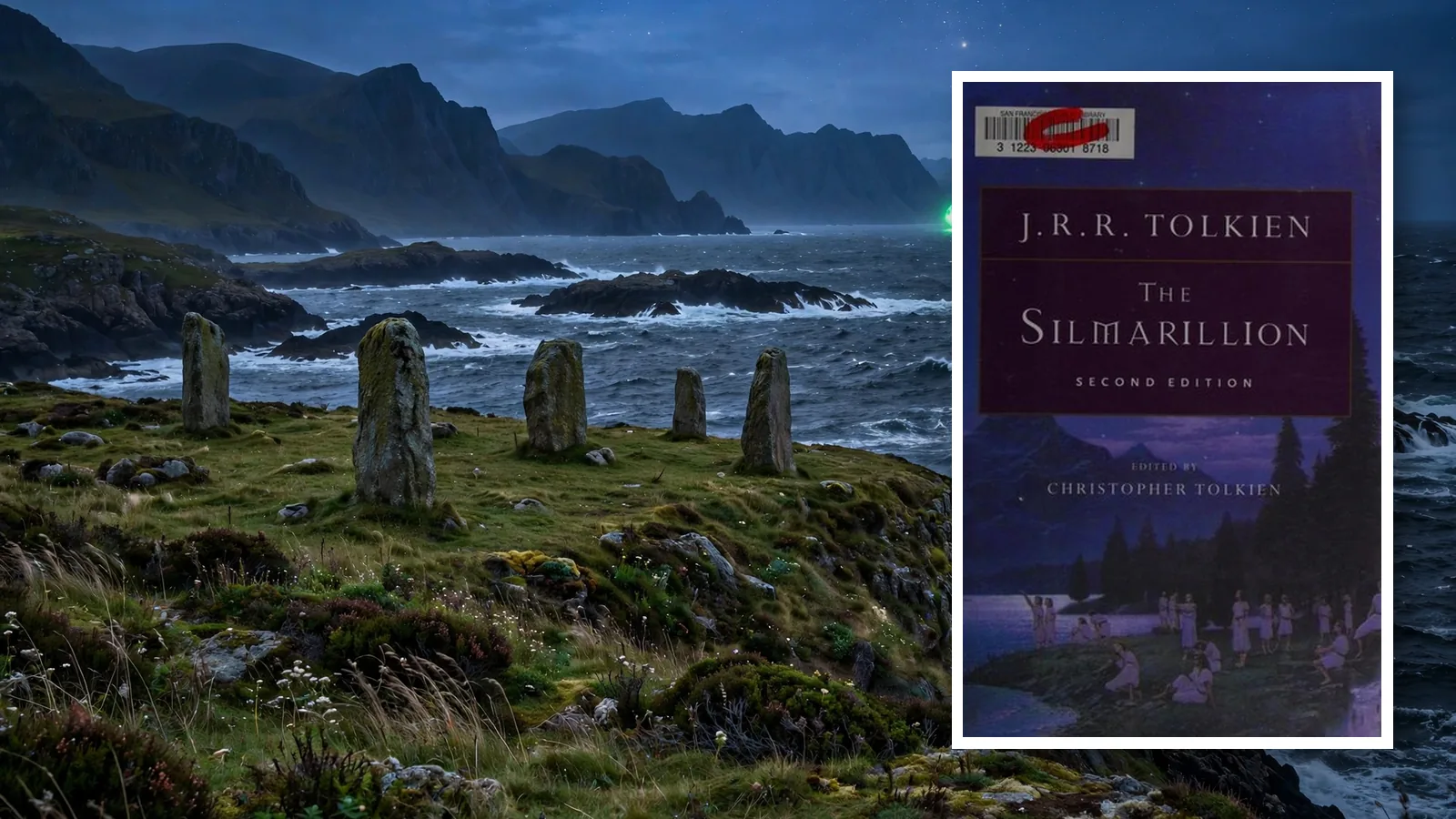
Tolkien worked on the stories of The Silmarillion from 1914, long before The Hobbit or The Lord of the Rings. They were his life’s work, the mythology behind Middle-earth, and he never finished them to his own satisfaction. He kept revising, retelling, and starting over for almost sixty years.
When he died in 1973, the papers were a mountain of drafts, some in different versions that contradicted each other. His son Christopher spent years sorting them, choosing between versions, and in places writing new connecting passages so the book could be read at all. The young Canadian writer Guy Gavriel Kay helped him sort the papers, and went on to become a fantasy novelist himself. It appeared on September 15, 1977, and won the 1978 Locus Award for Best Fantasy Novel.
Read it as a book of myths, not a novel. It reads best in small pieces, one story at a time.
3. The Mystery of Edwin Drood
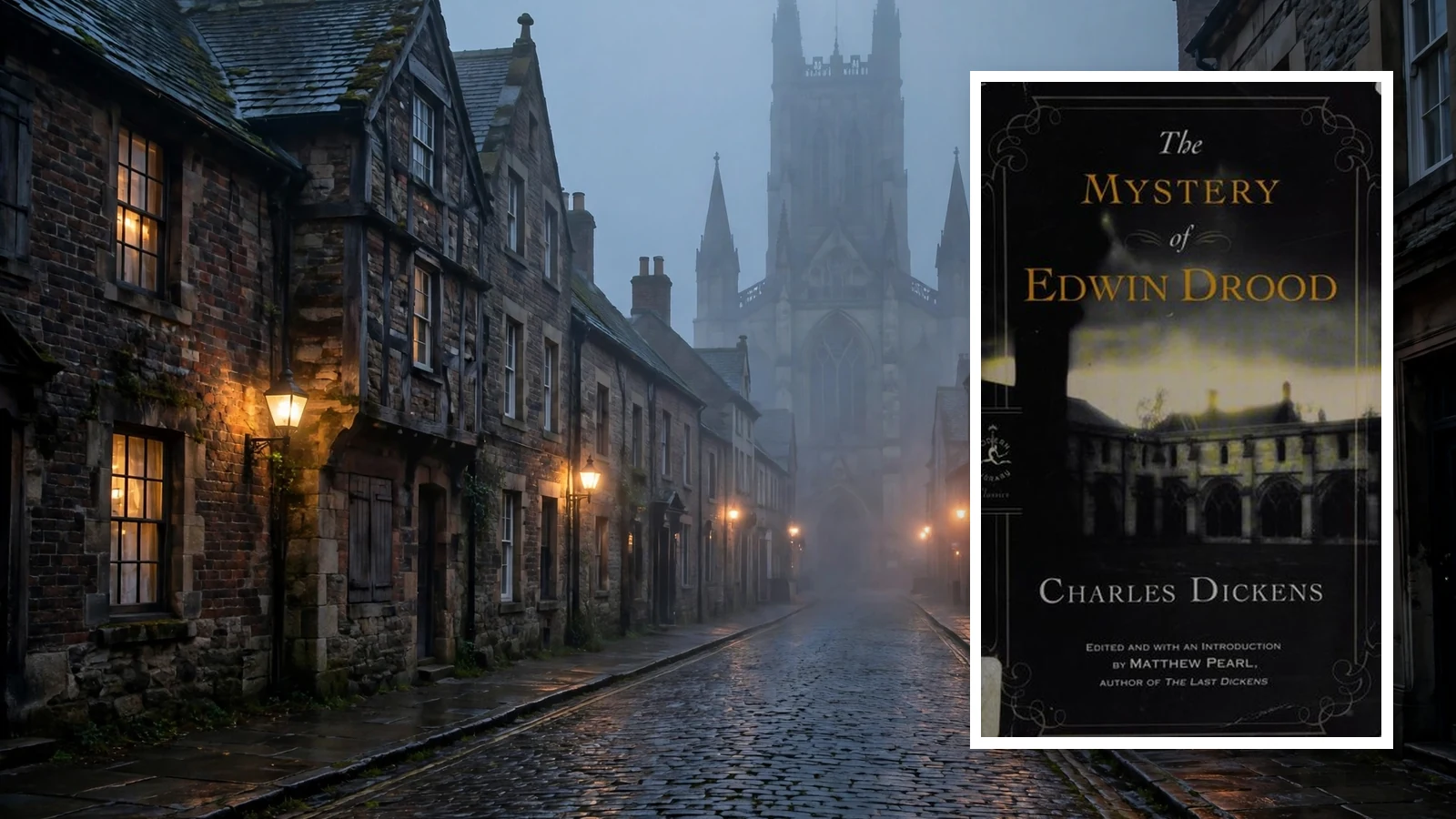
Dickens died with his last novel half written. The Mystery of Edwin Drood was planned in twelve monthly instalments, and only six were done when he suffered a stroke on June 8, 1870, the day after finishing chapter 22. He died the next day, and Edwin Drood was left in the middle of his story.
Edwin disappears on Christmas Eve, and the clues point at his uncle, the choirmaster John Jasper, a man with a secret opium habit and a violent temper. Dickens told his son one version of the ending and his sister-in-law another, and he called the book the Mystery, not the History, as if the not knowing was the point. Writers have tried to finish it for more than 150 years. No two of them agree.
Read it for the atmosphere, not the answer. The foggy cathedral town of Cloisterham is the real star.
4. The Canterbury Tales

Chaucer planned a storytelling contest on the road to Canterbury: thirty pilgrims, four tales each, about 120 stories in all. He finished 24 before he died in 1400, and the pilgrims never reach Canterbury in the text. The journey simply stops, the way a life does.
What survives is still the foundation of English literature. The Knight, the Wife of Bath, the Miller, and the Pardoner feel like people you know, not characters from more than 600 years ago. Some scholars argue the book is finished in its own way, because the Parson’s Tale and the Retraction close it with a sermon and an apology. Readers can decide for themselves.
Start with the General Prologue. The portraits of the pilgrims are the best character sketches in English.
Finished by other hands: who completed what
The Canterbury Tales, The Castle, and Suite Francaise were never finished by anyone. Green means completed by another hand. Gold means tried, but never settled.
5. The Castle
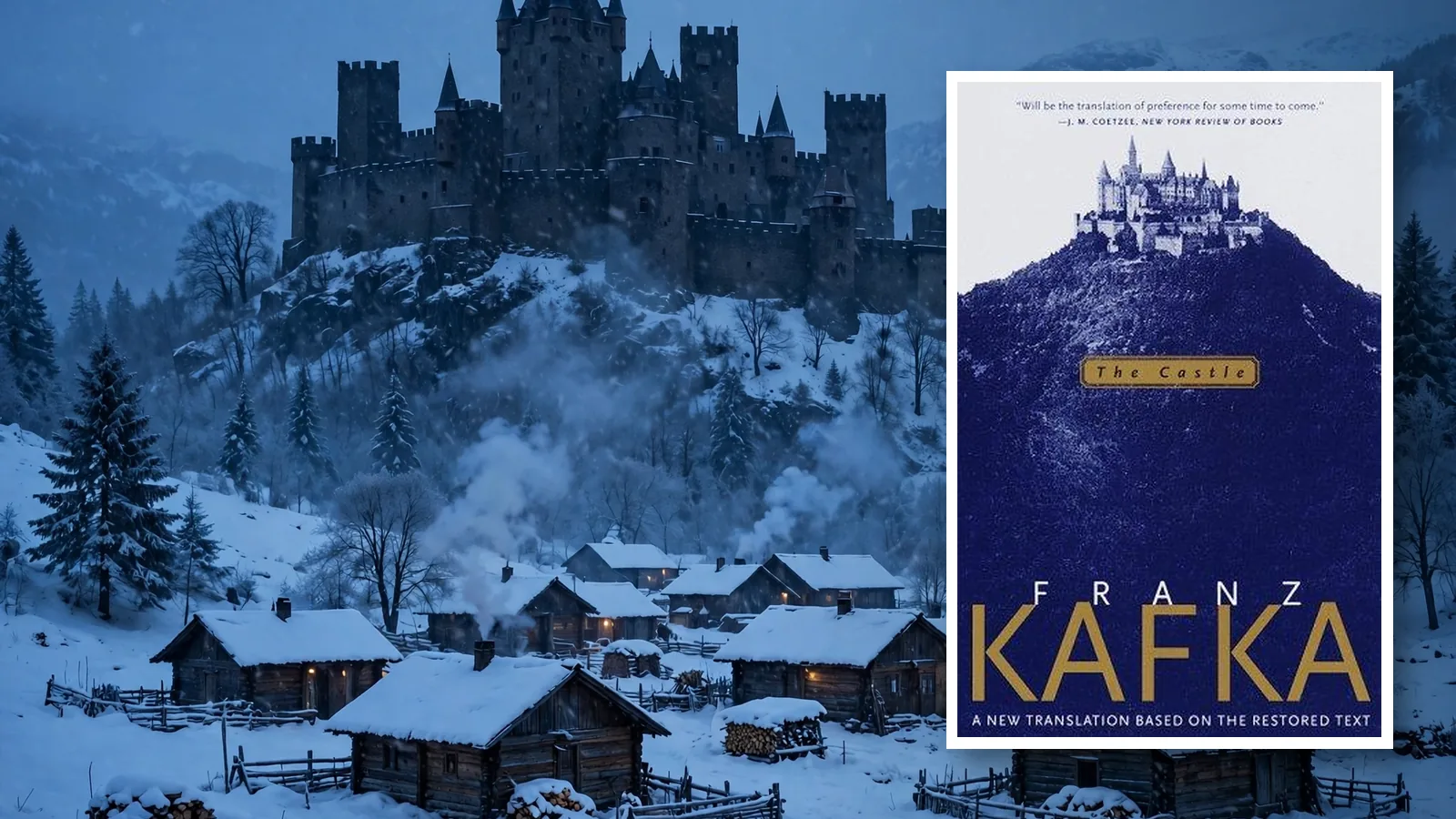
Kafka wrote The Castle in 1922, and it stops in the middle of a sentence in chapter 25. K., a land surveyor, arrives in a snowy village to take up a post with the castle authorities, and he never gets there. Every official he meets sends him to another official, and every promise dissolves into paperwork.
Kafka died of tuberculosis in June 1924, two years after writing it, and the book was published in 1926 by his friend Max Brod. Brod published it against Kafka’s written instruction to burn everything unpublished. Without that disobedience, we would have no Castle and no Trial. Brod also published The Trial the same way, and he spent the rest of his life publishing and promoting the friend who had asked him to destroy it all. The book is unfinished because its author was unfinished with the world it describes.
Read it slowly. The frustration K. feels is the point, and rushing only makes it worse.
6. The Pale King
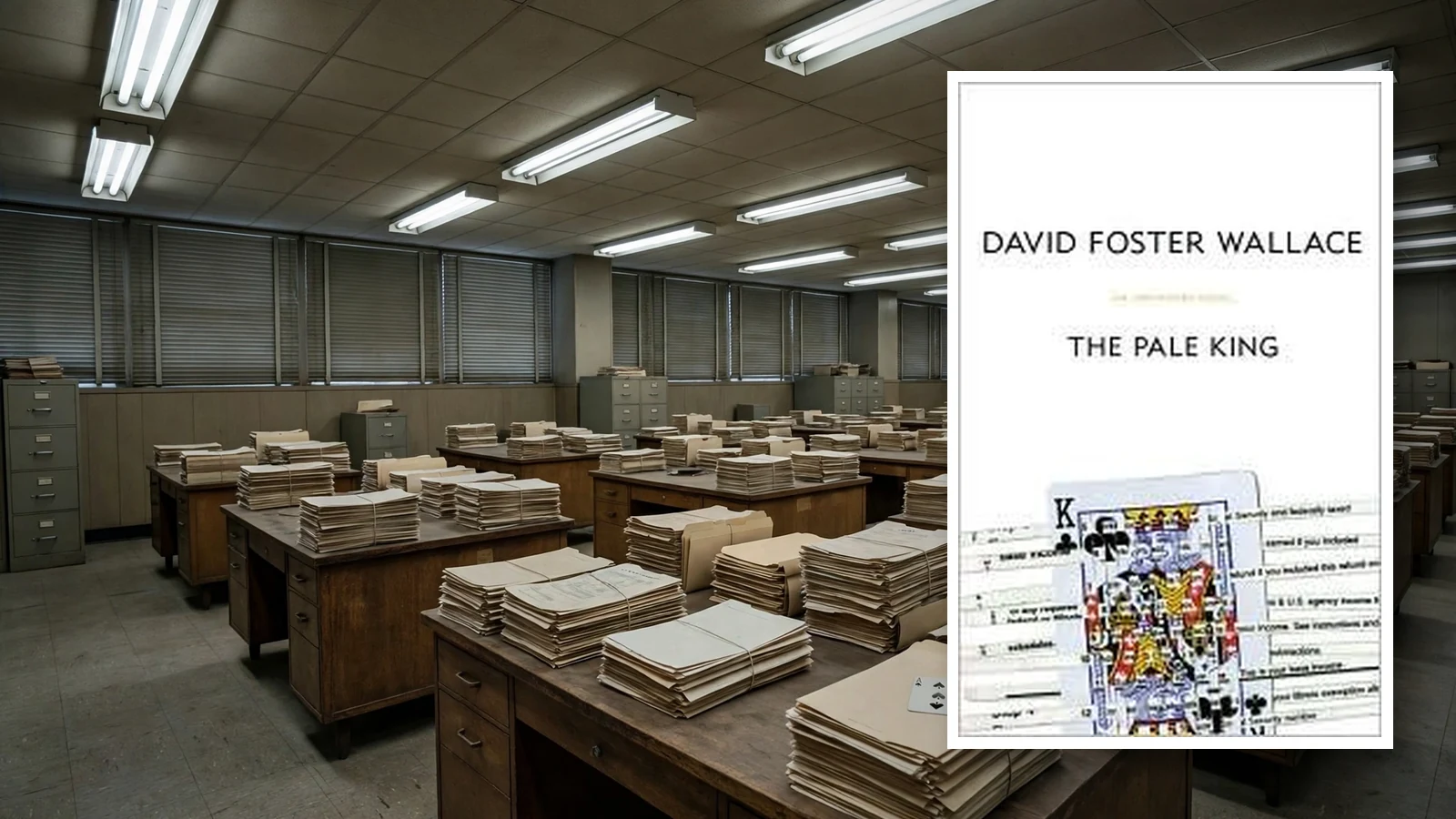
David Foster Wallace left The Pale King unfinished when he died in 2008. His editor, Michael Pietsch, assembled the book from more than 1,000 pages of drafts and notes, choosing the order and cutting what could not be made to fit. It appeared on April 15, 2011, and was a finalist for the 2012 Pulitzer Prize for Fiction, in a year when no prize was given.
The setting is an IRS Regional Examination Center in Peoria, Illinois, and the subject is boredom: how people live with work that numbs them, and how attention itself can be a kind of prayer. It is funny in places, and it is also the most serious book Wallace ever wrote about paying attention to other people.
Read it in pieces. It was built from pieces, and it works best that way.
7. Sanditon

Jane Austen wrote Sanditon between January 27 and March 18, 1817, and then she stopped. She was ill, and she died on July 18, 1817, at 41. What survives is eleven chapters and the opening of a twelfth, about 24,000 words, roughly a third of a novel. She called it The Brothers. The name Sanditon was added by editors later.
The heroine is Charlotte Heywood, a sensible young woman visiting a fishing village that Mr. Parker is turning into a fashionable seaside resort. The cast includes Miss Lambe, a mixed-race heiress from the West Indies, a character Austen would have made more of if she had lived. The book was first published in 1925, more than a century after she wrote it.
Read it for what it promises. The wit is already there, and the ending is the one you write in your head.
8. Suite Francaise
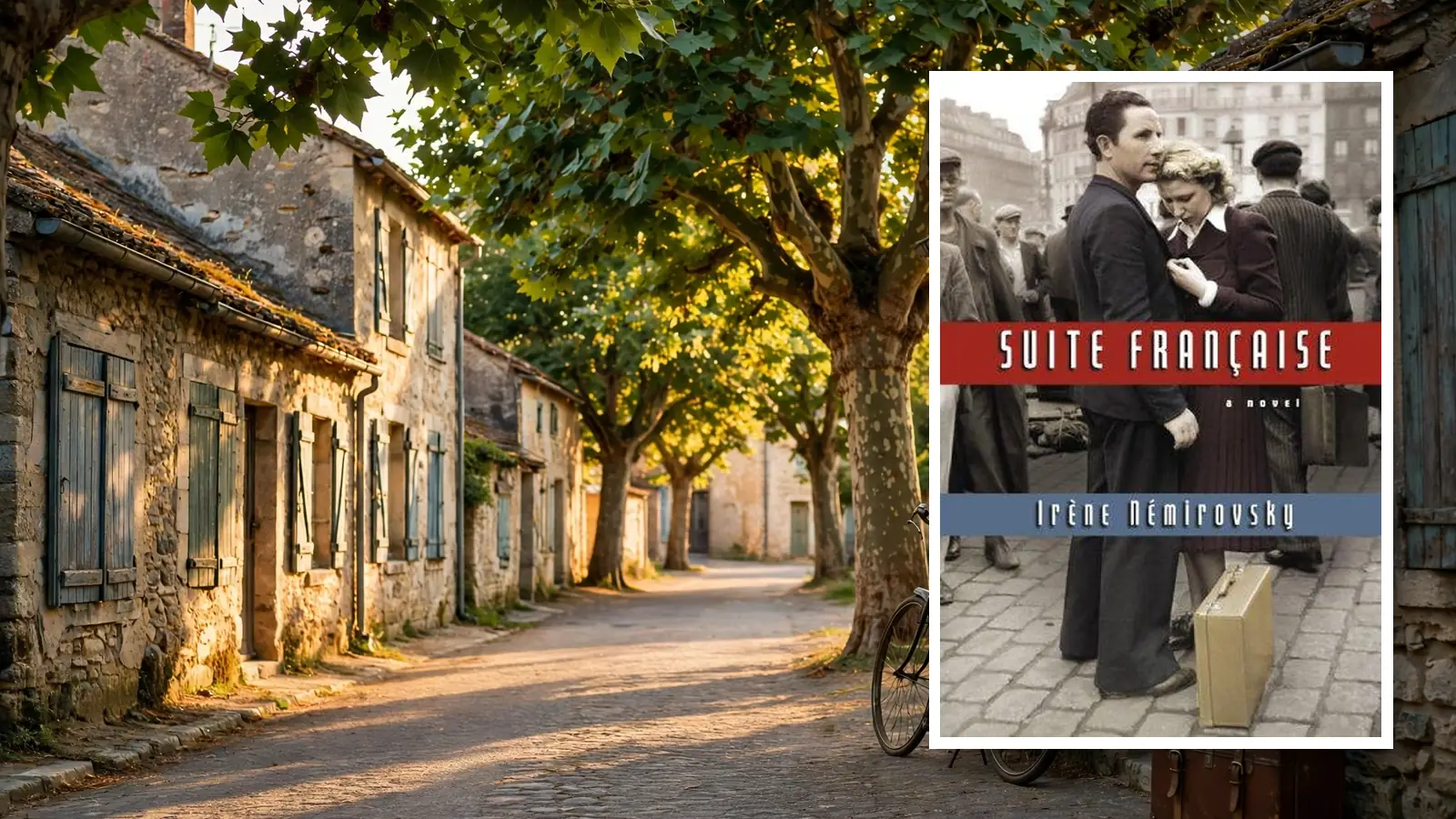
Irene Nemirovsky planned Suite Francaise as five novels about France under German occupation. She finished two, Storm in June and Dolce, before she was arrested in July 1942 and murdered at Auschwitz. She had become a celebrated novelist in France by the 1930s, after her first novel, David Golder, became a sensation in 1929. She wrote the first two novels while the war was still happening around her. The other three, Captivity, Battles, and Peace, exist only as titles and notes in her notebook.
Her daughters kept the notebook for decades without reading it, believing it was a diary too painful to open. They finally looked inside in 1998 and found a novel. It was published in France on October 31, 2004, and won the Prix Renaudot that year, the first time the prize was given to a dead author.
Read it for the second novel, Dolce, the story of a Frenchwoman and a German officer. It is the most human writing about the occupation you will find.
How much was actually finished
The Castle stops mid-sentence, so no bar can measure it. The Pale King survives as more than 1,000 pages of drafts, assembled after the author’s death.
Unfinished books ask something of the reader that finished books do not. They ask you to accept a story that will not tie itself up, and to find the value in the part that exists. The Castle will never tell you what is in the castle. Edwin Drood will never name his killer. Sanditon will never show you the resort Mr. Parker dreamed of.
That is not a flaw. It is the reason these books last. A finished book can be closed and shelved. An unfinished one stays open in your head, and you keep turning it over long after you put it down. The authors are gone, but the questions they left behind are still being argued over, still being finished by readers, and still worth asking.
Pick one and start this weekend. If you want an epic, take The Eye of the World. If you want a mystery, take Edwin Drood. If you want something short and strange, take The Castle. Whichever you choose, remember that you are reading a book its author never got to finish, and that is the whole point.

John Smith is the founder and CEO of Karaoke Machines Guru. He is a karaoke tutor and karaoke enthusiast and has been passionate about karaoke since he was a child. He also writes about karaoke-related tips, guides, and product reviews on this website.
He overlooks the whole website and makes sure that everything is running smoothly. Learn more!