

Ebenezer, a darker take on A Christmas Carol starring Johnny Depp as Scrooge, opened in theatres on November 13, 2026 and went straight to number one with about $19 million. Wicked: For Good follows on November 21, 2026. Christmas films are big business again, and the season is already crowded.
But the films most of us actually rewatch every year were not planned this carefully. The eight films on this list nearly did not exist at all. A studio tried to hide one from its own audience. A 70-year-old singer was legally first in line to play an action hero. A star quit on day one and offered his pay back. A director walked out before filming started. Each film survived something that should have killed it, and the story of how it survived is often better than the film itself.
That is the thread running through this list. These are not the best Christmas films ever made, and they are not ranked by quality. They are the films with the wildest true stories behind them, from 1947 to 2003, running 14 hours and 11 minutes in total, with an average IMDb rating of 7.1 out of 10. Watch them this December with fresh eyes, and you will never see them the same way again.
Eight Films, Eight Near Misses
Every film on this list survived something that should have ended it. Here is the short version of each escape.
- Miracle on 34th Street (1947): The studio hid Christmas and released it in May.
- Die Hard (1988): Frank Sinatra, aged 70, was legally first in line for the lead.
- Scrooged (1988): The star and the director fought every single day.
- Christmas Vacation (1989): The director quit after clashing with Chevy Chase.
- The Santa Clause (1994): The first draft had Scott shooting Santa.
- Jingle All the Way (1996): The star signed in February for a November release.
- How the Grinch Stole Christmas (2000): The star quit on day one and offered his pay back.
- Love Actually (2003): Four whole love stories were cut from the film.
1. Miracle on 34th Street

The film we watch every December opened in the middle of summer. 20th Century Fox finished Miracle on 34th Street in the spring of 1947, and studio head Darryl F. Zanuck refused to hold it until Christmas. He believed more people went to the movies in warm weather, so Fox released it in May 1947 and hid the holiday completely. The trailer never mentioned Christmas. The posters pushed Maureen O’Hara and John Payne as a romantic pair and kept Edmund Gwenn, who played Kris Kringle, in the background.
At a glance
Genre: Christmas comedy-drama
Director: George Seaton
Year: 1947
IMDb rating: 7.9/10
Runtime: 1 hour 36 minutes
Platform: Availability varies by region
The rush behind the film was just as frantic. The project was only greenlit at the end of October 1946, and the crew had to film during the real Macy’s Thanksgiving Day Parade on November 28, 1946, because Macy’s would only allow it if they did not slow the parade down. Shooting wrapped in March 1947, and the film was in theatres about two months later.
The gamble paid off in a way nobody at the studio expected. Audiences walked in expecting a summer romance and found a story about faith that still plays every December. The film won three Academy Awards, including Best Supporting Actor for Gwenn, and earned about $2.7 million at the box office. It is now the oldest film on this list, and it only exists as a Christmas classic because a studio boss was too impatient to wait for winter.
2. Die Hard
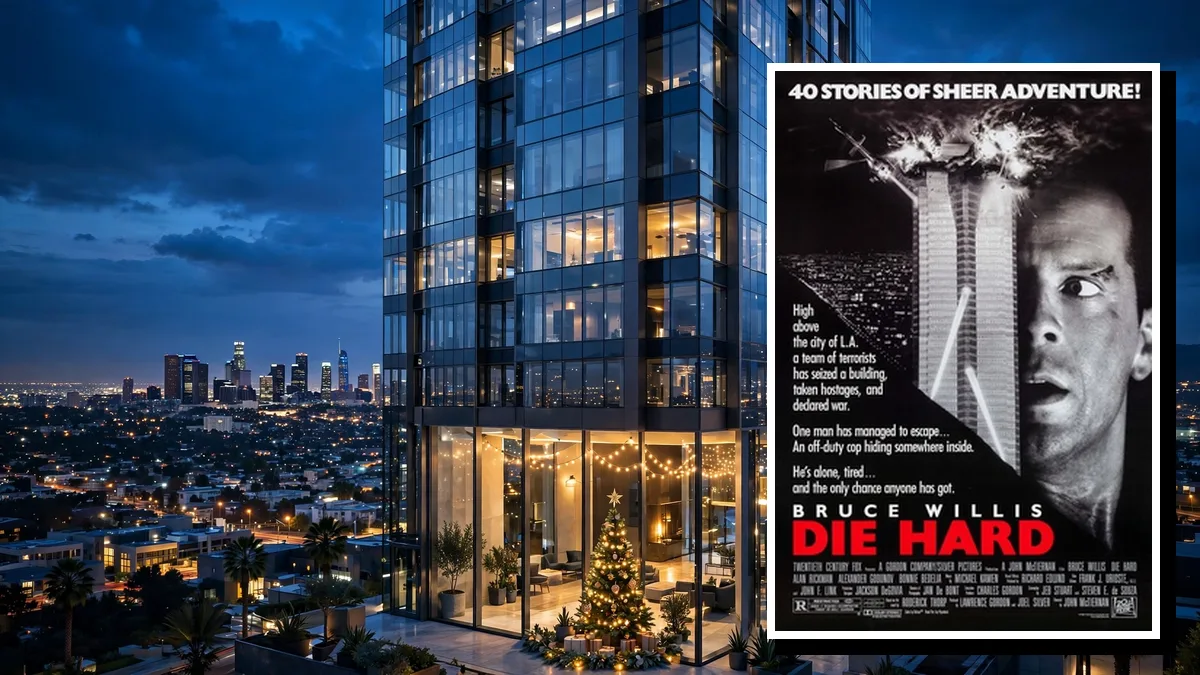
Die Hard is based on the 1979 novel Nothing Lasts Forever by Roderick Thorp, a sequel to his book The Detective, which became a 1968 film starring Frank Sinatra. Because of a clause in Sinatra’s old contract, the studio was legally obliged to offer him the lead role first. Sinatra was 70 at the time and turned it down, which sounds like a lucky break now. At the time, it was the start of a long and expensive problem, because almost every big action star in Hollywood said no next.
At a glance
Genre: Action thriller
Director: John McTiernan
Year: 1988
IMDb rating: 8.2/10
Runtime: 2 hours 12 minutes
Platform: Availability varies by region
Watch: Die Hard on IMDb
The list of refusals reads like a hall of fame. Stallone, Schwarzenegger, Eastwood, Ford, Gere, Reynolds, Newman and Pacino were all offered the part and passed. With the clock running, Fox turned to Bruce Willis, a television comedy star known for Moonlighting. His $5 million fee caused an uproar, and early posters put the Nakatomi tower front and centre while keeping Willis small or out of the frame.
Willis almost could not take the job at all. His Moonlighting contract kept him tied to the show, and he was only freed when co-star Cybill Shepherd became pregnant and production shut down for eleven weeks. That gap was exactly long enough to shoot the film. Die Hard cost about $28 million and earned more than $140 million around the world. People still argue about whether it counts as a Christmas movie, but it is set on Christmas Eve and plays every December, so the audience has already voted.
3. Scrooged
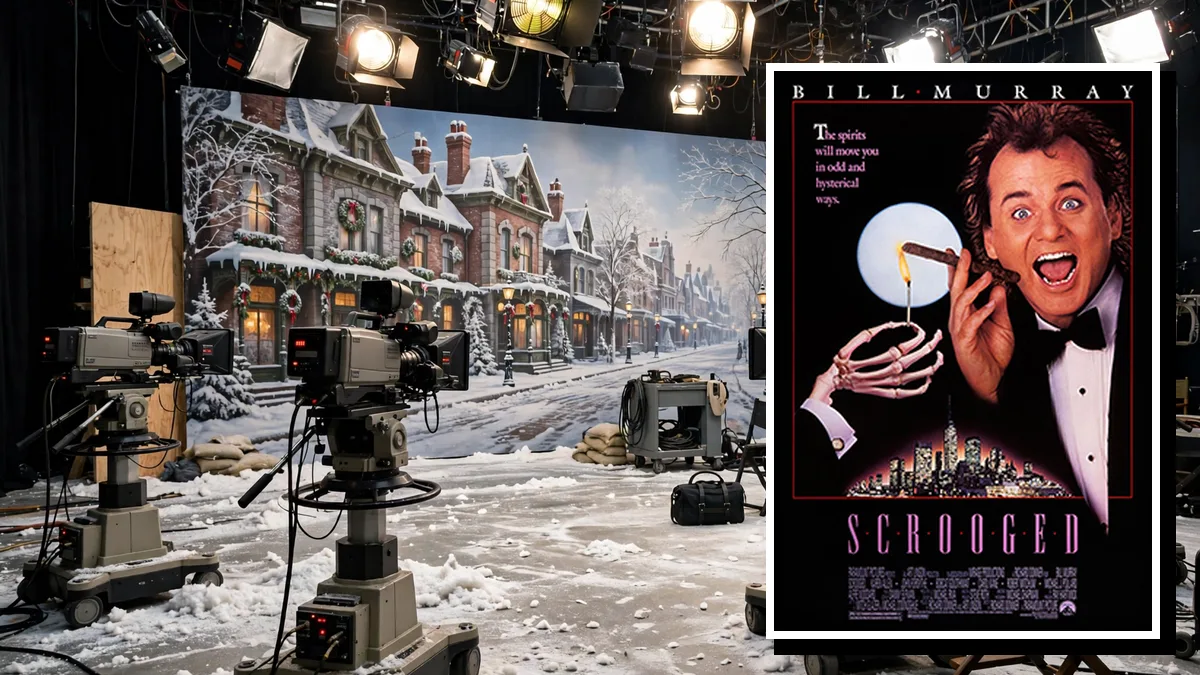
Bill Murray came back to acting for Scrooged after four years away. The success of Ghostbusters had overwhelmed him, and he only agreed to the film after reworking the script with writers Mitch Glazer and Michael O’Donoghue, both old Saturday Night Live colleagues. He wanted a bigger romantic story and stronger family scenes. The film was shot over three months, from December 1987 to March 1988, on a budget of about $32 million. On paper it looked like a safe Christmas comedy. On set it became one of the most miserable shoots of Murray’s career.
At a glance
Genre: Christmas comedy fantasy
Director: Richard Donner
Year: 1988
IMDb rating: 7.0/10
Runtime: 1 hour 41 minutes
Platform: Availability varies by region
Watch: Scrooged on IMDb
Murray and director Richard Donner disagreed about almost everything. Murray later said they disagreed “every single minute of the day” and complained that Donner kept telling him to play everything “louder, louder, louder”. Donner called Murray “superbly creative but occasionally difficult” and struggled with an actor who improvised nearly every scene. The set was dusty, smoky and full of fake snow, and Murray said he coughed up blood from it. Co-star Carol Kane split her lip during a scene and filming had to stop.
The ending almost did not happen the way we know it. Murray went off script for Frank Cross’s live television redemption speech, improvising an emotional plea while the crew watched in silence. When he finished, the crew applauded, and O’Donoghue asked, “What was that? The Jim Jones hour?” Donner turned and punched him in the arm. O’Donoghue later estimated that only about 40 percent of the original script survived into the finished film.
4. National Lampoon’s Christmas Vacation
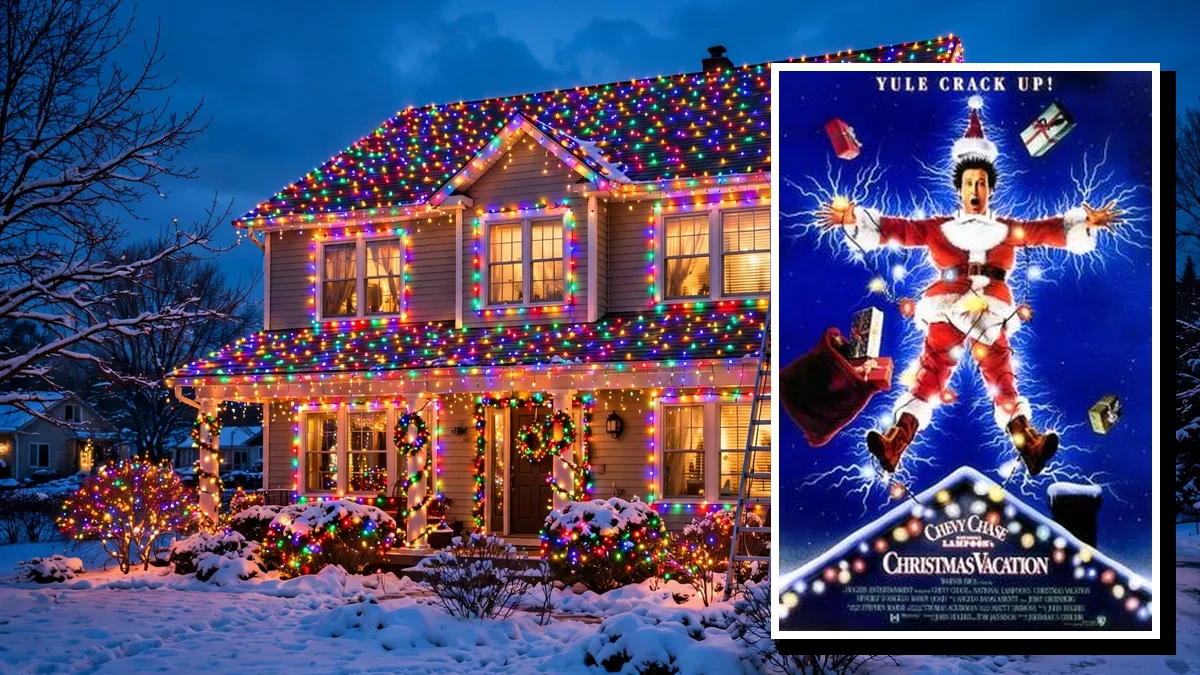
National Lampoon’s Christmas Vacation started as a short story called “Christmas ’59” by John Hughes, who wrote and produced the film. The first director hired was Chris Columbus, fresh from Adventures in Babysitting. He met star Chevy Chase a few times, shot some second unit work, and then walked away. Columbus later said, “Chevy treated me like dirt.” The clash cost the film its director before cameras had even rolled, and Hughes had to find a replacement fast.
At a glance
Genre: Christmas comedy
Director: Jeremiah Chechik
Year: 1989
IMDb rating: 7.6/10
Runtime: 1 hour 37 minutes
Platform: Availability varies by region
The job went to Jeremiah Chechik, a director making his first feature film. The studio was nervous about him, and it was nervous about the script too. Executives did not want the scene where the cat gets electrocuted under the Christmas tree, and Chechik had to run interference with Hughes to keep it in the film. Shooting ran from March to June 1989 in Colorado and Burbank, and the film reached theatres on December 1, 1989.
The twist is what happened to Columbus next. Hughes did not hold the walkout against him. He later handed Columbus the script for Home Alone, the film that made Columbus one of the biggest directors of the 1990s. Christmas Vacation became a holiday staple anyway, and the Griswold family lights have been copied on real houses every December since.
Casting Roulette: Who Almost Got the Part
Half of these films nearly starred someone else entirely. The near misses are almost as famous as the films.
- Die Hard: Frank Sinatra was offered the role first by contract. Then Stallone, Schwarzenegger, Eastwood, Ford, Gere, Reynolds, Pacino and Newman all passed before Bruce Willis.
- The Santa Clause: Written for Bill Murray, who passed. Chevy Chase, Tom Hanks, Tom Selleck and Mel Gibson were considered before Tim Allen.
- Jingle All the Way: Joe Pesci was in the running for Myron until Sinbad won the role.
- Christmas Vacation: Chris Columbus was hired to direct, then left. Jeremiah Chechik took over for his first feature.
- The Grinch: The studio wanted Jim Carrey painted green with no prosthetics. Carrey refused.
- Love Actually: Anne Reid and Frances de la Tour filmed a whole storyline that was cut.
5. The Santa Clause
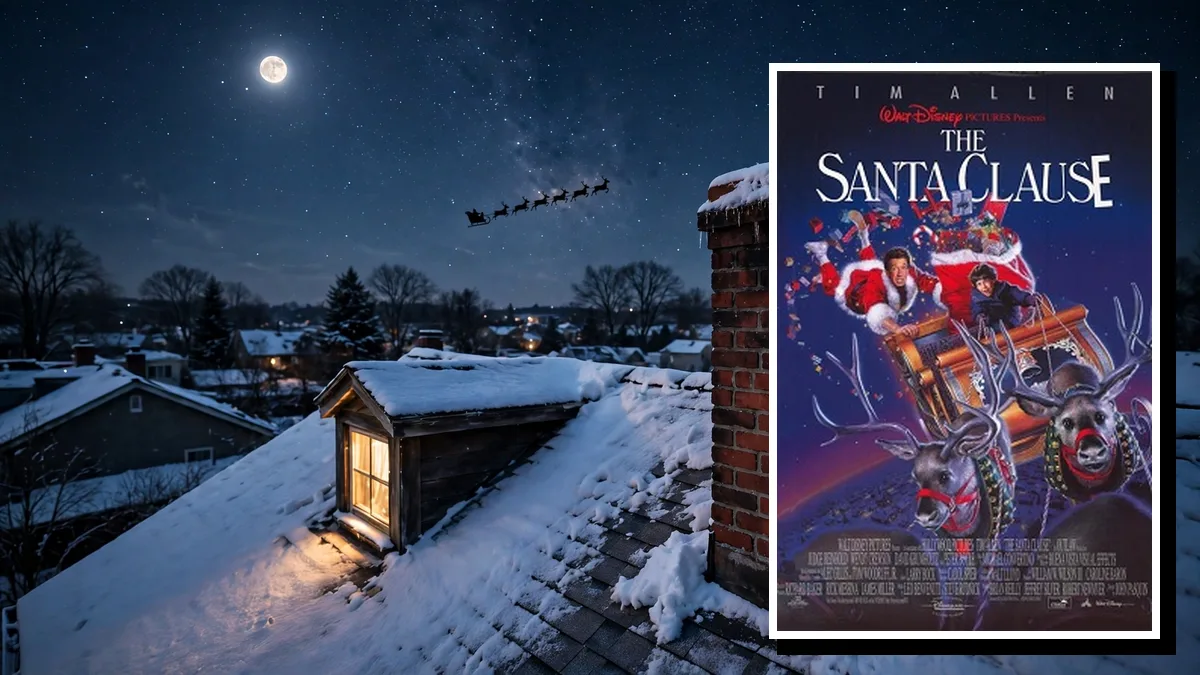
The Santa Clause began in 1989 as a script by comedy writers Leo Benvenuti and Steve Rudnick, built on a dark joke: what if a man killed Santa and had to take his place? A small company called Outlaw Productions optioned it for $10,000 and handed back a long list of notes. The writers put in every single note, and the script got worse. Benvenuti later called the result “horrible”. The film only found its shape when Jeffrey Katzenberg and Disney’s Hollywood Pictures came aboard.
At a glance
Genre: Christmas fantasy comedy
Director: John Pasquin
Year: 1994
IMDb rating: 6.5/10
Runtime: 1 hour 37 minutes
Platform: Availability varies by region
Watch: The Santa Clause on IMDb
Casting was the next near miss. The part of Scott Calvin was written with Bill Murray in mind, but Murray wanted nothing to do with another Christmas film after the misery of Scrooged. Chevy Chase, Tom Hanks, Tom Selleck and Mel Gibson were all considered. The job went to Tim Allen, then a television star on Home Improvement, and his schedule forced a delay of almost a year. Director John Pasquin first turned the film down, and only said yes after his wife, actress JoBeth Williams, read the script and told him it could be a classic.
The film itself was a physical ordeal. In the original draft, Scott shot Santa by mistake. Disney changed the death to a slip off the roof. Allen spent more than three hours a day in makeup, and the fat suit weighed about 75 pounds. Shot in spring, when real snow was a problem, it also carried a joke about a real phone sex line that Disney cut from later versions. The film cost about $22 million and earned $190.3 million around the world.
6. Jingle All the Way

Jingle All the Way started with a real-life panic. Writer Randy Kornfield watched his in-laws go to a toy store at dawn to buy his son a Power Ranger, and that scramble became the plot: two fathers hunting the last Turbo Man doll on Christmas Eve. Producer Chris Columbus rewrote the script to sharpen the satire about buying Christmas. The film was picked up by 20th Century Fox, but it still needed a star, and the one it wanted was busy.
At a glance
Genre: Christmas family comedy
Director: Brian Levant
Year: 1996
IMDb rating: 5.6/10
Runtime: 1 hour 29 minutes
Platform: Availability varies by region
Watch: Jingle All the Way on IMDb
Arnold Schwarzenegger was tied to a Planet of the Apes remake that kept stalling. When that film was delayed again in February 1996, he suddenly became free, and Jingle All the Way moved fast to sign him. He was paid a reported $20 million. The film was shot in Minneapolis and Saint Paul, including scenes at the Mall of America, and it was in theatres on November 22, 1996, about nine months after Schwarzenegger signed. Sinbad won the role of Myron ahead of Joe Pesci, and the big parade finale was filmed in 100-degree heat.
The trouble did not end when the cameras stopped. A publishing company sued Fox, claiming the script was stolen from a screenplay called Could This Be Christmas? In 2001 a court ordered Fox to pay $19 million. The verdict was overturned in 2004, but the fight lasted years longer than the shoot. The film cost between $60 million and $75 million and earned $129.8 million. Critics were unkind, but the film plays every December.
7. How the Grinch Stole Christmas
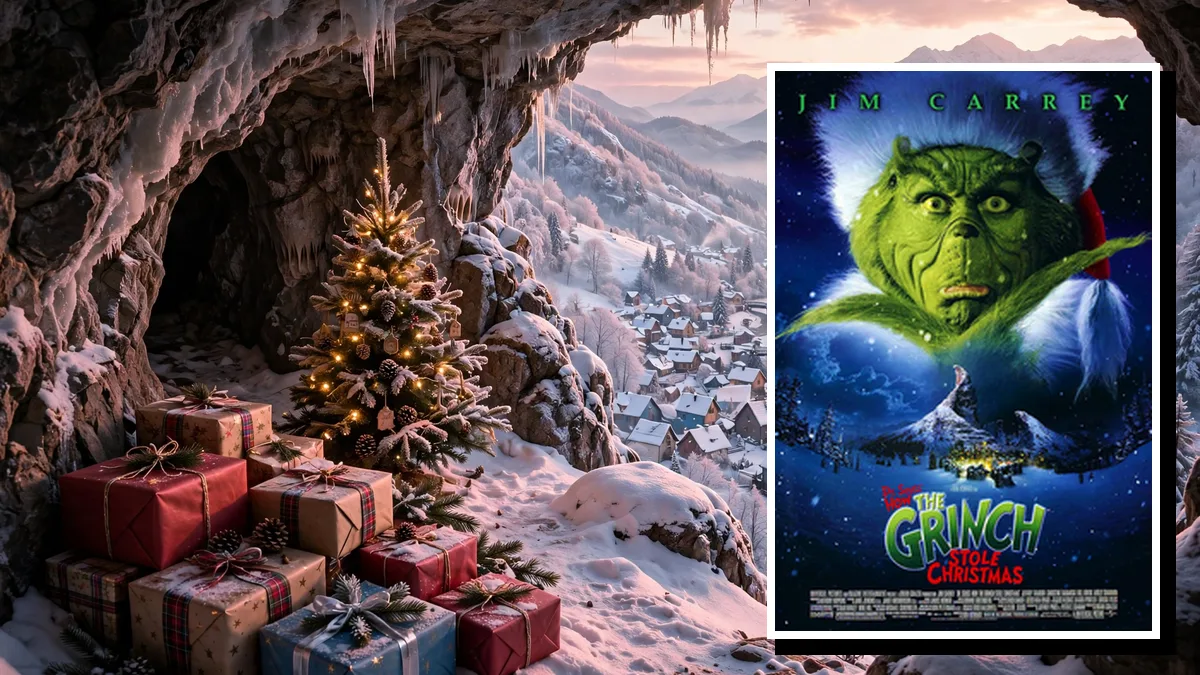
How the Grinch Stole Christmas nearly lost its star on the first day. Jim Carrey spent eight hours in the makeup chair while Rick Baker’s team built the Grinch around him, layer by layer. The prosthetics were so tight that Carrey could not breathe through his nose, and he spent the whole film breathing through his mouth. He started having panic attacks between takes, lying on the floor with a paper bag. After that first day he told director Ron Howard and producer Brian Grazer that he was quitting, and he offered to give back his reported $20 million fee.
At a glance
Genre: Christmas fantasy comedy
Director: Ron Howard
Year: 2000
IMDb rating: 6.2/10
Runtime: 1 hour 44 minutes
Platform: Availability varies by region
Grazer found an unusual fix. He brought in Richard Marcinko, the former Navy SEAL who founded SEAL Team Six and trained CIA officers to endure torture, to spend a weekend teaching Carrey how to cope. The daily makeup time was eventually cut to about three hours, and Howard adjusted the schedule because the glue and prosthetics were damaging Carrey’s skin. Makeup artist Kazuhiro Tsuji was so worn down that he left for a week before Howard talked him back.
The studio had wanted a simpler Grinch all along. Baker has said the executives told him, “We are paying Jim $20 million, and we want to see him. Just paint him green.” Carrey refused the shortcut and insisted on full prosthetics, including green contact lenses he later called a mistake. Howard even spent a day directing in full Grinch makeup to understand what his star was going through. The film cost about $123 million and earned more than $345 million around the world. The makeup won Baker an Academy Award.
8. Love Actually
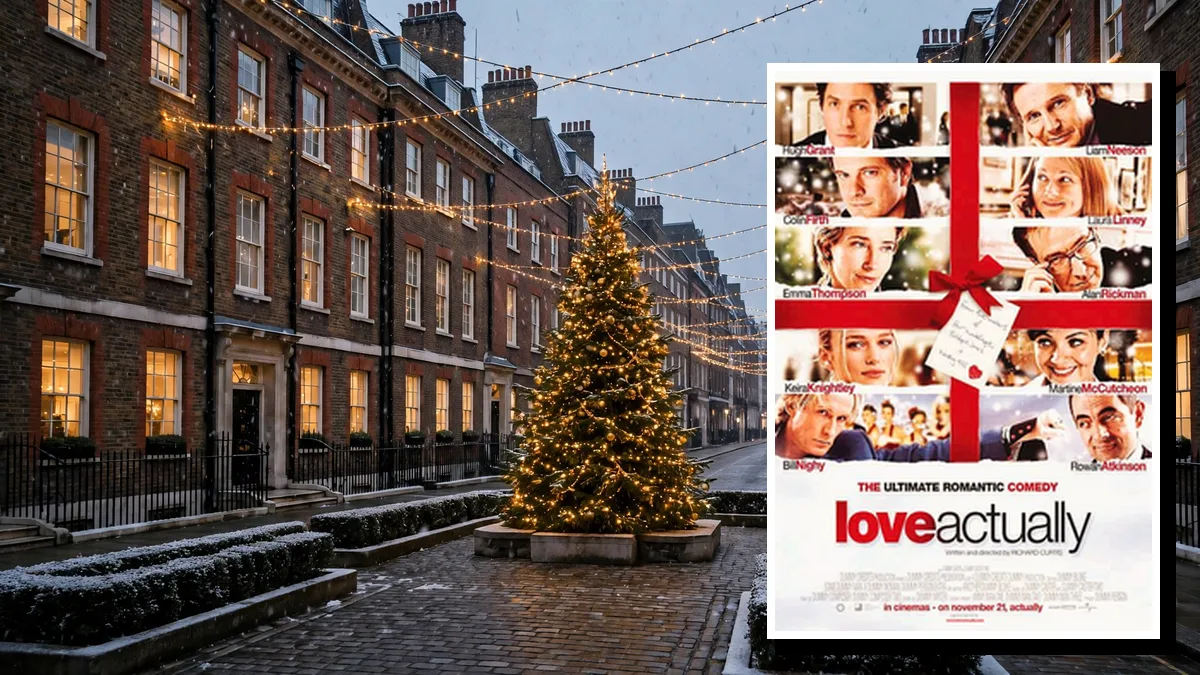
Love Actually was supposed to be even bigger than the film we know. Richard Curtis planned 14 linked love stories, and four of them were cut. Two were dropped while he was still writing: one about a girl in a wheelchair, and one about a boy who records a love song for a classmate. Two more were filmed and then cut in the edit: a storyline about a couple in Kenya facing famine, and one about a school headmistress, played by Anne Reid, who goes home to her terminally ill partner, played by Frances de la Tour.
At a glance
Genre: Romantic comedy drama
Director: Richard Curtis
Year: 2003
IMDb rating: 7.6/10
Runtime: 2 hours 15 minutes
Platform: Availability varies by region
Watch: Love Actually on IMDb
The film had other ideas that never survived either. Rowan Atkinson’s character Rufus, the fussy jewellery salesman, was originally written as an angel sent to stop Harry from buying the necklace that would wreck his marriage. That scene was cut, and Rufus became just a very thorough shop assistant. The first full cut of the film was, in Curtis’s own word, a “catastrophe”. He has said that ordering 12 stories was “like three-dimensional chess”, and the studio was pushing hard for a Christmas release.
The parts that did survive were often captured in unusual ways. The opening and closing scenes at Heathrow Airport were filmed with hidden cameras over a week, catching real travellers greeting their families. Curtis only decided the film would be set at Christmas when he was 30 pages into the script. It cost about $40 million and earned $250.8 million, and it is now one of the most rewatched films of the season.
The Whole List in One Sitting
Eight films, eight escapes, one very long December weekend. Here is the list by the numbers.
- Films: 8, from 1947 to 2003, a 56 year span.
- Total running time: 851 minutes, or 14 hours and 11 minutes.
- Average IMDb rating: 7.1 out of 10.
- Highest rated: Die Hard, 8.2. Lowest rated: Jingle All the Way, 5.6.
- Best bargain: Miracle on 34th Street won three Oscars after opening in May.
- Closest call: The Grinch, where the star quit on day one and offered $20 million back.
The pattern across all eight films is hard to miss. Trouble did not ruin these movies. In most cases it shaped them. A studio hiding Christmas made Miracle on 34th Street feel like a secret worth keeping. A television star nobody believed in made Die Hard feel like an ordinary man in an impossible place. A miserable shoot gave Scrooged its edge, and a torturous makeup chair gave the Grinch his fury.
That is worth remembering when the credits roll this December. Every classic on your list was once a problem on someone’s desk, a script nobody liked, a star who nearly walked, or a release date that made no sense. The films survived, and that is why they are still here. Pick one from this list tonight, and look for the near miss hiding inside it.
And if you want something brand new to go with the old favourites, Ebenezer is in theatres now, and Wicked: For Good opens on November 21, 2026. The season always makes room for one more Christmas film. The question is which of them will still be playing in twenty years.

John Smith is the founder and CEO of Karaoke Machines Guru. He is a karaoke tutor and karaoke enthusiast and has been passionate about karaoke since he was a child. He also writes about karaoke-related tips, guides, and product reviews on this website.
He overlooks the whole website and makes sure that everything is running smoothly. Learn more!