
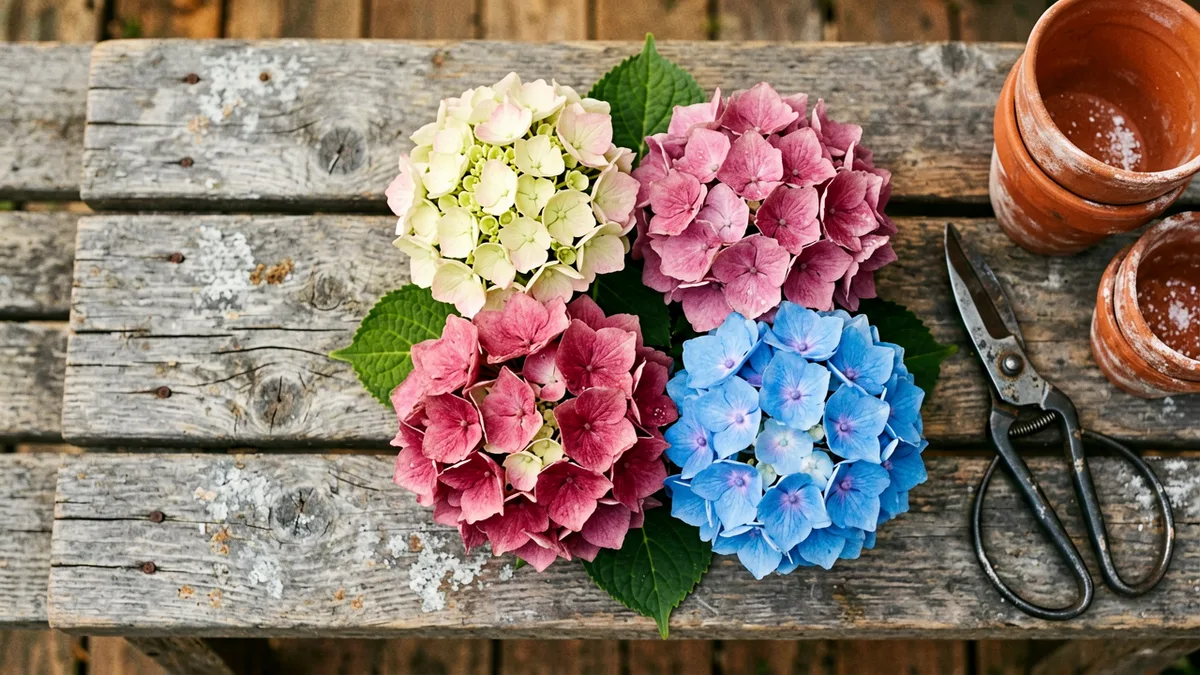
We have all bought that gorgeous, innocent-looking mophead hydrangea at the garden center, planted it near a walkway, and watched in horror as it mutated into an eight-foot monster that swallows the front porch. Traditional macrophylla varieties are beautiful, but they are notorious space hogs. In my early gardening years, I spent way too much time aggressively hacking back giant shrubs, which only rewarded me with a sad collection of bare sticks and zero flowers the following summer. It was a frustrating cycle that almost made me give up on them entirely.
The good news is that plant breeders finally listened to urban gardeners with small suburban plots or tight raised beds. Today, you can get those massive, iconic flower heads on shrubs that naturally top out at three or four feet without a single clip of your shears. After testing dozens of compact cultivars in my own borders and trial containers, I have narrowed down fifteen exceptional dwarf hydrangeas that actually stay small, bloom reliably on both old and new wood, and fit beautifully into restricted garden spaces.
Quick Tips Before You Start
Morning Sun Only
Give your dwarf hydrangeas 4 to 6 hours of morning light, then solid afternoon shade.
Check Container Size
Always use a pot at least 16 to 20 inches in diameter for long-term root health.
Water the Base
Keep overhead watering to a minimum to prevent powdery mildew on compact leaves.
1. Invincibelle Wee White Smooth Hydrangea
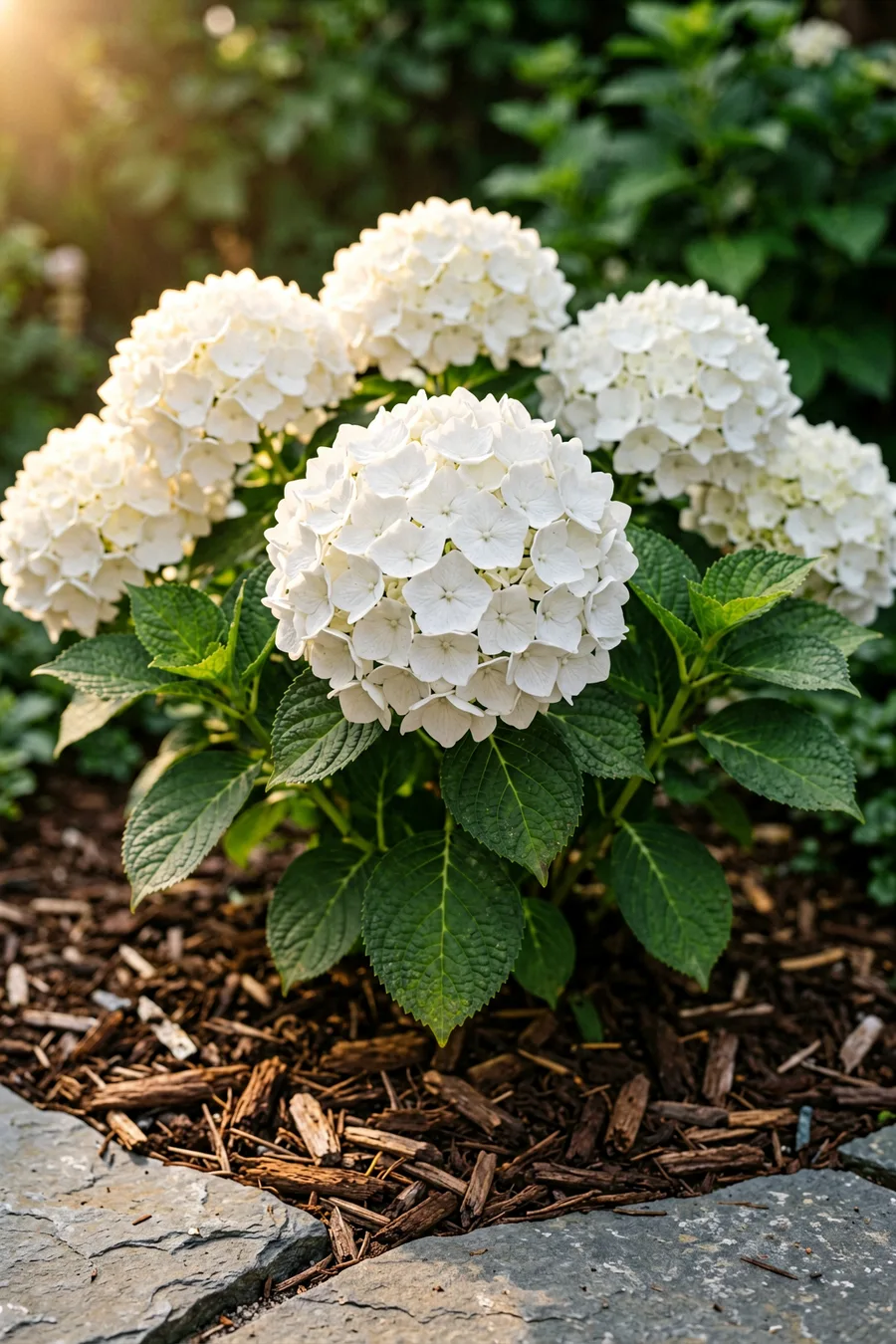
Everyone tells you that smooth hydrangeas require huge borders, but this specific cultivar completely shatters that assumption. This is the first true dwarf native arborescens variety on the market, topping out at a rigid 12 to 30 inches tall. It behaves less like a sprawling shrub and more like a sturdy, clump-forming perennial in a tight border or low foundation planting.
The real magic lies in the stem strength. Traditional Annabelle hydrangeas are infamous for flopping face-first into the mud after a heavy summer thunderstorm, but Wee White features thick, woody stems that keep the massive flower heads perfectly upright. The blooms emerge a soft pink-green before opening into pure, sterile white spheres that cover the entire canopy from early summer straight until frost.
💡 Tip: Cut this variety back by one-third its total height in late winter to stimulate dense new flowering wood.
Invincibelle Wee White — At a Glance
📏 Mature Height
1 to 2.5 Feet
❄️ Hardiness Zones
Zones 3–8
☀️ Sun Exposure
Part Sun to Sun
🌸 Bloom Type
Mophead / Smooth
Superpower
Unparalleled stem strength that completely prevents flopping after torrential summer rains.
2. Bobo Panicle Hydrangea
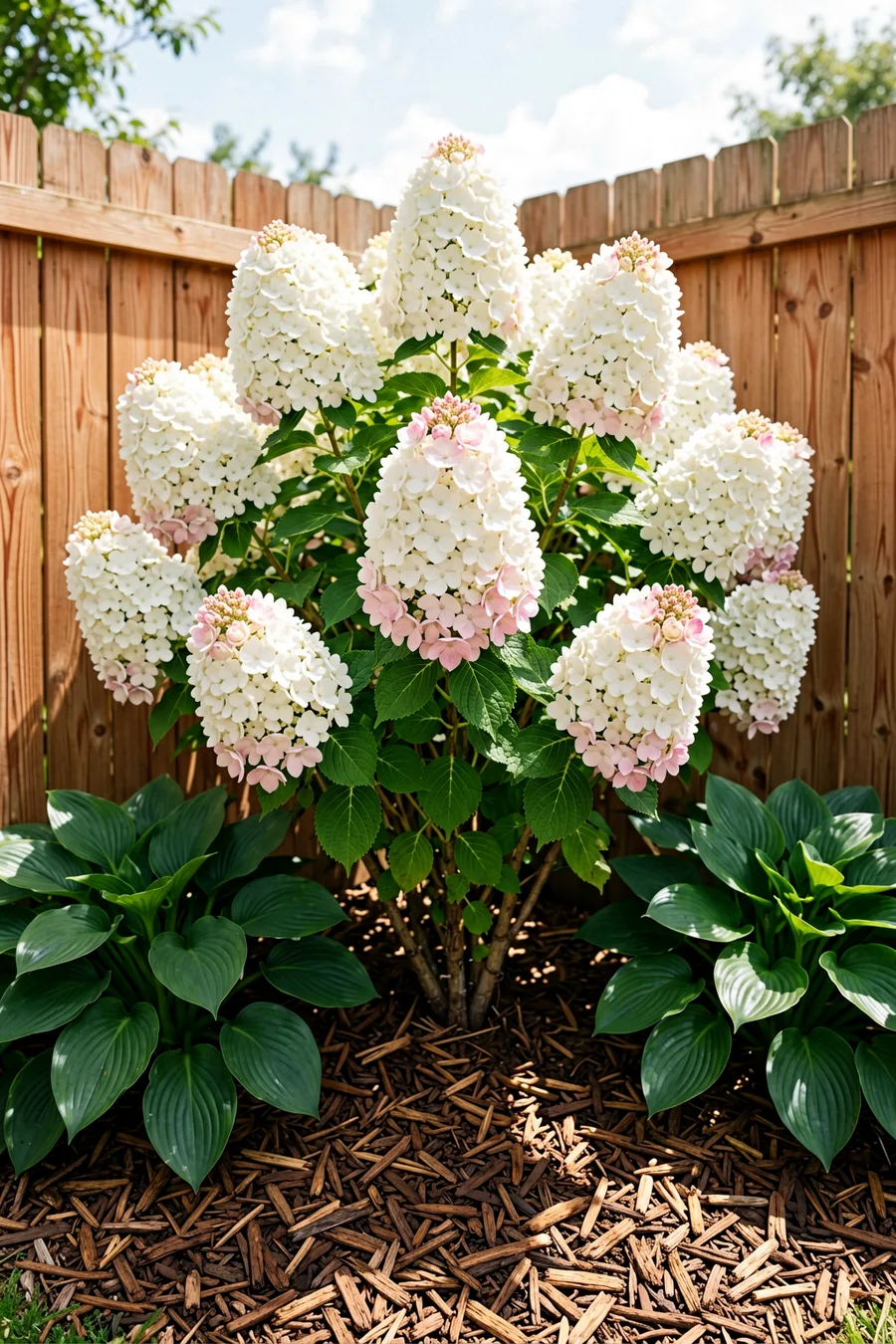
If you have struggled with finicky bigleaf varieties that refuse to bloom due to late spring frosts, change your strategy completely and plant a Bobo. This dwarf paniculata variety is incredibly tough and bloom-reliable because it flowers strictly on new growth produced during the current season. You can live in a frigid Zone 3 climate and still get a breathtaking show every single July.
It stays under three feet tall and expands to about three or four feet wide, creating a neat, rounded mound. The large, conical flower panicles open a clean, stark white and gradually shift to a soft, vintage blush pink as the nights cool down in September. Plant it in full sun if you live up north, or give it dappled midday protection in hot southern zones.
Best For
3. Let's Dance Blue Jangles Bigleaf Hydrangea
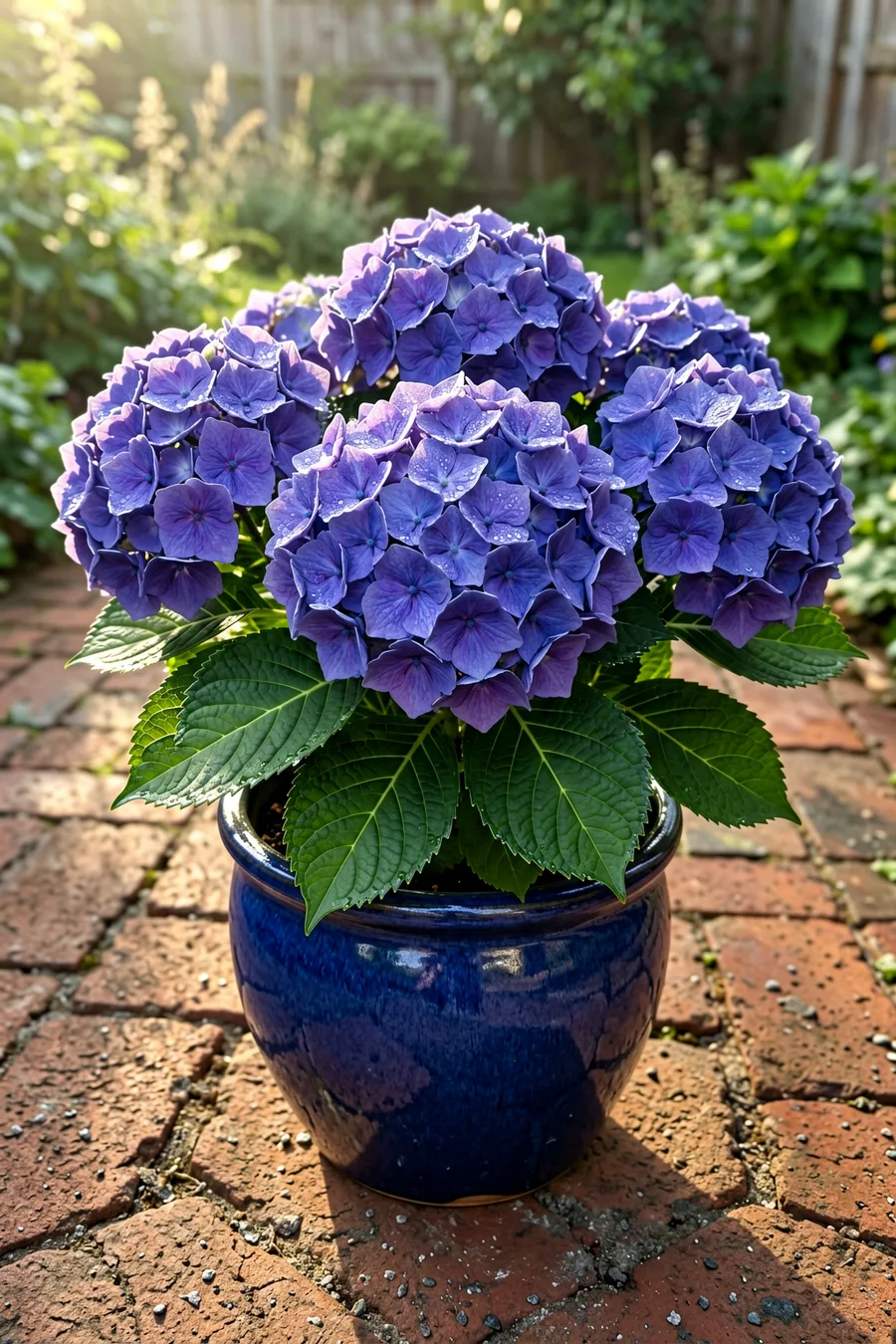
State the myth plainly: many gardeners believe you cannot keep a true bigleaf reblooming hydrangea under three feet without using heavy chemical growth regulators. Let's Dance Blue Jangles completely disproves this. It is a true, genetically compact macrophylla that naturally stays between one and two feet high, making it absolute perfection for small urban courtyards or tight entryways.
What makes this selection special is its reliable reblooming mechanism. It packs a heavy punch of flowers on old wood in early summer, and then rapidly develops a second wave of blooms on the new growth. If an unexpected late freeze destroys the initial spring buds, you do not lose your summer display; the plant simply pivots and pumps out flowers from the base anyway.
🌱 GROWING TIP
Adjust Your Soil Chemistry For Blue Flowers
If you want true blue flowers on your bigleaf varieties, drench the soil around the roots with aluminum sulfate every spring. If your soil is naturally alkaline, they will bloom bright pink instead.
4. Little Lime Punch Panicle Hydrangea
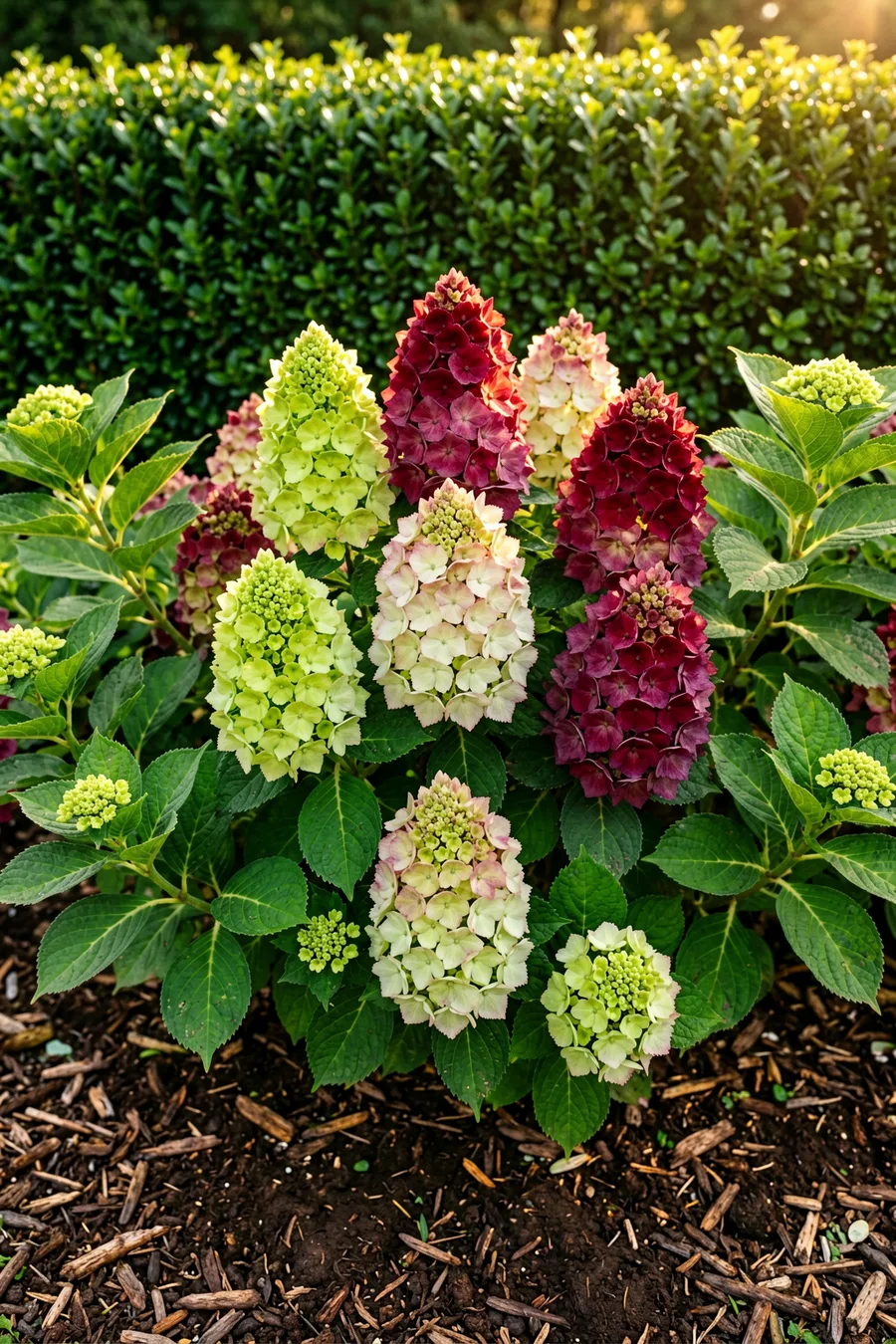
Acknowledge the classic choice: everyone knows Little Lime, but its newer sibling, Little Lime Punch, is a major upgrade for tiny spaces. Reaching a manageable three to four feet tall and wide, this shrub delivers a dramatic color transformation that standard panicles simply cannot match. It does not just fade to a muddy brown at the end of the season.
Instead, the blooms emerge a crisp lime green, then age from the bottom up into an intense palette of bright white, light pink, and finally a rich, Hawaiian Punch red. Because the plant produces new flowers continuously throughout the summer, you will often see all four distinct colors glowing on the exact same bush at the same time in late August.
5. Tuff Stuff Ah-Ha Mountain Hydrangea
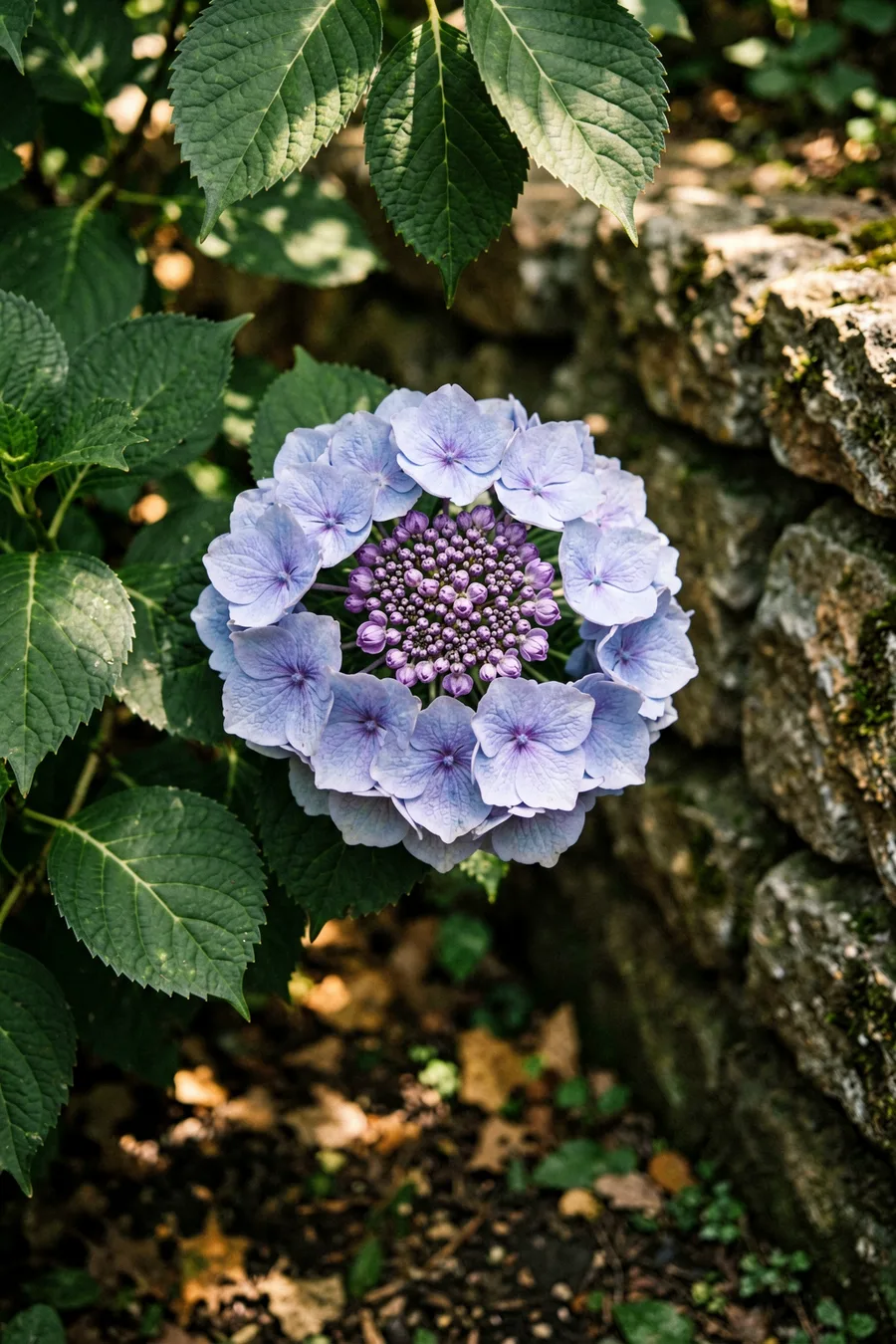
You know what nobody tells you about mountain hydrangeas? They are inherently tougher and more bud-hardy than bigleaf hydrangeas because they originated in the rugged, cold mountainous regions of Japan. Tuff Stuff Ah-Ha is a dwarf serrata variety that stays under three feet tall and features beautiful, delicate lacecap blooms rather than heavy mopheads.
The lacecap form means you get a central cluster of fertile buds surrounded by a ring of large, showy sterile petals that look like floating stars. The stems are exceptionally wiry and resilient. Even better, it reblooms continuously from June until frost, ignoring the humid summer heatwaves that often cause standard bigleaf cultivars to wilt and stall out completely.
6. Pugster Blue Butterfly Bush Alternative
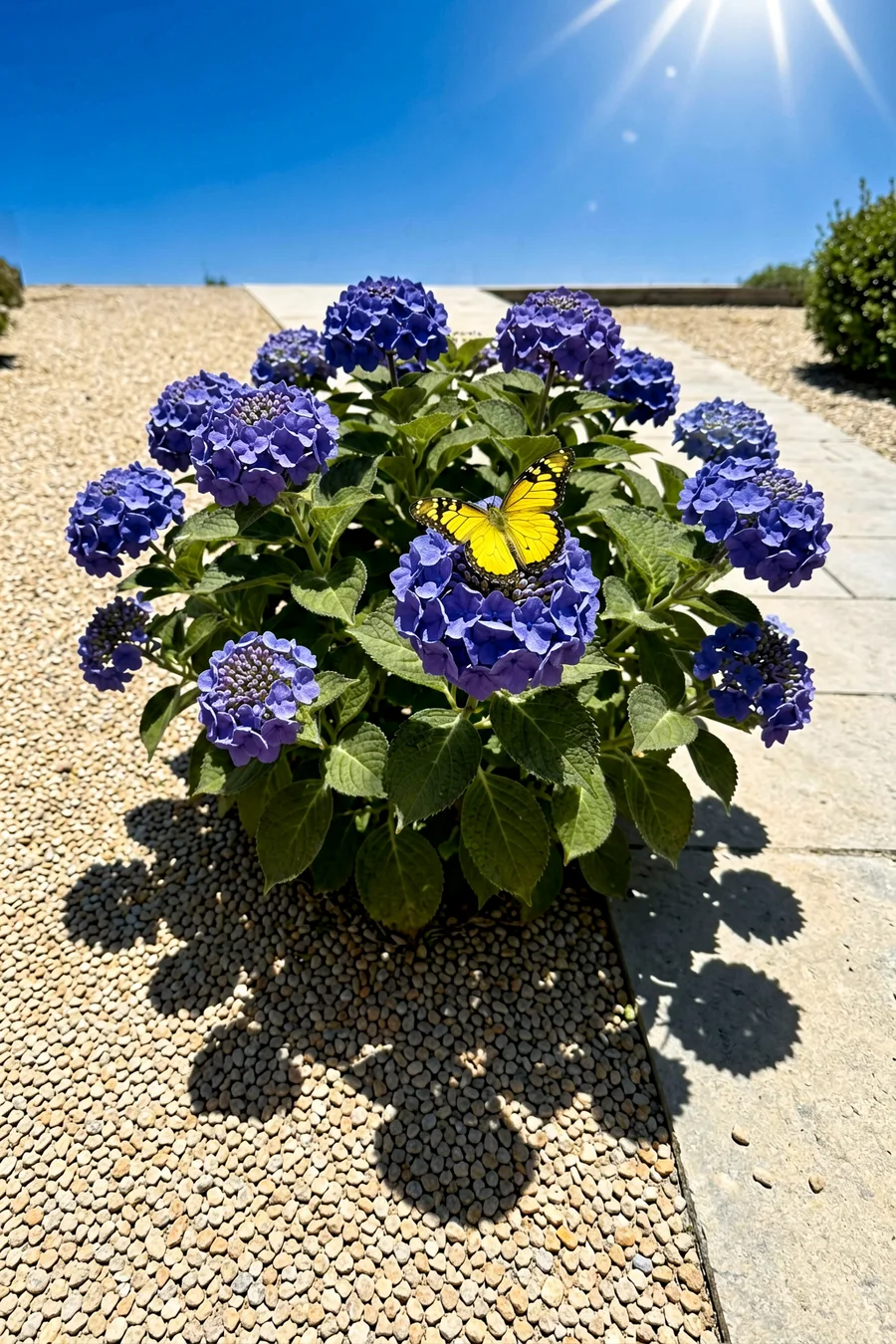
Compact gardens require plants to do double duty, and while this list focuses on hydrangeas, sometimes you need a companion that mimics their look while handling blazing, dry heat. When a true hydrangea cannot handle a baking southern exposure against a concrete walkway, use a compact look-alike strategy.
Pugster Blue is technically a dwarf butterfly bush, but it grows in a dense, low, mounded habit that mimics a two-foot hydrangea shrub. It pumps out thick, plump flower spikes that look exactly like miniature blue hydrangea panicles. It delivers that classic cottage garden aesthetic in full sun areas where delicate bigleaf hydrangeas would crisp up and fry within hours.
🪴 How to Plant a Dwarf Hydrangea in a Pot
Select a Heavy Container
Choose a terracotta or glazed ceramic pot at least 16 inches wide with large drainage holes.
Fill with Premium Mix
Use a high-quality, moisture-retaining potting soil blended with a handful of coarse perlite.
Loosen the Root Ball
Gently massage the nursery roots to break up any circular binding before setting it.
Plant and Mulch
Set the plant level with the soil line and add a 1-inch layer of shredded bark.
7. Tiny Quick Fire Panicle Hydrangea
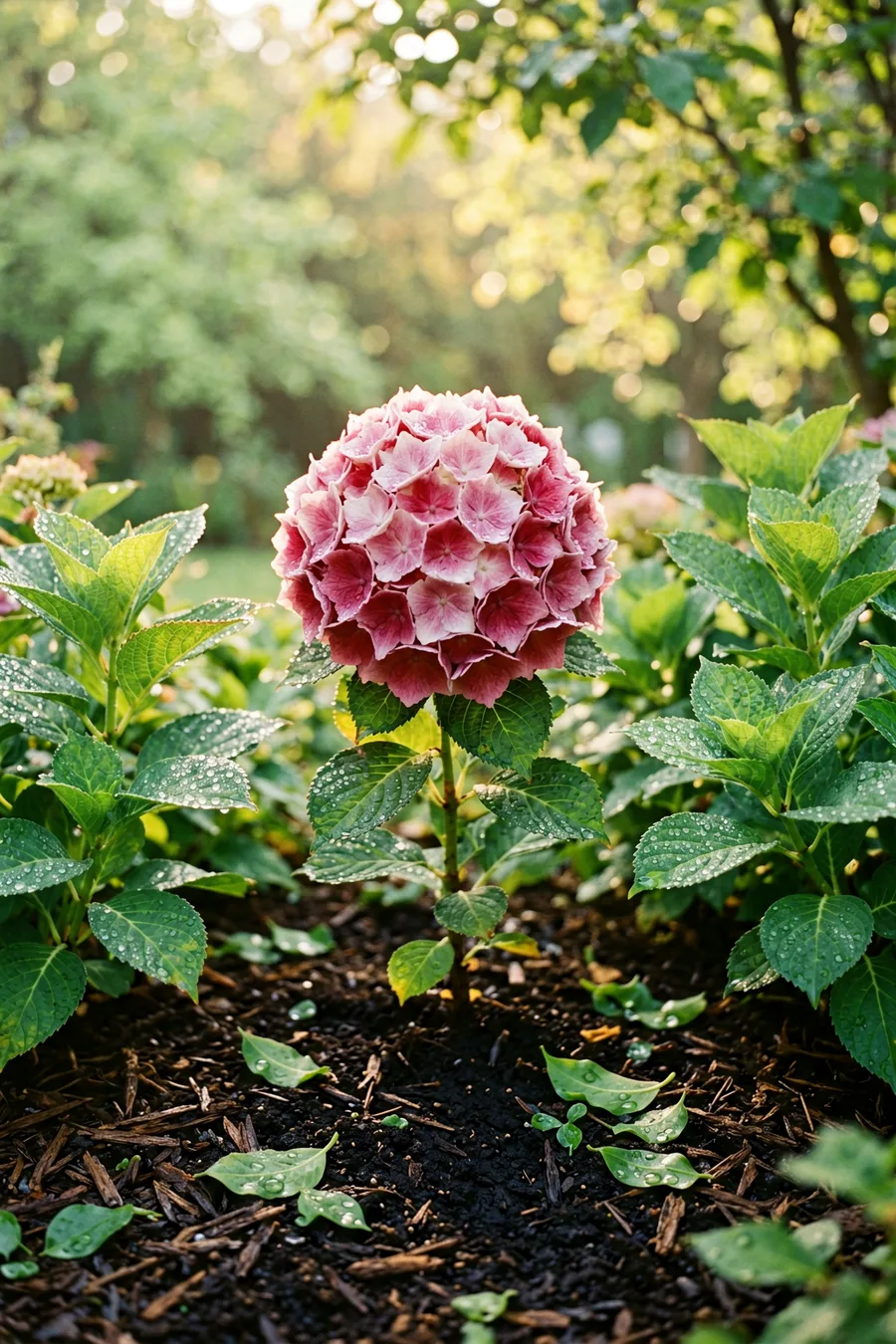
This is the absolute earliest-blooming panicle hydrangea you can buy, starting its show up to a full month before other varieties even think about pushing out buds. Tiny Quick Fire brings all the rugged reliability of the standard Quick Fire down into a tight, compact frame that tops out between 18 and 36 inches high.
The blooms open a clean, light white before quickly transitioning to an incredibly rich, dark pink-red. Because it blooms so early in the season, the color transition happens during the height of summer rather than waiting for autumn. It is the perfect choice for adding instant structure and high-contrast color to the front of a small mixed perennial bed.
8. Cityline Paris Bigleaf Hydrangea
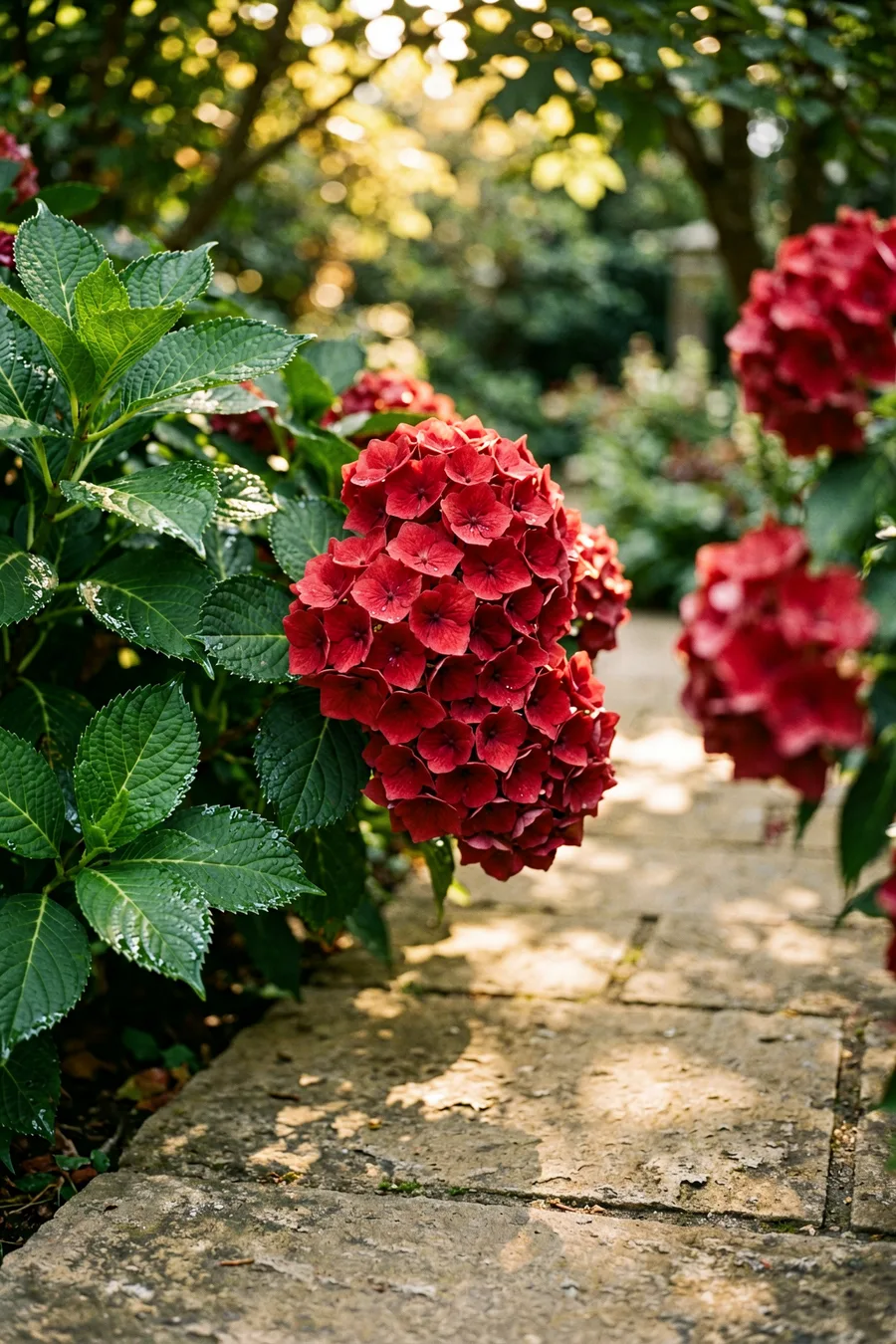
Open with a bold opinion: most red hydrangeas are a total disappointment because they quickly fade into a dull, muddy purple-brown. Cityline Paris is the exception to the rule. This German-bred cultivar is a true dwarf macrophylla that maintains an exceptionally tight, neat habit of just 12 to 24 inches tall.
The flowers are an intense, deep glossy red-pink that holds its saturation remarkably well over time. It has excellent resistance to powdery mildew, which is a common plague for compact shrubs packed into tight, low-airflow city gardens. The deep green, glossy leaves provide a beautiful, high-contrast backdrop that makes the red pigments pop.
⚠️ COMMON MISTAKE
Never Prune Bigleaf Hydrangeas in Late Winter
Do not cut back varieties like Cityline Paris or Let's Dance in the winter. They set their flower buds the previous autumn, so winter hacking removes all of your spring blooms.
9. Little Honey Oakleaf Hydrangea
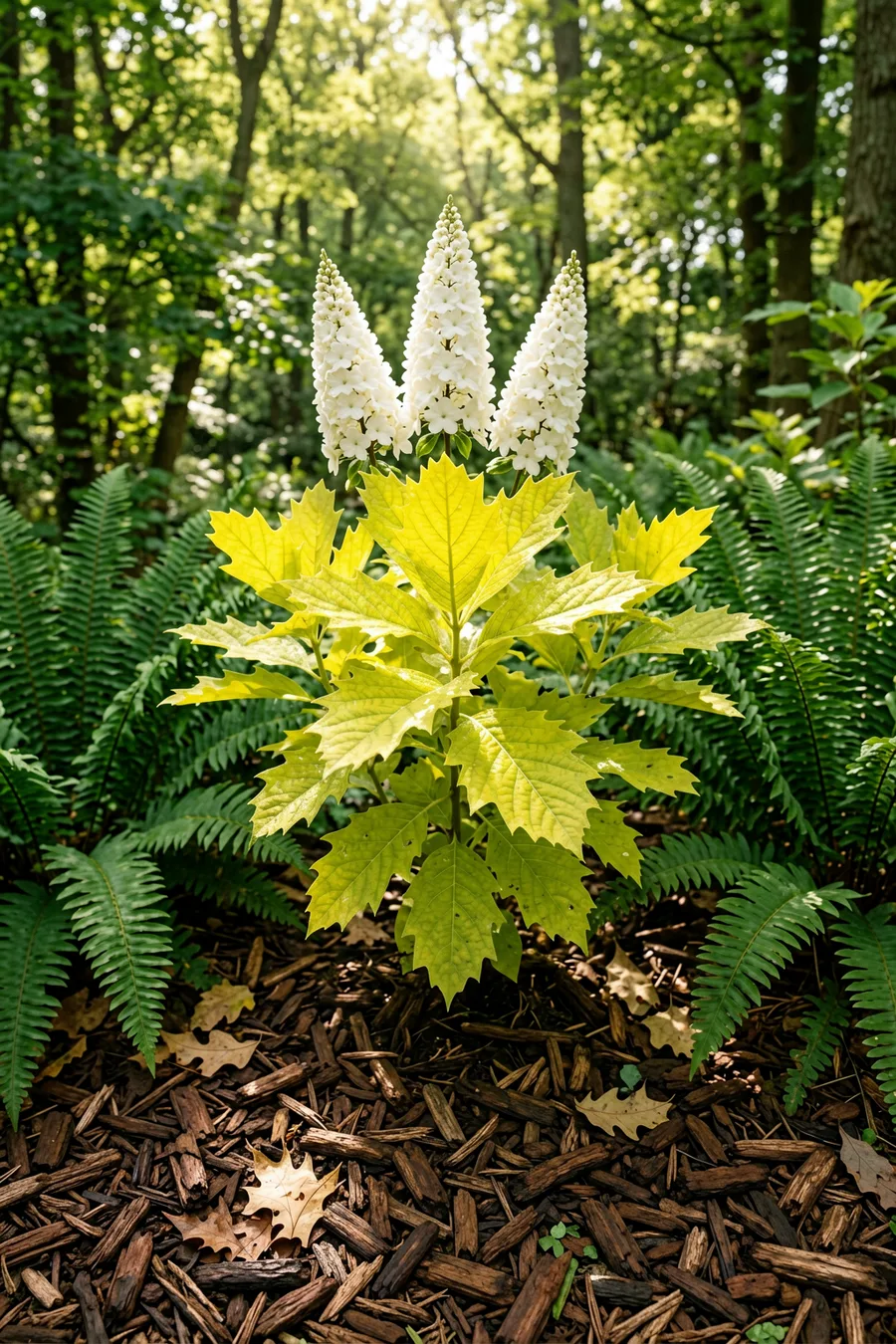
Oakleaf hydrangeas are prized for their dramatic foliage and brilliant autumn color, but the wild native species easily rocket to eight feet tall. Little Honey solves this space issue completely, holding steady at a compact three feet tall and about three to four feet wide.
The real standout feature is the glowing, golden-yellow foliage that brightens up dark, dreary corners of a shaded garden. In mid-summer, it produces elegant, loose white flower panicles that stand out against the chartreuse leaves. When autumn arrives, the golden foliage takes on a breathtaking, deep crimson-maroon tone that lasts well into November.
Little Honey Oakleaf — At a Glance
🍁 Foliage Style
Golden / Oak-like
🌤️ Best Light
Dappled / Morning Sun
🍂 Fall Color
Deep Crimson Red
📏 Max Height
3 Feet Max
Superpower
Stunning chartreuse foliage that brings instant light and color to dark, deep-shade corners.
10. Invincibelle Limetta Smooth Hydrangea
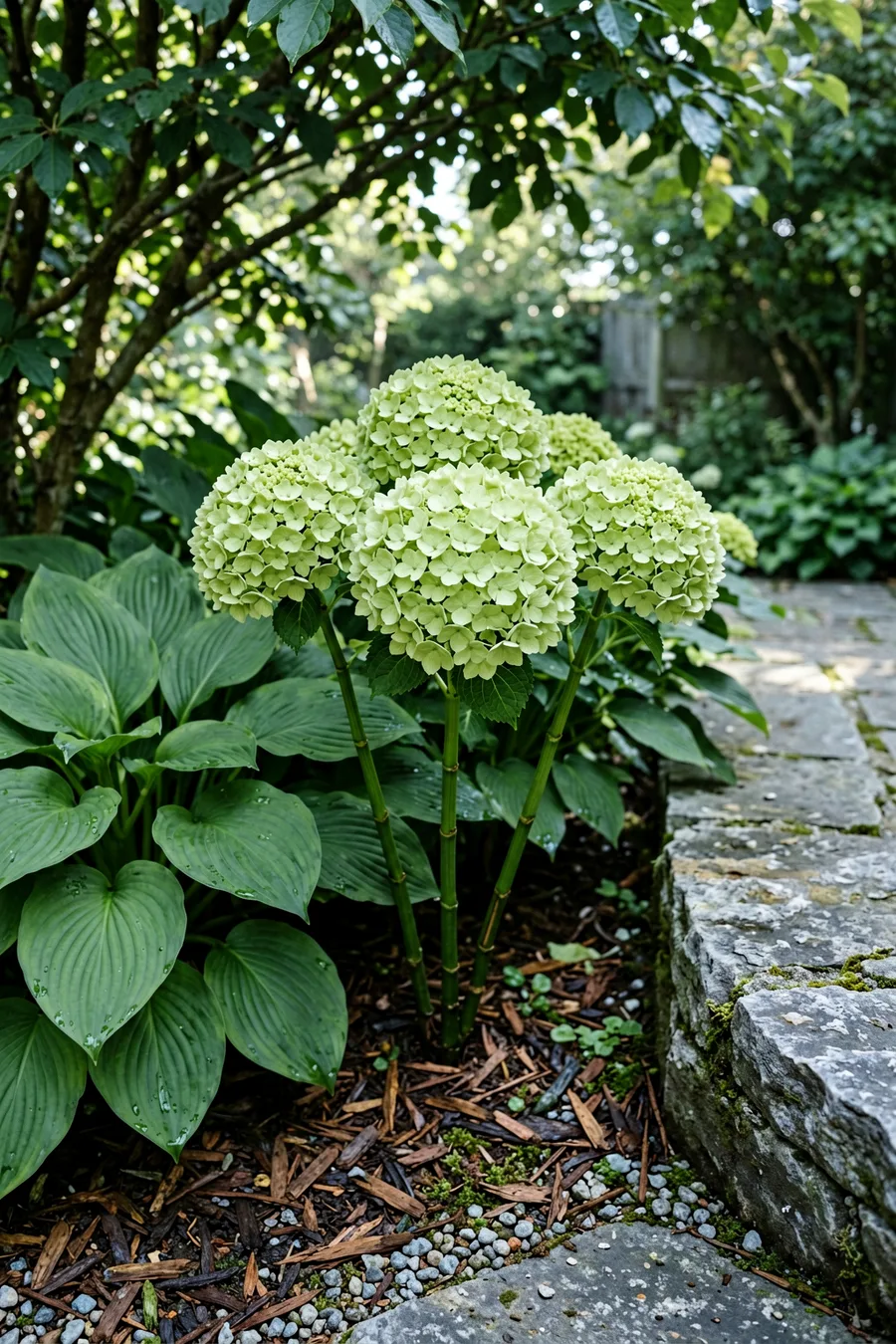
If you love the refreshing, cool look of lime-green blooms but your garden is too shaded to support sun-loving panicle varieties, plant Invincibelle Limetta instead. This smooth hydrangea variety thrives in partial shade and stays in a tidy, symmetrical mound between 30 and 44 inches tall.
The flowers open a translucent, bright jade green, slowly soften to a creamy white-lime in the heat of summer, and then crisp back up to a deep, rich green in autumn. It flowers entirely on new wood, meaning you can cut it right down near the ground every single winter to keep its shape perfectly uniform and fresh.
11. Fire Light Tidbit Panicle Hydrangea
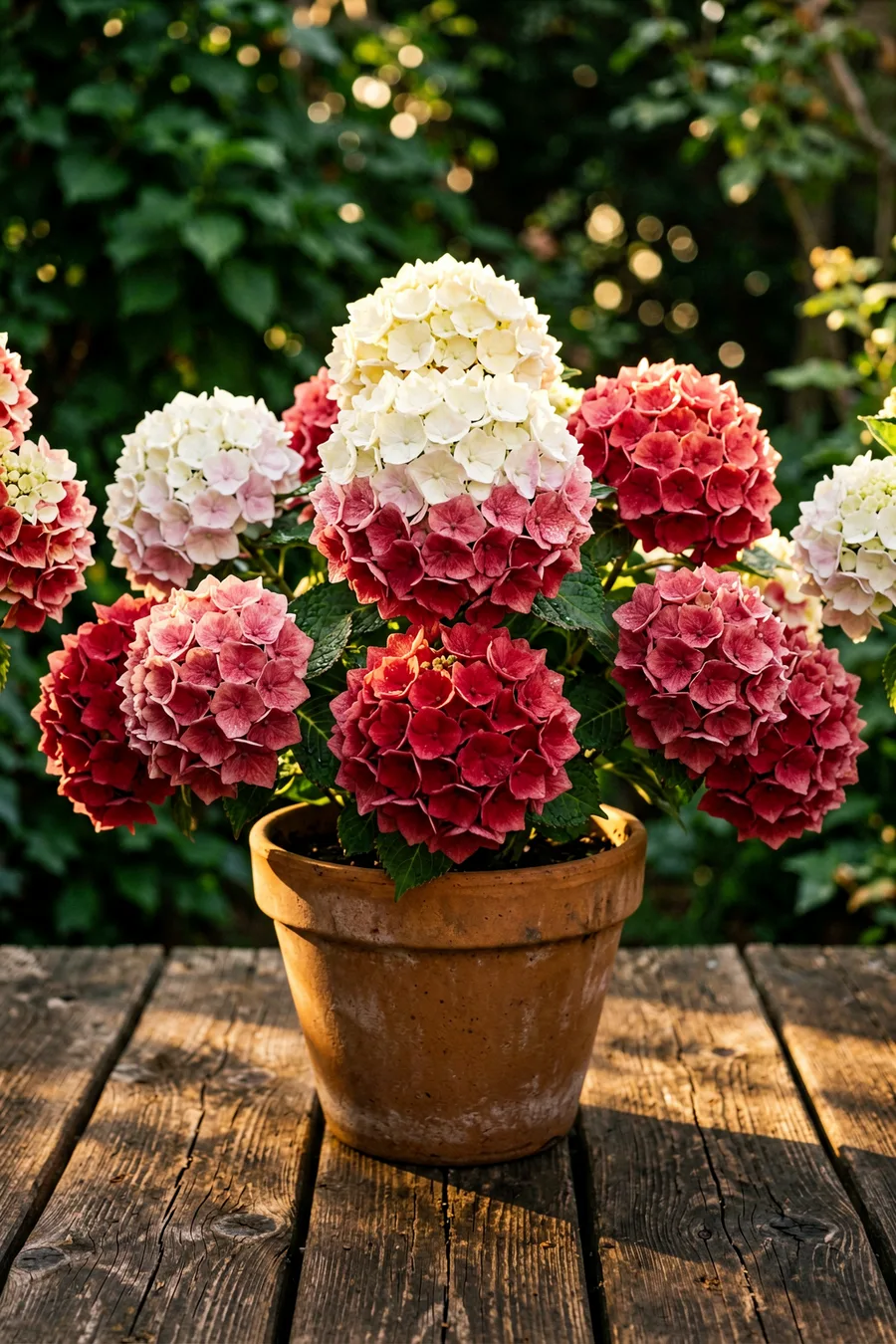
This is an absolute powerhouse of a plant packed into a tiny, diminutive frame. Fire Light Tidbit is one of the smallest paniculata selections ever introduced, naturally capping out at an incredibly neat two to three feet tall and wide. It is built specifically for the tightest urban spaces.
Despite its small stature, it produces an unbelievable number of dense flower panicles that completely obscure the green foliage by late July. The blooms open a clean white before shifting through shades of bright pink and ending in a striking, deep pomegranate red that remains vibrant for weeks as a dried flower head.
12. Gatsby Gal Oakleaf Hydrangea
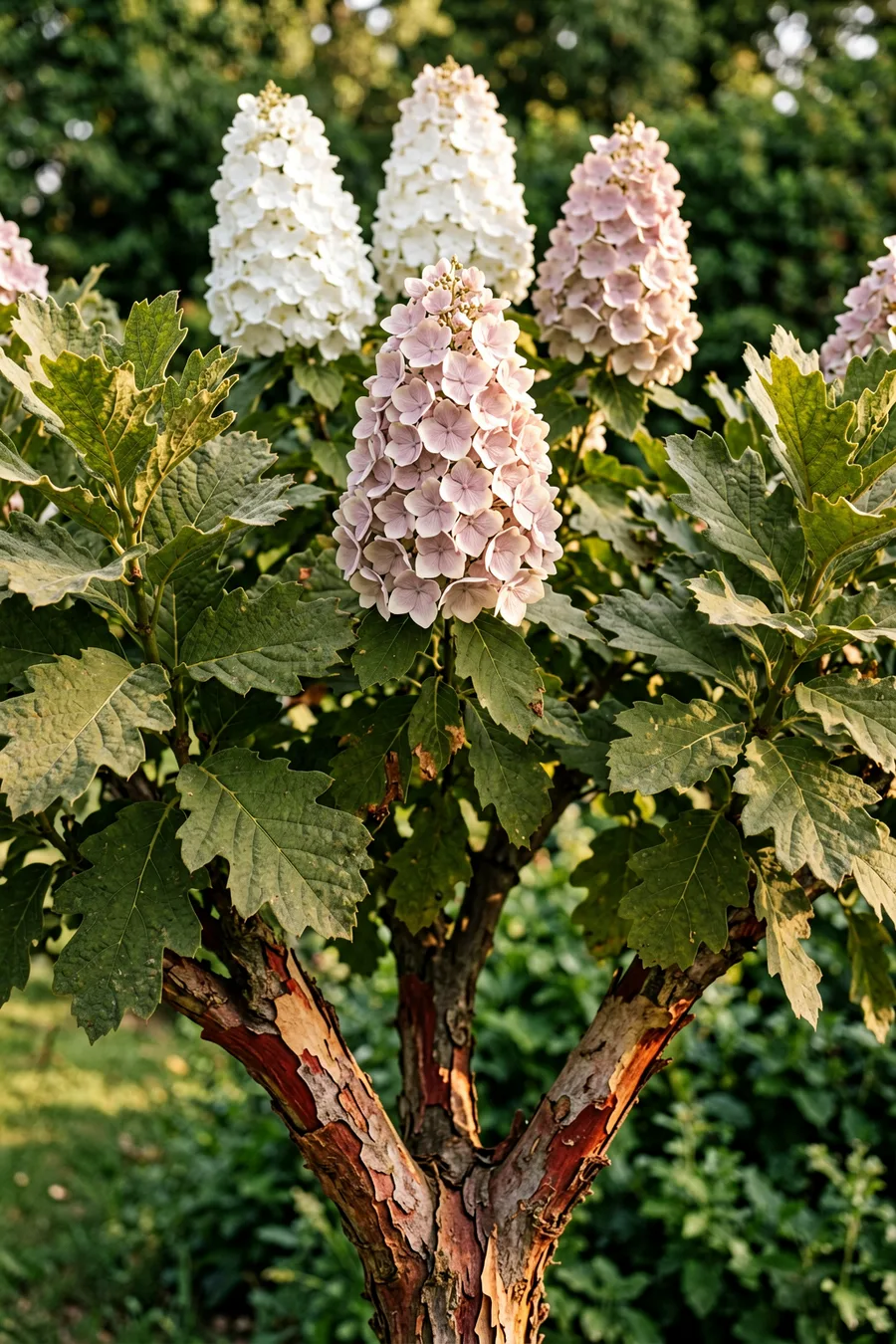
While most oakleaf varieties are far too large for a standard city lot, Gatsby Gal brings that classic American native style down to an manageable format. Topping out right at four feet tall, it is the perfect size for a low, informal hedge or a prominent specimen plant in a small backyard corner.
The flower panicles are shockingly large for a shrub of this size, standing proudly upright above the dark green, leathery leaves. As an added bonus, the flowers age to a beautiful, soft old-rose pink in late summer, and the peeling, cinnamon-colored bark provides fantastic architectural interest throughout the bleak winter months.
Dwarf Panicle vs. Dwarf Bigleaf Hydrangeas
Dwarf Panicle (Paniculata)
- Thrives in full sun and heat
- Blooms reliably on new wood
- Conical white-to-red flowers
- Prune hard in late winter
Dwarf Bigleaf (Macrophylla)
- Requires afternoon shade
- Needs consistent soil moisture
- Rounded blue or pink flowers
- Prune only right after blooming
13. Wee Bit Giddy Bigleaf Hydrangea
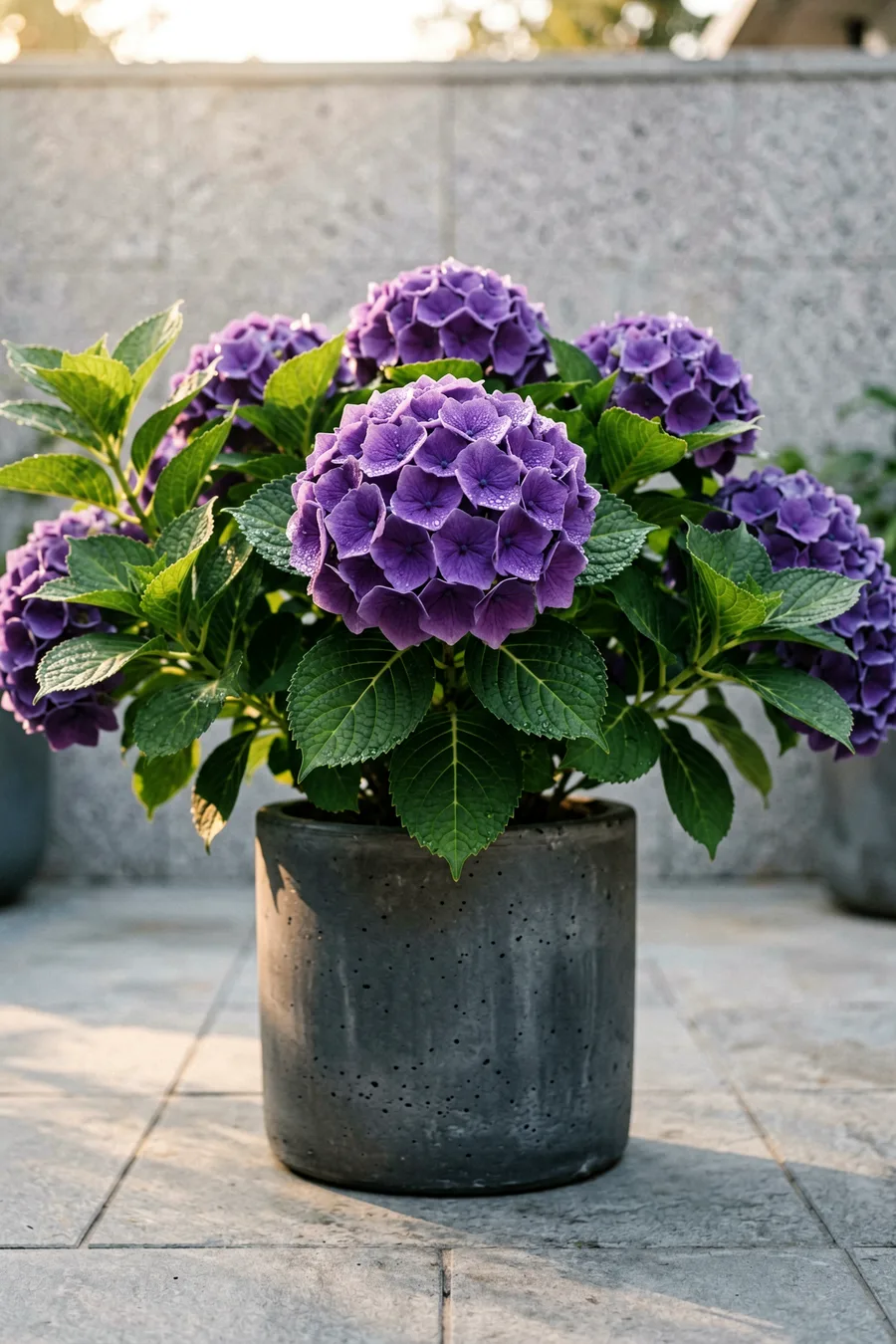
Open with a strong confession: I used to think small bigleaf hydrangeas were weak, prone to flopping, and generally not worth the effort. Wee Bit Giddy completely changed my mind. This option features some of the toughest, most rigid wood I have ever seen on a compact macrophylla variety.
It stays under two feet tall but produces massive, intense red-pink mophead flowers that look almost cartoonish against the small, dark green bush. If you have an acidic soil profile, these flowers shift into a mesmerizing, deep royal violet-purple that looks incredibly rich and sophisticated in a modern container or a formal garden border.
14. Cherry Explosion Lacecap Hydrangea
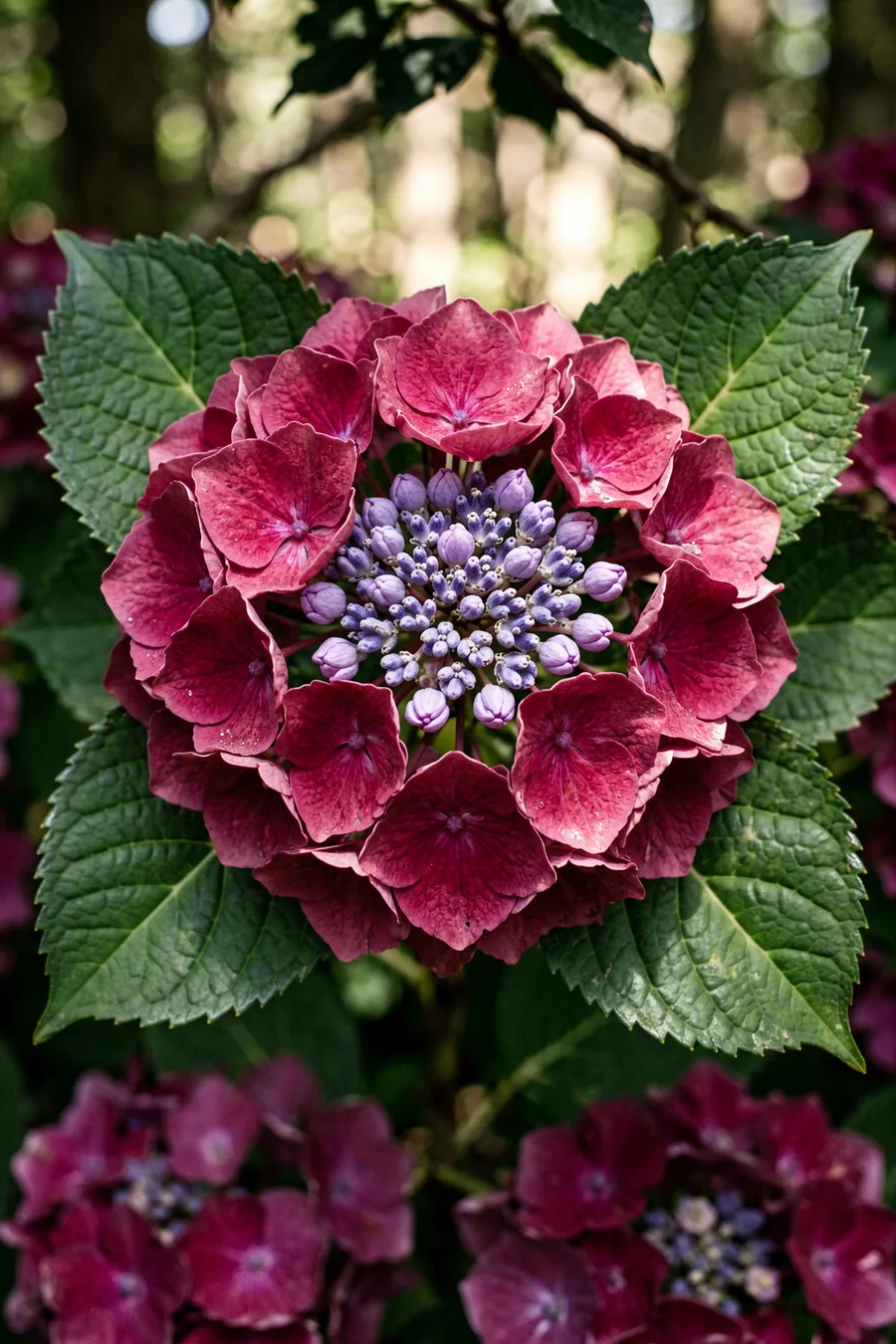
If you want to inject raw, unapologetic color into a semi-shaded border, skip the pastel pinks and go straight for Cherry Explosion. This dwarf mountain hydrangea selection stays under three feet tall and forms a perfectly neat, rounded mound without any pruning intervention.
The lacecap blooms feature a central cluster of tightly packed pink buds surrounded by a ring of large, brilliant cherry-red petals. In acidic soils, the center shifts to a deep violet while the outer ring stays a rich, dark magenta, creating an eye-catching two-tone effect that instantly draws the eye from across the yard.
15. Little Lime Panicle Hydrangea
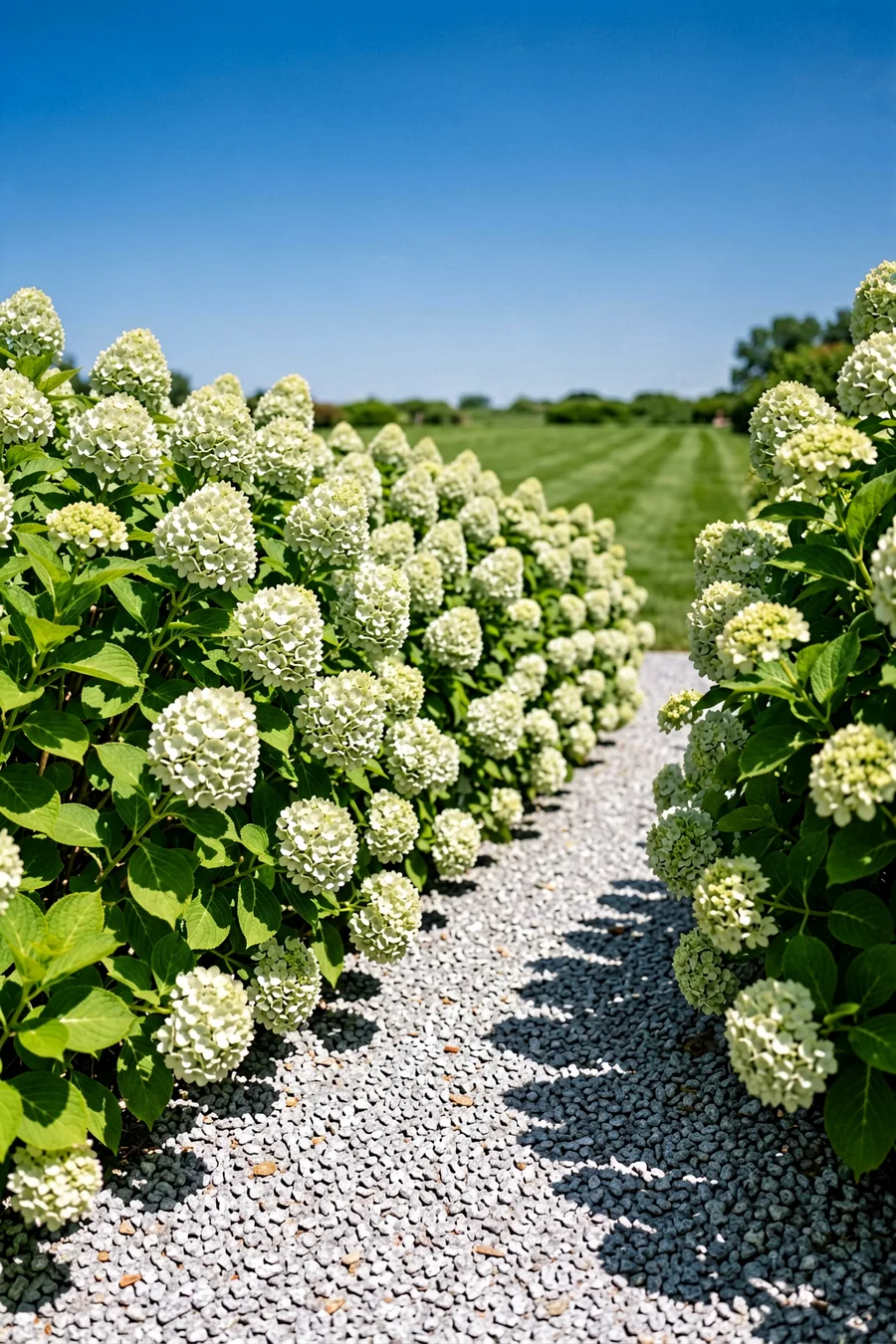
The reliable classic: No compact hydrangea list is complete without the industry standard that started the dwarf panicle revolution. Little Lime is the compact version of the legendary Limelight, holding steady at a clean three to five feet tall when grown in full sun.
Why it works: It produces the exact same soft, lime-green, football-sized flower panicles as its giant parent, but on a bush that fits under a standard kitchen window. It is exceptionally winter-hardy, drought-tolerant once established, and provides a clean, elegant look that coordinates beautifully with any style of architecture.
Placement tip: Use this variety to create a low-maintenance, repeating hedge along a driveway or property line where you want maximum summer privacy without blocking your view.
💡 PRO TIP
Leave Dried Blooms For Winter Texture
Don't deadhead your panicle hydrangeas in late autumn. Leave the dried tan flower heads on the plant all winter; they look spectacular catching the frost and morning snow.
Frequently Asked Questions
Can compact hydrangeas grow in full sun?
Dwarf panicle varieties like Bobo and Little Lime thrive in full sun, especially in northern zones. However, bigleaf and mountain varieties require afternoon shade to prevent their leaves from scorching and wilting.
How often should I water dwarf hydrangeas in pots?
Potted hydrangeas dry out quickly. Check the soil daily and water deeply whenever the top inch feels dry. During hot summer stretches, you will likely need to water them thoroughly every morning.
Do compact hydrangeas need heavy pruning?
No, their small size is genetic. Only prune panicle and smooth varieties in late winter to clean up their shape. Bigleaf varieties should only have dead wood removed in spring to protect flower buds.
Why is my dwarf hydrangea not blooming?
The most common culprit is incorrect pruning or a harsh winter freeze that killed the flower buds on old-wood varieties. Switch to new-wood panicle varieties if you live in a very cold climate.
Final Thoughts
If you only add one variety from this list to your garden this season, make it the Bobo Panicle Hydrangea. It is absolute perfection for small spaces because it completely removes the guesswork from pruning, shrugs off brutal winter freezes, and packs an unbelievable amount of flower power into a three-foot frame that never flops. Plant it in a high-visibility spot near your patio or front walkway, give it a solid base of rich potting soil, and enjoy the effortless summer show.
Transform Your Small Space Garden Today
Subscribe to our weekly gardening newsletter for concrete, dirt-under-the-nails advice on growing massive blooms in tiny yards.

John Smith is the founder and CEO of Karaoke Machines Guru. He is a karaoke tutor and karaoke enthusiast and has been passionate about karaoke since he was a child. He also writes about karaoke-related tips, guides, and product reviews on this website.
He overlooks the whole website and makes sure that everything is running smoothly. Learn more!