
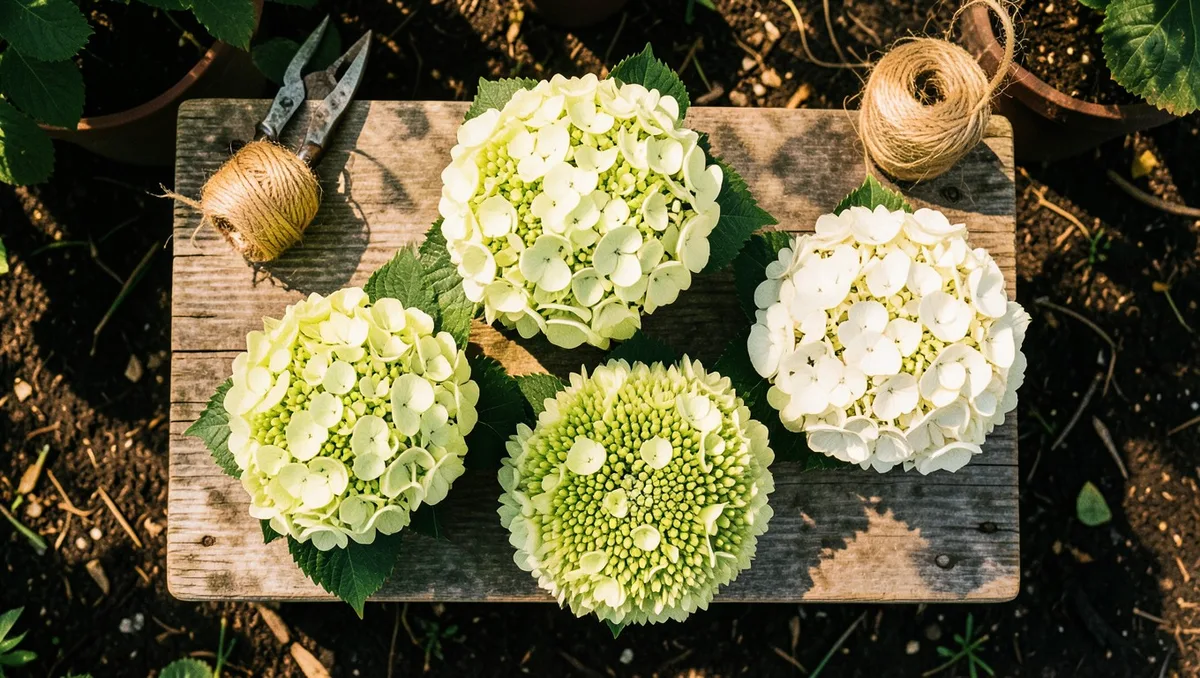
We have all been there: you plant a gorgeous hydrangea in a sunny spot, only to watch its leaves turn into crispy, brown potato chips by midday. Most people think hydrangeas are strictly shadow-dwellers that wilt at the mere suggestion of a sunburn. I used to think the exact same thing until I baked three expensive mopheads to a crisp in my own Zone 7 backyard. But here is the real secret that seasoned gardeners know: the hydrangea family is massive, and certain rugged varieties actually need full sun to produce those massive, show-stopping flower heads.
To make gardening work in intense afternoon heat, you have to stop buying delicate woodland species and start planting tough, sun-adapted varieties. In this guide, we are diving into the exact panicle and smooth hydrangeas that can take eight hours of direct baking sun without dropping a single leaf. If you want huge, reliable blooms that shift from lime green to creamy white and dusty rose from July through October, these fifteen powerhouse varieties will deliver.
Quick Tips Before You Start
Morning Moisture
Water deeply at the base of the plant at 6:00 AM so the roots are fully hydrated before the sun hits.
Mulch Heavily
Apply a three-inch layer of shredded pine bark or cedar mulch to keep soil temperatures cool.
Prune Correctly
Cut panicle hydrangeas back by one-third in late winter to encourage massive new wood blooms.
1. Limelight Panicle Hydrangea Is the Unrivaled King of Sun
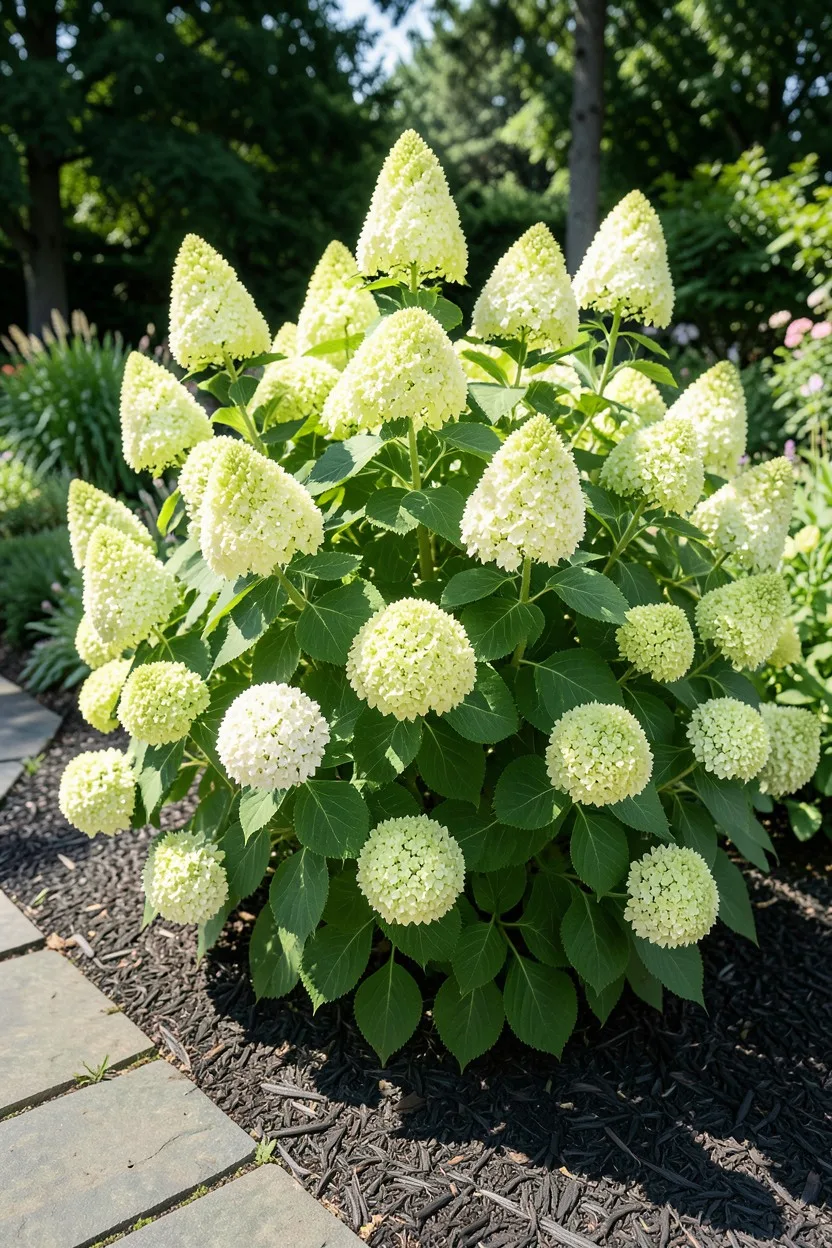
Everyone tells you to plant marigolds for sun, but if you want a massive, architectural shrub that laughs at 95-degree heat, you plant a Limelight. This panicle variety (Hydrangea paniculata) is the absolute gold standard for sun tolerance. I have grown these against a south-facing brick wall in the dead of July, and they simply do not quit.
The secret to its success is its woody stems and thick, leathery leaves that prevent rapid moisture loss. It starts the season in mid-summer with crisp, celery-green cone-shaped blooms that slowly mature to a bright, sterile white. By September, the whole plant shifts into a dusty blush pink that holds its structure well into winter.
Give this shrub plenty of breathing room. It easily reaches eight feet tall and wide within four seasons, so do not cram it into a tight corner. Plant it as a privacy screen or a bold anchor at the back of your perennial borders.
Limelight Panicle — At a Glance
📏 Mature Size
6–8 feet tall and wide
☀️ Sun Exposure
6–8+ hours direct sun
🌸 Bloom Shape
Large cone-shaped panicles
🎨 Color Cycle
Lime green to white to rose
Superpower
Extreme heat tolerance with zero midday wilting once established.
2. Little Lime Offers Heavy Blooms on a Compact Frame
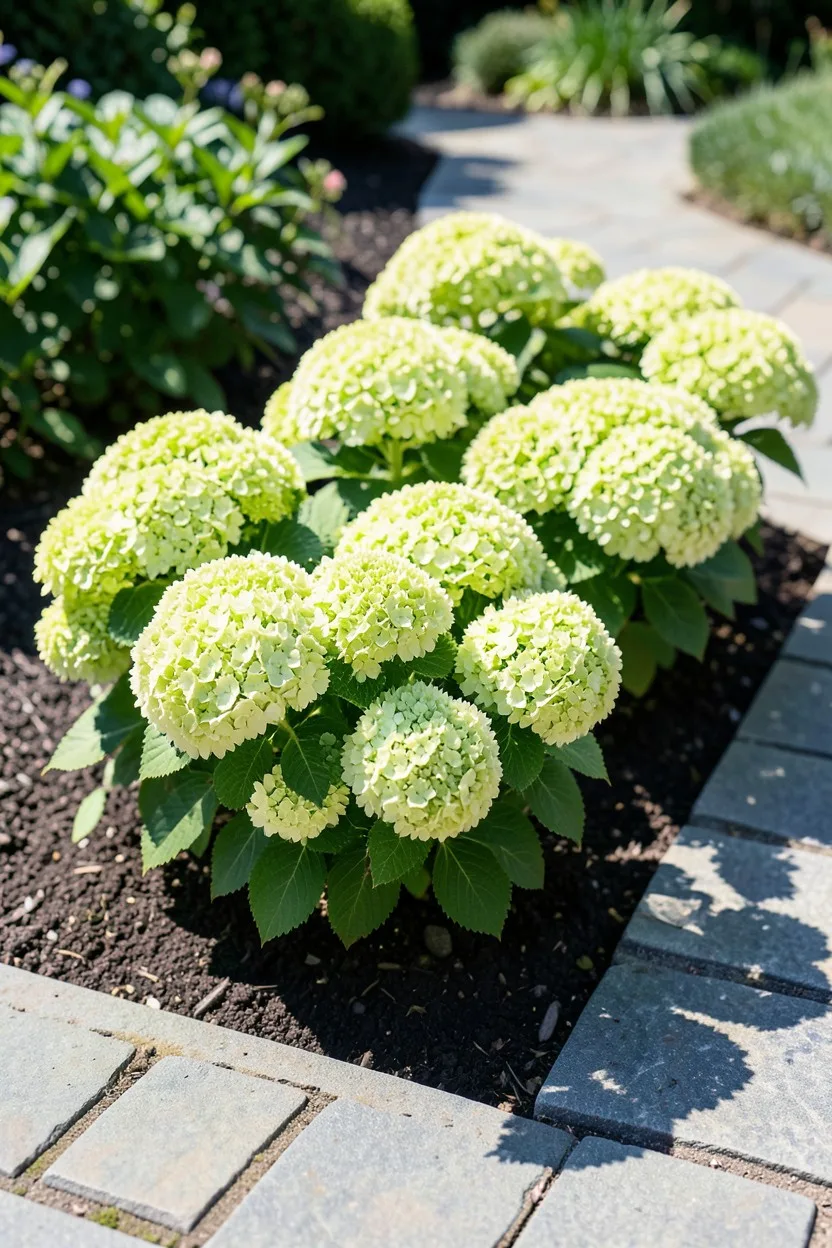
You love the look of Limelight but your suburban lot cannot handle an eight-foot monster shrub. Enter Little Lime. This is not a delicate dwarf variety that needs babying; it is the exact same rugged genetics packed into a tight, three-to-five-foot square frame.
Space saving: Fits perfectly into small foundation plantings or tight raised beds without overtaking your view.
Sturdy stems: The branches are remarkably thick for a smaller shrub, meaning the heavy flower cones stay upright even after a torrential summer downpour.
I plant these in rows of three to create low hedges along walkways. They handle the reflected heat from concrete paths beautifully, provided you lay down a thick layer of mulch to protect the shallow root zone from baking.
3. Incrediball Smooth Hydrangea Defies the Standard Shade Rule
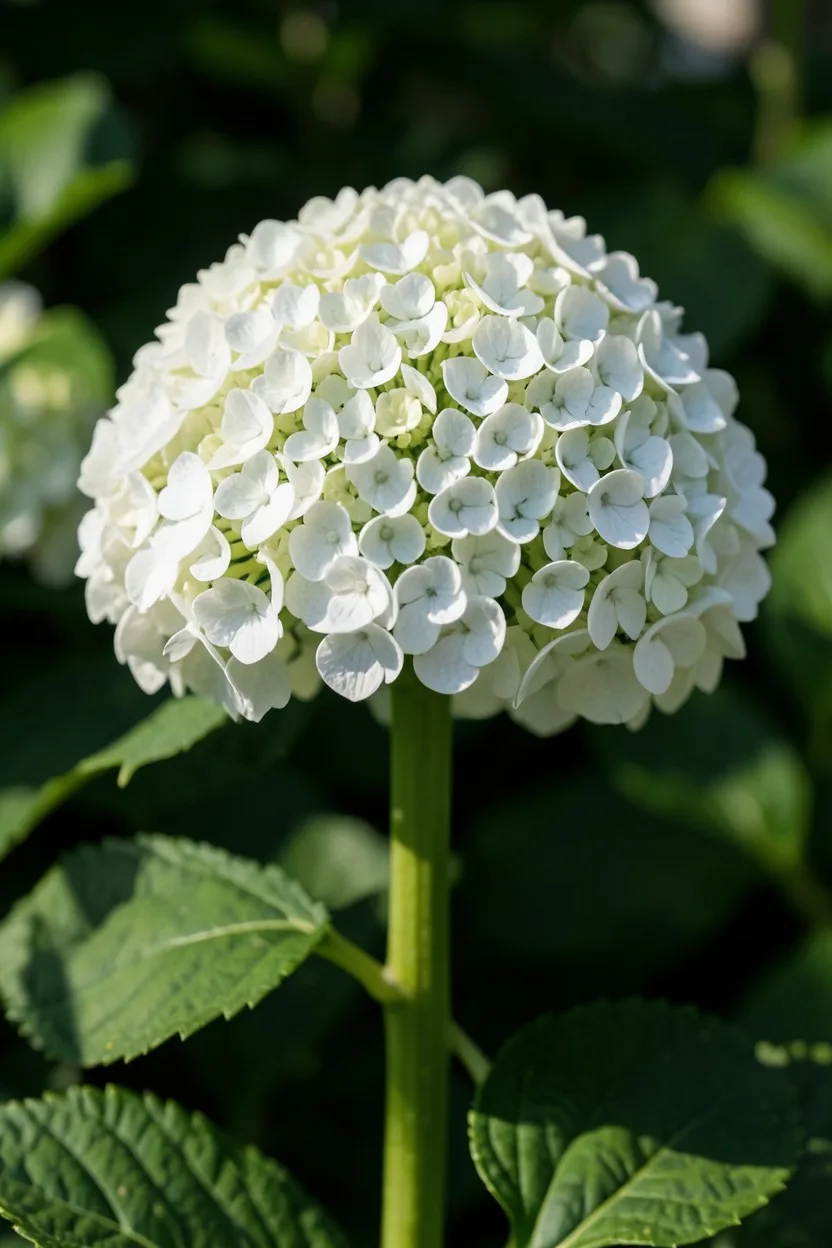
Myth-buster time: you have been told that smooth hydrangeas (Hydrangea arborescens), like the classic Annabelle, must live in deep, moist shade. That is totally wrong when it comes to the upgraded Incrediball variety. This selection takes the classic mophead look and beefs it up for sunny spaces.
The problem with old-school smooth hydrangeas is thin, floppy stems that dive-bomb into the dirt the second they bloom. Incrediball was specifically bred with massive, thick stalks that hold basketball-sized white flower heads straight up in the air, even in full sun exposures.
However, there is a catch. While it handles the sun beautifully without scorching, it is thirstier than panicle varieties. Plant this one where your hose easily reaches, and give it a deep soaking twice a week during hot spells.
🌱 GROWING TIP
Deep Root Soaking for High-Sun Performance
Never sprinkle hydrangea leaves with an overhead hose in the heat of the day. Instead, run a soaker hose directly at the base of the shrub for 45 minutes twice a week to force roots deep into the cool subsoil.
4. Phantom Panicle Hydrangea Delivers Massive Headline Blooms
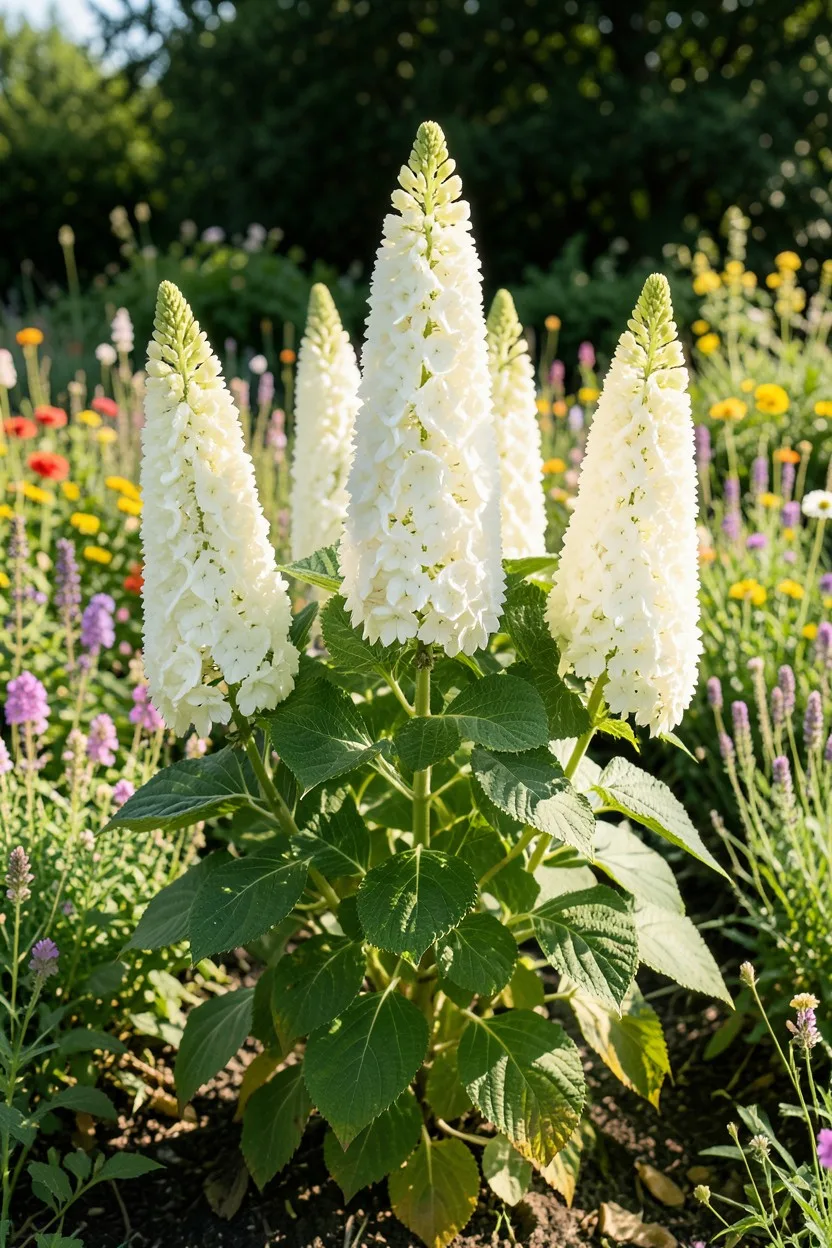
If you want to make your neighbors stop their cars and stare at your garden, Phantom is your shrub. It is a straightforward, no-nonsense panicle hydrangea that produces the absolute largest flower cones of any variety on the market—frequently reaching fifteen inches long.
Because it blooms on new wood, you do not have to worry about late spring frosts killing off your flower buds. Chop it down by half in March, and by July it will blast out huge cones that open a soft, buttery yellow before turning brilliant white.
Give it a prominent spot where it can shine. I use it as a standalone specimen plant at the corner of my property to anchor a large perennial bed filled with sun-loving purple coneflowers and black-eyed Susans.
5. Vanilla Strawberry Brings Striking Two-Tone Pastel Contrast
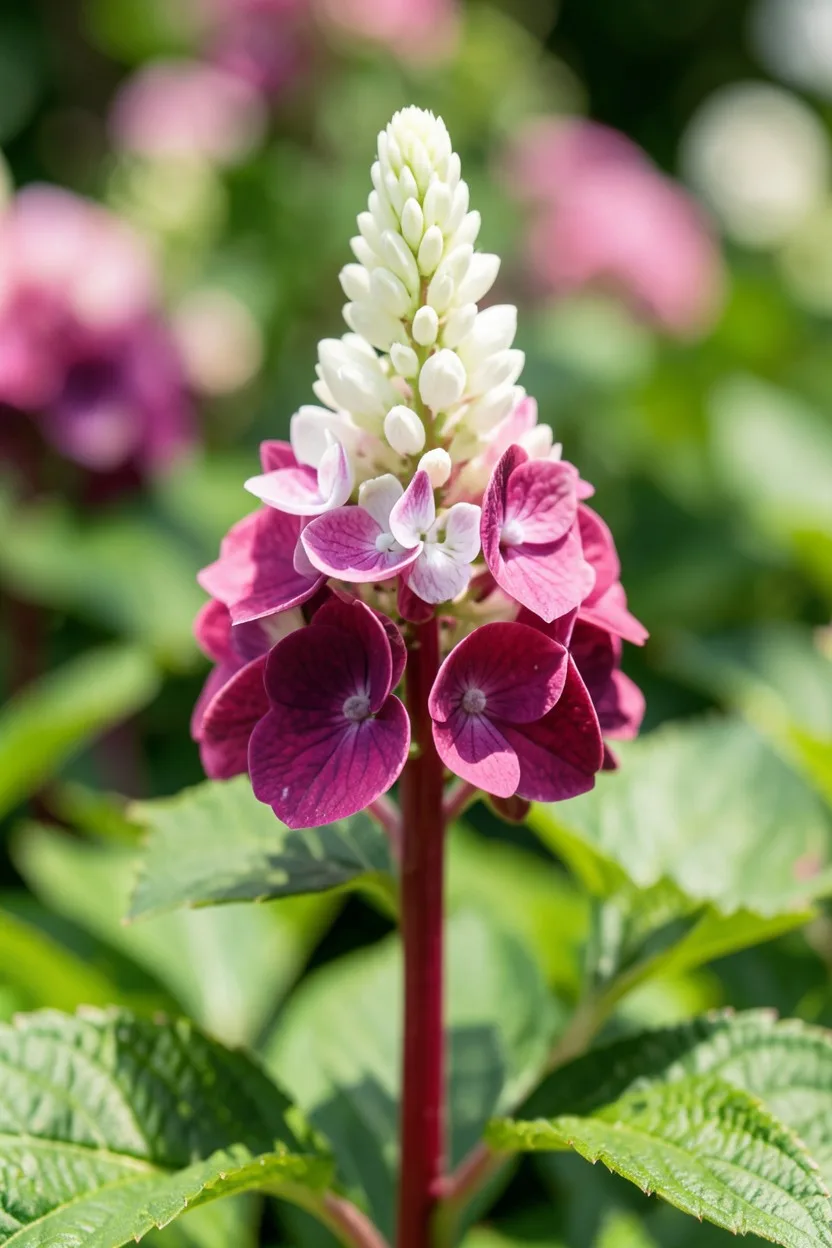
Nobody tells you that the speed of summer temperature drops completely dictates how well your hydrangeas transition color in autumn. Vanilla Strawberry is a unique panicle variety that changes color so dramatically it looks like a completely different plant by September.
It starts blooming in mid-summer with pristine white panicles on bright red stems. As the nights begin to cool down in late August, the base of the flower cone turns a deep raspberry pink while the top stays white. The result is a stunning, two-tone strawberry-sundae effect.
To get the most intense pink coloration, this variety requires at least six full hours of direct morning sun. If you tuck it into the shade, those spectacular pink tones will fade into a dull, muddy brown.
Best For
6. Bobo Panicle Hydrangea Packs Flowers Into Tiny Spaces
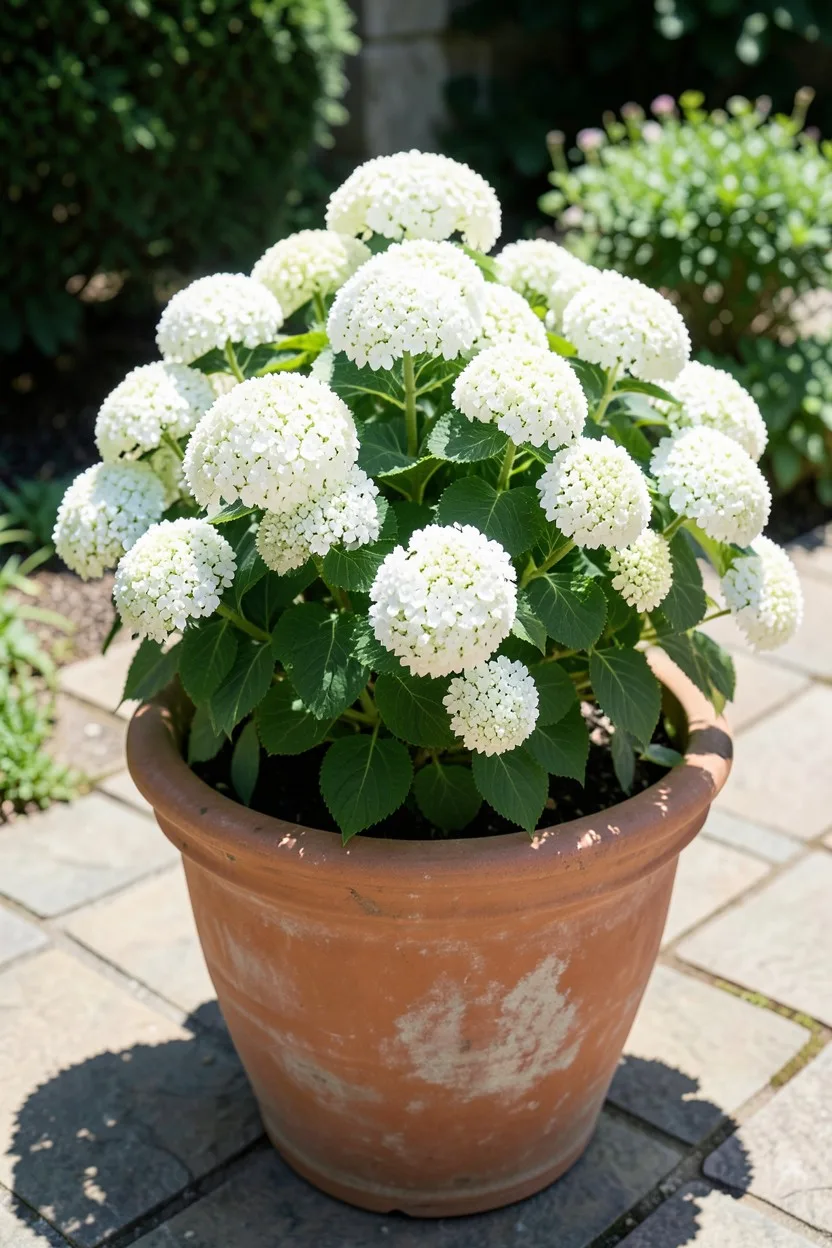
Acknowledge the variation in small spaces: most dwarf shrubs end up looking stunted or sparse. Bobo is the complete opposite. This tiny powerhouse stays under three feet tall but produces so many flower heads that the foliage completely disappears under a mass of white cones in August.
It is hands-down the best option for container gardening on sunny patios. I put them in large, 20-inch terra cotta pots flanking my back steps. Because containers dry out faster than the ground, you must mix a generous scoop of compost into your potting soil to hold onto essential moisture.
Do not over-prune this little guy. Just give it a light haircut in early spring to clean up old flower stalks and it will reward you with a dense, solid wall of summer blossoms.
7. Quick Fire Sparkles With Early-Season Pollinator Blooms
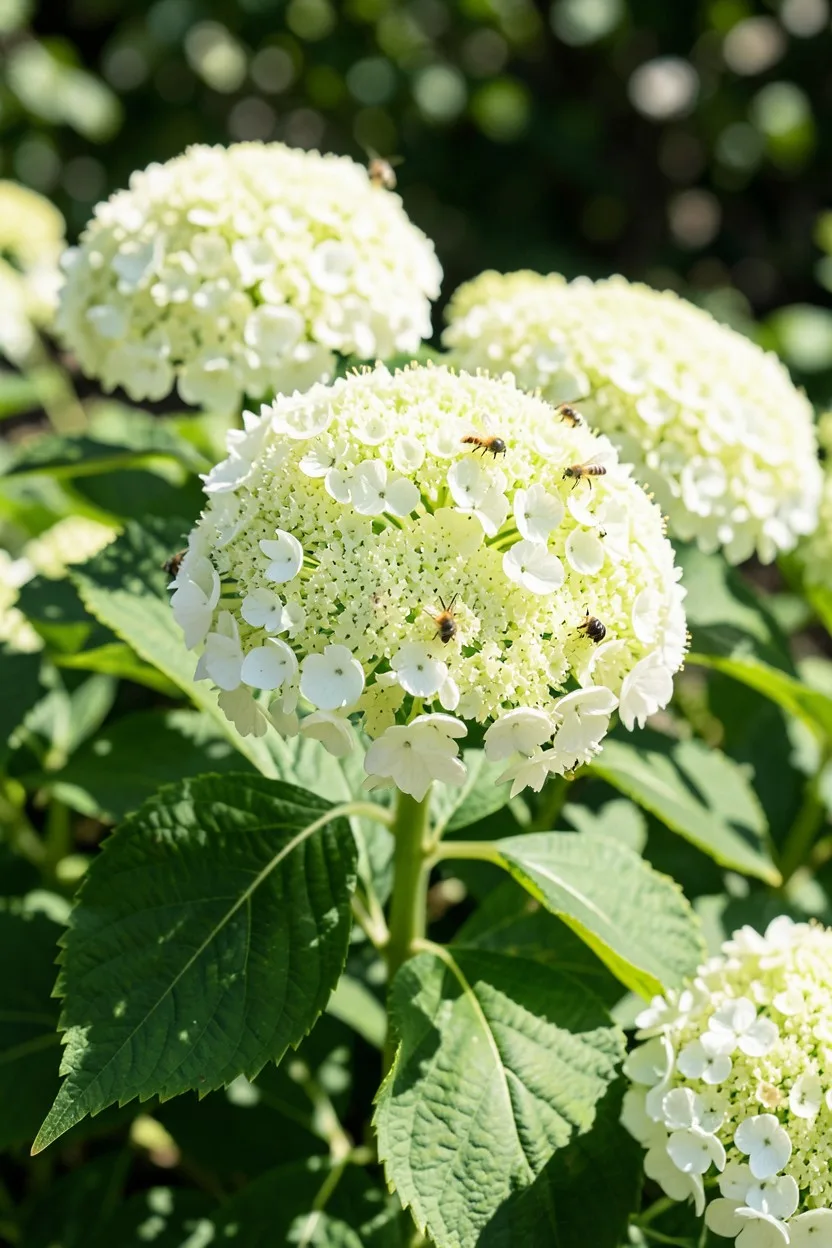
If you are tired of waiting until late July for your hydrangeas to finally start doing something, buy a Quick Fire. This variety cuts the waiting time in half by bursting into full bloom up to a month earlier than other panicle varieties.
Instead of the dense, packed florets seen on a Limelight, Quick Fire features open, airy lacecap-style panicles. This open structure makes it incredibly easy for native bees and butterflies to access the nectar inside.
By the time other hydrangeas are just waking up, Quick Fire is already shifting into its deep, rich watermelon-pink phase. It is an exceptional choice for lengthening your garden's bloom diary and keeping pollinators fed through early summer gaps.
8. Fire Light Holds Bold Watermelon Crimson Tones Late
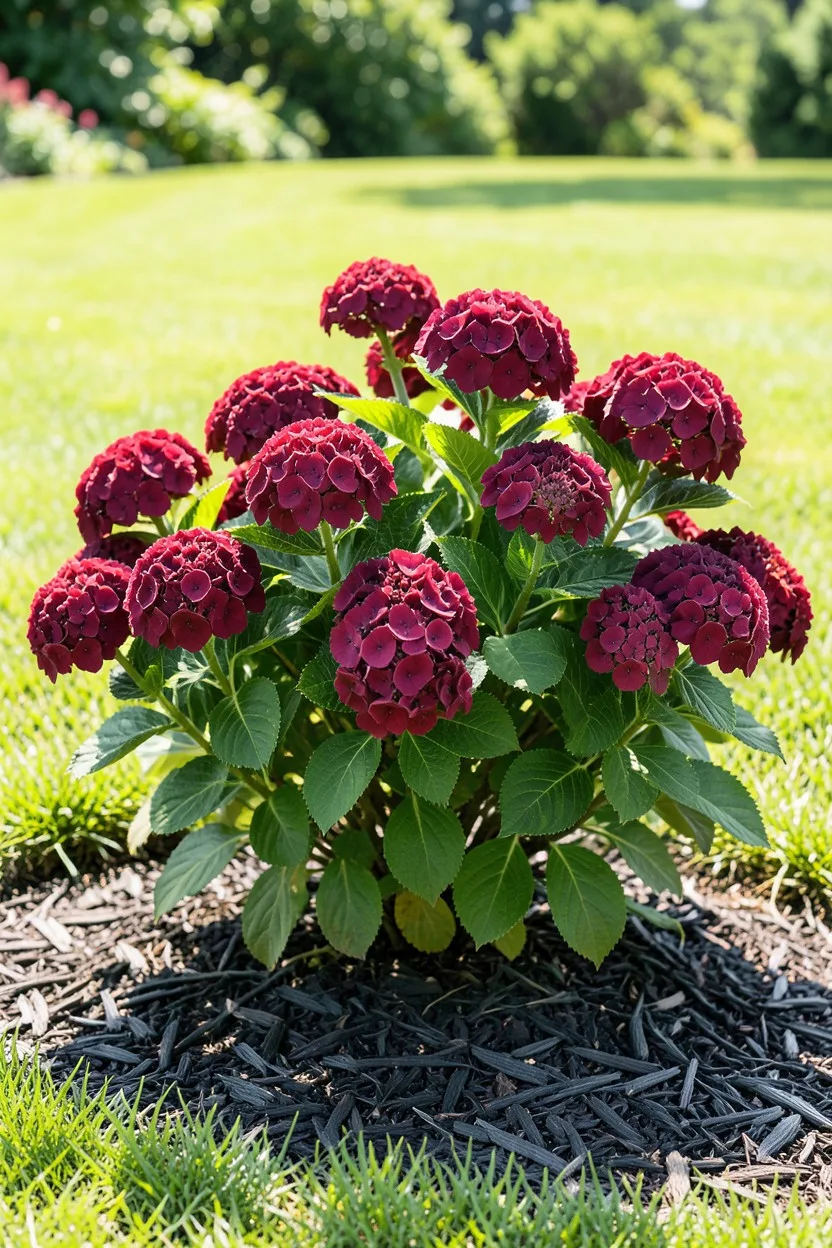
Science-backed field trials show that many pink-fruiting panicle hydrangeas wash out into a pale tan color when exposed to sustained, high-intensity summer heatwaves. Fire Light was bred specifically to solve this problem, locking in intense pigment despite soaring temperatures.
The secret lies in the high concentration of anthocyanin compounds within its petals, which react beautifully to late-season sunlight. The blooms open a clean ivory white but quickly transform into a deep, saturated pomegranate crimson that holds its intense color for weeks.
Plant Fire Light in full, unobstructed sun to maximize this color transformation. If it is shaded by nearby trees, the dramatic red shift will be significantly muted.
🌱 How to Plant Full-Sun Hydrangeas
Dig Wide
Dig a hole twice as wide as the root ball but exactly the same depth to keep the crown level.
Amend Soil
Mix two inches of aged compost into the native soil backfill to improve moisture retention.
Plant and Drench
Set the shrub in place, fill the hole halfway with soil, and flood it completely with water to eliminate air pockets.
Mulch Shield
Fill the rest of the hole and apply a three-inch layer of shredded bark mulch keeping it clear of the main stems.
9. Little Quick Fire Fits Compact Beds and Borders
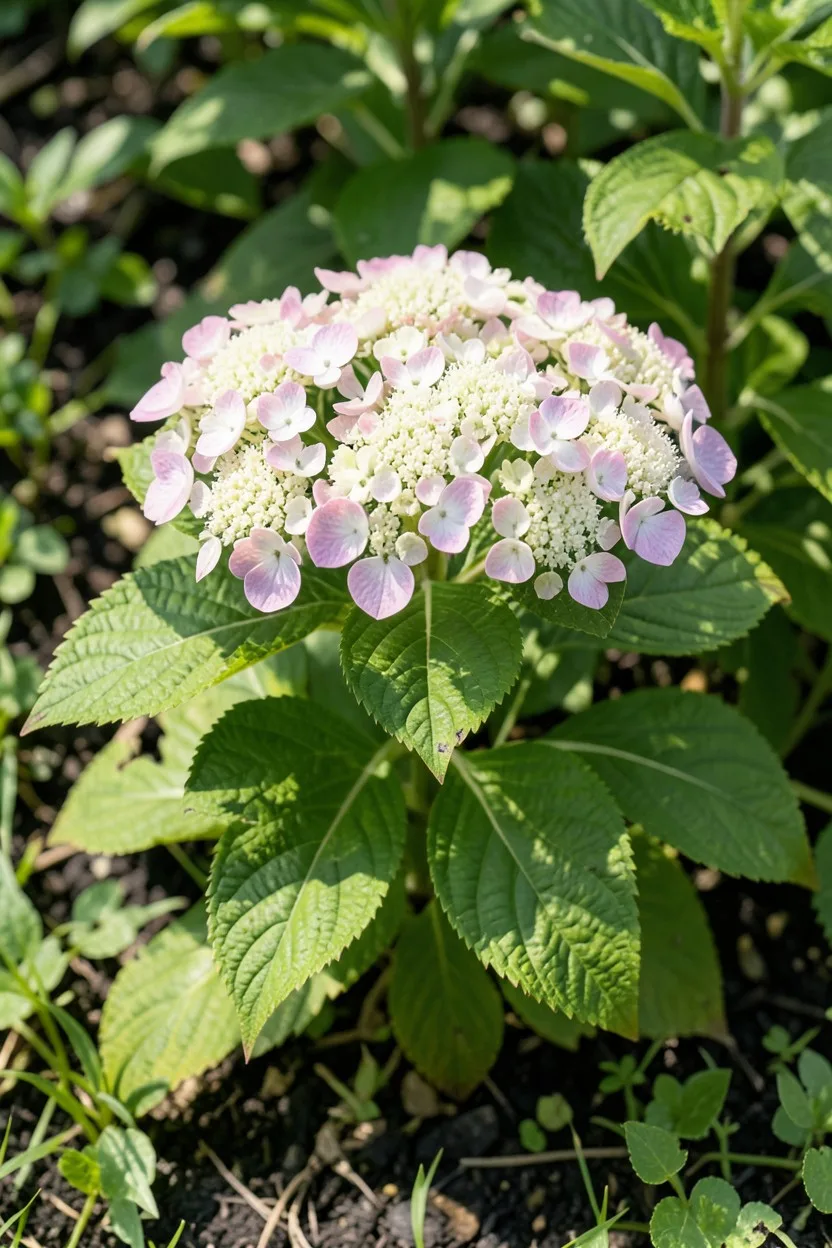
Opinion confession: I used to think dwarf versions of popular shrubs were a total marketing gimmick that left you with weak plants. Little Quick Fire completely changed my mind the first season I planted it along my sunny front walkway.
It takes the ultra-early blooming schedule and open lacecap texture of the standard Quick Fire and caps its growth at a tidy three feet. It handles intense heat and drying winds with incredible resilience, never showing the scorched margins common to delicate varieties.
This is my top recommendation for dressing up the bare lower legs of taller, leggy shrubs. Plant them directly in front of older panicle types to create a layered, multi-tiered wall of blooms.
10. Strawberry Sundae Shifts Bright Pink on Compact Wood
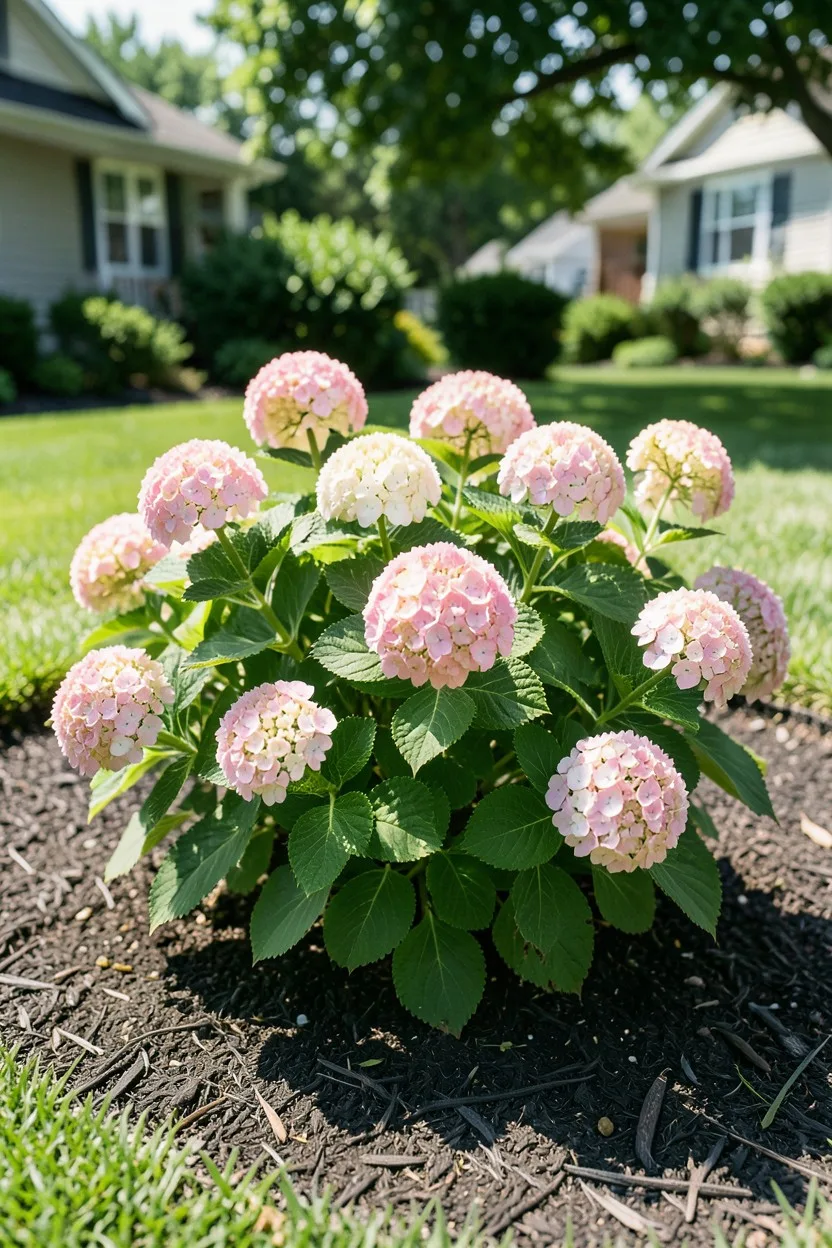
Do this, not that when trying to get bright pink autumn colors in tight spaces: do not buy a massive variety and try to shear it down to size constantly. That destroys the flower buds. Instead, plant Strawberry Sundae, which naturally stays compact while delivering that classic color shift.
Reaching just four feet tall, this cousin of Vanilla Strawberry changes from a clean cream to a delicious strawberry-pink hue starting from the base of the flower head upward. It gives you the dramatic multi-tone show without requiring constant pruning maintenance.
To keep the branches from leaning toward the light, make sure this shrub receives even, overhead sun for at least six hours a day. Uneven light will cause the plant to develop an asymmetrical, lopsided shape.
⚠️ COMMON MISTAKE
Avoid Severe Mid-Summer Shearing
Never prune your panicle hydrangeas in July to control their size. This chops off the current season's developing flower buds and leaves the raw inner branches vulnerable to severe sunscald.
11. Tardiva Panicle Hydrangea Anchors Late-Autumn Garden Interest
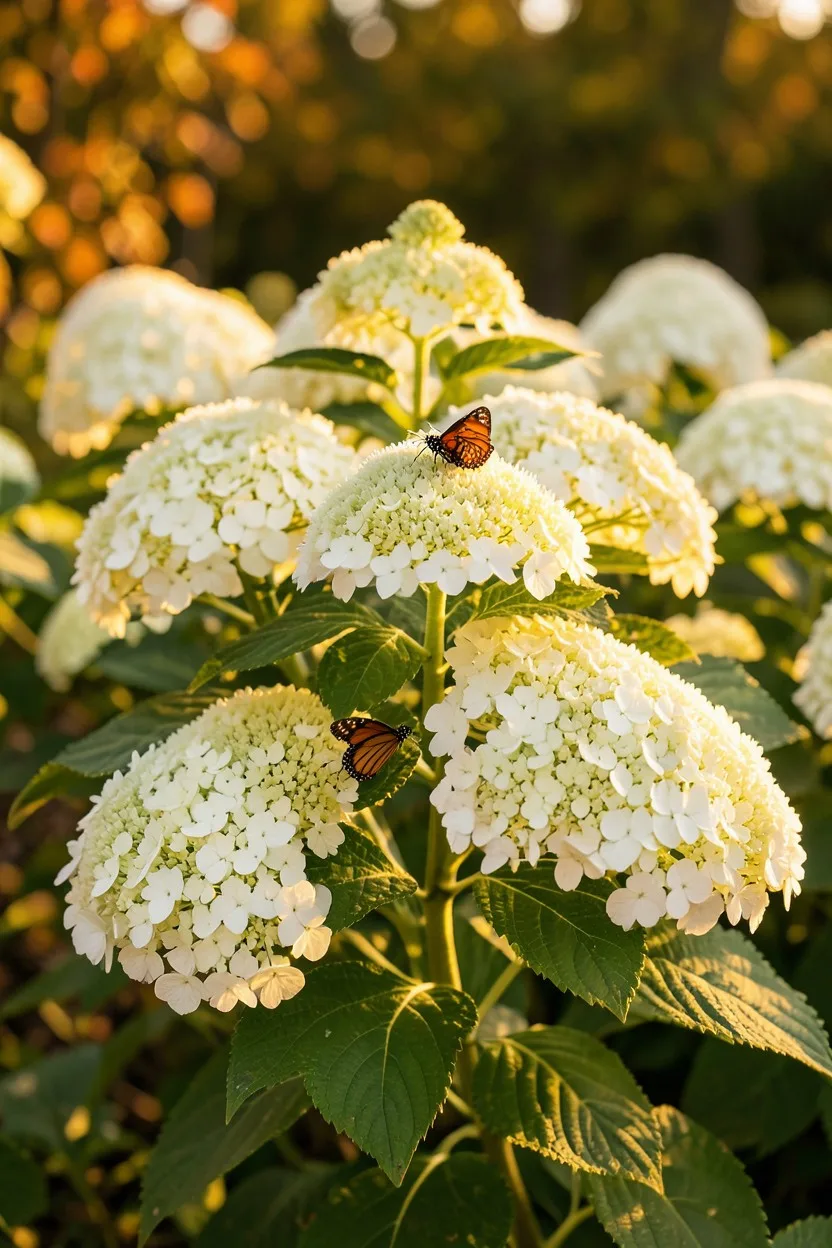
If you want your high-sun garden to keep pushing fresh flowers well into October when everything else is turning into brown mush, Tardiva is your best bet. This is an old-school, tough-as-nails heirloom panicle variety that refuses to bloom until late August.
Late season food: Provides a vital nectar source for migrating monarch butterflies when other flowers have faded.
Open structure: The pointed, six-inch cones are loose and airy, giving the shrub a wild, romantic cottage-garden look rather than a stiff, formal shape.
Tardiva grows quickly into a massive ten-foot specimen. I use it as a canopy plant, pruning away the lower branches over time to turn it into a gorgeous, multi-stemmed small tree that leaves room for sun-loving hostas beneath.
12. Pinky Winky Offers Striking Two-Tone Extra-Large Cones
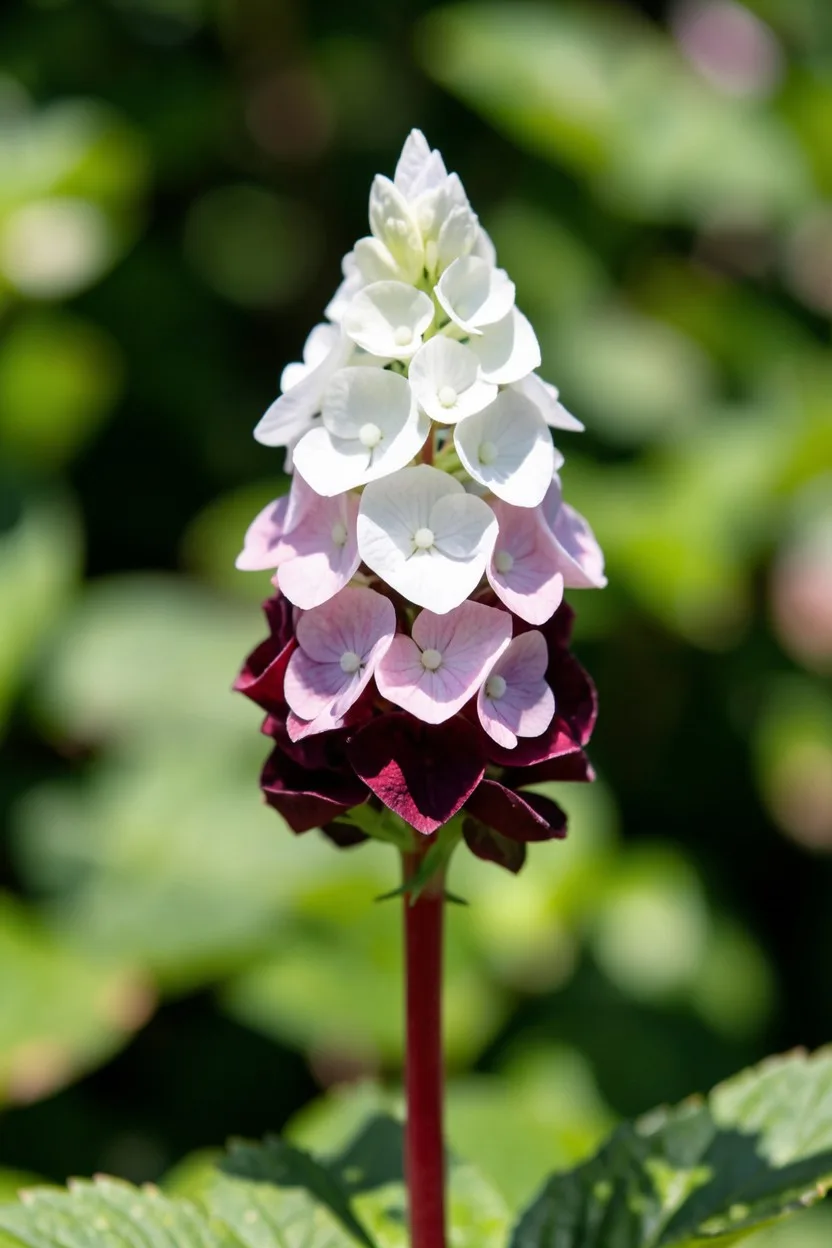
Nobody tells you about the incredible structural engineering of Pinky Winky. This variety features some of the stiffest, most unyielding red stems in the entire plant kingdom, designed specifically to carry massive fourteen-inch flower heads without a hint of drooping.
The flower cones open white but turn a deep, dark rose at the base while continuously pushing new white florets at the tip. This creates an incredibly distinct, elongated two-color look that persists for nearly two months under blistering sun.
It is exceptionally hardy and performs brilliantly even in poor, clay-heavy soils where other hydrangeas struggle with root rot. Just make sure the planting spot gets full sun to develop those deep, smoky rose tones.
Pinky Winky — At a Glance
🌱 Soil Type
Adapts well to heavy clay
📏 Flower Size
12–14 inch long cones
🪵 Stem Type
Ultra-stiff dark red wood
🦋 Wildlife
Attracts late summer bees
Superpower
Stiffest stems in the industry—guaranteed never to flop after a heavy rain.
13. Diamond Rouge Pushes the Absolute Deepest Red Shift
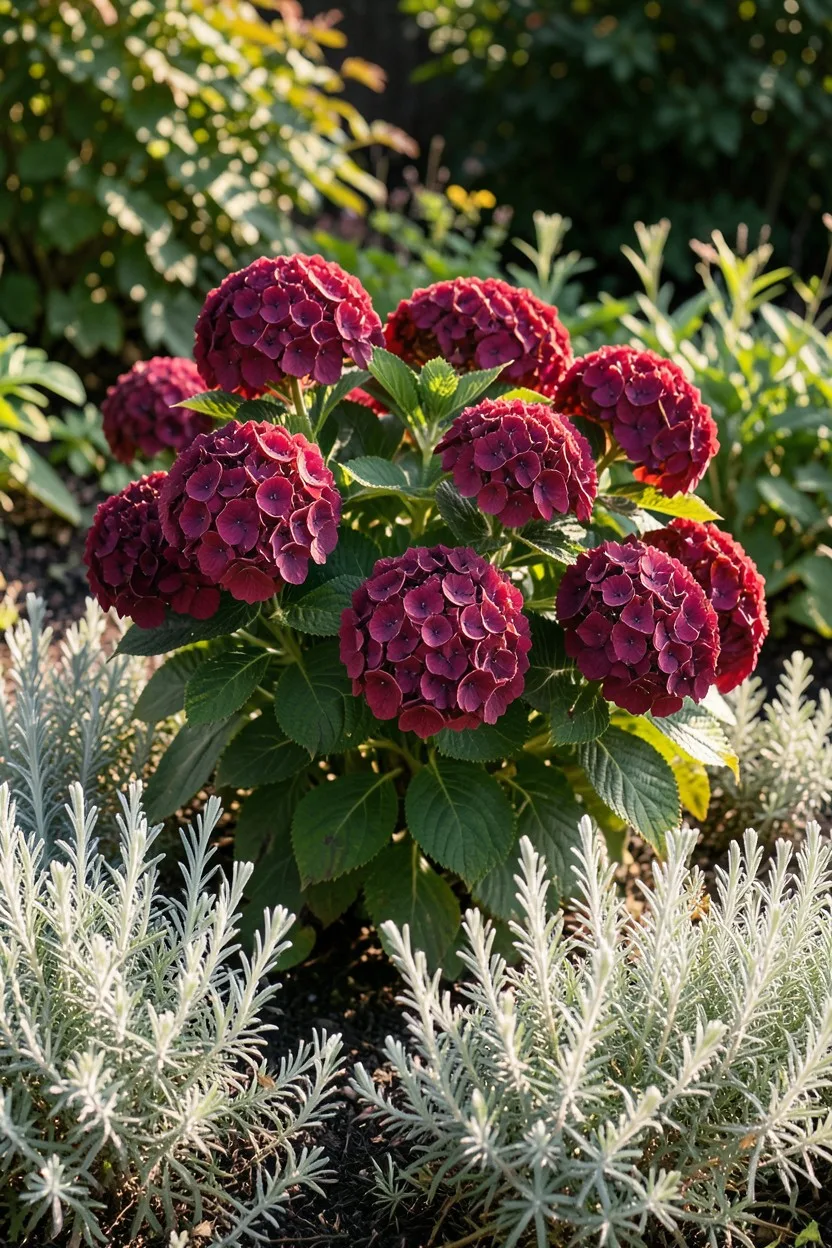
If standard pastel pinks feel a bit boring for your landscape palette, Diamond Rouge is the variety you need to track down. In independent color trials, this panicle selection produced the deepest, most saturated red color of any sun-tolerant hydrangea available.
The blooms open white in July, transition to a bright raspberry pink by August, and finally deepen into a spectacular, rich wine-red by September. It looks absolutely incredible paired with silver-foliaged companions like Russian sage.
Keep in mind that this variety grows at a slightly slower pace than hyper-vigorous types like Limelight. Give it regular waterings and a light application of balanced organic fertilizer in May to fuel its intense color show.
14. Incrediball Blush Brings Soft Mophead Pinks into Sun
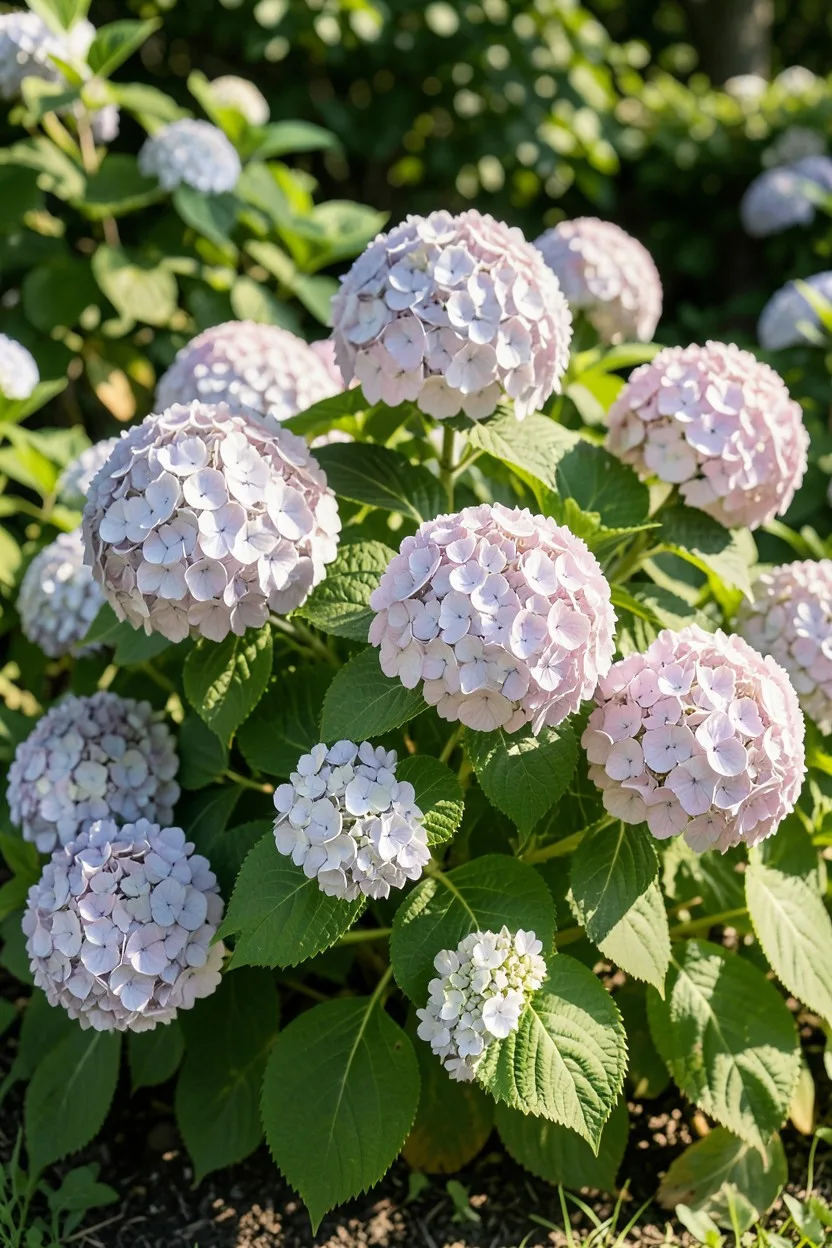
Do this, not that when you want pink mopheads in full sun: do not buy a classic French hydrangea (Hydrangea macrophylla) like Endless Summer and stick it in the blazing sun. It will scorch and fail. Instead, plant an Incrediball Blush.
This brilliant smooth hydrangea cross takes the rugged, sun-tolerant, strong-stemmed framework of the white Incrediball and infuses it with a gorgeous, soft silvery-pink hue that does not fade or bleach out under harsh ultraviolet rays.
Because it blooms exclusively on new wood produced during the current spring, you can cut the entire plant back to twelve inches every winter. This routine keeps the shrub neat, tidy, and loaded with fresh flower buds every single year.
15. Silver Dollar Offers Unique Elegant Compact White Fronds
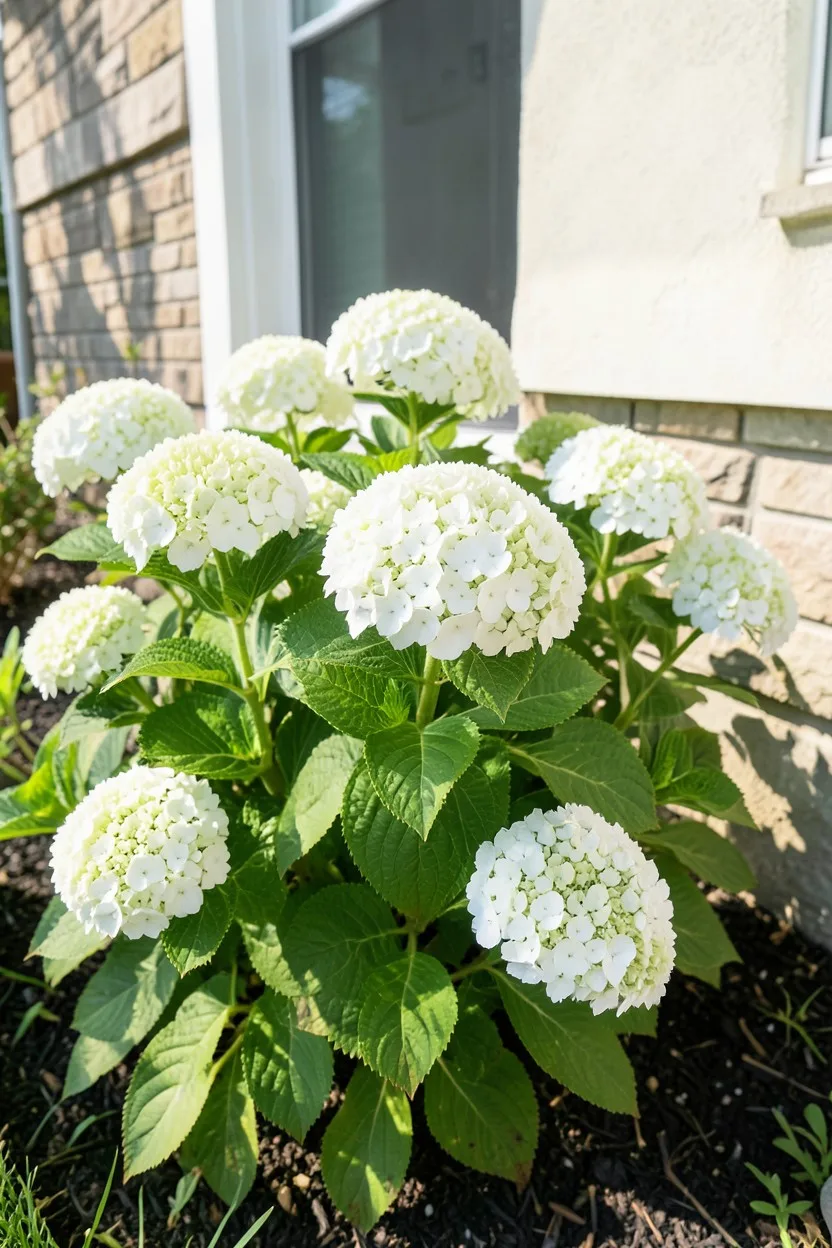
Compact framing: Stays under five feet tall with an incredibly neat, rounded growth habit that never gets wild.
Densely packed florets: The individual flower heads are incredibly thick and compact, giving them a heavy, solid white appearance that stands out from a distance.
Subtle shading: Features a delicate, pale green center in each floret that gives the entire cone an elegant, shimmering silver look under bright sunlight.
This is an exceptional choice for formal garden styles or symmetrical foundation plantings on the sunny side of your home. It needs very little maintenance beyond a quick late-winter trim to clear out dead wood and spent flowers.
Choosing Your Full-Sun Hydrangea Family
Panicle Varieties (Limelight, Quick Fire)
- Incredibly heat-tolerant and drought-resistant
- Thick wood branches never flop or droop
- Stunning color shifts from green to white to red
- Cone-shaped flower heads create structured texture
Smooth Varieties (Incrediball Family)
- Classic round, ball-shaped mophead look
- Requires more consistent summer moisture
- Stays truer to its base white or pink color
- Can be cut completely to the ground in winter
Frequently Asked Questions
Can hydrangeas really handle full afternoon sun?
Yes, but only specific species. Panicle hydrangeas (Hydrangea paniculata) and upgraded smooth varieties like Incrediball thrive in 6-8 hours of direct sun. Classic bigleaf French hydrangeas will scorch and wilt instantly in those same conditions.
How often should I water sun-loving hydrangeas?
During their first two seasons, give them a deep, thorough soaking twice a week at the base. Once their root systems are fully established, they can easily get by on one deep watering per week, even during hot summer stretches.
Why aren't my sun hydrangeas changing color in the fall?
The dramatic pink and red shifts require direct sunlight hitting the petals combined with dropping nighttime temperatures. If your plants are shaded by trees or if summer heat lingers long into autumn, the blooms will skip the red phase and turn tan.
When is the best time to prune these varieties?
Prune both panicle and smooth hydrangeas in late winter or early spring before new growth starts. Because they bloom on fresh wood grown in the current season, early pruning encourages larger flowers and prevents you from cutting off buds.
Final Thoughts
If you only add one full-sun variety to your landscape this season, make it the classic Limelight. There is a reason this specific plant revolutionized modern landscaping: it is absolutely bulletproof in the heat, needs minimal maintenance once established, and delivers a stunning color show that lasts from July through the winter frost. Skip the finicky shade options and plant something that actually loves the sun.
Transform Your Garden Palette
Sign up for our weekly nursery insider newsletter to get specific, zone-by-zone planting blueprints and early notices on hard-to-find shrub varieties.

John Smith is the founder and CEO of Karaoke Machines Guru. He is a karaoke tutor and karaoke enthusiast and has been passionate about karaoke since he was a child. He also writes about karaoke-related tips, guides, and product reviews on this website.
He overlooks the whole website and makes sure that everything is running smoothly. Learn more!