
A good dystopian novel does not ask you to imagine a strange planet. It asks you to look at your own street, your own phone, and your own habits, then shows you where they could lead. The best books in this genre feel close because they start close. They take one real trend, stretch it a little further, and let the reader watch what happens next.
This list gathers seven novels that do that job better than almost anything else in print. They span more than seventy years, from a 1932 vision of a drugged and happy future to a 2008 arena where children fight on live television. Some are short and sharp. Some are slow and quiet. All of them leave a mark that lasts long after the last page.
You do not need to read them in order. Pick the fear that feels nearest to you right now. If the news makes you worry about surveillance and control, start at the top. If you worry more about comfort and distraction, jump to the second book. Each pick below comes with its real published cover, so you can spot the exact edition on a shelf or in a shop.
What ties these books together is not gloom. It is a question each one asks in its own way: what would you give up to feel safe, and who decides what safe means? The answers are different in every book, and that is why the list works as a set. Read all seven, and you get a map of the ways freedom can slip away.
Some of these novels were written as warnings about governments. Others were written as warnings about ourselves, about what happens when we trade hard choices for easy comfort. The scariest moments in this list are not the punishments. They are the moments when ordinary people accept the new rules because the new rules make life simpler.
Keep this list handy for your next reading slump. A dystopian novel is a strange kind of comfort read. It unsettles you, then it sharpens you, and by the end you see your own world a little more clearly.
Why dystopian books feel so close to home
They start with a real trend, then stretch it one step further.
The danger is familiar: screens, slogans, pills, and rules that sound helpful.
The heroes are ordinary people who notice something is wrong.
The warning lands because the world in the book looks a lot like ours.
1. 1984 by George Orwell
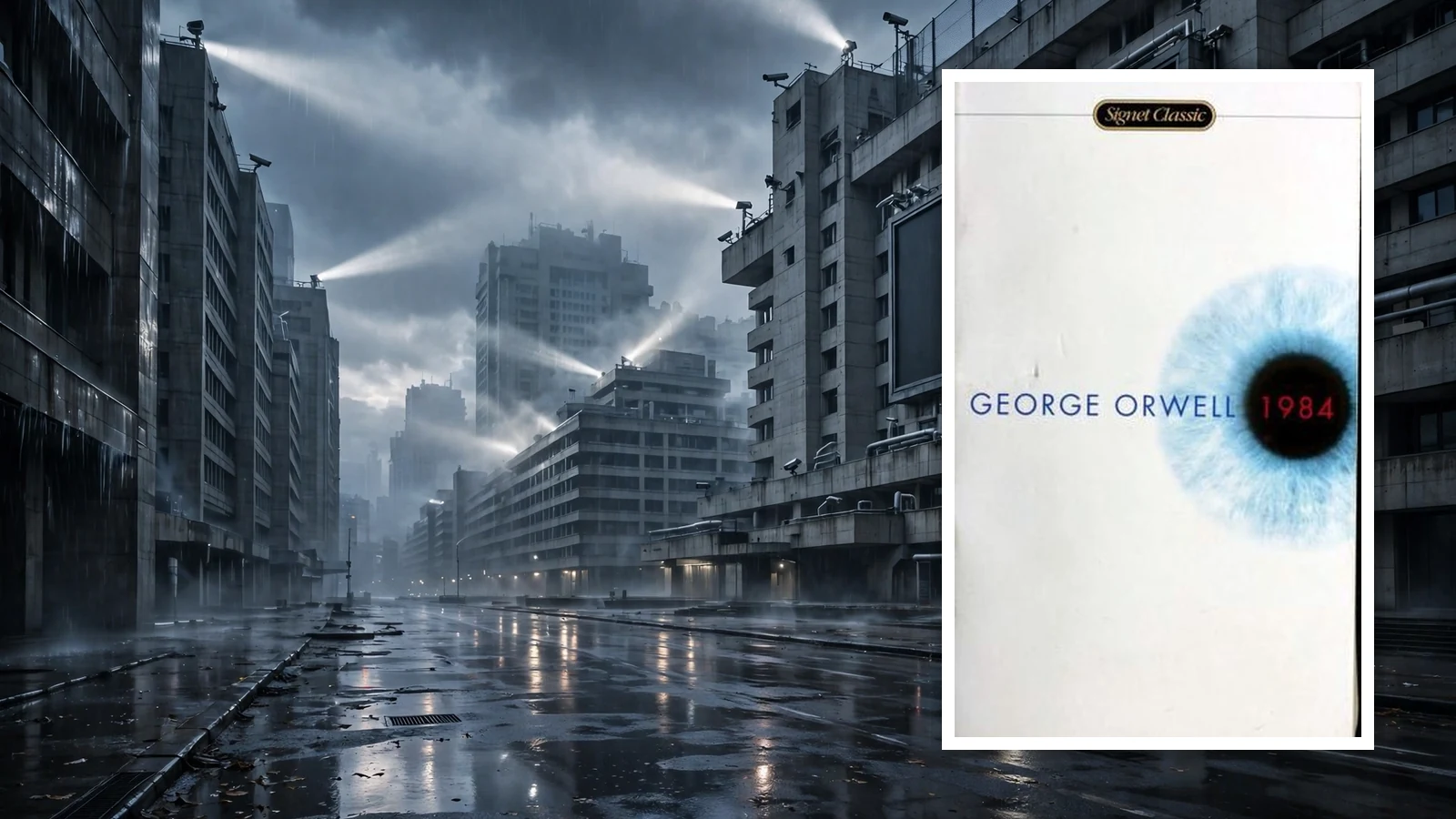
Winston Smith lives in Oceania, a state that watches everything. Telescreens in every home speak orders and record the smallest sound. Winston works at the Ministry of Truth, where his job is to change old records so they agree with the present line.
Orwell wrote the novel in 1948 and published it in 1949, and its grip comes from how plain the machinery feels. There is no single villain to blame. There is a system, and the system runs on fear, habit, and tired people doing their jobs. Winston is not a hero in the usual sense. He is a tired clerk who keeps a secret diary, falls in love, and wants one small room where nobody is watching.
The love story with Julia gives the book its heat. For a short while they find a rented room above a shop, and that room feels like freedom. Then the state closes in, and the famous Room 101 scene shows what real control looks like. It is not a speech or a prison cell. It is a threat aimed at the one fear a person cannot argue with.
Read it first if you want the foundation of the whole genre. Words Orwell invented here, like Big Brother, doublethink, and thoughtcrime, are still part of everyday speech, and the book explains why. It is bleak and it is brilliant, and it stays with you because its warning is not about one country or one year. It is about what power does when nobody is allowed to say no.
At a glance
Genre: Dystopian political fiction
Author: George Orwell
Year: 1949
Goodreads rating: 4.21 out of 5
Buy link: Buy on Amazon
2. Brave New World by Aldous Huxley
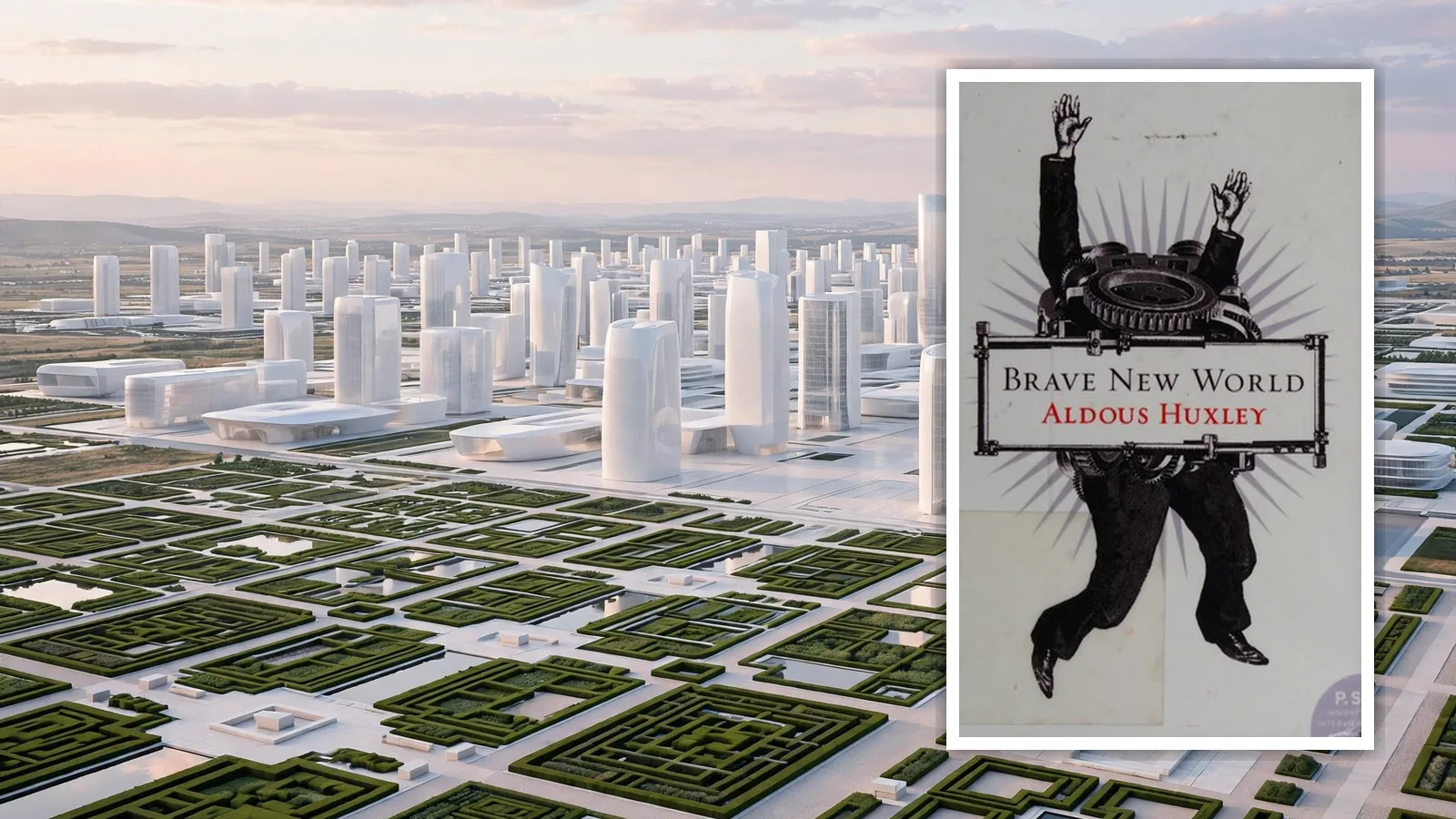
Huxley imagined a future that controls people not with fear but with pleasure. In the World State, babies are grown in labs and sorted into castes before birth. Children are conditioned to love their place in life, and adults take a drug called soma whenever they feel sad, bored, or angry. Nobody needs to be beaten, because nobody is unhappy enough to rebel.
The novel follows Bernard Marx, a misfit who feels too much, and Lenina Crowne, who follows the rules without thinking. Then they meet John, called the Savage, a young man raised outside the system on old books and old ideas. John sees the bright clean world and finds it empty. He quotes Shakespeare, a book the World State banned long ago, and the words sound strange in a world that has no room for them. He wants real feeling, real pain, and real choice, even when those things hurt.
Huxley understood that a society can be controlled by giving people what they want, all the time, until wanting anything else feels strange.
Read it after 1984 and the pair will argue in your head for weeks. Orwell feared a boot stamping on a face. Huxley feared a smile that never leaves. The argument between them is the great debate of dystopian fiction, and this book states Huxley side with wit, style, and a sadness that sneaks up on you in the final pages.
At a glance
Genre: Dystopian science fiction
Author: Aldous Huxley
Year: 1932
Goodreads rating: 3.98 out of 5
Buy link: Buy on Amazon
3. Fahrenheit 451 by Ray Bradbury
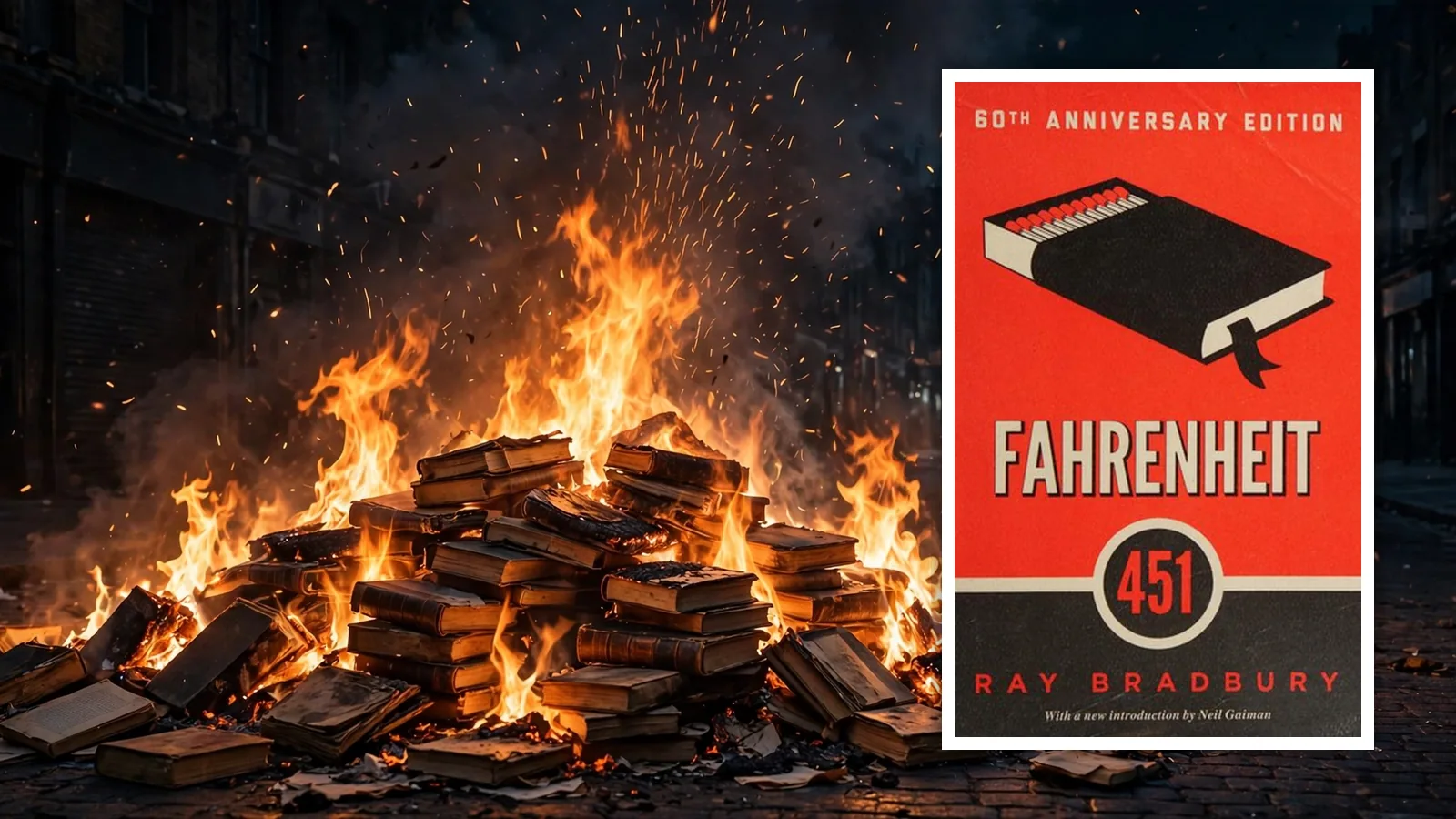
Guy Montag is a fireman, but in his world firemen start fires instead of putting them out. Their job is to burn books, and the houses that hide them. People no longer read, and the state keeps them calm with huge wall screens, fast cars, and noise that never stops. Montag likes his work at first, until a young neighbour named Clarisse starts asking him simple questions.
Clarisse asks why he burns books, and whether he is happy. The questions stick in his head like a splinter. Montag starts to steal books from the houses he is sent to burn, hiding them at home and reading them in secret. His wife Mildred does not understand. His captain, Beatty, understands all too well, and Beatty can quote books even as he orders them destroyed.
Bradbury wrote the novel in 1953, in a time of book bans and political fear, and he aimed it at more than censors. The screens and the speed are not forced on anyone. People chose them, because thinking takes effort and a story on a wall is easier.
Read it if you love books, because it will make you hold yours a little tighter. It is short, fast, and written in bright, burning images that stay in the mind. The ending is strange and hopeful, and it offers a quiet answer to the fire: memory survives as long as people carry the words with them.
At a glance
Genre: Dystopian science fiction
Author: Ray Bradbury
Year: 1953
Goodreads rating: 3.97 out of 5
Buy link: Buy on Amazon
4. The Handmaid’s Tale by Margaret Atwood
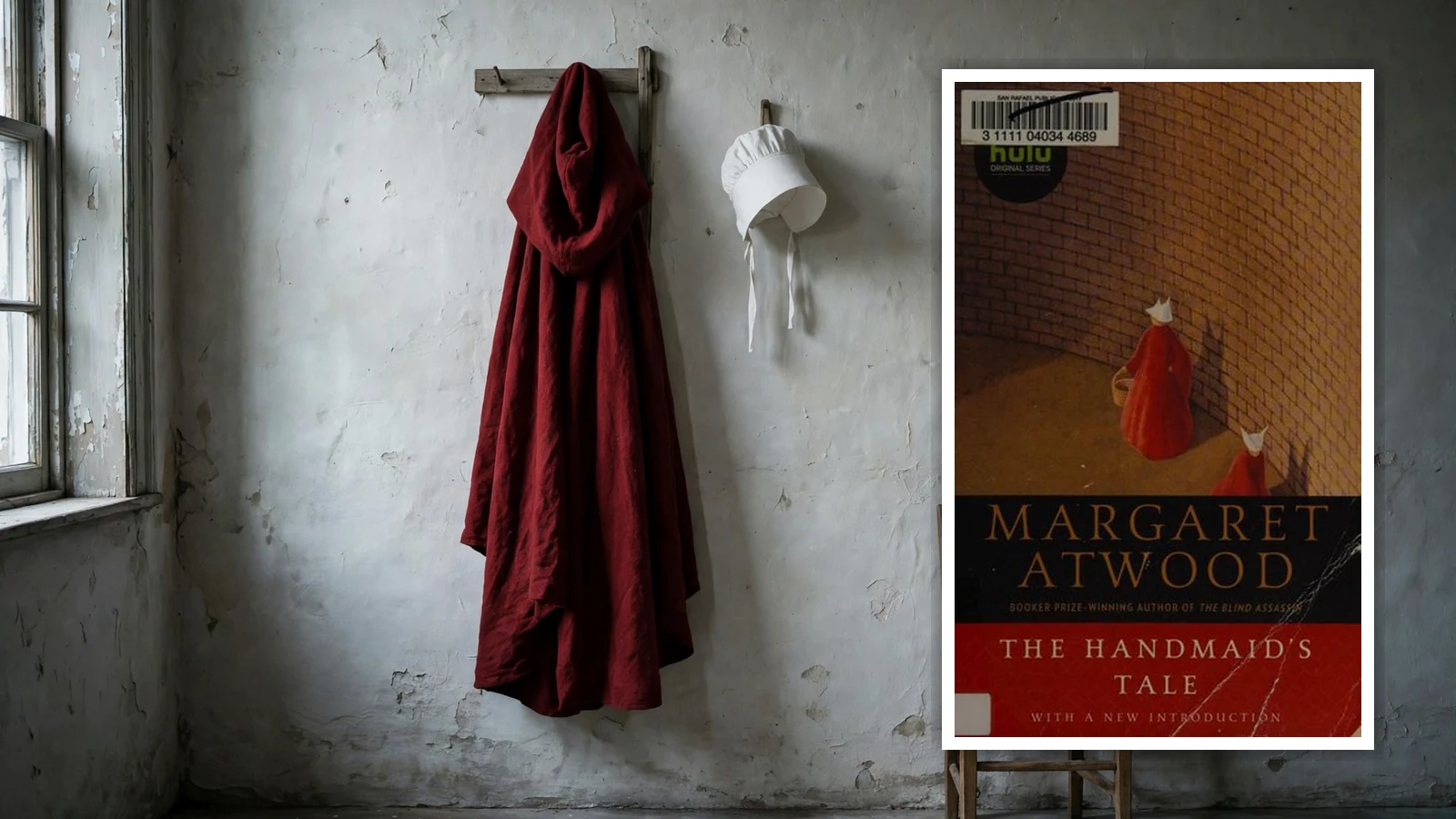
Offred lives in Gilead, a state built on the ruins of the United States after a violent takeover. Women have lost their jobs, their money, and their names. Offred is a Handmaid, one of the fertile women assigned to powerful households to bear children. She may leave the house once a day to shop, and she must lie still once a month and pray the Commander makes her pregnant.
Atwood tells the story through Offred’s memories, and the mix of past and present is what gives the book its power. Offred remembers a husband, a daughter, a job, and a life where she could read and choose. Those memories sit beside the small rules of her new life: the red dress, the white bonnet, and the Eyes who watch everything.
Nothing in Gilead is invented from thin air. Atwood has said she used only things that had already happened somewhere in real history, and that fact makes the book colder.
Read it for Offred’s voice, which is wry, sharp, and stubbornly alive. She is not a fighter with a weapon. She is a woman who refuses to let her inner life be taken, and her small acts of memory and defiance carry the whole novel. It is the most quietly furious book on this list, and the one most readers finish in a single sitting.
At a glance
Genre: Dystopian literary fiction
Author: Margaret Atwood
Year: 1985
Goodreads rating: 4.16 out of 5
Buy link: Buy on Amazon
Seven worlds, one warning
1984 warns about a state that watches you.
Brave New World warns about a state that pleases you.
Fahrenheit 451 warns about a world that stops reading.
The Handmaid’s Tale warns about freedom taken in small steps.
The next three warn about young people used by the system.
5. The Hunger Games by Suzanne Collins
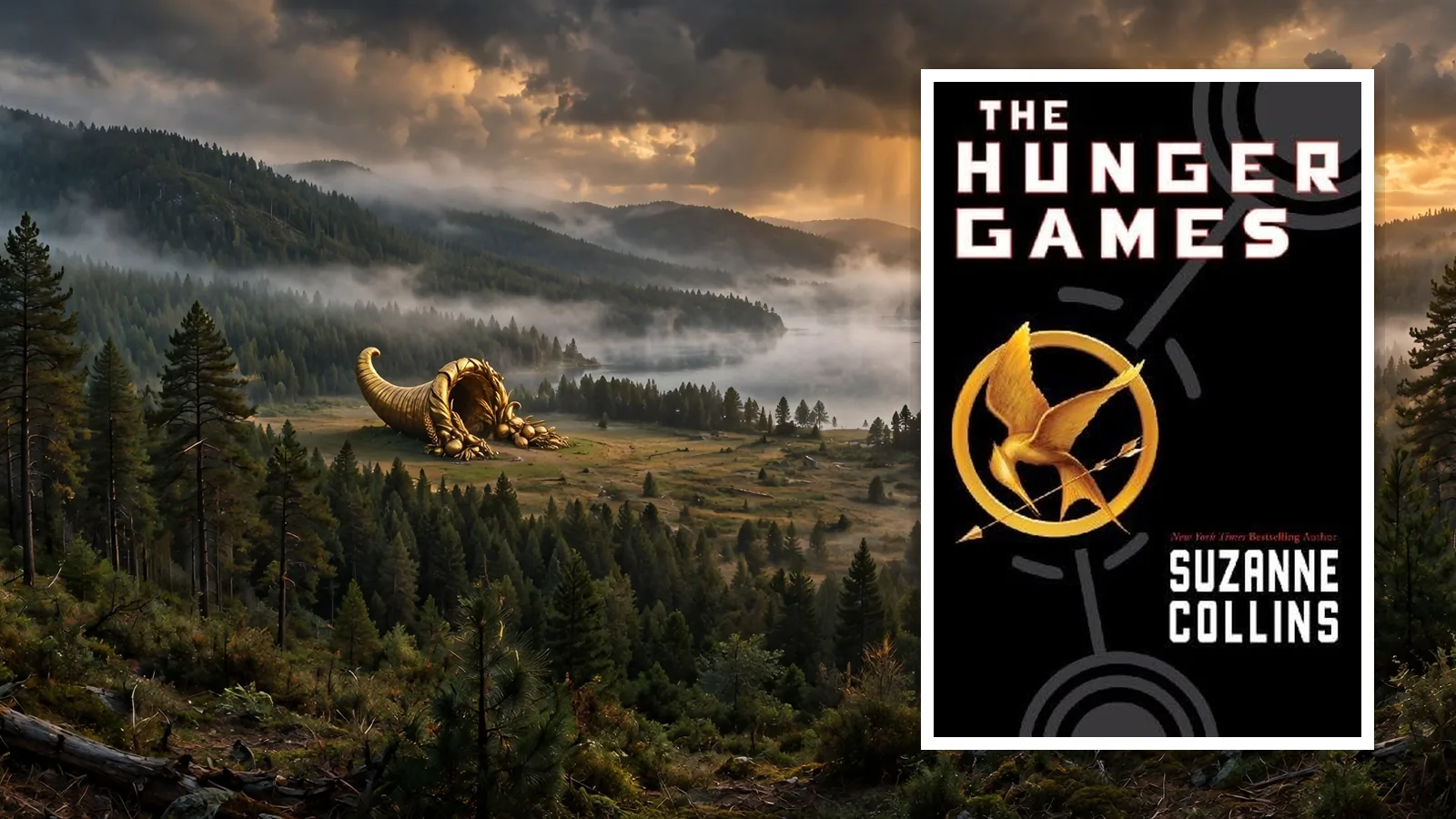
Panem is a nation built from the ruins of North America, ruled by a glittering Capitol and twelve poor districts. Every year the Capitol holds the Hunger Games, a contest where two teenagers from each district are sent into an arena to fight to the death on live television. Katniss Everdeen, sixteen, volunteers to take her younger sister Prim’s place, and walks into the arena with almost no hope of coming back.
Collins writes the Games with a pace that never lets go. Katniss must find food, water, and shelter while cameras follow every move and sponsors send gifts to the tributes they like best. The horror is not only the killing. It is the way the whole thing is packaged as entertainment, with costumes, interviews, and betting odds, while real children die for the crowd.
The heart of the book is the choice Katniss keeps making: to stay human when the arena rewards cruelty. Her bond with Peeta, the boy tribute from her district, and her care for Rue, the youngest tribute, give the story its warmth. The Capitol wants a show. Katniss gives it a person who refuses to play the part it wrote for her.
Read it if you want the fastest book on this list. It is tense, vivid, and hard to put down, and it works for teens and adults alike. The sequels grow bigger, but this first book is the purest version of the idea: a girl with a bow, a rigged contest, and a whole nation watching to see whether she will break.
At a glance
Genre: Young adult dystopian fiction
Author: Suzanne Collins
Year: 2008
Goodreads rating: 4.34 out of 5
Buy link: Buy on Amazon
6. The Giver by Lois Lowry
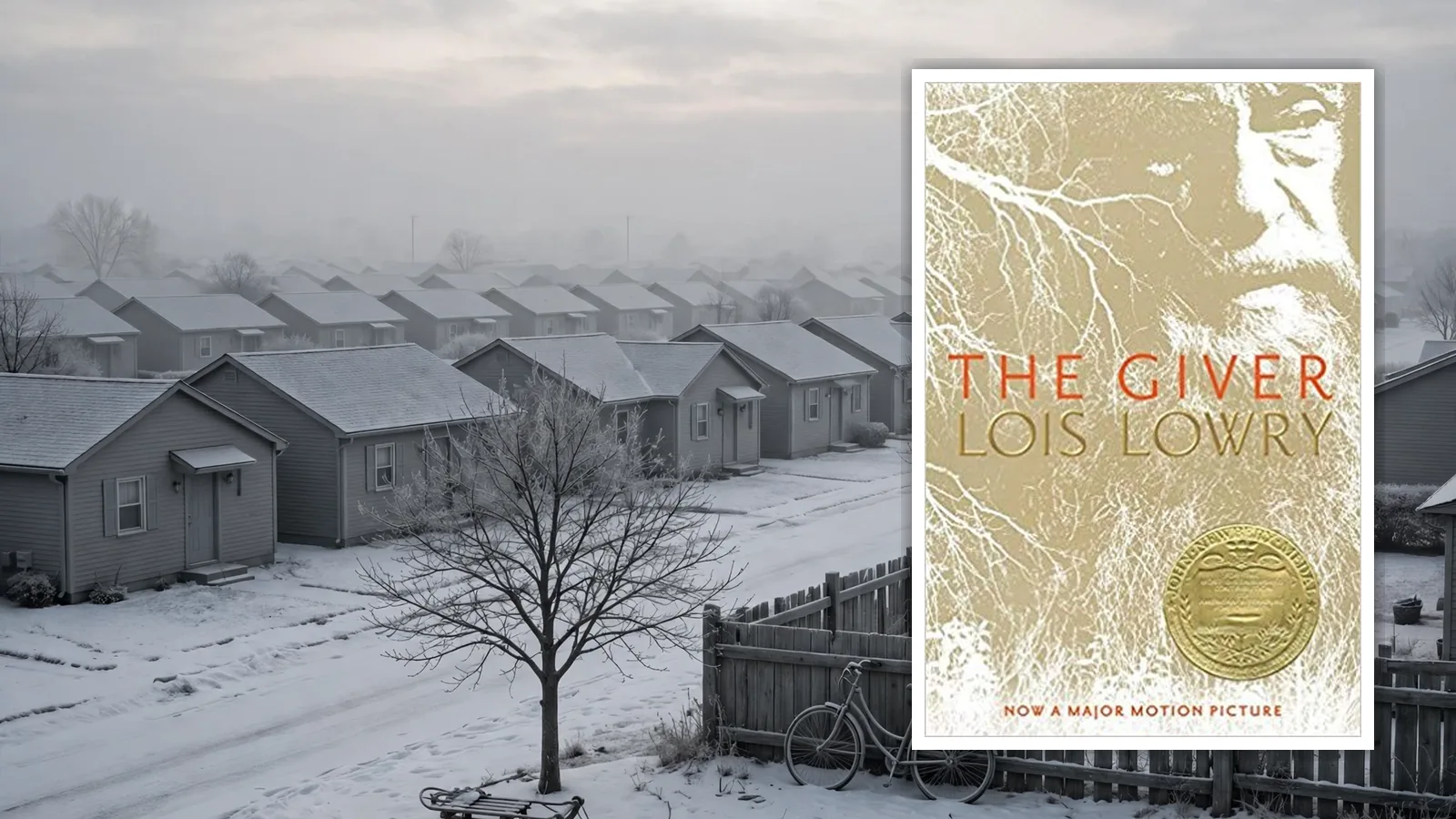
Jonas lives in a community that looks perfect from the outside. There is no war, no hunger, no pain, and no choice. Jobs are assigned, families are matched, and every day runs on the same calm schedule. At twelve, Jonas is given the most honoured job of all: Receiver of Memory. He will train with the Giver, the one old man who holds all the memories the community gave up.
The training scenes are the soul of the book. The Giver passes Jonas memories of snow, sunlight, colour, music, and love, and Jonas feels them for the first time. He also receives memories of war, hunger, and loss.
Slowly Jonas sees the price of the perfect life. A world without pain is also a world without joy, without colour, and without real love. The community’s calm rests on a word nobody says aloud: release. When Jonas learns what release truly means, he must decide whether to stay safe or to risk everything for the truth.
Read it if you want a short book with a huge question inside it. It is often assigned in schools, and it earns that place, because it trusts young readers with a real moral choice. Adults will find it just as strong. The ending is open, and readers have argued about it for thirty years, which is a sign the book did its job.
At a glance
Genre: Young adult dystopian fiction
Author: Lois Lowry
Year: 1993
Goodreads rating: 4.12 out of 5
Buy link: Buy on Amazon
7. Never Let Me Go by Kazuo Ishiguro
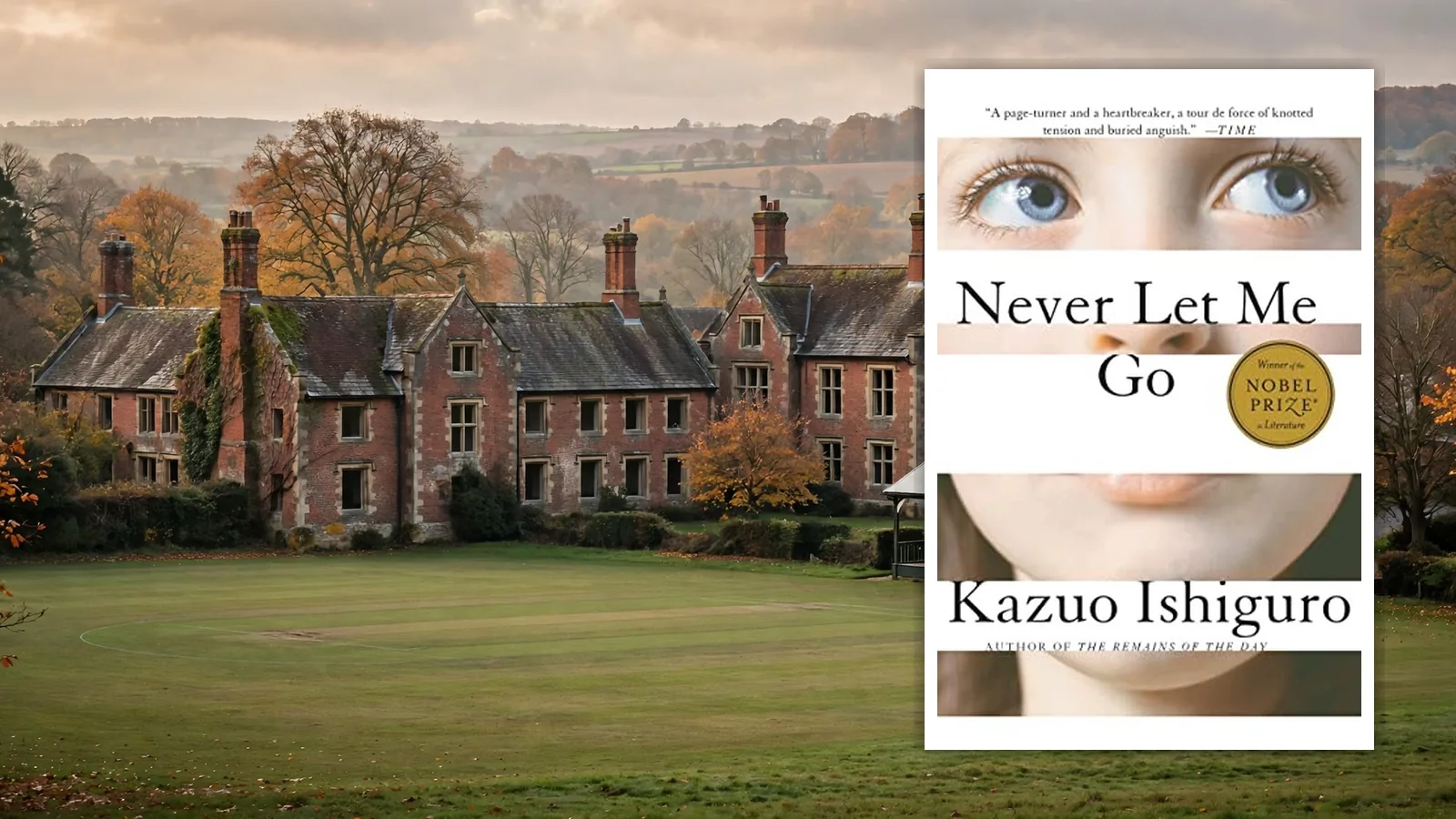
Kathy H. is thirty-one when she starts to tell the story of her school days at Hailsham, a quiet boarding school in the English countryside. The students there paint, write poetry, and play on green fields, and their teachers guard them with a care that feels loving. Slowly, through half heard remarks and small clues, Kathy and her friends Tommy and Ruth learn the truth about who they are and what they were made for.
The students of Hailsham are clones, raised to donate their organs when they grow up. Nobody shouts this fact at them. It arrives in hints, and in a rumour about a deferral that might let two people in love live a little longer. Ishiguro never raises his voice. He lets the horror sit quietly beside the ordinary details of school life, and that quiet is what makes it devastating.
The friendship between Kathy, Tommy, and Ruth carries the novel. They argue, forgive, grow apart, and come back together, the way real friends do. Their love triangle is small and human, and it matters more because their time is short. The book asks what makes a life worth living when its length is fixed, and it never offers an easy answer.
Read it last, because it is the saddest and most beautiful book on this list. Ishiguro won the Nobel Prize in Literature in 2017, and this novel shows why. It is not about a future war or a grand revolt. It is about three young people learning what they are, and loving each other anyway.
At a glance
Genre: Dystopian literary fiction
Author: Kazuo Ishiguro
Year: 2005
Goodreads rating: 3.85 out of 5
Buy link: Buy on Amazon
Pick your next read by mood
For the classic warning: 1984.
For a bright and chilling future: Brave New World.
For a short, fiery read: Fahrenheit 451.
For a voice you will not forget: The Handmaid’s Tale.
For pure pace: The Hunger Games or The Giver.
For a quiet heartbreak: Never Let Me Go.
These seven books were written in different decades, for different readers, and with different fears in mind. Put them side by side and a pattern appears. Every one of them shows a society that promised safety, comfort, or order, and every one shows what that promise cost the people who believed it.
The warnings still matter because the temptations still matter. We still like the idea of a screen that knows what we want, a rule that keeps us safe, and a feed that never asks us to think hard. The books on this list do not say that comfort is evil. They say that comfort without choice is a trap.
Start with the one that calls to you, and let the rest wait on the shelf. They will wait, because a good warning does not go out of date. When you finish, pass your favourite on to a friend. Dystopian novels are even better when someone else is also up too late, turning pages, and asking the same question: how close is this to home?
One last tip: read slowly at the small scenes. The authors hide their sharpest points in plain sight, in a rented room, a stolen book, a red dress, or a sled ride down a snowy hill.
If you are new to the genre, a good route is to start with The Giver for warmth and clarity, then move to 1984 for the full weight of the warning. That pairing shows both faces of dystopian fiction in two fine reads: the quiet question and the loud alarm, the world that takes your feelings and the world that takes your freedom.
Whatever you choose, give the book a quiet hour and a closed door. Dystopian novels work best without interruption, when you can hold the world, the rules, and the people caught inside them in your head at once.

John Smith is the founder and CEO of Karaoke Machines Guru. He is a karaoke tutor and karaoke enthusiast and has been passionate about karaoke since he was a child. He also writes about karaoke-related tips, guides, and product reviews on this website.
He overlooks the whole website and makes sure that everything is running smoothly. Learn more!