

Some books ask for your attention. Spy books demand it. A good one starts with a secret, tightens the knot with every chapter, and leaves you turning pages long after you planned to stop. The best spy stories are not about gadgets or glamour. They are about trust, and what happens when trust breaks.
This list gathers seven novels that have held readers for decades. Some are cold and bleak. Some are fast and stylish. All of them understand the same basic truth: the most dangerous moment in espionage is not the chase. It is the quiet moment when a character must decide who to believe.
You do not need to read them in order. Pick the mood you want tonight. If you want moral tension, start at the top. If you want pure pace, jump to the middle. If you want a story that still feels modern after seventy years, try the quieter classic near the end. Each pick below comes with its real published cover, so you can spot the exact edition on a shelf or in a shop.
Keep a lamp on. These are the kind of books that make one more chapter turn into five, and five turn into a very late night.
Part of the pleasure is the range. A le Carré novel asks you to sit still and listen, because the lie is often in the tone of voice, not the action. A Forsyth novel asks you to follow a timetable, because the danger is in a missed train or a wrong paper. A Fleming novel asks you to enjoy the surface, the casino, the clothes, the dinner, while knowing that the surface is exactly where a spy does his work.
That range is why spy fiction never goes stale. The tools change, from microfilm to mobile phones, but the human problem stays the same. Someone knows something. Someone else wants it. Someone in between must decide whether to speak, to run, or to stay silent and watch. The books below all stage that problem with unusual skill, and each one stages it differently.
How to use this list
Start with any title. Each novel stands on its own.
Watch for the moment of betrayal. That is where each story turns.
Read the At a glance box for genre, year, and reader rating before you choose.
1. The Spy Who Came in from the Cold by John le Carré
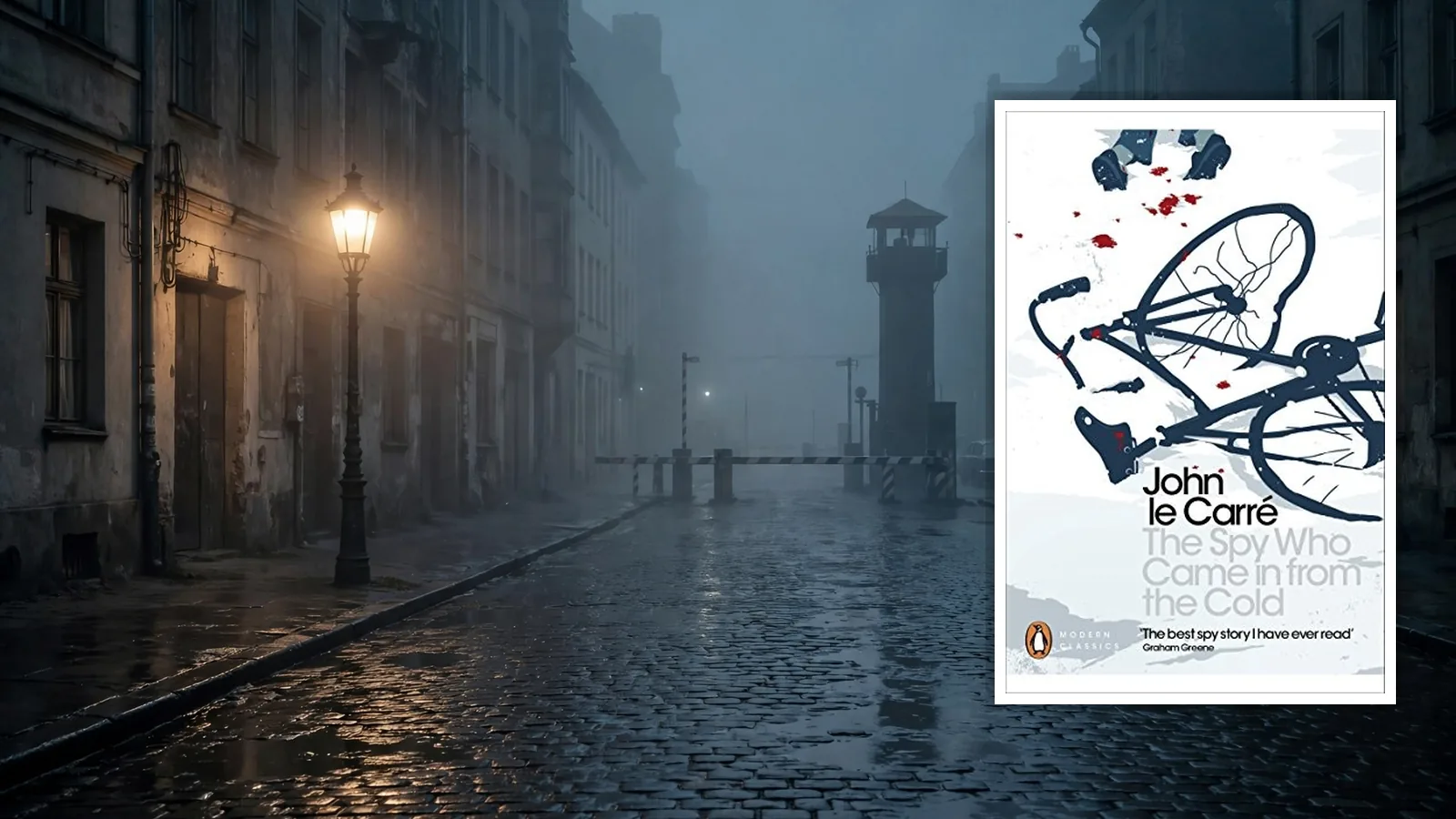
Alec Leamas is tired, and that tiredness is the point. He runs the Berlin station for British intelligence, and his network is falling apart. His agents are being killed, one by one, and London calls him home. What looks like the end of a career turns out to be the start of a far colder game.
Leamas is sent back into the field as a man who seems broken and bitter. He drinks too much. He talks too freely. He looks like exactly the kind of agent an enemy service would love to recruit. That appearance is planned, and the plan has layers that Leamas himself does not fully see.
This is spy fiction stripped of shine. There are no grand speeches and no easy heroes. Every loyalty in the book has a price, and every kindness may be a move in a larger operation. The ending lands hard because it refuses to soften what the story has shown all along.
Read it for the atmosphere first: fog, checkpoints, cheap rooms, and long silences. Then read it again for the plot, and notice how many small details were warnings all along. It is short, sharp, and still unsettling more than sixty years after it first appeared.
At a glance
Genre: Cold War espionage
Author: John le Carré
Year: 1963
Goodreads rating: 4.09 out of 5
Buy link: Buy on Amazon
2. Tinker, Tailor, Soldier, Spy by John le Carré
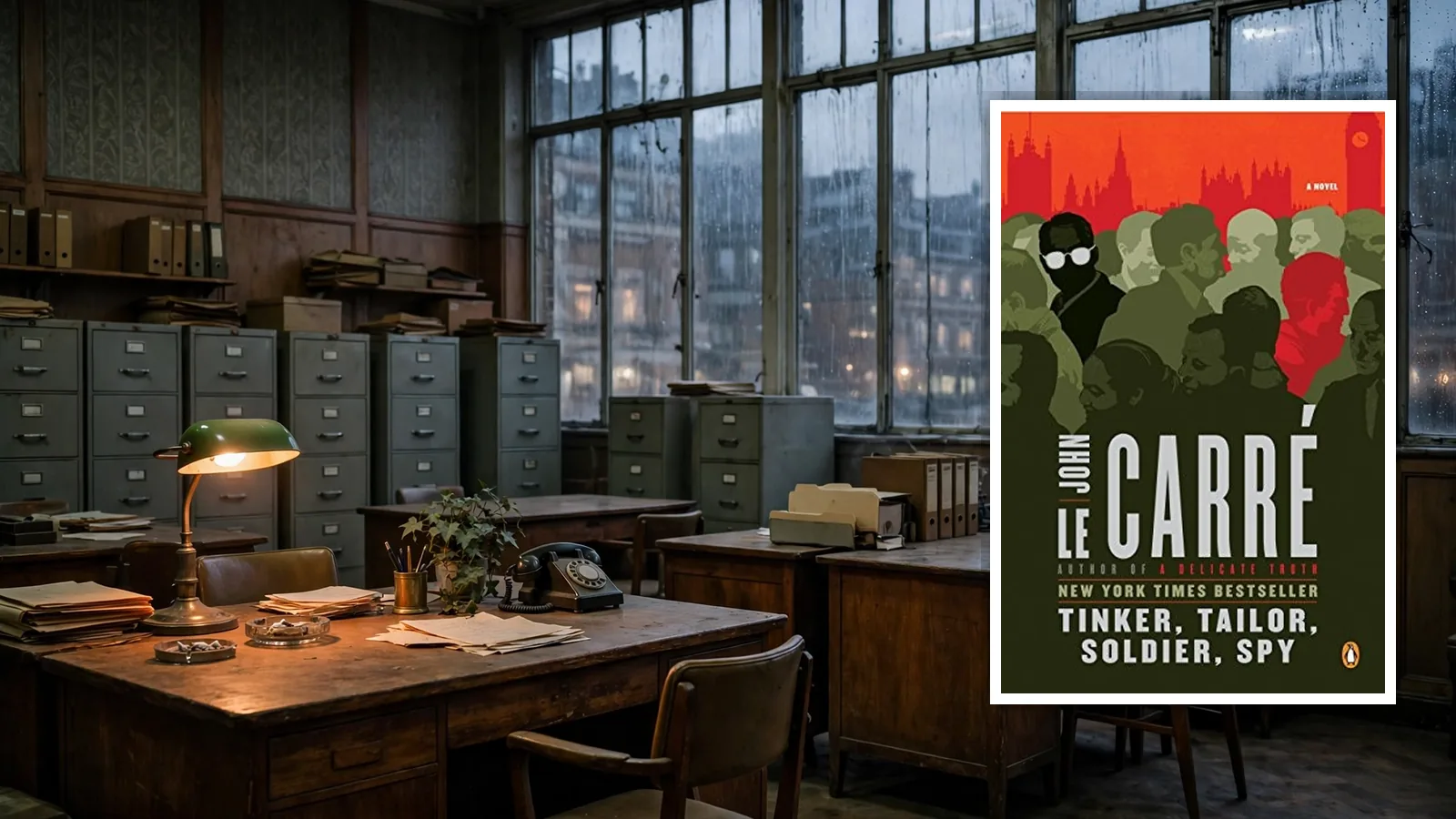
George Smiley is the opposite of a flashy spy hero. He is quiet, polite, and easy to overlook. That is why he is the right man for this job. Someone at the very top of British intelligence is passing secrets to Moscow, and Smiley must find the mole without alerting the mole.
The suspects carry code names: Tinker, Tailor, Soldier, and Spy. Smiley works through old files, old interviews, and old grudges. He listens more than he speaks. He notices who pauses, who smiles too quickly, and who remembers a detail slightly wrong.
This novel rewards patience. The tension builds from paperwork, memory, and careful questions, not from chases. When the truth finally comes into focus, it feels both shocking and, in hindsight, plain to see. That is the mark of a brilliantly built puzzle.
If you like stories where character is the clue, this is the essential pick. Smiley does not win by force. He wins by understanding people better than they understand themselves.
At a glance
Genre: Cold War espionage
Author: John le Carré
Year: 1974
Goodreads rating: 4.06 out of 5
Buy link: Not included: no verified amazon.com/dp link was returned in search
3. The Day of the Jackal by Frederick Forsyth

Here is a rare trick: the book tells you the target from the start, and still keeps you tense. A group of French extremists hires a professional assassin, known only as the Jackal, to kill President Charles de Gaulle. The reader knows the plan. The thrill is watching how close it comes to working.
Forsyth builds the story like a report. The Jackal forges papers, tests a rifle, changes his face, and moves across borders with calm precision. On the other side, a French detective works the same trail with less time and fewer leads. Each chapter shortens the gap between hunter and hunted.
The detail is what grips you. Every false passport, every train timetable, every small choice feels real, because Forsyth researched it like a journalist. You start to believe this could have happened, and that belief makes every near miss feel sharper.
By the final pages, the pace is relentless. You will know the history, and you will still hold your breath. Few thrillers earn that kind of suspense from a story whose ending you already suspect.
At a glance
Genre: Political espionage thriller
Author: Frederick Forsyth
Year: 1971
Goodreads rating: 4.27 out of 5
Buy link: Not included: no verified amazon.com/dp link was returned in search
4. Casino Royale by Ian Fleming
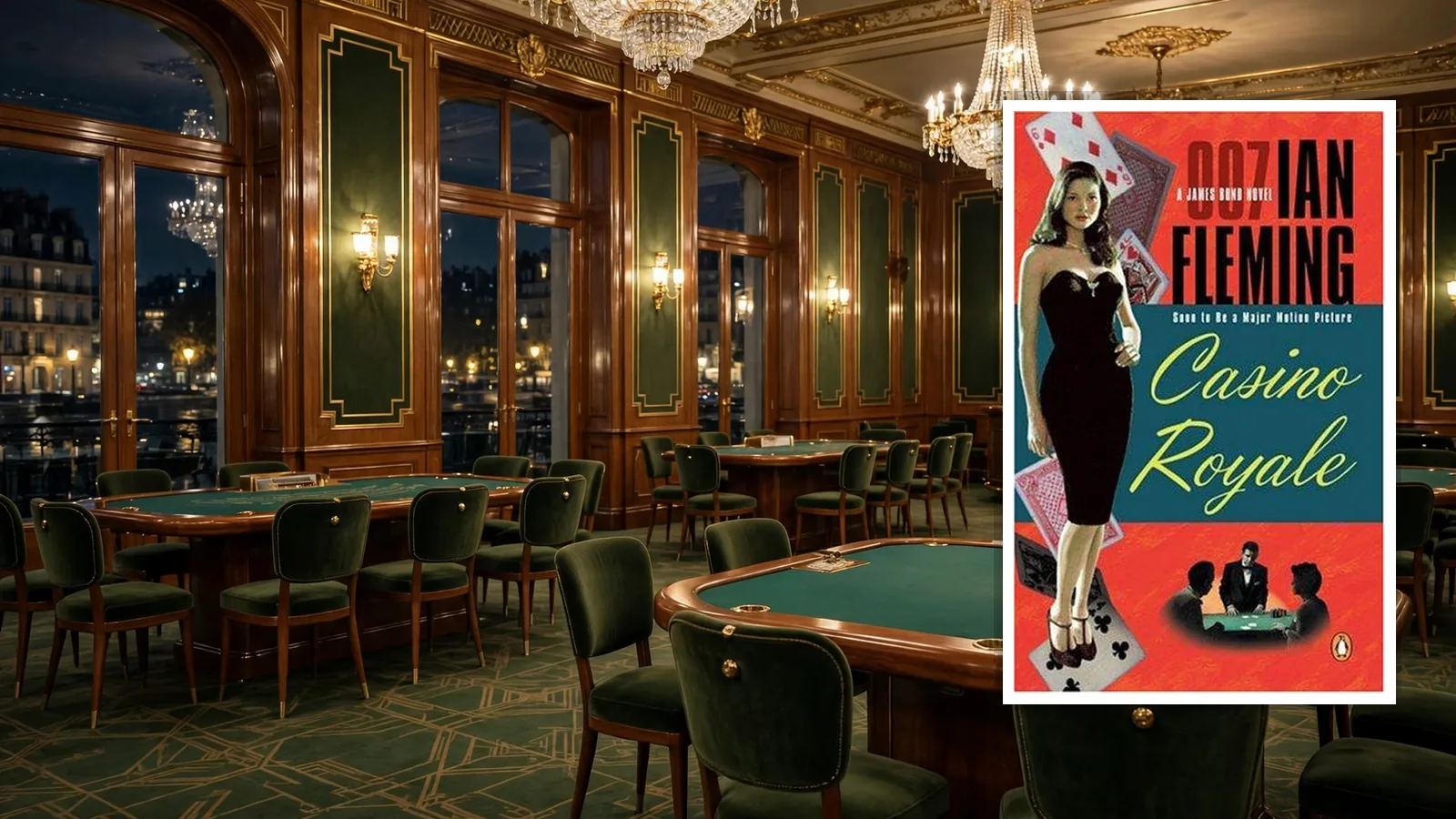
This is where James Bond begins, and the book Bond is leaner and darker than the film star. He is sent to a French casino with one mission: bankrupt Le Chiffre, a Soviet paymaster, at the baccarat table. If Le Chiffre loses the money, he loses his protection. If Bond loses, the mission fails.
The card game is the centre of the book, and Fleming writes it with real tension. Every hand matters. Every glance across the table could be a tell. Bond is cool under pressure, but he is not untouchable, and the novel lets him bleed, doubt, and make mistakes.
Then comes Vesper Lynd, and the story shifts from a game of cards to a test of trust. Bond must work out who is playing him, and who is playing for the other side. The romance is sharp and sad, and it explains a great deal about the man Bond later becomes.
Short and stylish, this is the perfect entry point for readers who want glamour with a hard edge. It moves fast, it looks beautiful on the page, and it leaves a sting in its final lines.
At a glance
Genre: Spy fiction
Author: Ian Fleming
Year: 1953
Goodreads rating: 3.75 out of 5
Buy link: Not included: no verified amazon.com/dp link was returned in search
What makes a spy novel grip you
A secret that cannot be shared, even with allies.
A hero who must lie well, and live with the lying.
An enemy who is smart, patient, and nearly invisible.
A final twist that reframes everything you just read.
5. The Bourne Identity by Robert Ludlum
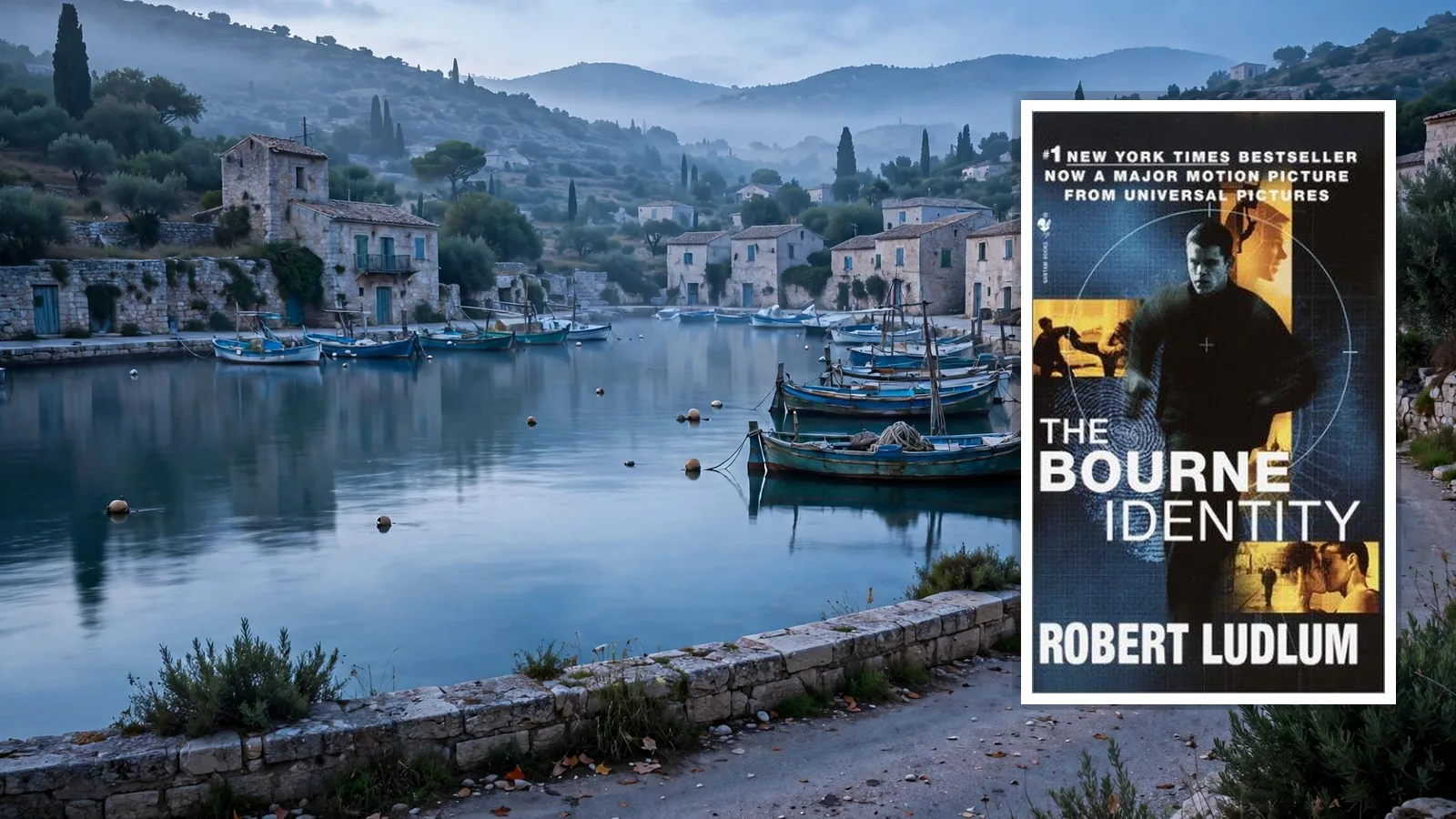
A man is pulled from the Mediterranean with bullets in his body and no memory in his head. He has a Swiss bank account, a set of lethal skills he cannot explain, and a name that may not be his own: Jason Bourne. That opening is one of the great hooks in spy fiction.
Bourne must learn who he is while people who know far more than he does try to kill him. Every clue opens a new danger. A hotel room, a bank vault, a familiar face in a crowd: each one could be a trap. He trusts his instincts because his memory gives him nothing else.
Ludlum keeps the pace high and the geography wide, from Zurich to Paris and beyond. The action is big, but the real engine is identity. Bourne is not just running from assassins. He is running toward an answer about himself that he may not like.
If you want a spy novel that reads like a sprint, start here. The chapters are short, the turns keep coming, and the central question, who is Jason Bourne, pulls you forward to the last page.
At a glance
Genre: Espionage thriller
Author: Robert Ludlum
Year: 1980
Goodreads rating: 4.05 out of 5
Buy link: Not included: no verified amazon.com/dp link was returned in search
6. The Quiet American by Graham Greene

Saigon in the early 1950s is hot, tense, and full of people pretending to be something they are not. Thomas Fowler, a British journalist, has covered the war long enough to distrust grand ideas. Then he meets Alden Pyle, a young American full of theories about how to save Vietnam.
Pyle believes in a third force, a local movement that can stand apart from both France and the communists. He is polite, earnest, and sincere. He is also dangerously wrong about the country he claims to help. Fowler watches, warns, and slowly gets pulled into a story he cannot control.
Greene writes with a cool eye and a sharp sense of irony. The love triangle between Fowler, Pyle, and Phuong is not just romance. It mirrors the larger struggle for Vietnam itself: who gets to claim it, who gets to speak for it, and who pays when outsiders get it wrong.
This is the quietest book on this list, and in some ways the most chilling. It was published before America went fully to war in Vietnam, and it reads now like a warning that arrived early. The final pages stay with you long after you close the cover.
At a glance
Genre: Espionage and literary fiction
Author: Graham Greene
Year: 1955
Goodreads rating: 3.98 out of 5
Buy link: Buy on Amazon
7. The Night Manager by John le Carré

Jonathan Pine is a night manager at a luxury hotel, and that polite job hides a soldier past. Years earlier, he tried to pass on secret papers about an arms dealer, and the woman who trusted him paid for it. When the same dealer, Richard Roper, walks back into his life, Pine sees a second chance.
British intelligence recruits Pine to go undercover inside Roper’s world. He must become someone Roper trusts: charming, useful, and just ruthless enough to belong. Every dinner, every deal, every smile is a performance, and one slip could end him.
Le Carré uses the post Cold War world to full effect. The enemy here is not a rival state. It is a network of money, weapons, and powerful friends who protect each other. Pine is up against wealth as much as violence, and the odds feel brutally uneven.
This is a long, rich novel with hotel glamour on the surface and rot underneath. Pine is a humane hero in an inhumane trade, and his struggle to stay decent while playing a villain role is what makes the book hard to put down.
At a glance
Genre: Post Cold War espionage
Author: John le Carré
Year: 1993
Goodreads rating: 3.84 out of 5
Buy link: Not included: no verified amazon.com/dp link was returned in search
Pick your next read by mood
For moral tension: The Spy Who Came in from the Cold.
For a clever puzzle: Tinker, Tailor, Soldier, Spy.
For pure pace: The Bourne Identity or The Day of the Jackal.
For style and sadness: Casino Royale or The Quiet American.
For a long undercover game: The Night Manager.
Spy fiction lasts because it asks a question we all recognise: how do you know who to trust when everyone has a reason to lie? The seven books above answer that question in seven different ways, from a foggy Berlin checkpoint to a bright casino floor, from a Saigon street to a hotel terrace at night.
Start with the one that calls to you, and let the rest wait on the shelf. They are patient books. They know you will come back, because a good secret is hard to leave alone. When you finish, pass your favourite on to a friend. The best spy stories are even better when someone else is also up too late, turning pages, and asking the same question: what happens next?
One last tip: read slowly at the twists. The authors on this list hide their clues in plain sight, in a paused sentence, a changed detail, or a smile that lasts half a second too long. Catch one of those clues early, and you will feel like an agent yourself. Miss it, and the ending will still catch you by surprise. Either way, you win.
If you are new to the genre, a good route is to start with Casino Royale for style, then move to The Spy Who Came in from the Cold for depth. That pairing shows both faces of spy fiction in two short reads: the glamorous agent and the weary one, the game played in public and the game played in shadow.
If you already love the genre, the deeper cuts here are Tinker, Tailor, Soldier, Spy and The Quiet American. Neither book rushes. Both trust the reader to notice small shifts, a name remembered wrong, a kindness offered at the wrong moment, and both reward that attention with endings that feel earned rather than imposed.
Whatever you choose, give the book a quiet hour and a closed door. Spy novels work best without interruption, when you can hold the whole web of names and loyalties in your head at once. That is when the small clues start to glow, and when a book that seemed simple on page fifty turns out to have been playing a longer game all along.

John Smith is the founder and CEO of Karaoke Machines Guru. He is a karaoke tutor and karaoke enthusiast and has been passionate about karaoke since he was a child. He also writes about karaoke-related tips, guides, and product reviews on this website.
He overlooks the whole website and makes sure that everything is running smoothly. Learn more!