
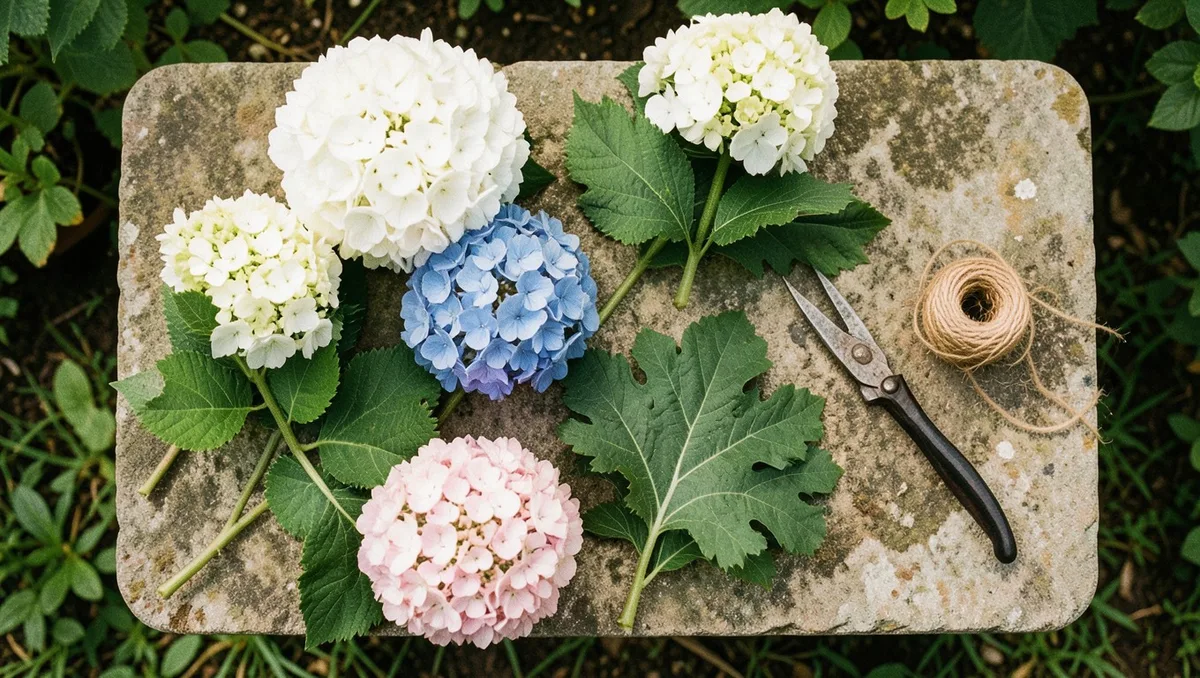
Every gardener has that one gloomy, light-starved corner behind the garage or beneath the old maple tree where most plants go to die. For years, I treated my north-facing backyard border like a lost cause, throwing down mulch and hoping for the best until I finally leaned into the dramatic power of shade-loving shrubs. Hydrangeas do not just tolerate partial shade; they absolutely thrive in it, turning dim spaces into lush, luminescent garden rooms if you position them with intention.
You do not need blazing all-day sun to create a breathtaking gardening display that stops neighbors in their tracks. This layout guide skips the generic advice and gives you 15 concrete, battle-tested design ideas to maximize your shady spots using specific varieties, smart structural companions, and deliberate spacing rules.
Quick Tips Before You Start
Morning Sun Only
Aim for 2 to 4 hours of gentle morning light; harsh afternoon rays scorch delicate shade petals.
Deep Organic Mulch
Spread a 3-inch layer of shredded pine bark to lock in consistent moisture around shallow roots.
Mind Mature Widths
Space larger mopheads at least 5 feet apart to allow full air circulation and prevent powdery mildew.
1. The Luminescent North-Facing Foundation Border
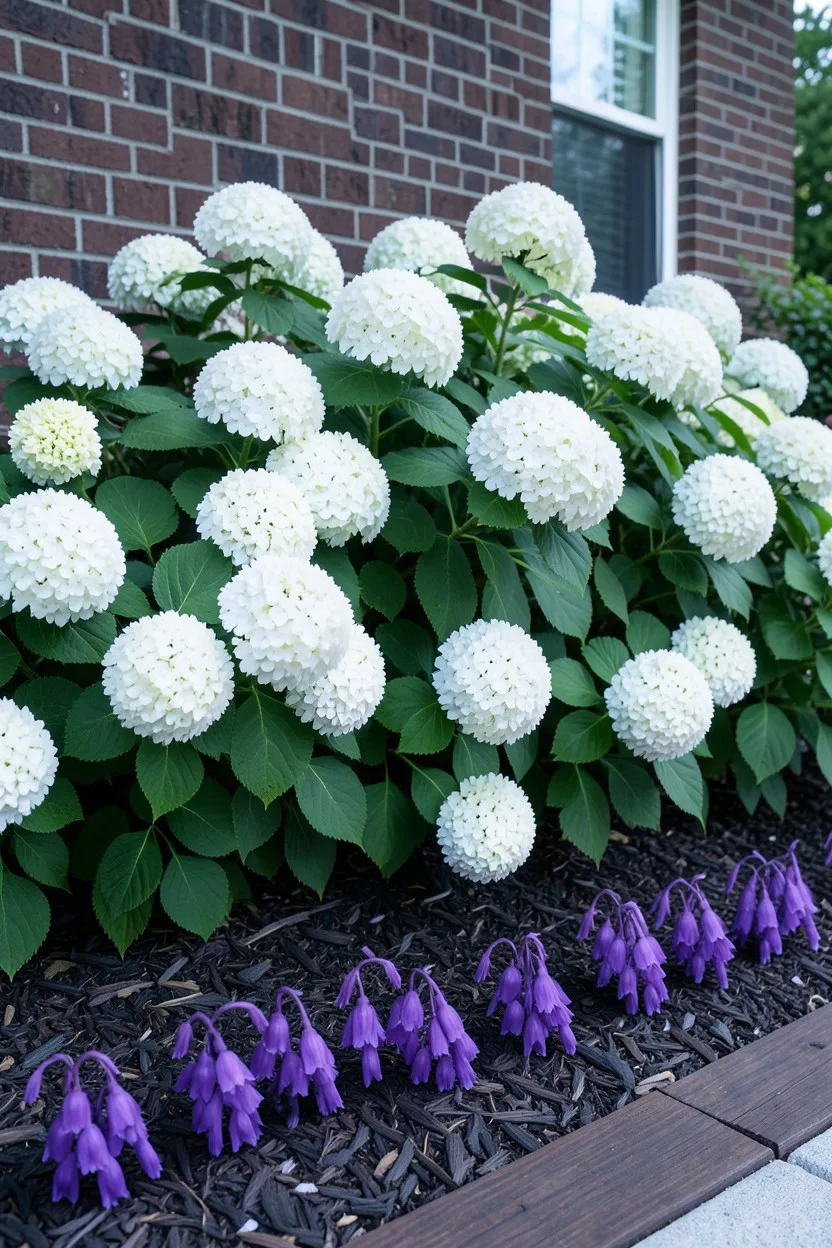
When you look at a solid brick wall that receives zero direct sunlight, your instinct might be to plant standard evergreen boxwoods and call it a day. Break out of that sterile mindset by building a tiered foundation border anchored by smooth hydrangeas. The bright white flower heads act like natural light reflectors, catching ambient sky glow and bouncing it directly back toward your windows.
Plant a solid row of Hydrangea arborescens 'Incrediball' right against the foundation, spaced exactly four feet apart. These stems are thick enough to withstand heavy summer rainstorms without flopping into the dirt. In front of them, drop in a contrasting row of deep purple Heuchera 'Palace Purple' to create a sharp, dramatic color break that emphasizes the massive size of the white blooms.
2. Woodland Pathways with Floating Lacecaps
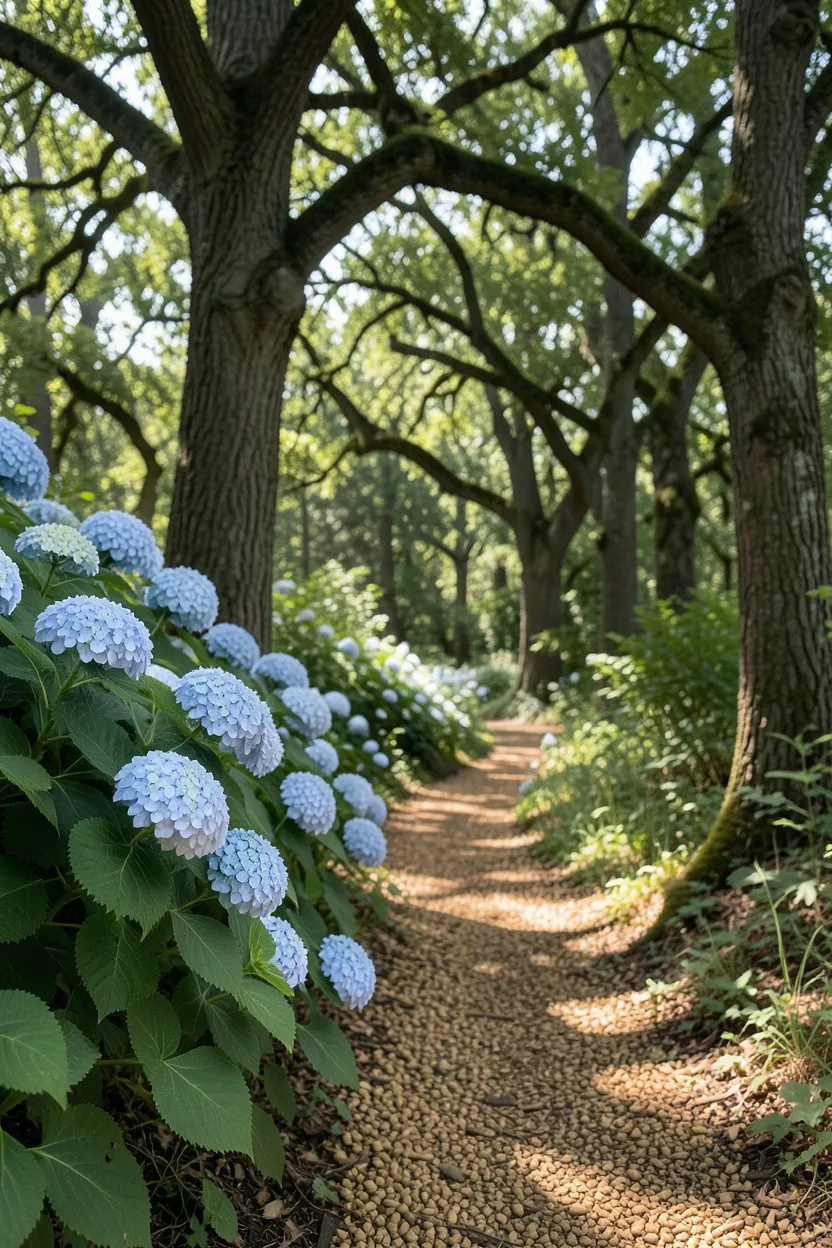
Strolling down a shaded mulch path should feel like a discovery, not a chore through overgrown brush. You need a plant that feels wild yet refined. Everyone tells you to put classic mopheads along paths, but they quickly grow bulky and crowd your walking space, forcing you to prune away next year's flower buds just to clear the walkway.
Deploy serrata hydrangeas, specifically 'Blue Billow' or 'Tuff Stuff', along your path edges instead. These mountain varieties feature delicate lacecap blooms that seem to float effortlessly on slender stems. Space them three feet back from the path edge to let their outer branches gently drape over the wood chips without blocking your steps. Their flatter bloom structure allows the natural woodland texture to shine through rather than blocking the view.
3. The Textured Oakleaf Understory Matrix
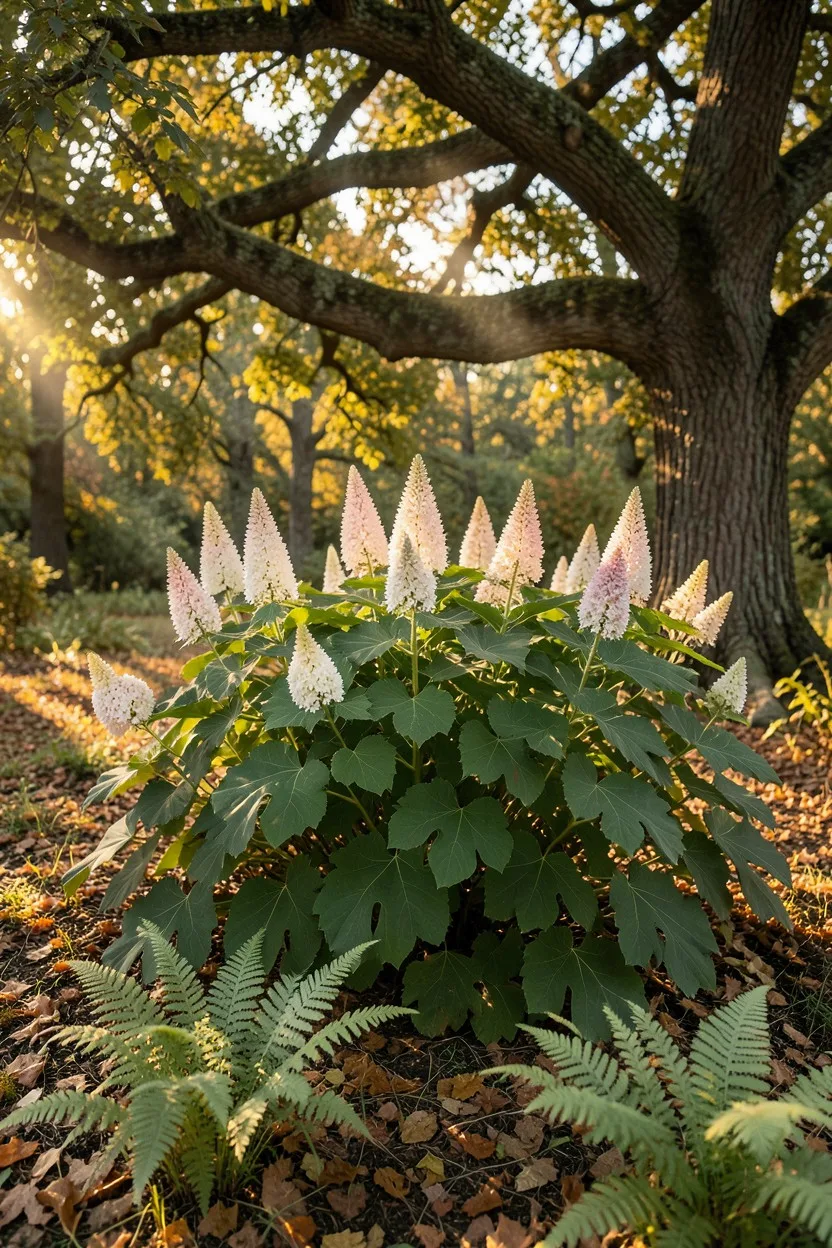
Growing anything directly under mature maple or oak trees is an uphill battle because of aggressive root competition and heavy shade. Most macrophylla varieties will shrivel and pout in dry tree shade. This is where you switch tactics entirely and bring in the toughest native powerhouse available.
Hydrangea quercifolia 'Alice' or 'Ruby Slippers' thrives in oak understories because its rugged root system handles dry spells far better than its soft-leaved cousins. Plant them six feet away from the tree trunks to avoid the thickest root masses. The deeply lobed, oak-like leaves introduce a coarse, architectural texture that breaks up the fine, boring look of standard shade ferns. In late autumn, these leaves turn a spectacular, fiery mahogany red that keeps your shaded understory alive long after other perennials have melted into the ground.
🌱 GROWING TIP
Watering Secrets for Tree Understories
Trees act like giant umbrellas, stealing rainfall before it hits the ground. Set up a dedicated drip irrigation line coiled twice around the base of your understory oakleaf hydrangeas, running it for 45 minutes twice a week during dry summer spells.
4. Symmetrical Courtyard Entry Anchors
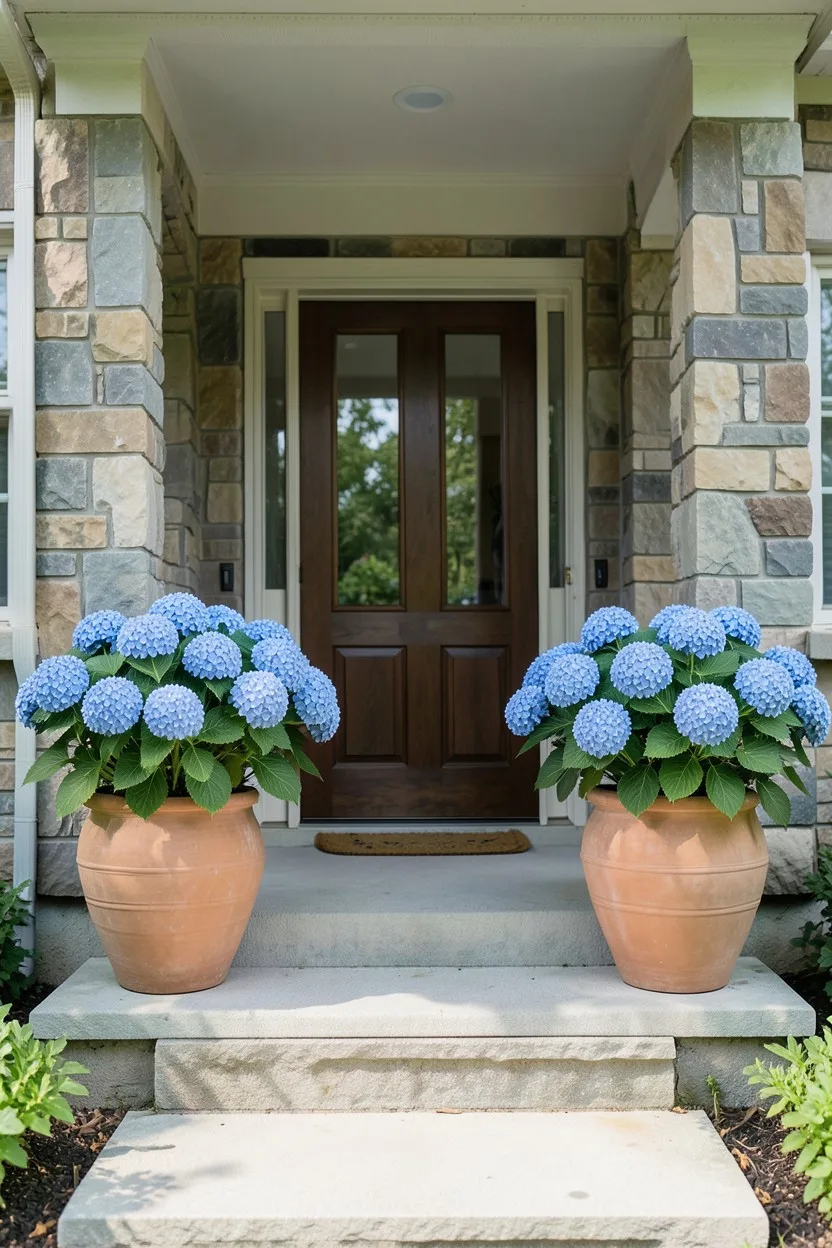
A shaded courtyard entryway can easily feel dark, cold, and uninviting to visitors. Instead of using predictable, rigid evergreen cones that look like they belong outside an office park, flank your front door with massive, soft blooming structures that signal a warm, living home.
Get two large, matching 24-inch unglazed terracotta pots and place them exactly on either side of your steps or entry arch. Plant a reblooming variety like Endless Summer 'The Original' in each pot using an acidic potting mix mixed with a handful of soil sulfur. This guarantees you get deep, electric blue mopheads all summer long. The symmetrical, round shape of the bushes frames your doorway perfectly, while the bright blue color cuts right through the heavy shadows of a covered porch entry.
5. The Vertical Climbing Shrub Screen
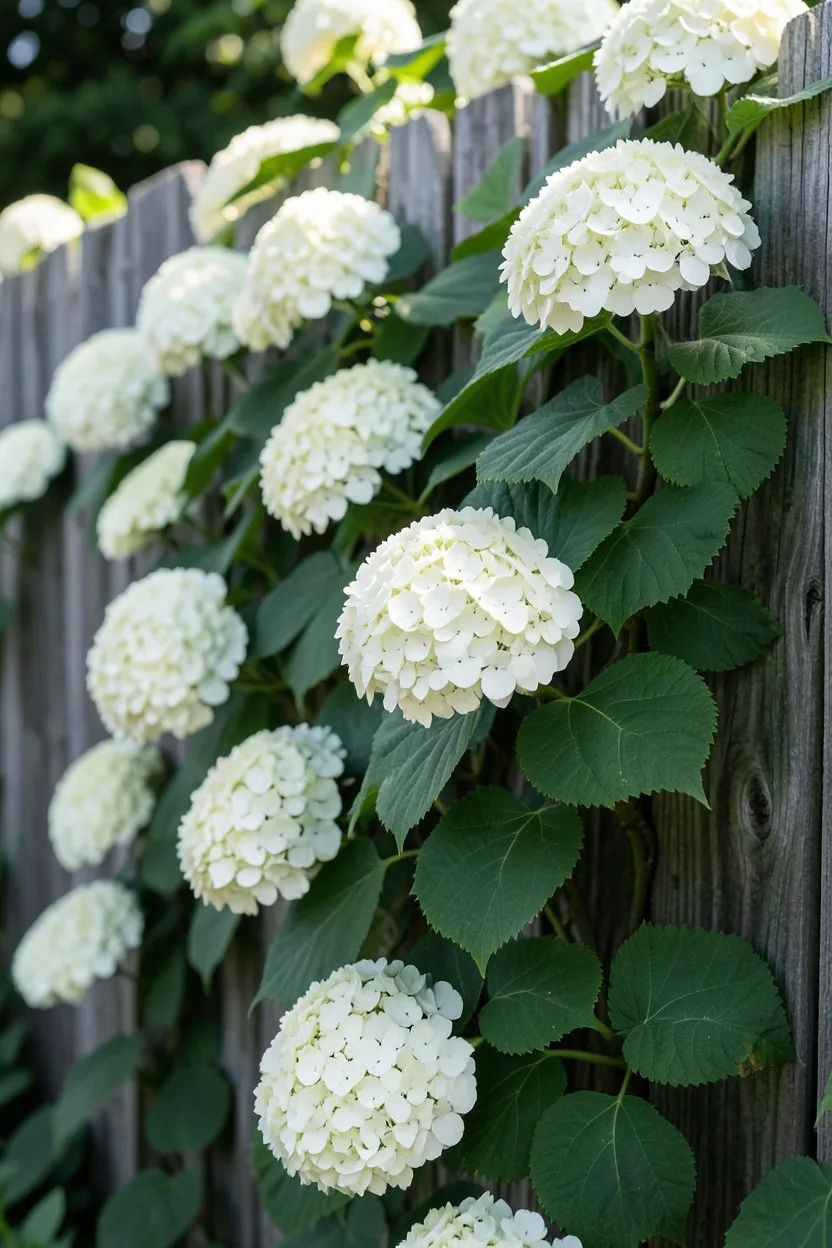
You know what nobody tells you about wooden privacy fences in partial shade? They look incredibly stark and boring when they sit in shadow all afternoon. Standard climbing vines like clematis will refuse to bloom without full sun, leaving you with nothing but bare wood or patchy green tendrils.
Force your shaded vertical surfaces to work for you by planting Hydrangea anomala subsp. petiolaris, the climbing hydrangea. This self-clinging vine uses aerial rootlets to grip cedar fences or brick masonry without requiring complex wire trellis systems. Plant one bare-root specimen at the base of every eight-foot fence panel. For the first two years, it will sleep while building roots, but by year three, it will rapidly coat the wood in lush, heart-shaped green leaves and flat, creamy-white lacecap flowers that make a plain fence look like a living English estate wall.
Climbing Hydrangea — At a Glance
🪜 Growth Habit
Vining / Self-clinging
📐 Max Height
30 to 50 feet
🌸 Bloom Style
Creamy-white lacecap
🪵 Support Needed
Sturdy wood or brick
Insider Note
Do not panic if it grows slowly at first; climbing types require two full seasons to establish roots before exploding upward.
6. The Bright Hostaria Background Foil
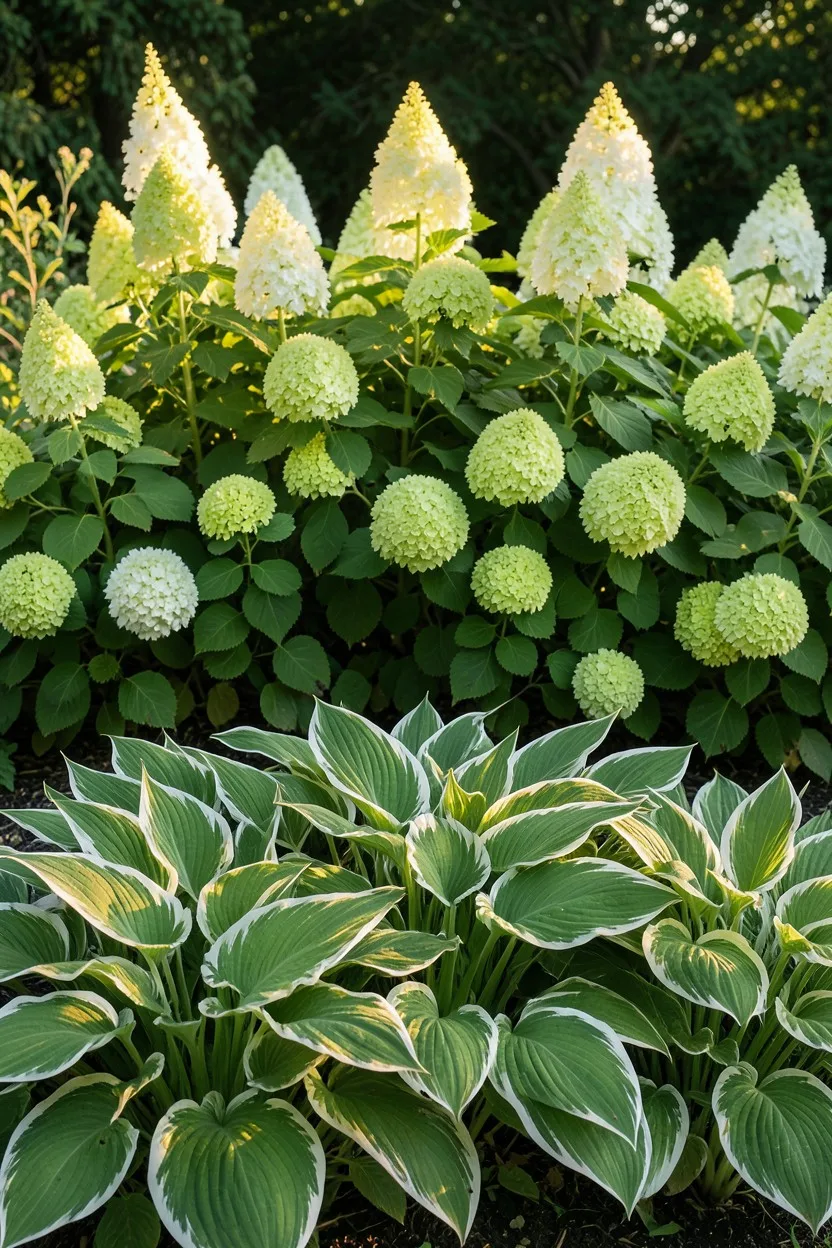
Hostas and hydrangeas are the classic gardening duo, but most people arrange them backward. They place small hydrangeas behind massive hostas, causing the bold, low hosta leaves to swallow up the lower stems of the shrub, creating a cluttered, chaotic mess.
Flip the hierarchy to get a clean, intentional look. Plant a solid wall of tall panicle hydrangeas, like 'Limelight' or 'Little Lime', as your structural background hedge. In the partial shade zone directly in front of their feet, carpet the ground with variegated hostas like 'Patriot' or 'Francee'. The clean, white-and-green striped margins of the hosta leaves precisely echo the changing white-to-lime-green tones of the panicles overhead, making the entire composition look like a custom designer planting map.
7. The Intimate Bistro Corner Privacy Nook
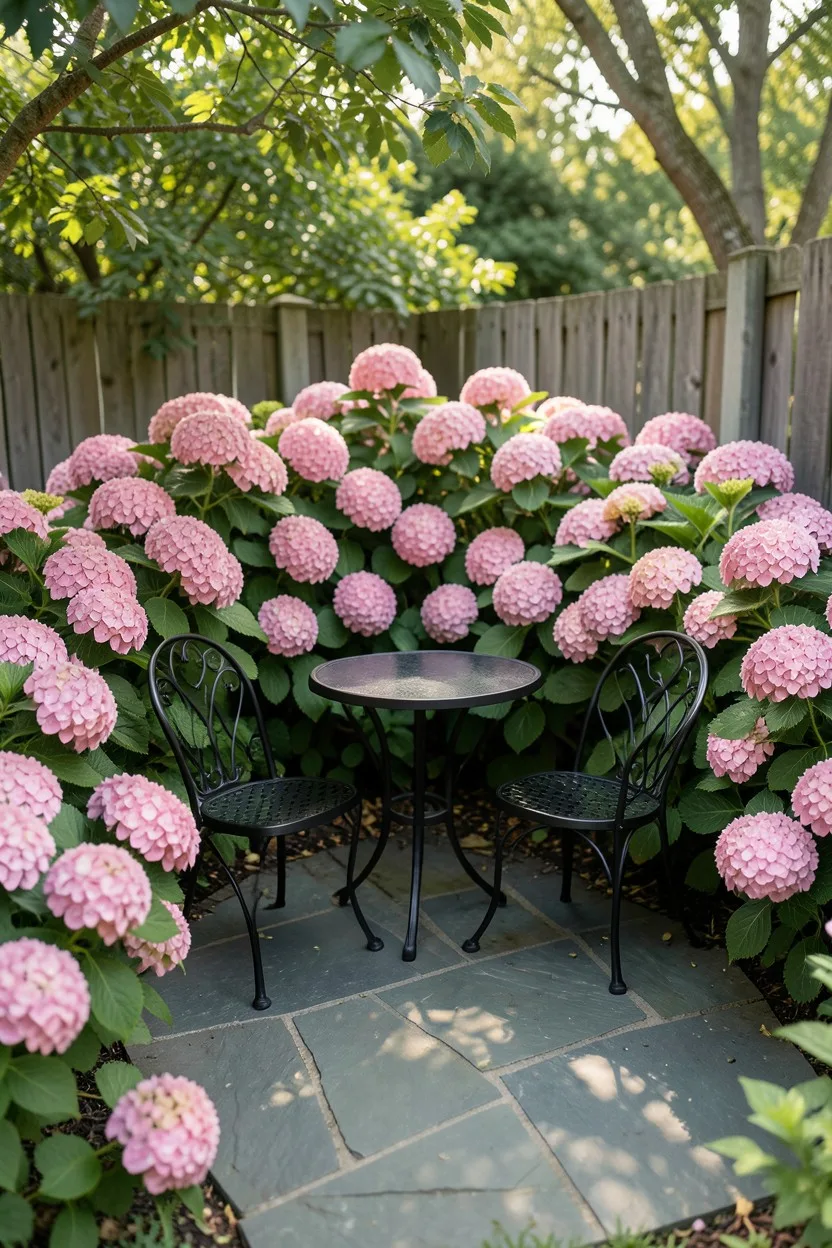
If you have a small patio table tucked into a partially shaded alcove, you want to feel protected and enclosed, not exposed to the rest of the yard. Standard privacy hedges feel claustrophobic in small spaces, but a soft, tactile flowering wall creates a sanctuary.
Encircle a small two-chair bistro set with three 'Incrediball' blush smooth hydrangeas arranged in a tight semi-circle. Space the center stems exactly three and a half feet apart from each other and three feet back from the chairs. As the shrubs mature to their four-foot height, their massive, soft pink-to-white flower heads lean in slightly toward the seating area, creating a fragrant, living wall that absorbs background noise and screens out neighboring views while you drink your morning coffee.
⚠️ COMMON MISTAKE
Avoid Overcrowding Small Patios
Never plant fast-growing mopheads closer than three feet to your actual patio furniture. Their broad leaves hold onto dew and rainwater, meaning you will get soaked every time you brush past them to sit down.
8. The Shifted Pastel Color Gradient
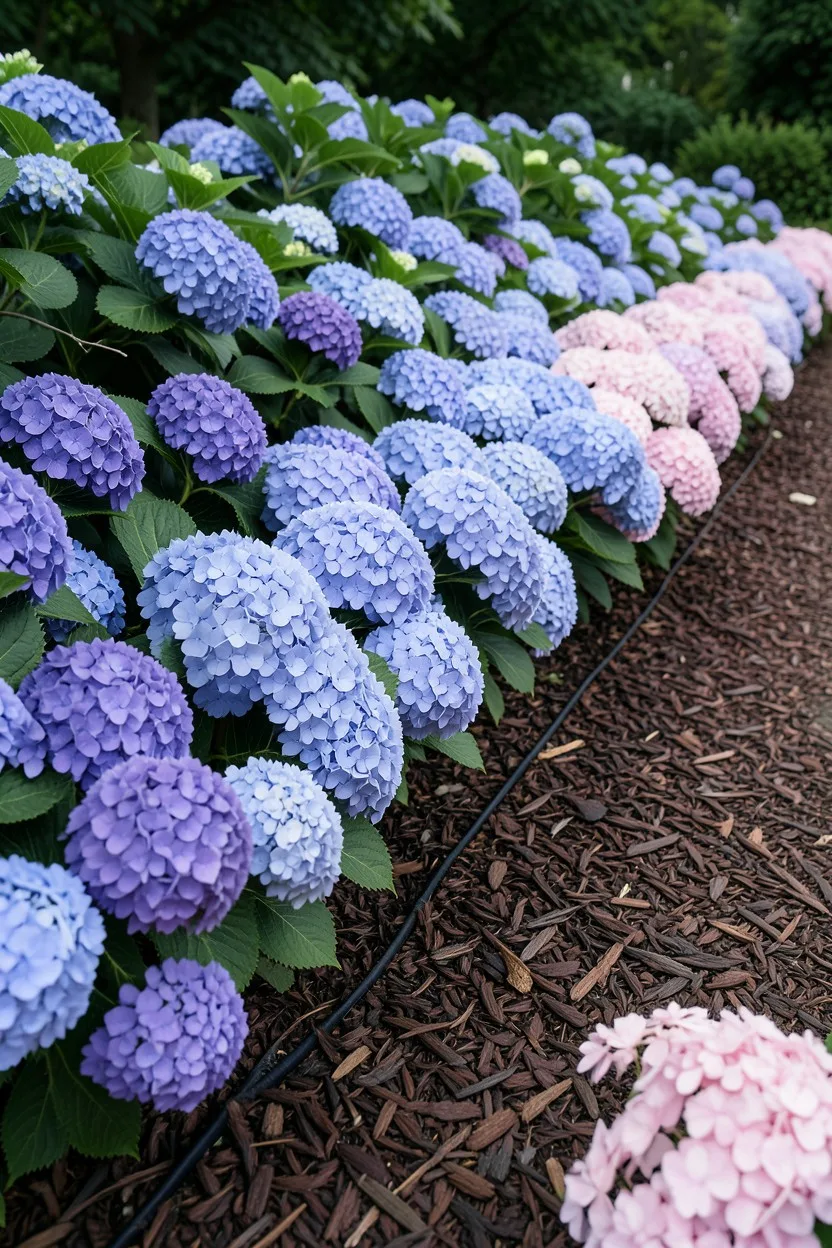
Most people just buy whatever random hydrangea color is available at the garden center, resulting in a jarring jumble of competing pinks and blues that hurts the eyes. Take control of your garden color theory by deliberately shifting the soil chemistry across a single long, shaded border.
Buy six matching Nikko Blue bigleaf hydrangeas and plant them in a straight line. On the far-left side of the bed, heavily amend the soil with aluminum sulfate to drive the pH down to 5.2, creating intense, true blue flowers. In the center, leave the soil neutral. On the far-right side, add garden lime to lift the pH to 6.5, forcing those exact same plants to bloom in soft pastel pink. The result is a stunning, living color gradient that transitions smoothly across your shaded landscape.
9. The Tiered Asian-Style Layered Border
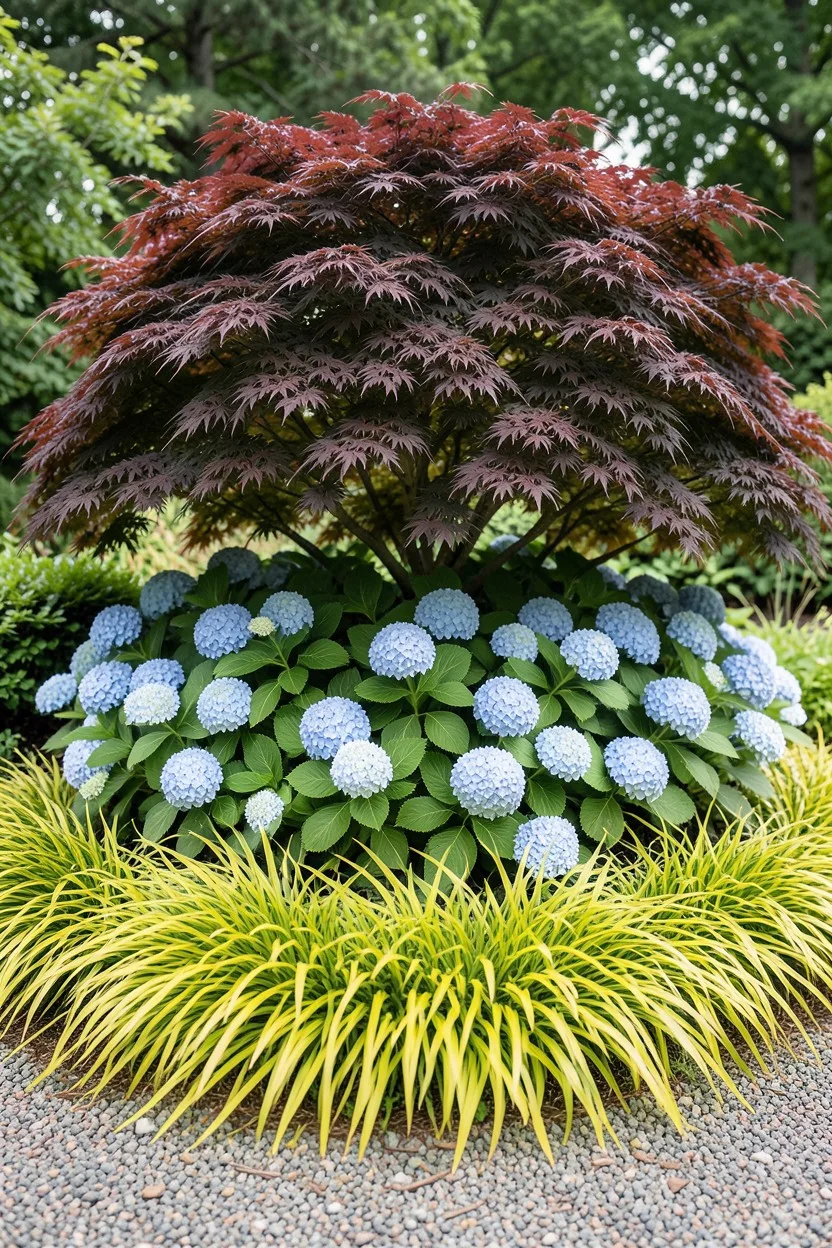
I used to think Japanese-inspired shade gardens were restricted to simple bamboo, moss, and green maples. Then I visited a private collection in Portland and saw how traditional mountain lacecaps can ground a serene, structural landscape without overwhelming it.
Create a strict three-tier shade border. Plant a weeping Japanese Maple like 'Acer palmatum Dissectum' as your tall, architectural crown layer. Directly beneath its cascading purple leaves, plant three 'Glow 'n Glimmer' serrata hydrangeas. Their flat, soft pink or blue lacecap heads mimic the horizontal branching structure of the maple. Finish the front edge with low, bright green Hakonechloa macra 'Aureola' forest grass. The grass spills forward like water, completing a highly structured, peaceful design.
10. The Bright Autumn Oakleaf Focal Island
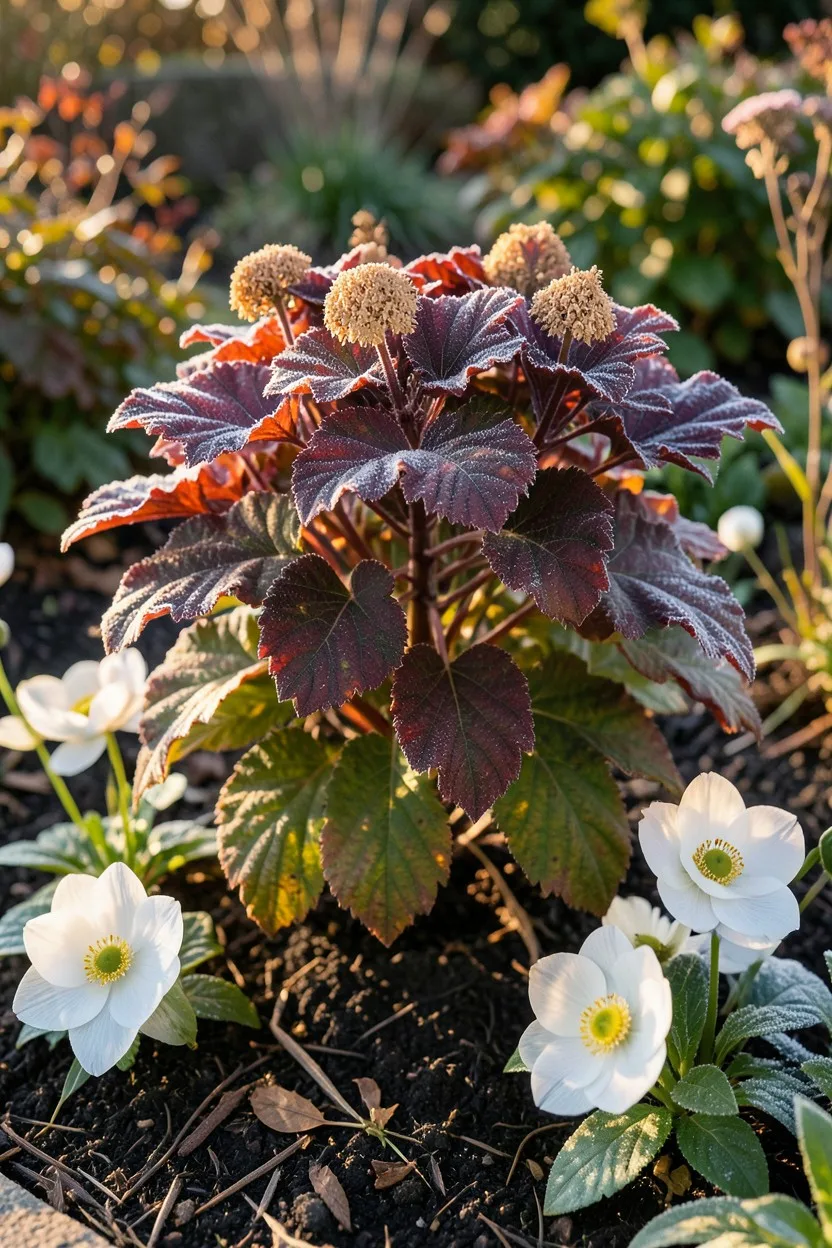
When summer ends, most shaded garden spots turn into a sea of collapsing brown perennial mush. If your design relies solely on soft macrophylla varieties, your shade beds will look abandoned from October through March. You need a structural anchor that plays the long game.
Dig a large, circular island bed in a spot that gets partial afternoon sun, and plant a single 'Gatsby Gal' oakleaf hydrangea dead center. Surround it with a ring of late-season blooming 'Honorine Jobert' Anemones. In August, the anemone flowers dance around the white hydrangea panicles. By November, the hydrangea leaves turn a brilliant, fiery crimson-purple, while the dried flower heads remain on the plant all winter, catching the frost and giving your eye something beautiful to look at in the dead of January.
Oakleaf Hydrangea — At a Glance
🍁 Fall Color
Crimson / Mahogany
❄️ Winter Value
Peeling bark / Dried heads
☀️ Sun Tolerance
High (handles dry shade)
📐 Spacing
6 feet apart
Superpower
The only hydrangea family that provides brilliant multi-colored autumn foliage and architectural winter interest.
11. The Dappled Shade Mixed Shrub Screen
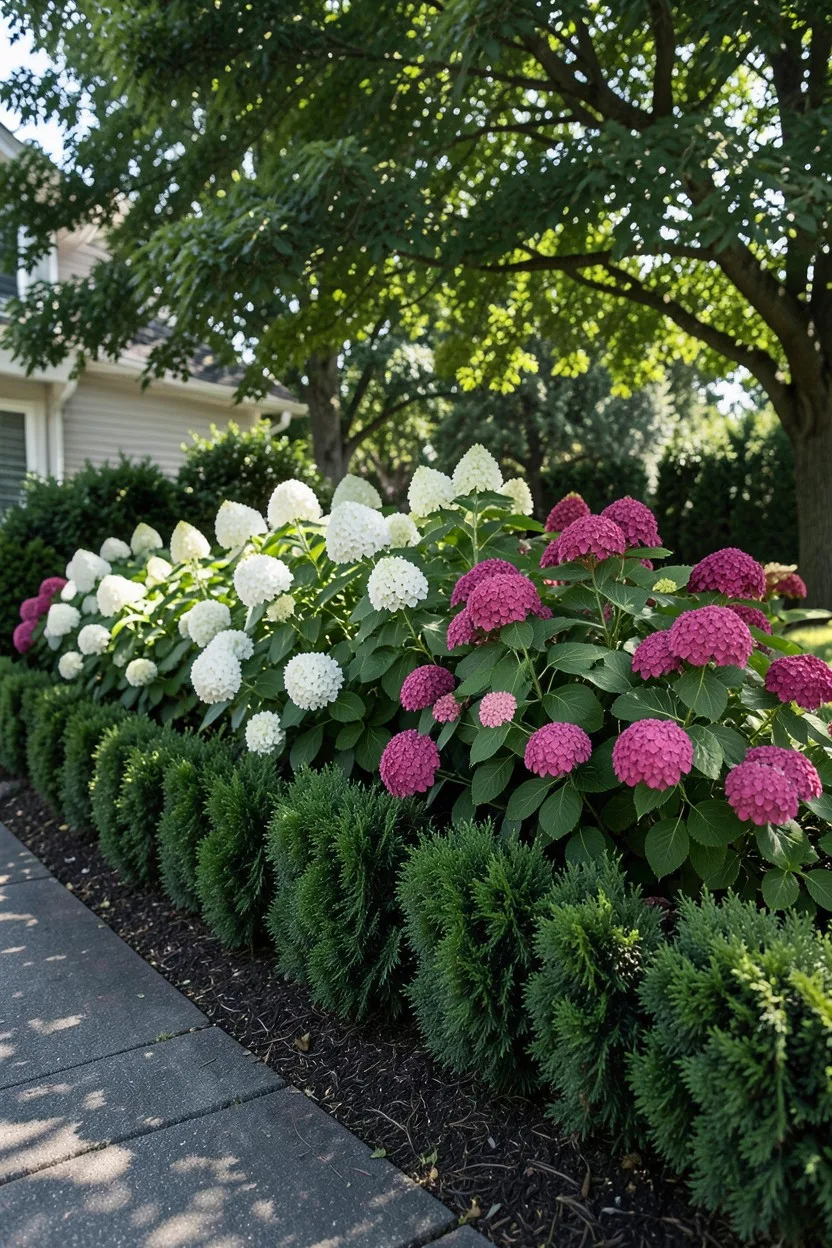
A long property line that sits under a row of neighbor's tall trees shouldn't be fenced off with an ugly, solid row of identical arborvitae trees that will grow patchy from a lack of light. A mixed deciduous hedge handles uneven lighting far better and looks natural.
Blend panicle hydrangeas with structural shade conifers. Alternate one 'Quick Fire' panicle hydrangea with one 'Green Wave' Taxus yew, keeping a strict four-foot spacing between plants. The yews provide a deep green, solid evergreen back wall that thrives in partial shade. In mid-summer, the 'Quick Fire' hydrangeas explode with open, airy white blooms that rapidly turn a deep watermelon pink, standing out brilliantly against the dark, needle-textured background of the yews.
12. The Massed White Wood-Edge Drift
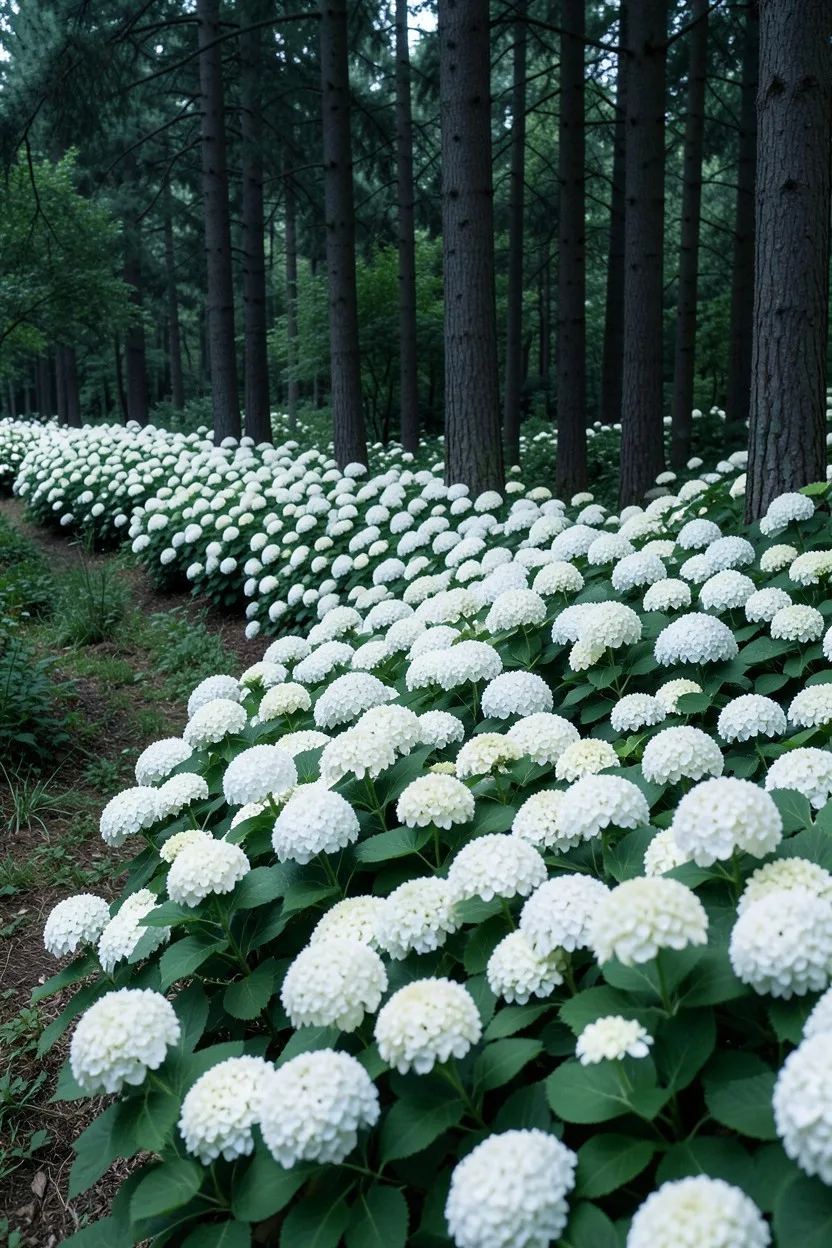
If you have a large property where your manicured lawn meets a wild woodland tree line, individual plants look tiny and disorganized. Small, scattered color choices get swallowed up by the scale of the big trees. You need to design with brute force scale.
Buy ten 'Annabelle' smooth hydrangeas. Instead of planting them in a neat row, plant them in a jagged, staggered double zigzag pattern along the tree line, spacing them three feet apart. This mass-planting technique creates a continuous, unbroken running wave of giant white globes that mimics a natural forest understory drift. The sheer volume of white flowers reflects the dim wood-edge light, making your entire property line look expanded and brightly illuminated from a distance.
💡 PRO TIP
Hard Pruning for Massive Drift Blooms
Cut your entire Annabelle drift down to 12 inches above the ground every March. This harsh pruning forces the plants to produce vigorous new spring stems that bear the largest possible flower heads come July.
13. The Formal Sun-Dappled Courtyard Allée
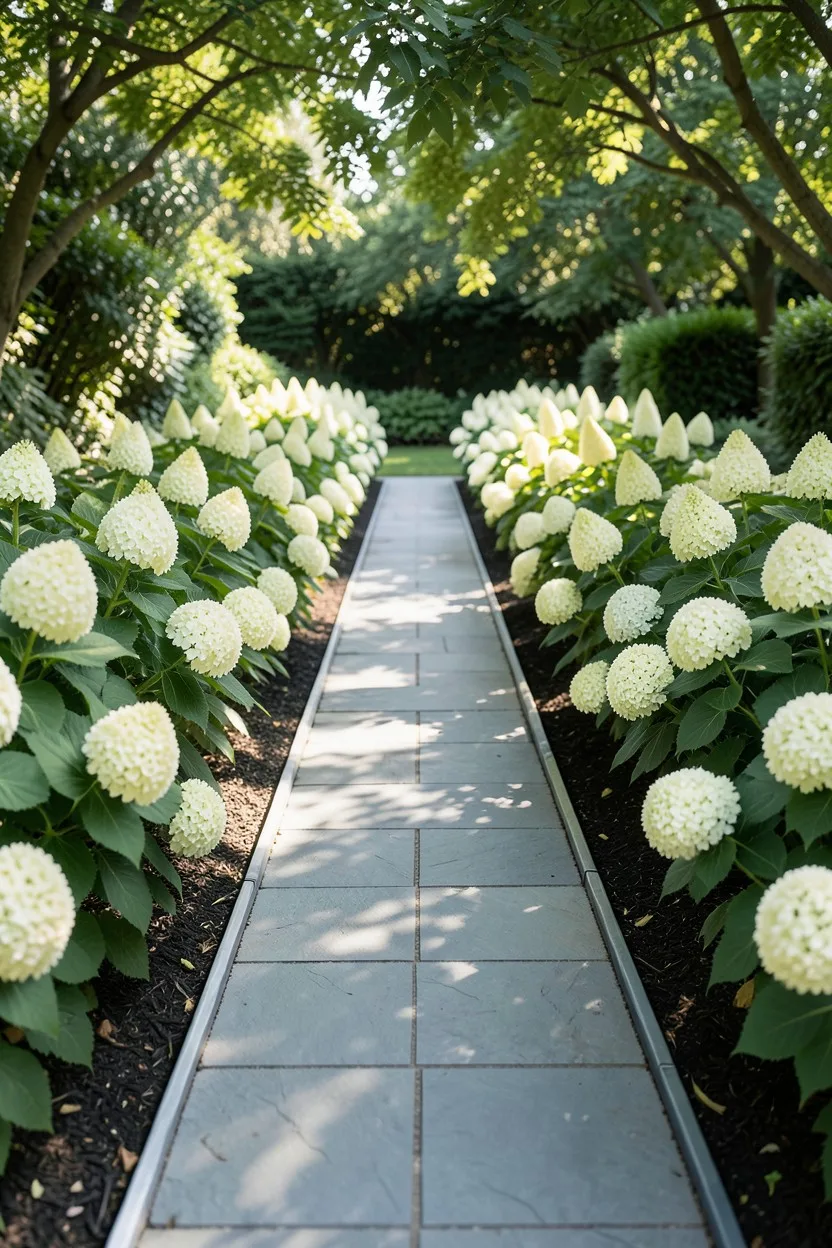
Formal garden designs usually demand full, scorching sun for roses or lavender, but you can achieve that same clean, luxury estate look in a partially shaded courtyard or side yard. The secret lies in using strict hardscaping geometry to control the wild shape of your flowering shrubs.
Lay down a straight, four-foot-wide pea gravel or flagstone walkway. Flank both sides of the path with a perfectly straight row of 'Bobo' panicle hydrangeas, spaced exactly three feet apart. 'Bobo' is a dwarf variety that tops out at just three feet tall, preventing it from flopping or swallowing the path. Keep the edges cleanly defined with steel landscape edging. The contrast between the rigid, clean gravel lines and the overflowing, creamy-white flower cones creates an instant formal look that shines in soft, partial sunlight.
14. The Shaded Deck Container Cluster
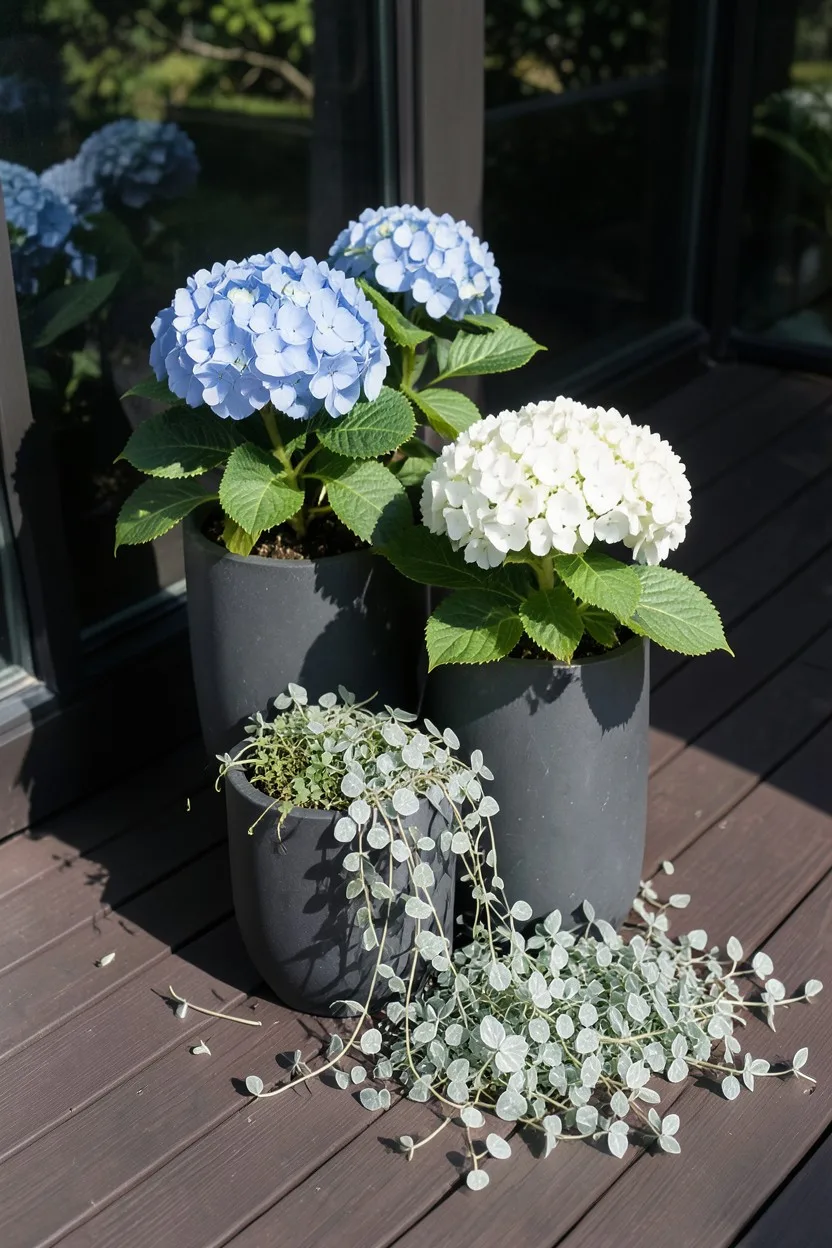
Do not leave your covered back deck or apartment balcony bare just because it sits in the shadow of the roofline. You do not need open soil to enjoy heavy flower displays. You just need to select varieties bred specifically to live their entire lives in pots without binding their roots.
Gather three dark charcoal-colored resin pots in varied heights: 14 inches, 18 inches, and 22 inches. Group them tightly in the shadiest corner of your deck. In the tallest pot, plant 'Pop Star' bigleaf hydrangea, a compact reblooming powerhouse that stays under three feet. In the medium pot, plant a soft white 'Wee White' smooth hydrangea. In the lowest pot, drop in trailing silver Dichondra 'Silver Falls'. This vertical arrangement creates a lush cascade of flowers and foliage that functions like a small-scale, movable shade garden.
15. The Mixed Hydrangea and Fern Tapestry Bed
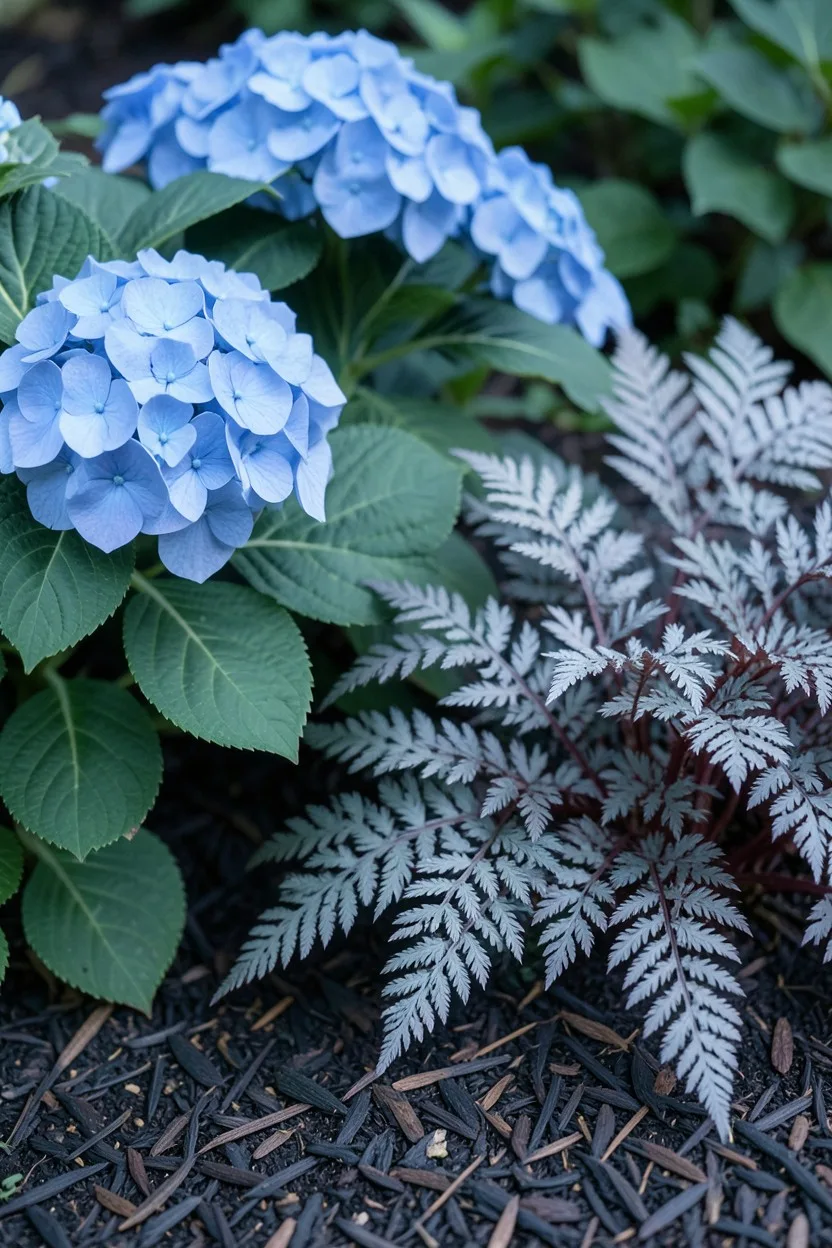
If you plant nothing but hydrangeas in a large shade bed, the design can look heavy and monotonous when the shrubs are out of bloom. The best estate gardens break up the heavy woodiness of shrubs by interweaving them with soft, feathery perennials that move gracefully in the wind.
Design a mixed tapestry bed by spacing your main bigleaf hydrangeas six feet apart. Fill the large open gaps between them with a combination of 'Athyrium niponicum' Japanese Painted Ferns and 'Blechnum spicant' Deer Ferns. The silver-and-burgundy fronds of the painted ferns pick up the cool blue and purple tones of the hydrangea flowers, while their delicate, finely cut foliage textures contrast beautifully against the massive, broad leaves of the shrubs.
🌱 How to Plant Your Shade Hydrangea
Dig the Hole
Make the hole twice as wide as the nursery pot but keep it exactly the same depth to protect the crown.
Amend the Soil
Mix equal parts native soil and organic compost directly into the bottom of the planting hole.
Loosen the Roots
Gently scarify the sides of the root ball with your fingers to encourage outward growth.
Set and Backfill
Place the plant in the hole, fill with your soil mix, and tamp down lightly to remove air pockets.
Mulch and Drench
Apply 3 inches of pine bark mulch around the base and apply two gallons of water immediately.
Final Thoughts
If you only add one variety from this entire design layout to your yard this weekend, make it the oakleaf hydrangea. While classic blue mopheads will always hold a place in traditional cottage gardens, the sheer toughness and year-round structural transformation of native oakleaf varieties make them the smartest investment for any difficult, light-starved corner. They bridge the gap between summer color, autumn drama, and winter architecture in a way no other shade shrub can match.

John Smith is the founder and CEO of Karaoke Machines Guru. He is a karaoke tutor and karaoke enthusiast and has been passionate about karaoke since he was a child. He also writes about karaoke-related tips, guides, and product reviews on this website.
He overlooks the whole website and makes sure that everything is running smoothly. Learn more!