
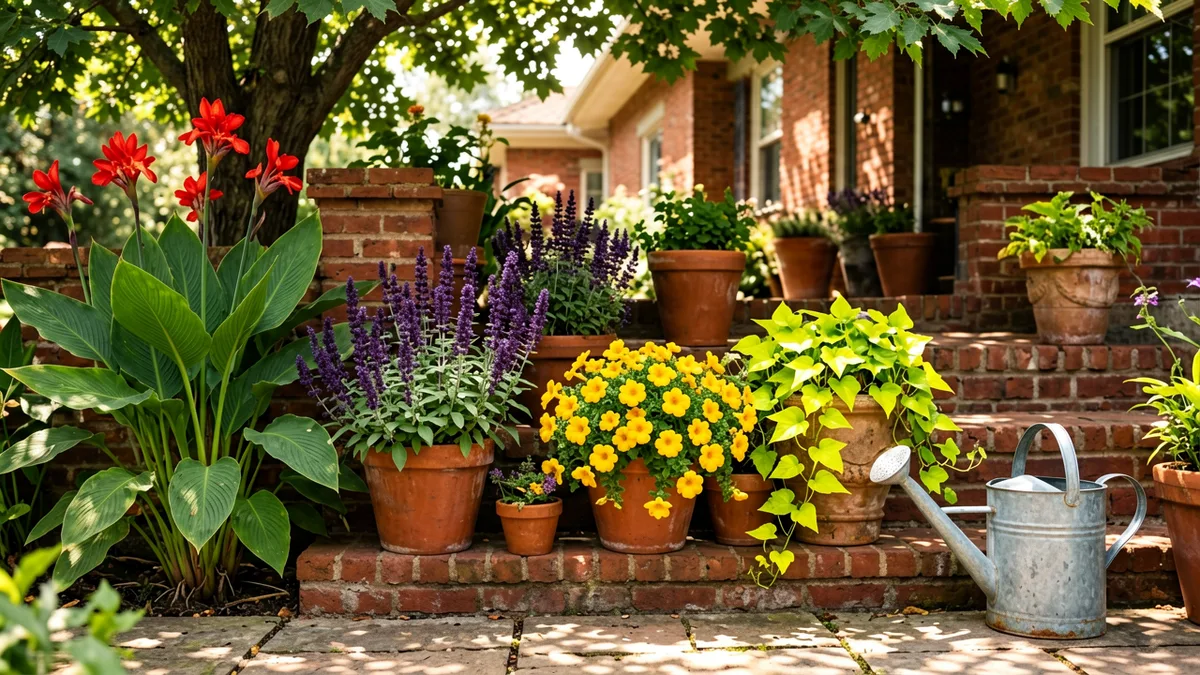
Every May, the routine is the same: you spend a small fortune on pristine nursery baskets, hang them on your sun-drenched front porch, and by mid-July, they look like crispy, brown sadness. Full sun on a front porch isn't just bright; it is a microclimate baking oven magnified by concrete steps, siding, and asphalt driveways. Most container plant combinations simply cannot handle that level of ambient heat without constant, twice-a-day life support.
After frying my fair share of expensive ferns and delicate fuchsias on my south-facing bricks, I shifted to a tough-as-nails palette that thrives on intense glare. The secret to a jaw-dropping porch display that lasts until frost isn't constant watering; it is choosing structural, heat-adapted varieties and housing them in containers large enough to insulate their roots. Let us skip the generic design advice and build pots that actually survive August.
Quick Tips Before You Start
Go Big on Size
Never use pots smaller than 14 inches wide; small soil volumes bake and dry out within hours.
Drill Drainage Holes
Standing water boils in hot sun, rotting roots instantly. Ensure every pot has clear drainage.
Mulch the Top
Add a one-inch layer of shredded cedar wood bark to lock in moisture and cool root zones.
1. The Fiery Canna Lily and Calibrachoa Pillar
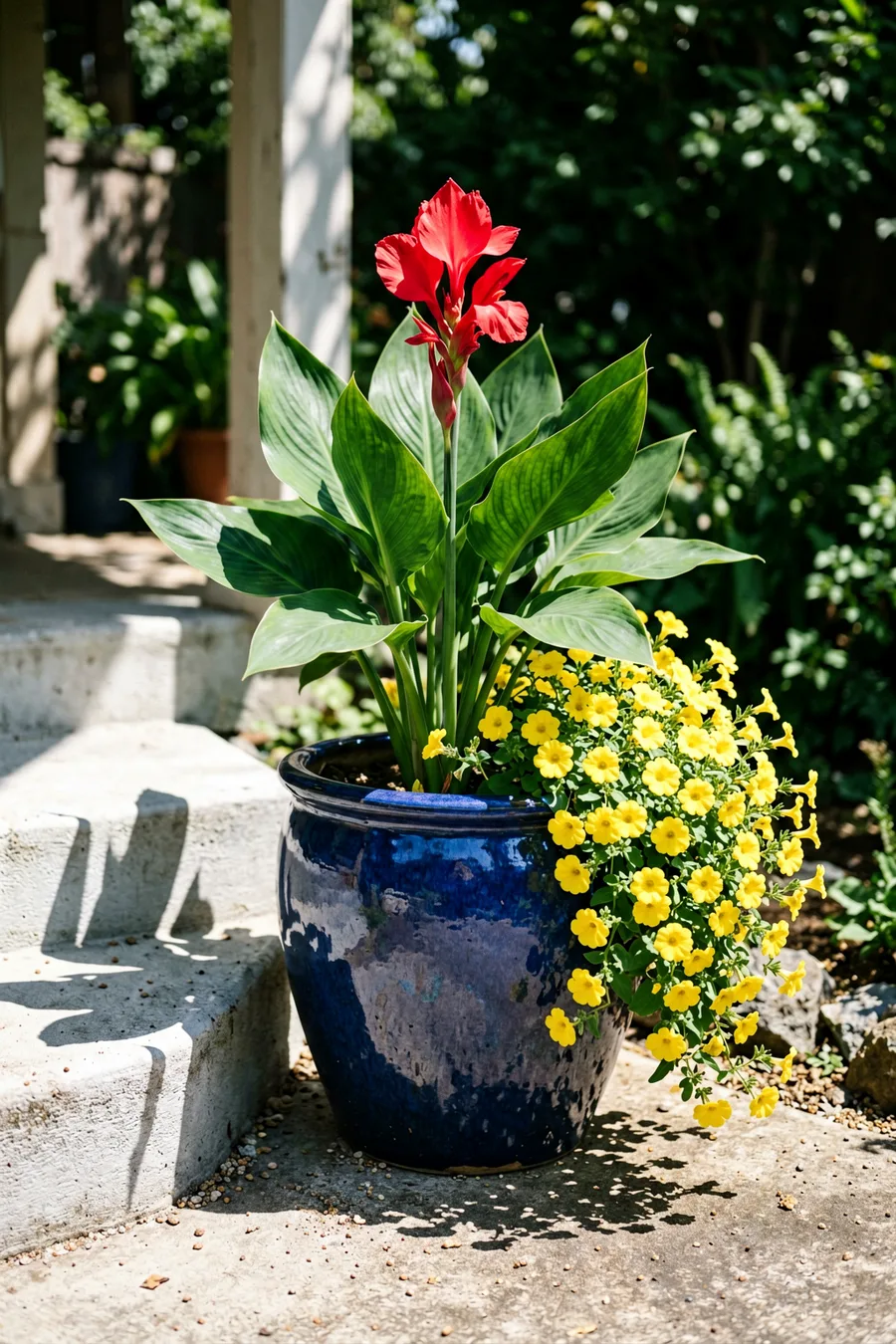
Everyone tells you to plant geraniums for sun, but they stall when the nighttime temperatures stay above 75 degrees. Instead, anchor your largest porch pot with a dwarf canna lily variety like 'Toucan Scarlet'. Cannas love intense, baking heat and provide a dramatic tropical silhouette that won't wilt under pressure.
Surround the base of the lily with trailing calibrachoa in deep gold or orange. Calibrachoa behaves like a petunia on overdrive but handles scorching afternoon rays without getting leggy or requiring constant deadheading. Use a heavy 18-inch glazed ceramic pot to balance the weight of the tall canna stalks and prevent high summer winds from tipping the display over.
2. The Silver and Purple Low-Water Monochrome
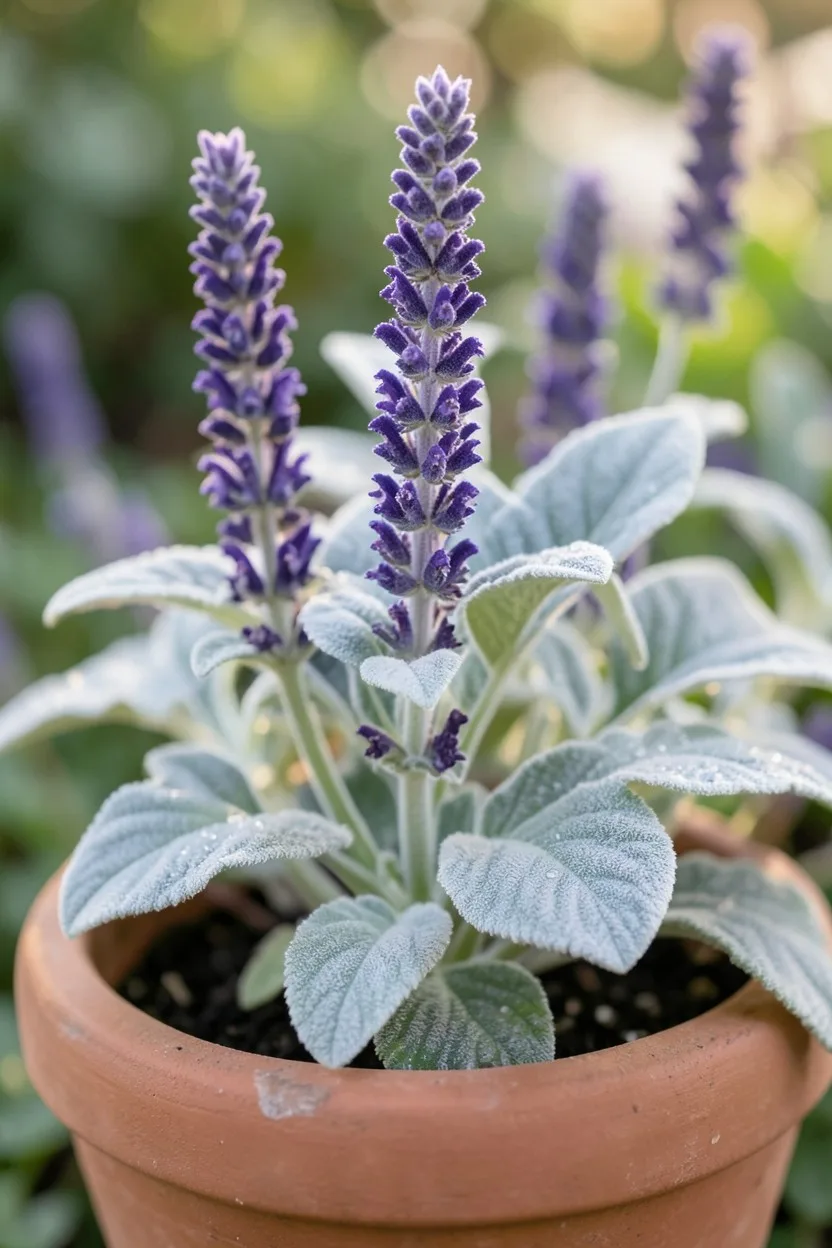
You know what nobody tells you about growing helichrysum? Icicle licorice plant is the ultimate heat-defying filler that makes every purple flower pop. Pair its felted silver leaves with deep violet 'Evolution' mealycup salvia for a sophisticated, cool-toned container that defies the summer heat index.
Salvia farinacea doesn't drop petals or look messy when it finishes blooming; its blue-purple spikes hold their color for weeks. Plant these in an unglazed terracotta pot. The breathable clay allows gas exchange for the roots, which is exactly what these Mediterranean-style growers need to survive humid, scorching July afternoons.
Silver & Purple Duo — At a Glance
🌡️ Sun Exposure
6+ Hours Direct Sun
💧 Watering Need
Low once established
🏺 Best Container
16-inch Terracotta
🦋 Pollinator Draw
High bee attraction
Heat Strategy
The silver hairs on the licorice plant reflect harsh UV rays, protecting the soil from overheating.
3. The Texas-Tough Lantana and Vinca Spillway
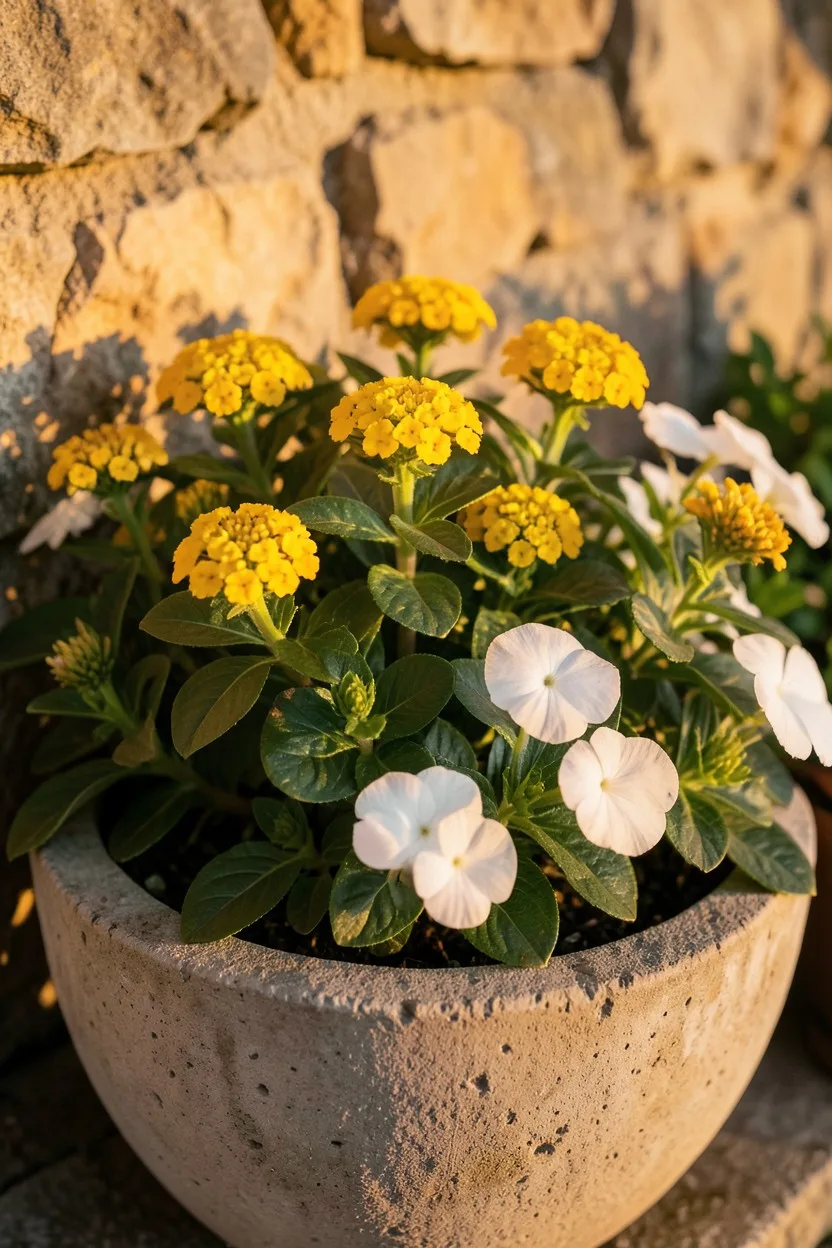
Back in my Houston days, I tried growing standard trailing petunias in full sun and they looked melted by midday. If your porch gets blasted by sun from noon until 6 PM, your answer is trailing lantana combined with annual vinca (Catharanthus roseus).
Lantana grows wild in arid climates and actually blooms better when the weather gets brutal. Mix a golden variety like 'New Gold' with white annual vinca. Vinca has glossy, thick foliage that resists water loss, and it doesn't drop flowers or stop blooming even during severe heatwaves. Water this combination only when the top two inches of potting mix feel entirely dry.
4. The Architectural Yucca and Trailing Portulaca Bowl
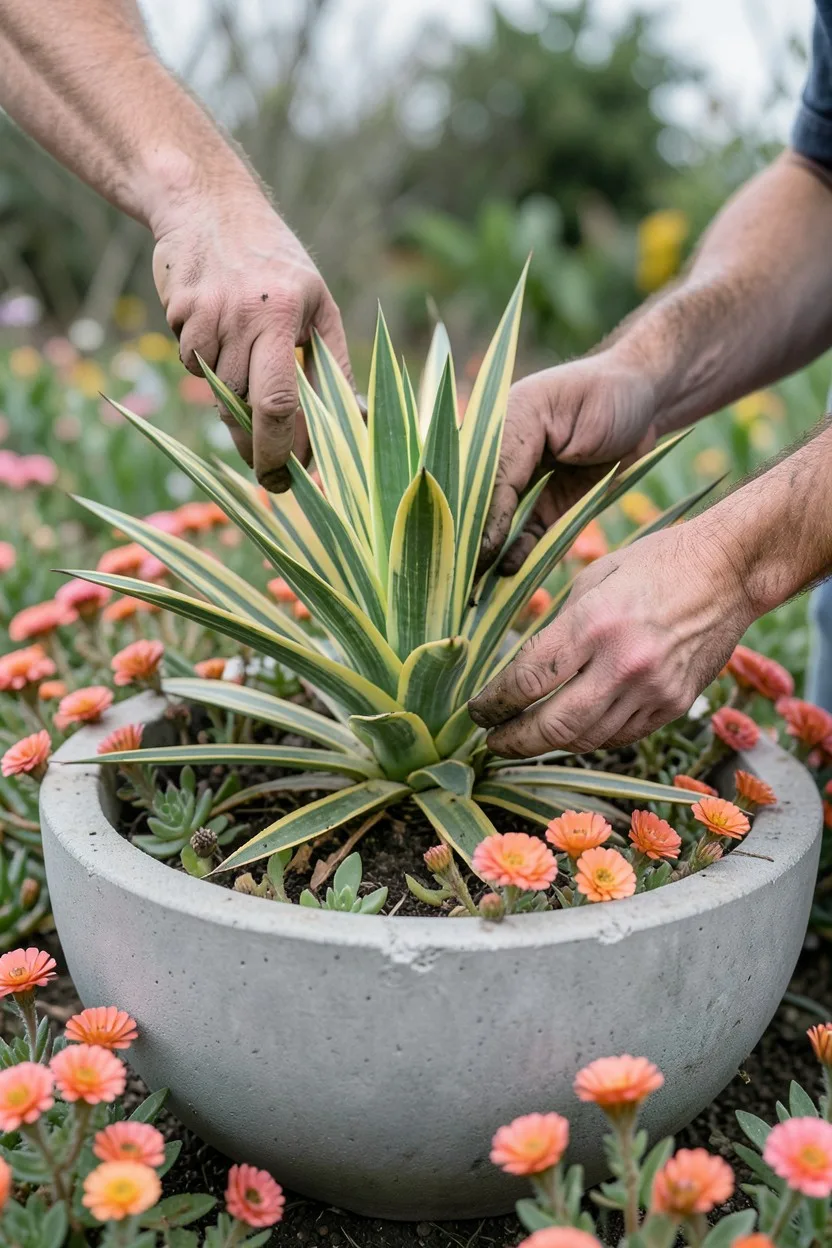
If you travel frequently during the summer and can't commit to a daily watering schedule, stop planting delicate annuals altogether. Use a structural, hardy center plant like 'Color Guard' Yucca with its striking variegated yellow and green spears, then underplant it with portulaca, also known as moss rose.
Portulaca is a true succulent with needle-like leaves that store water efficiently. The vibrant, neon-colored blossoms open wide in bright sunlight and close on cloudy days. Plant this combination in a wide, shallow concrete bowl planter. It creates a modern, architectural look that demands zero pruning and survives easily on rain alone.
⚠️ COMMON MISTAKE
Don't Use Cheap Peat-Heavy Potting Mix
Standard cheap potting soil high in peat moss turns into an impenetrable brick when dried out in full sun. Water will run down the inside edges of the pot without hitting the roots. Always use a professional mix containing coarse perlite and composted pine bark.
5. The High-Contrast Angelonia and Sweet Potato Vine Column
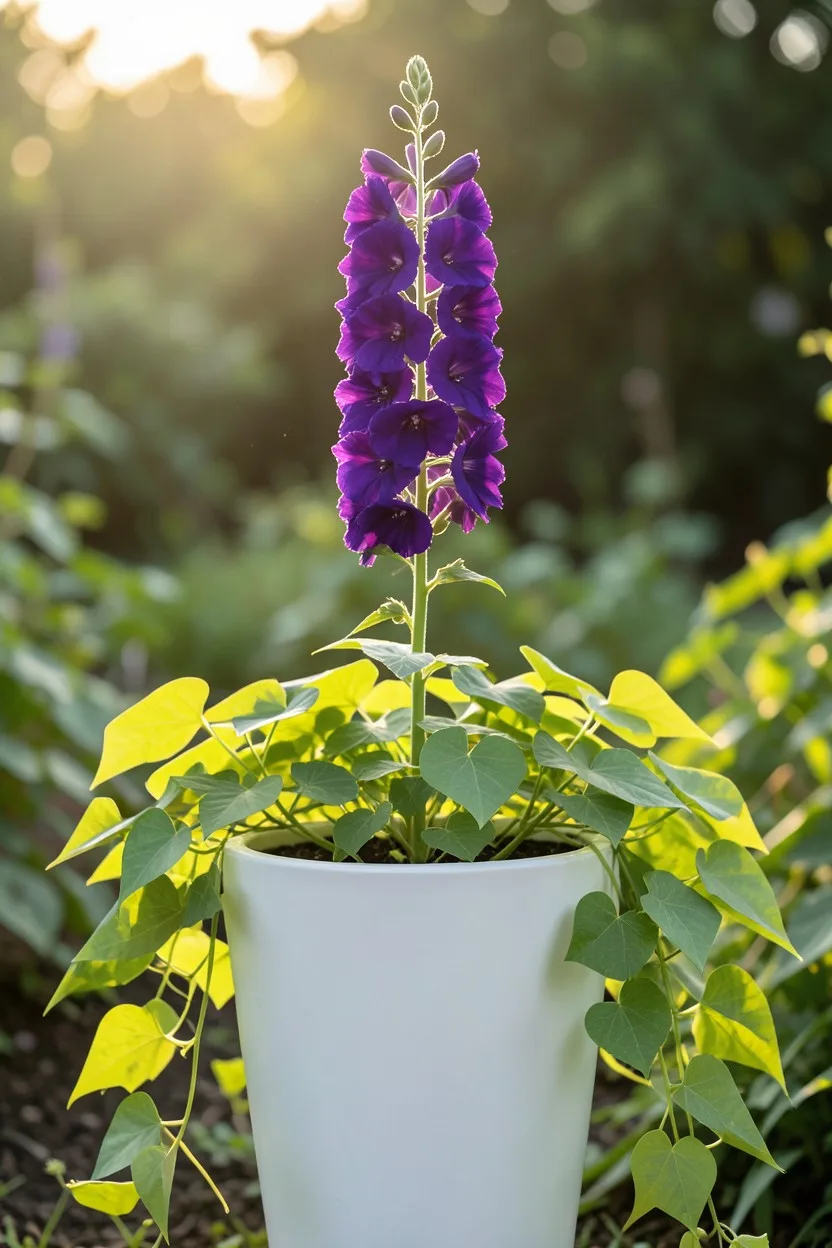
Angelonia is widely known as summer snapdragon, and it lives up to the name. Unlike real snapdragons which collapse in May, Angelonia stands perfectly erect and productive all summer long. Choose a tall, upright strain like 'Archangel Purple' to give your porch immediate vertical height.
To balance the rigid upright stems, wrap the base with 'Marguerite' sweet potato vine. The chartreuse, lime-green leaves offer an intense color contrast against the dark purple blooms. Beware: sweet potato vines are aggressive growers. You must aggressively snip back the trailing ends every two weeks with sharp garden shears to prevent them from choking out the angelonia.
6. The Cottage-Style Zinnia and Alyssum Basket
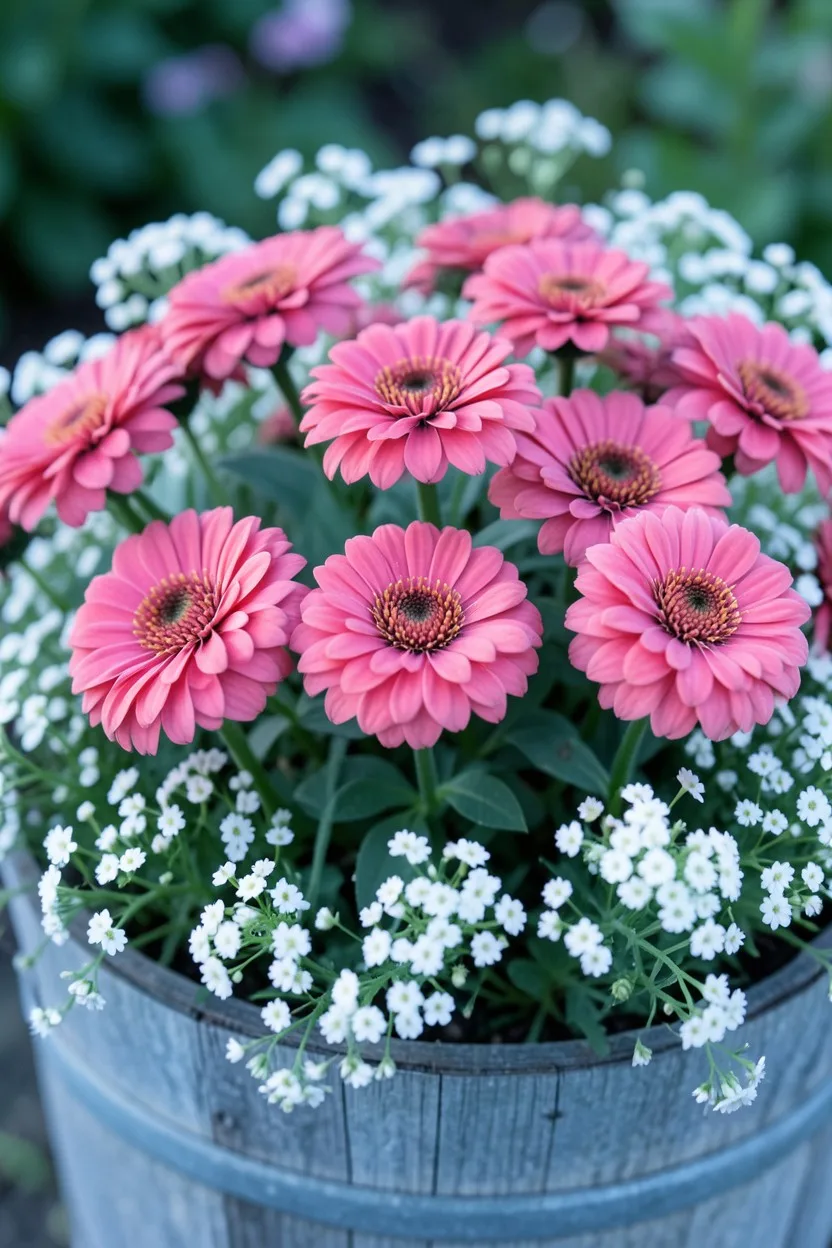
Most people associate zinnias with wide cutting gardens, but dwarf varieties are stellar container stars. Specifically, choose 'Profusion' or 'Zahara' series zinnias. These varieties stay under 12 inches tall, form dense mounds, and are highly resistant to powdery mildew, which typically disfigures older zinnia varieties during humid summers.
Tuck sweet alyssum around the edges of the pot. While traditional alyssum dies in June heat, newer heat-tolerant cultivars like 'Stream' white alyssum flower continuously through August. This pairing gives you a soft, honey-scented cottage garden aesthetic right on your hardscape porch steps without the typical mid-summer collapse.
Best For
7. The Elegant Grass and Trailing Scaevola Statement
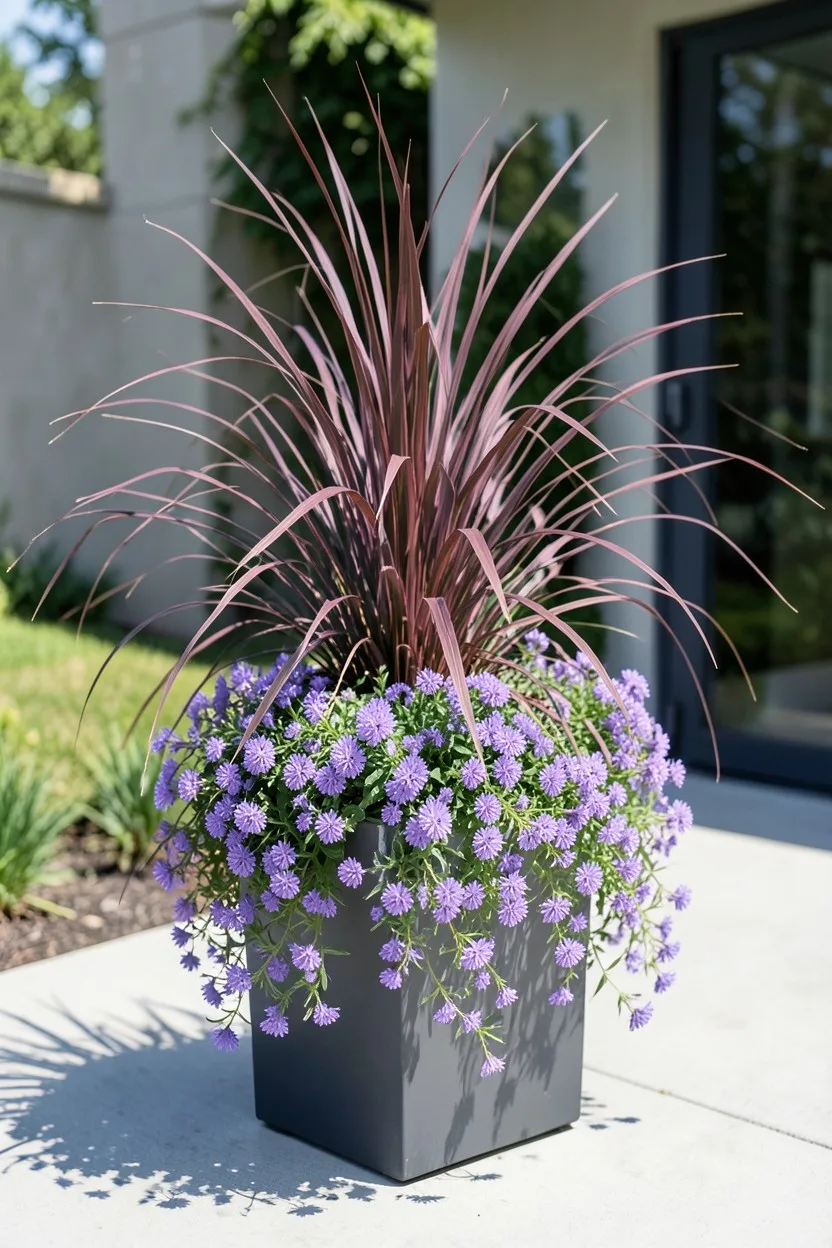
If you want a container that looks stately from twenty yards away, lean into texture rather than big flowers. Plant purple fountain grass (Pennisetum setaceum 'Rubrum') in the absolute center of a tall, modern charcoal gray planter. The dark burgundy blades provide movement in the breeze.
At the base, add Scaevola aemula, commonly called fan flower. Fan flower is native to Australia, meaning it laughs at scorching pavement heat. Its unique, one-sided purple-blue blooms cascade straight down the dark sides of the pot. This combination requires virtually no deadheading; the old grass blades drop cleanly and fan flowers are self-cleaning.
8. The Mediterranean Culinary Herb and Marigold Trio
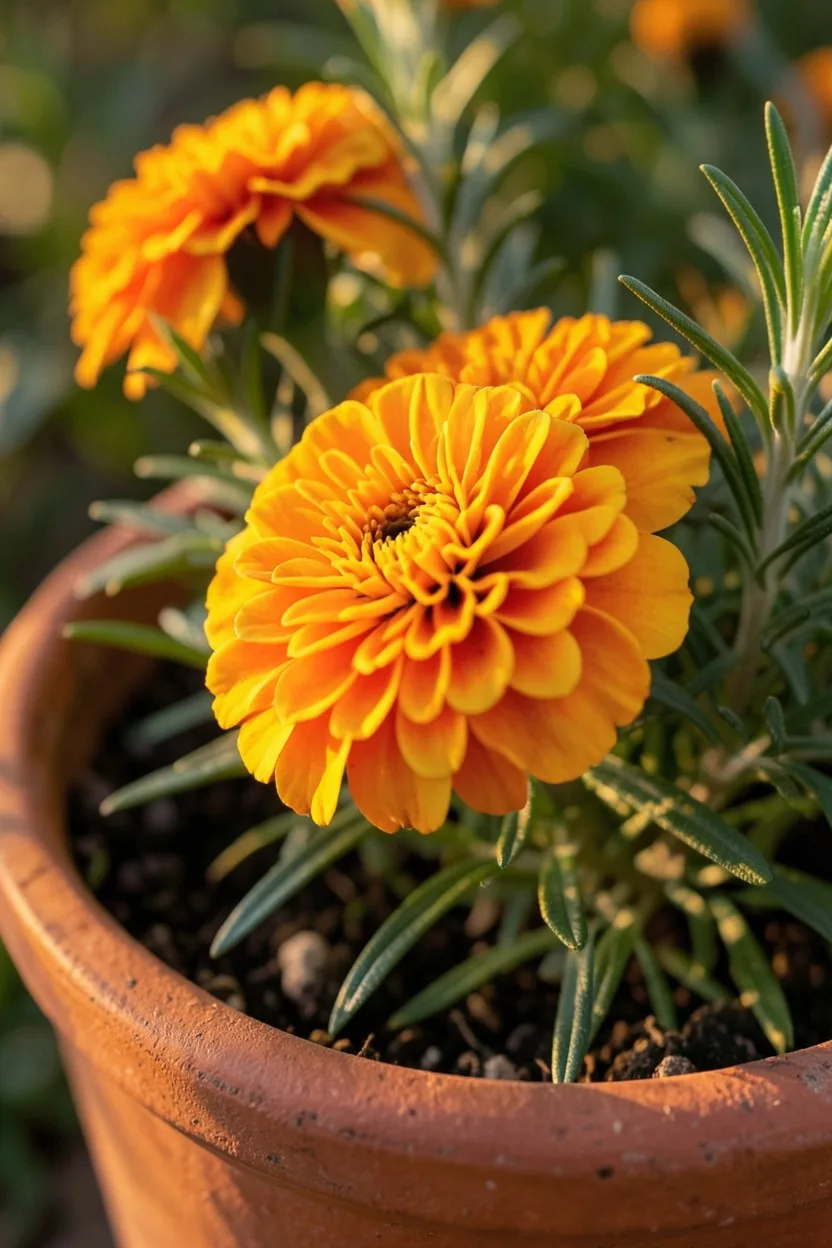
Everyone tells you to plant marigolds to deter pests, and honestly? That advice is right. But the part they skip is which variety to choose. Skip the giant, top-heavy African marigolds that snap in summer storms, and get tight, bushy French marigolds like the 'Bonanza' series.
Combine them with upright rosemary and trailing 'Prostratus' rosemary or creeping thyme in a large, unglazed terracotta pot. The woody, resinous oils in the rosemary thrive in hot, dry air, and the orange marigolds add a striking pop of color. Plus, you can snip dinner ingredients right outside your front door while enjoying a highly aromatic entry display.
🌱 GROWING TIP
Soak Terracotta Pots Before Planting
Dry terracotta acts like a sponge, sucking moisture directly out of your fresh potting soil. Always submerge new or dry clay pots in a tub of water for 30 minutes before filling them with soil to protect your young plant roots.
9. The Bold Croton and Firecracker Cuphea Mix
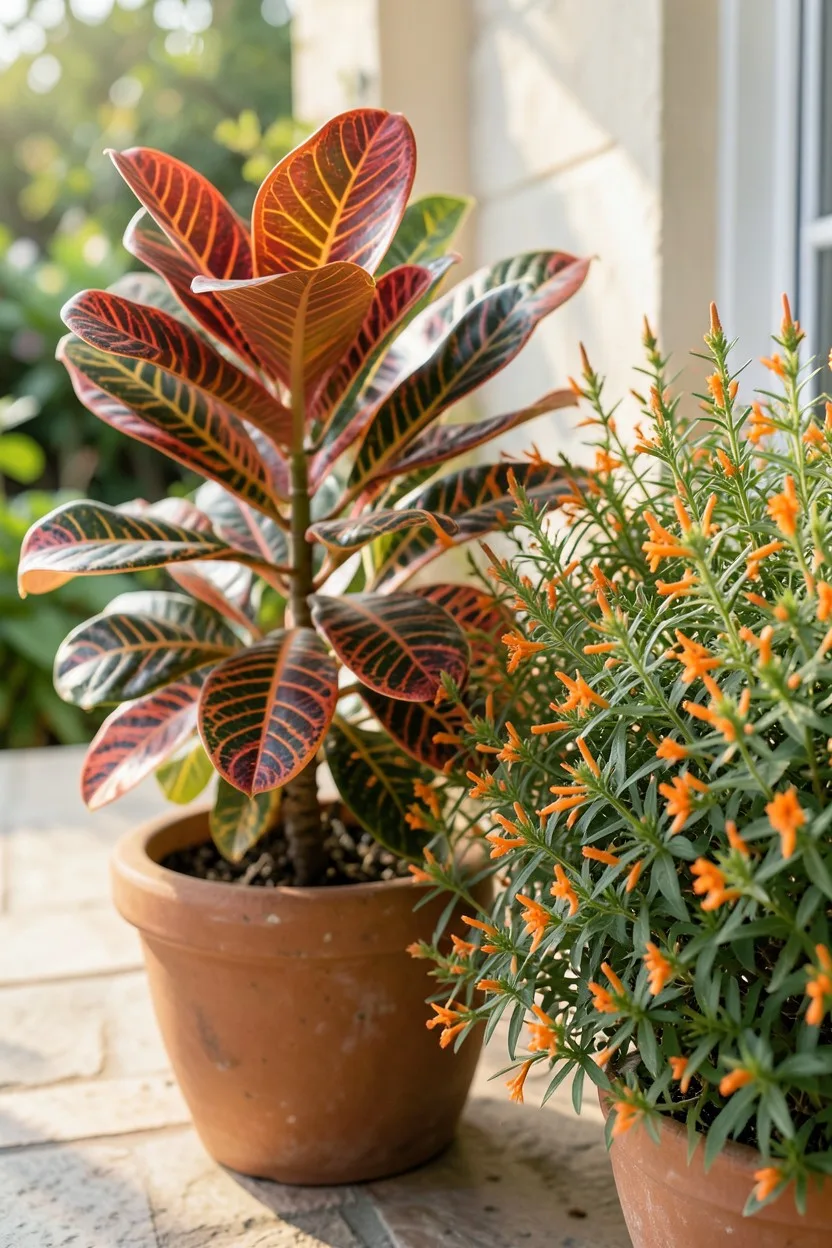
Opinion confession: I used to think crotons belonged strictly indoors as sad houseplants. Then I saw one planted in an outdoor summer display under blinding sun in Atlanta, and my mind completely changed. The direct sunlight coaxes out intense, fiery veins of yellow, red, and orange in the foliage.
Pair an upright 'Petra' croton with Cuphea ignea, commonly called the firecracker plant or cigar plant. The cuphea produces hundreds of tiny, bright orange tubular flowers with dark purple tips that hummingbirds fight over. This combination handles extreme heat beautifully because both plants are native to tropical regions where summer sun is unyielding.
10. The Low-Maintenance Agave and Dichondra Cascade
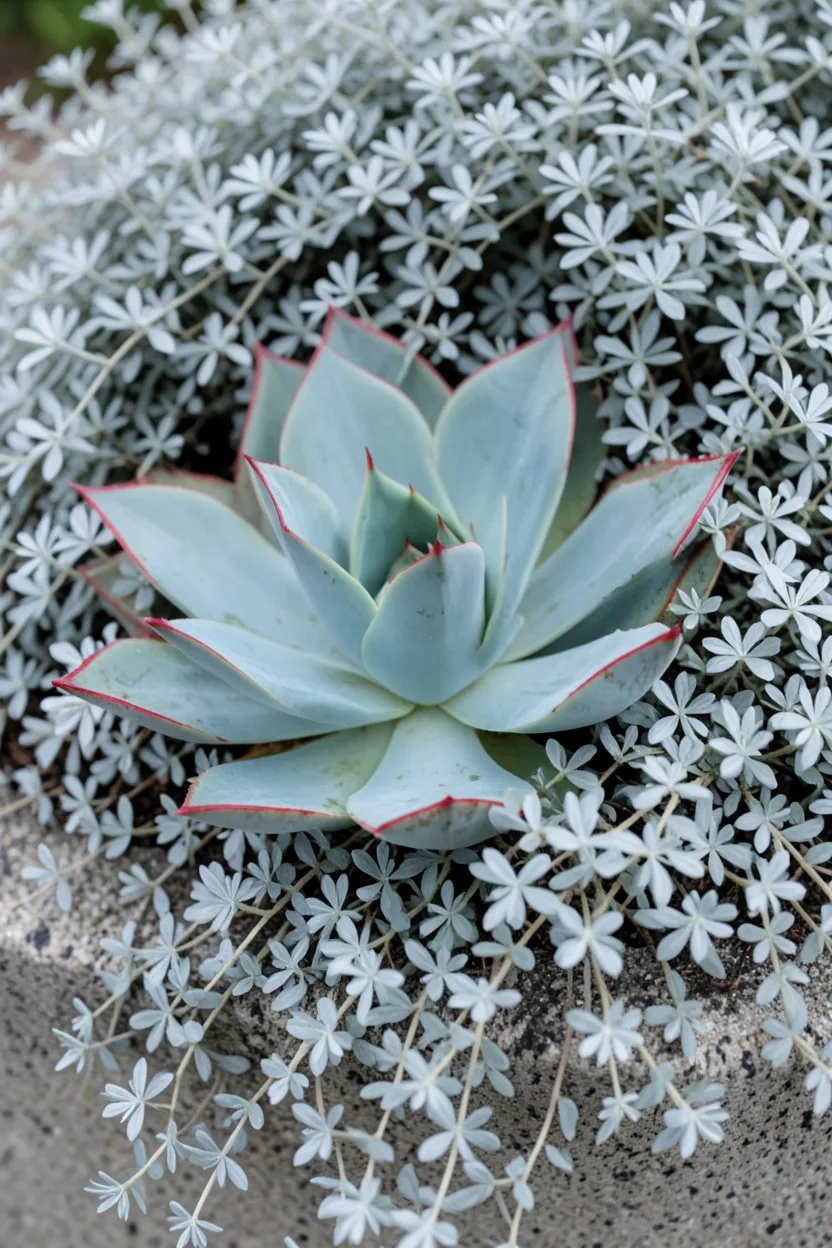
For a minimalist, high-end look that can survive a three-week summer vacation without water, use a small agave variety as your centerpiece. 'Blue Glow' agave provides a stunning, rigid architectural form with subtle red margins along its blue-green leaves.
Soften the sharp look of the agave by lining the pot rim with Dichondra argentea, famously known as 'Silver Falls'. This plant produces long, metallic-silver runners that resemble a waterfall cascading down your container. It grows incredibly fast in warm weather, handles blazing sun, and requires zero trimming or deadheading to look pristine.
🏺 How to Build a High-End Porch Pot
Check Drainage
Drill a minimum of one 1-inch hole in the bottom of your container.
Fill with Premium Mix
Pack the container firmly with a professional potting soil containing perlite.
Incorporate Fertilizer
Mix two tablespoons of slow-release organic fertilizer granules into the top soil layer.
Plant Closely
Arrange the root balls tightly together, leaving only two inches of space below the rim.
Mulch and Scent
Top the exposed soil with shred cedar bark to insulate roots from the pavement glare.
11. The Vibrant Hibiscus and Evolvulus Border
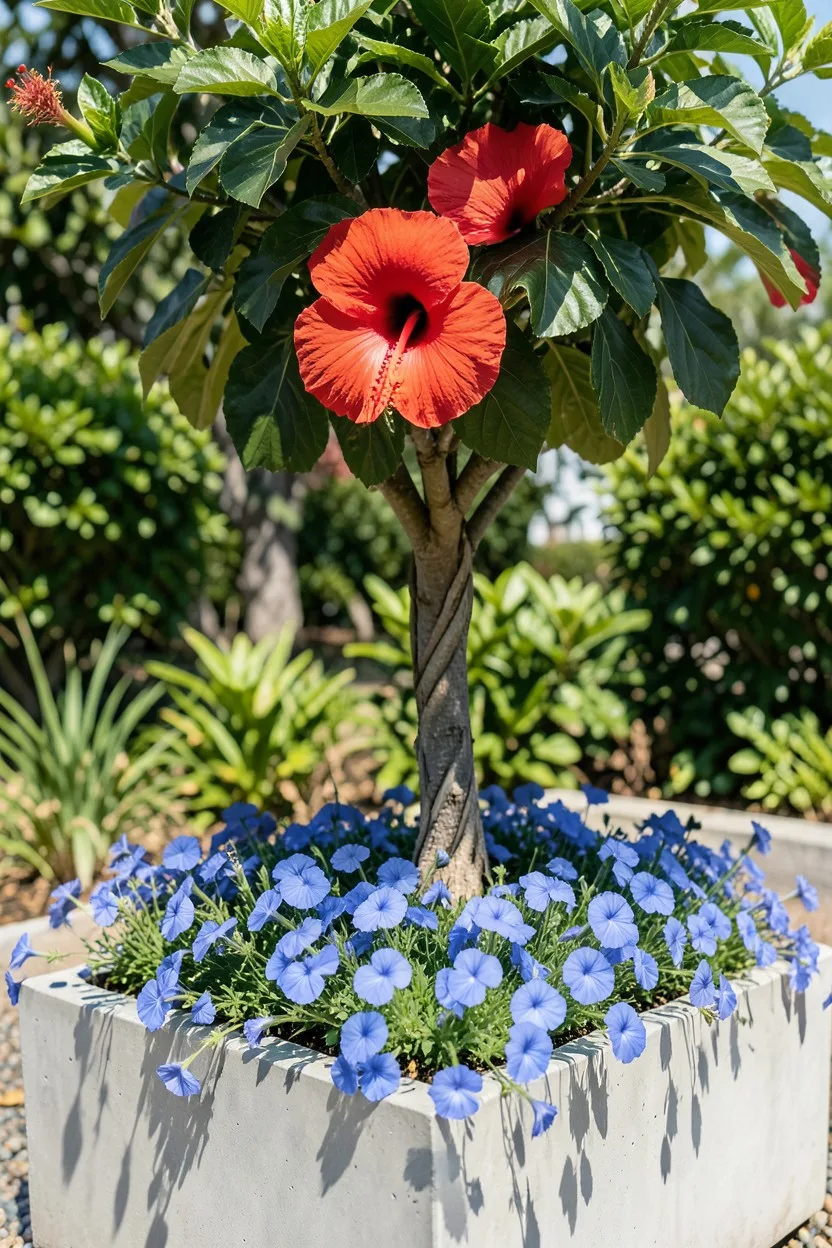
Nothing screams tropical summer louder than a braided hibiscus tree, but leaving its bare stem in a pot looks unfinished. Underplant your standard tropical hibiscus with Evolvulus nuttallianus 'Blue My Mind' (dwarf morning glory).
True blue is a notoriously rare color in the summer garden, but evolvulus delivers it consistently. It thrives on intense, baking concrete heat and produces sky-blue blooms that stay open all day long. Ensure you apply a slow-release fertilizer like Osmocote at planting time; hibiscus are heavy feeders that need consistent nutrients to pump out those massive daily blooms.
12. The Tough-as-Nails Sedum and Sempervivum Tapestry
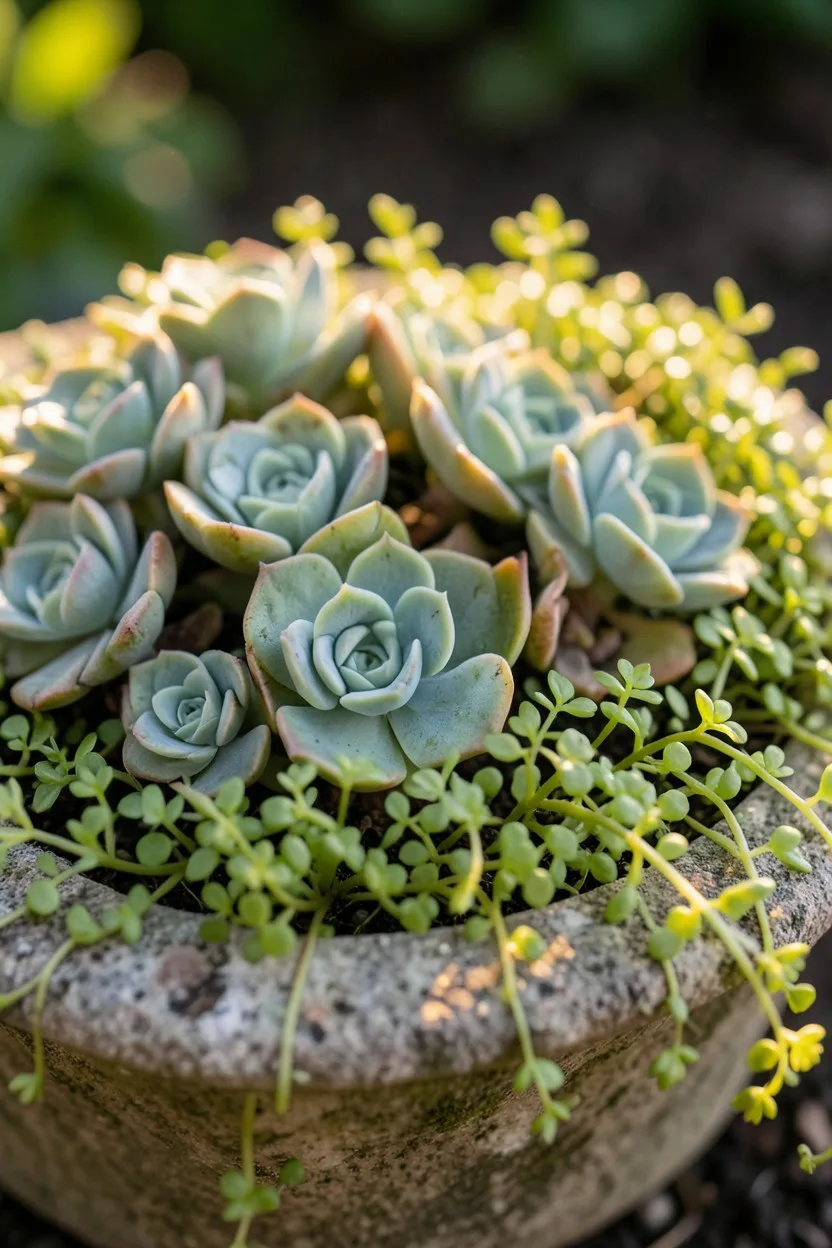
If you have a shallow, wide bowl planter that sits on top of a hot brick retaining wall or porch railing, standard potting soil will dry out in two hours. Do this instead: fill that shallow bowl with a gritty, sandy succulent mix and plant a collection of 'Autumn Joy' sedum and Sempervivum (hens and chicks).
Sedum stores moisture in its fleshy leaves and can tolerate weeks of direct, baking sun without dropping a single leaf. As the summer progresses, the hens and chicks will multiply, spilling over the edges of the pot in a tight, intricate geometric pattern that requires virtually zero maintenance.
13. The Brilliant Coleus and Sweet Potato Vine Combo
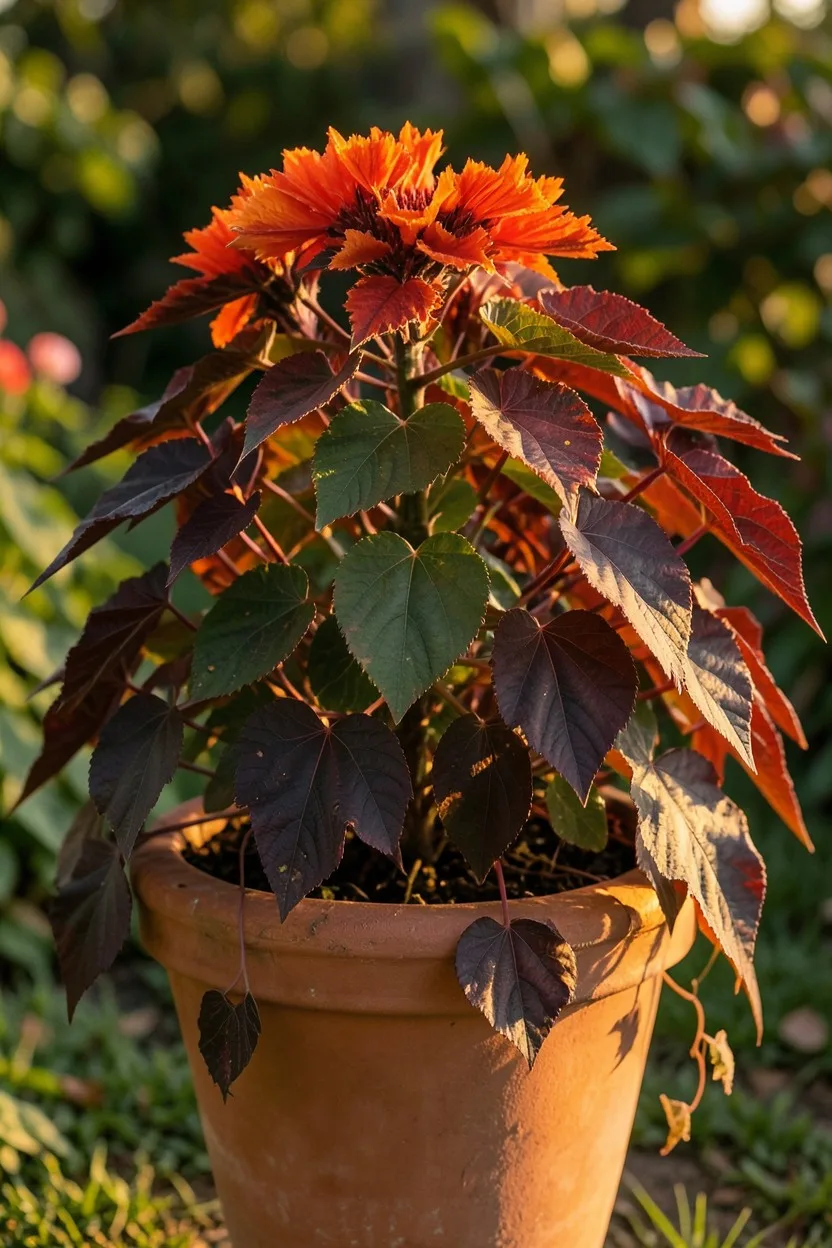
Myth buster: most people think coleus is exclusively a shade plant. While older heirloom varieties bleach out and die in direct sun, newer selections like the 'Sun King' or 'Inferno' series are explicitly bred to handle intense, unfiltered sunlight. In fact, their colors become more vivid the more sun they receive.
Pair a fiery orange sun-coleus with 'Blackie' dark purple sweet potato vine. The contrast between the neon orange upright foliage and the dark, nearly black lobed trailing leaves creates an moody, high-impact look. Keep this pair pinched back at the growing tips to encourage a bushy, dense habit rather than a tall, leggy structure.
Sun Coleus — At a Glance
🌱 Variety Type
Sun-tolerant annual
📏 Height Range
18–24 inches
🎨 Foliage Mix
Neon orange / Deep purple
✂️ Maintenance
Pinch tips bi-weekly
Pro Tip
Snip off the blue flower spikes as soon as they appear to force the plant to focus its energy on brilliant leaves.
14. The Drought-Defying Pentas and Verbena Magnet
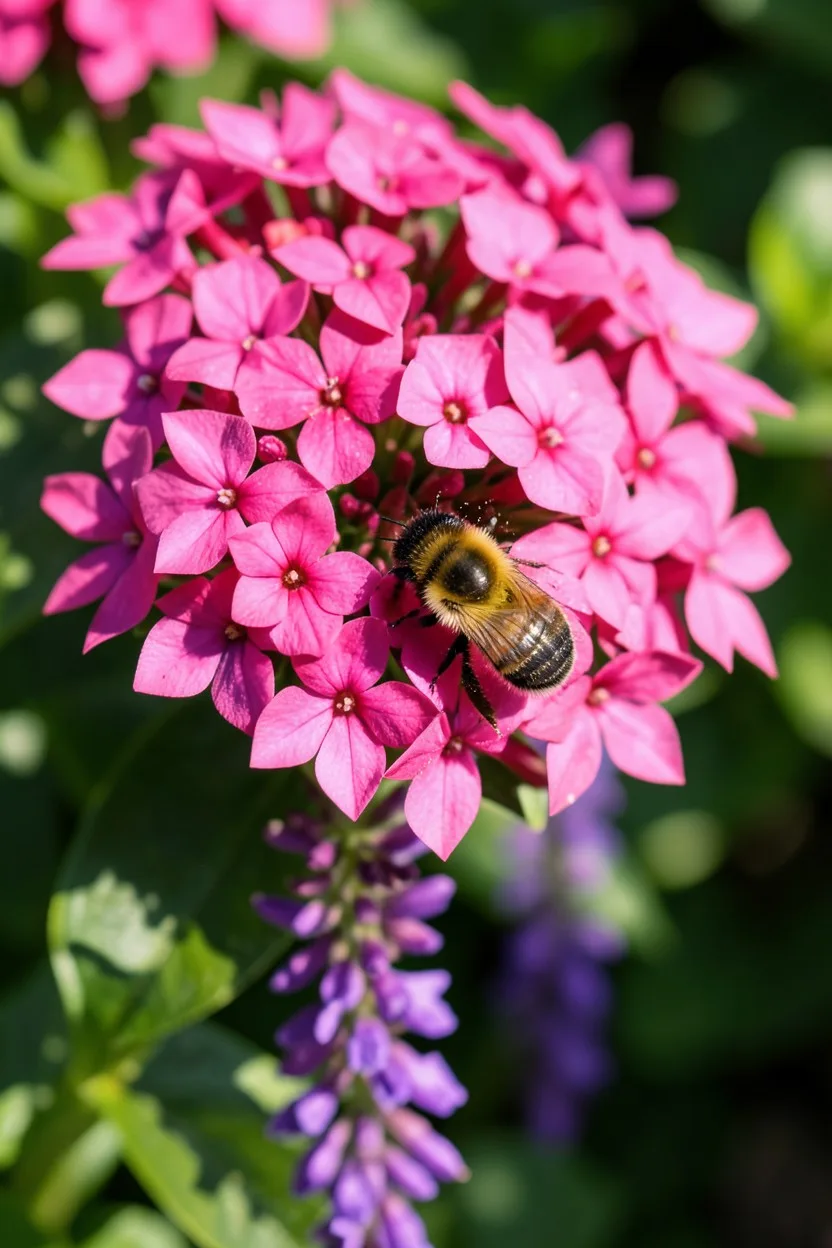
Plant one container of star-cluster pentas near your front door and watch the local bee and butterfly traffic change overnight. Pentas produce dense clusters of nectar-rich, star-shaped flowers that hold up exceptionally well to humid, sweltering midsummer conditions without dropping a single bud.
Surround the upright pentas with trailing 'Homestead Purple' verbena. This specific verbena variety is famous for its rugged constitution, staying vibrant through long dry spells. Place this duo in a heavy concrete container on your sunniest step. Water deeply once a week, making sure the moisture penetrates to the absolute bottom of the container.
15. The Elegant Dipladenia and Euphorbia Display
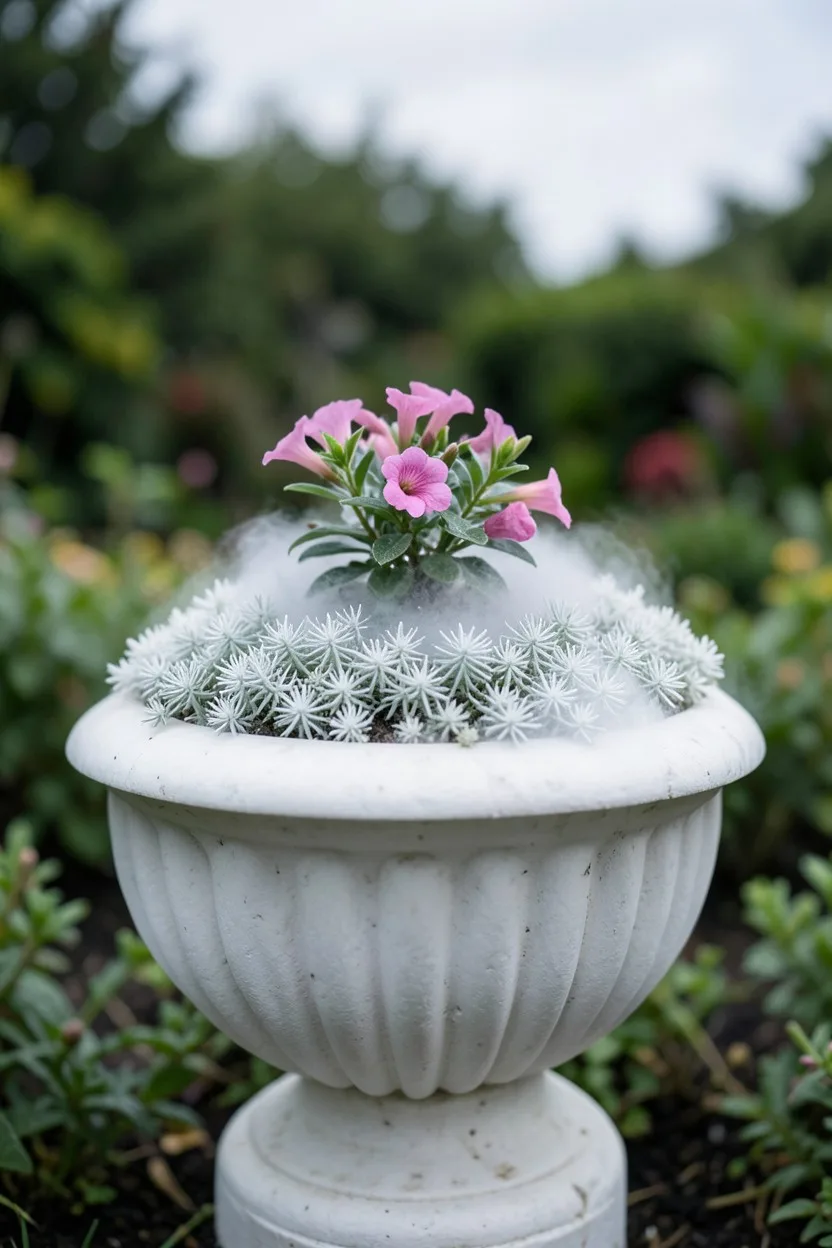
If you love the classic look of a flowering vine but don't want to manage a massive mandate, choose Dipladenia. It is the bushy cousin of mandevilla, meaning it forms a compact, mounding heap rather than an aggressive climbing vine. Its leathery, deep green leaves are highly efficient at retaining moisture.
Interplant pink or white dipladenia with Euphorbia 'Diamond Frost'. The euphorbia looks like a delicate, airy cloud of tiny white flowers, mimicking baby's breath. But don't let its delicate look fool you; it is a sap-filled euphorbia that thrives on heat and neglect. The fine white texture perfectly softens the bold, structured trumpets of the dipladenia.
💡 PRO TIP
Deadhead Weekly for Maximum Bloom Volume
Even self-cleaning annuals benefit from quick intervention. Spend five minutes every Saturday morning snipping off spent flower stalks just above the next set of leaves. This stops seed production and forces the plant to continuously generate fresh buds.
16. The Tropical Cordyline and Ornamental Pepper Statement
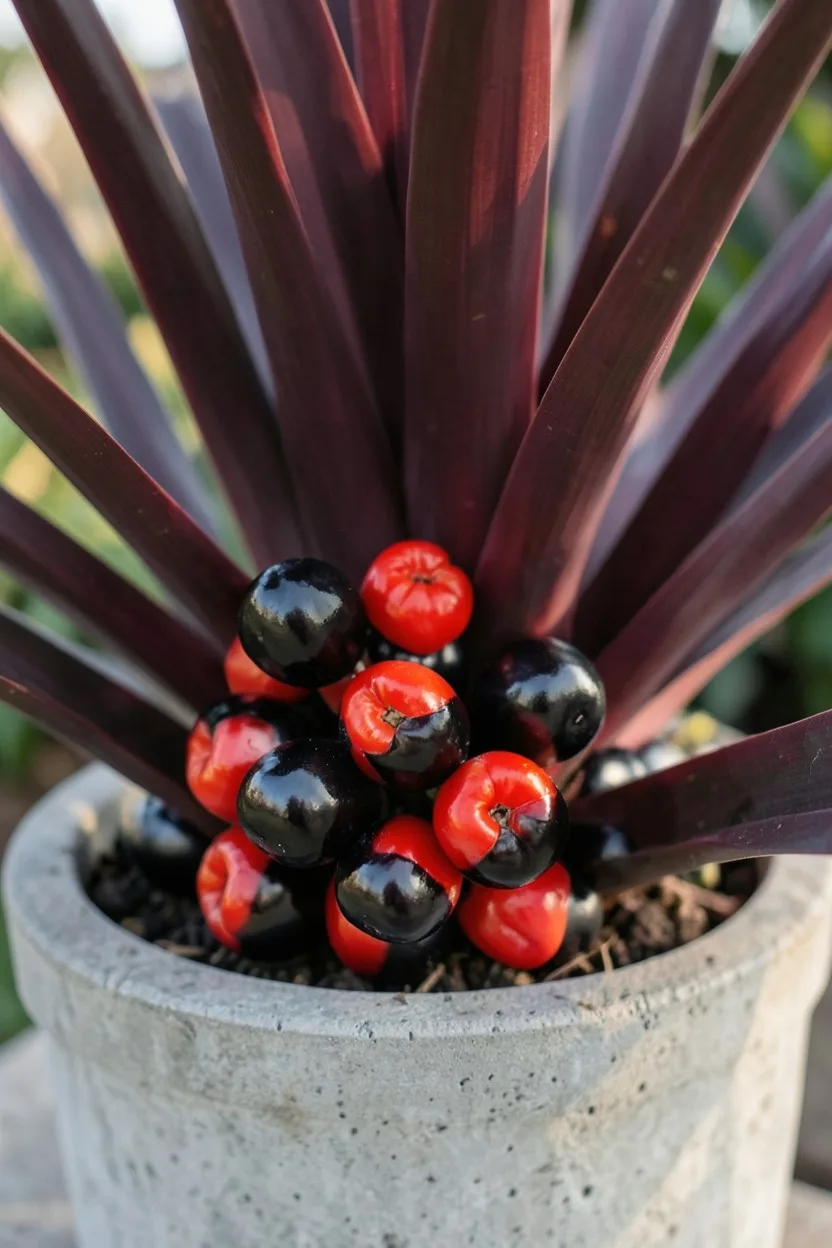
For a container that transitions beautifully from high summer straight into late autumn, look beyond traditional blooming annuals. Use a spiked, burgundy Cordyline australis (cabbage palm) as your thriller element, which gives structural drama and deep red hues.
Underplant it with ornamental peppers like 'Black Pearl' or 'Chilly Chili'. These peppers produce dense clusters of small, glossy fruits that turn from deep purple-black to fiery orange-red as they ripen in the hot sun. The fruits are incredibly durable, holding their color and texture on the plant for months without softening or rotting in the heat.
17. The Sun-Loving Begonia and Asparagus Fern Column
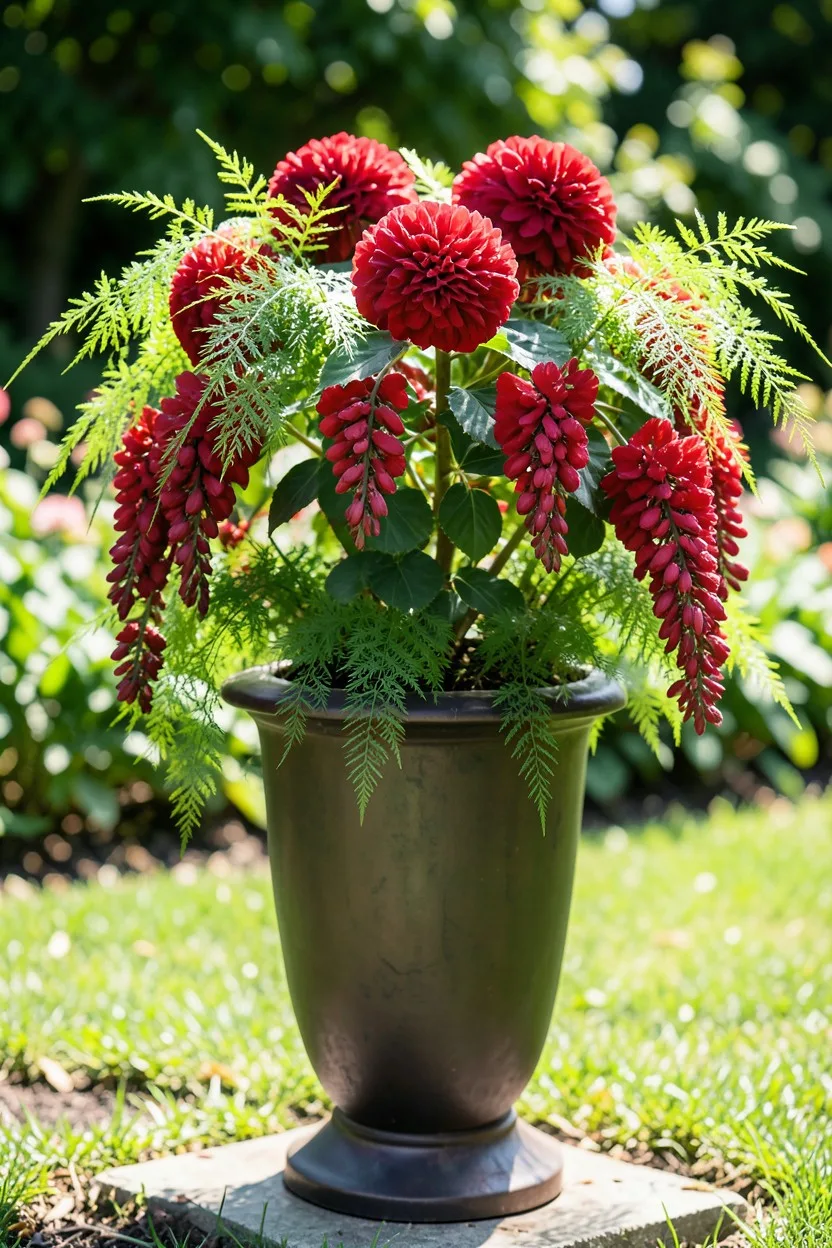
Most begonias melt under direct afternoon sun, but the 'Dragon Wing' and 'Whopper' series are complete game-changers for hot exposures. These massive, vigorous plants have thick, waxy leaves that efficiently seal in moisture, allowing them to bask in full sun without scorching.
To break up the dense, heavy foliage of the begonia, interplant it with asparagus fern (Asparagus densiflorus). The bright chartreuse, needle-like plumes provide a light, airy texture that contrasts beautifully with the bold red or pink begonia blooms. Plant this in a tall resin urn planter to allow both elements plenty of vertical space to expand.
18. The Heat-Loving Celosia and Creeping Jenny Mix
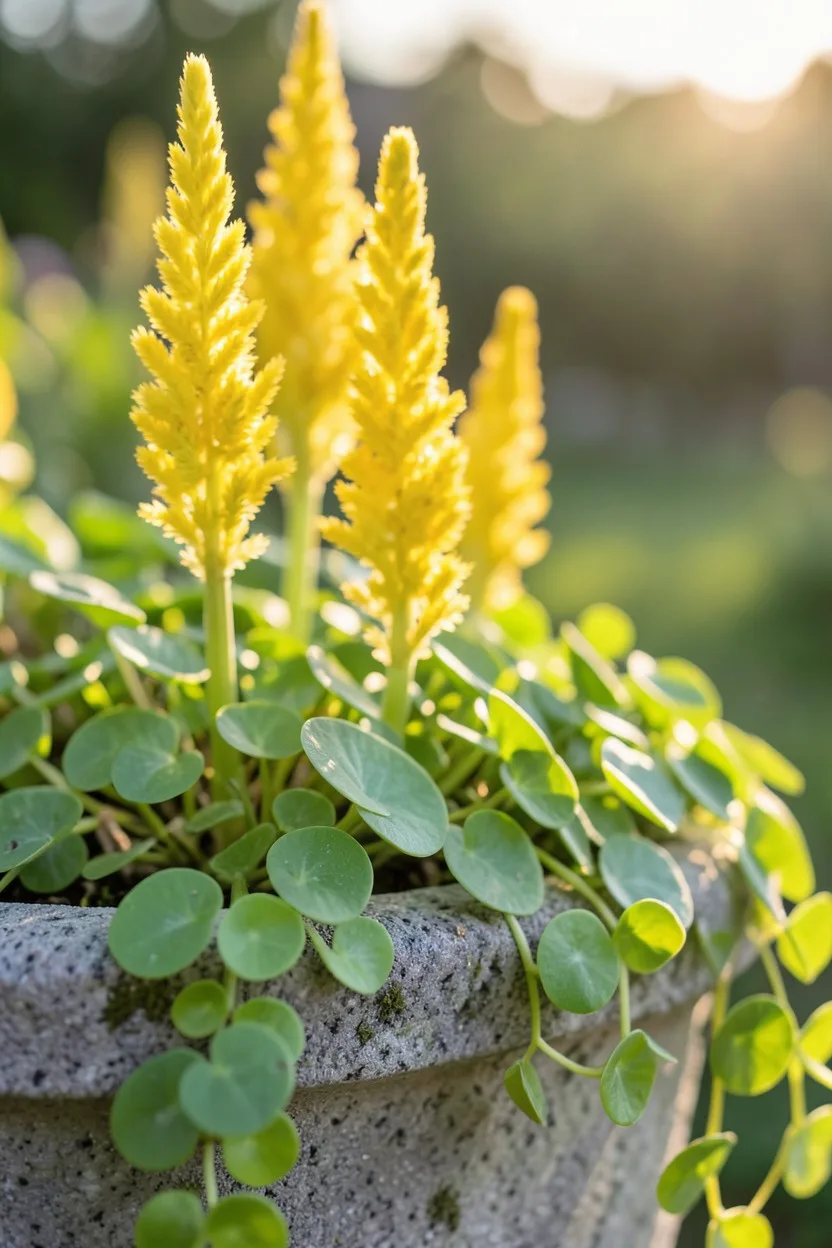
Celosia plumosa looks like miniature neon flames rising out of your flower pots, making it perfect for an energetic front porch entrance. Varieties like the 'First Flame' series stay compact and carry their brilliant yellow, orange, or crimson plumes well into the late fall season.
Contrast the stiff, velvety texture of celosia with trailing lysimachia, commonly known as creeping jenny. The chartreuse, penny-shaped leaves cascade aggressively over the rim of the container. Note: creeping jenny loves moisture, so ensure this combination receives a deep soaking as soon as the top inch of soil dries out to prevent the trailing ends from crisping.
19. The Tough Sunbather: Heliotrope and Strawflower Combo
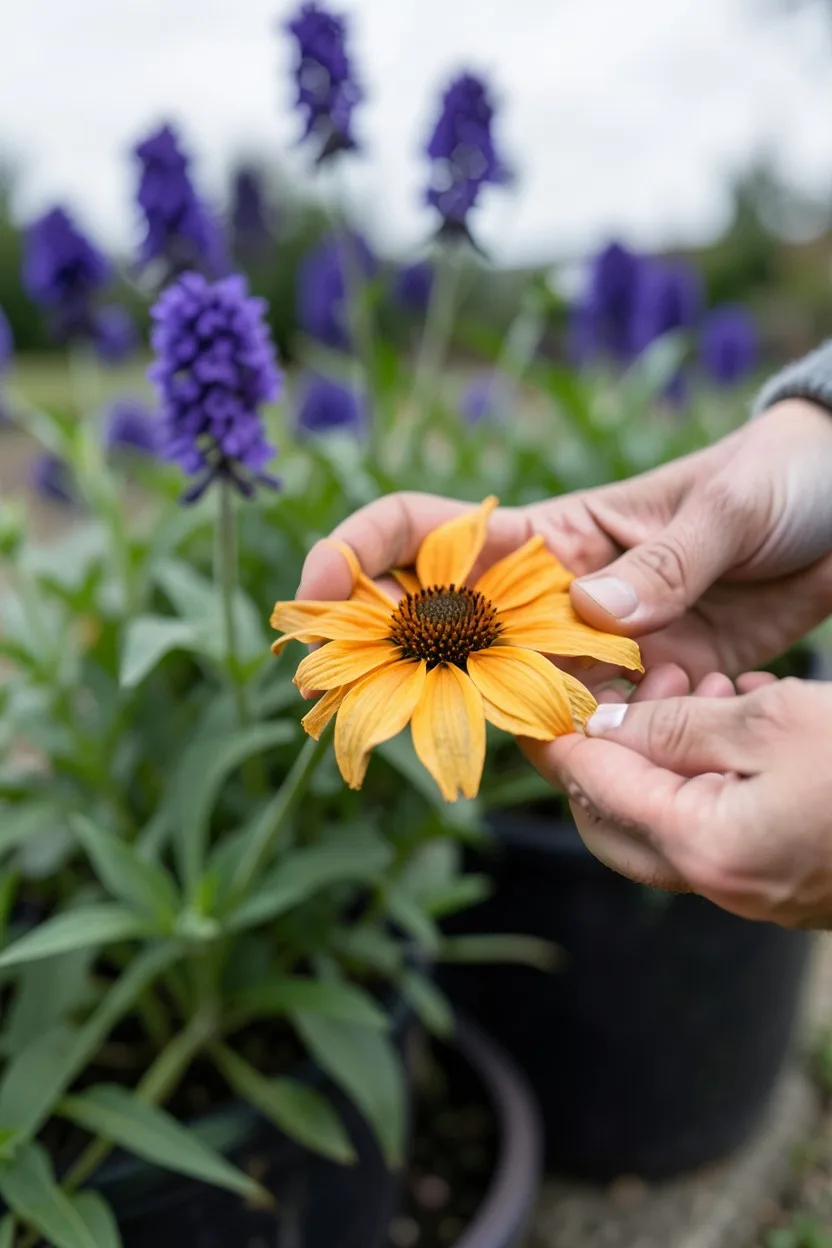
If you want your porch to smell like baked vanilla and cherry pie, heliotrope is your answer. While old varieties required partial shade, newer selections like 'Augusta Lavender' are specifically bred to endure blazing full sun without stalling or burning up.
Combine the intensely fragrant, purple clusters of heliotrope with strawflowers (Xerochrysum bracteatum). Strawflowers have unique, papery blooms that feel dry to the touch even while growing. They survive extreme heat easily because their petals are naturally adapted to arid conditions. This pairing creates an unusual, tactile experience right at your front door.
20. The Minimalist Ornamental Grass and Caladium Display
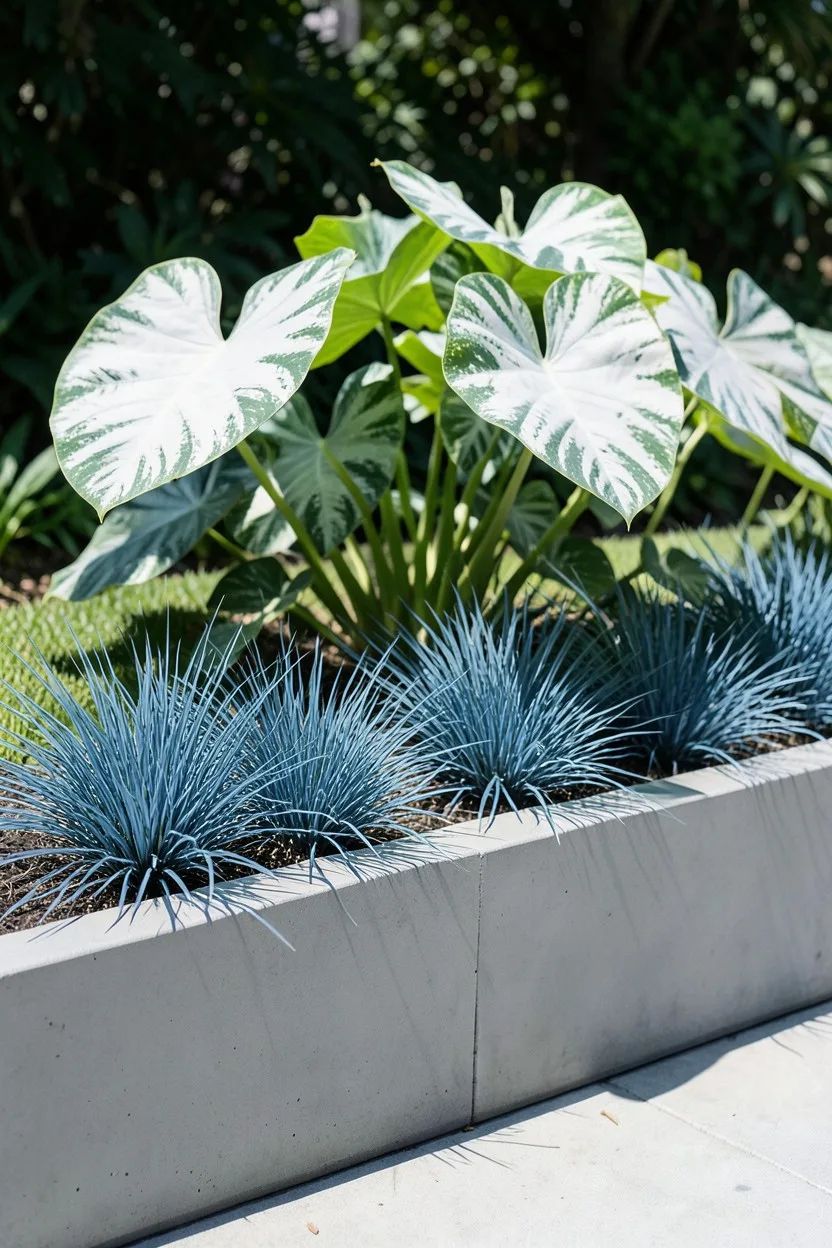
To close out our list, let us highlight a combination that relies entirely on structural form rather than flower power. Plant blue fescue grass ('Elijah Blue') along the front edge of a modern stone container, and anchor the back with sun-tolerant caladiums like the 'Heart to Heart' series.
The spiky, metallic blue tufts of the fescue provide a striking geometric contrast to the massive, heart-shaped translucent leaves of the caladium. This pairing brings a clean, contemporary architectural vibe to modern porch designs and requires zero deadheading all summer long.
Summer Care Strategy Comparison
What to Do
- Water deeply at dawn so roots absorb moisture before the midday heat hits.
- Use large resin, stone, or thick glazed ceramic pots to insulate roots.
- Apply a slow-release organic fertilizer at planting time for sustained growth.
What to Avoid
- Avoid shallow light watering, which forces roots to the hot soil surface.
- Never use thin black plastic pots that absorb heat and cook roots.
- Do not apply liquid chemical fertilizers to bone-dry, heat-stressed soil.
Frequently Asked Questions
How often should I water my full-sun porch pots?
During the peak heat of July and August, large containers (16 inches or wider) typically require a deep soaking every 24 to 48 hours. Always check the soil moisture by burying your index finger two inches deep into the pot before adding water.
Why are the leaves on my sun-tolerant plants turning yellow?
Yellowing leaves usually point to frequent light watering or poor drainage. When soil stays waterlogged at the base of the pot, roots suffocate and rot. Ensure your containers have large drainage holes and use a loose potting mix containing plenty of coarse perlite.
Do I need to feed my container plants all summer long?
Yes. Every time you water a container, vital nutrients leach out of the bottom drainage holes. To keep plants blooming continuously, mix a slow-release granular fertilizer into the soil during planting, then supplement with a water-soluble fish emulsion every three weeks.
Can I leave terracotta pots outside during the winter months?
If you live in a climate with freezing winter temperatures, you must empty unglazed terracotta pots and store them indoors. Moisture trapped inside the porous clay walls expands when it freezes, causing the pot to flake, crack, and shatter before spring.
Final Thoughts
If you only add one plant from this entire list to your porch this season, make it the trailing 'New Gold' lantana. Most flowering annuals eventually stall or look ragged when the high summer heat index climbs into the triple digits, but lantana pushes out fresh green growth and vibrant blooms the harder the sun bakes it. Pair it with a substantial, thick-walled stone container that keeps its root system well-insulated from the blistering pavement glare, and you will finally break the yearly cycle of crispy mid-summer container failures.
Transform Your Garden Space Today
Sign up for our seasonal container planting guide to get exclusive, region-specific combination recipes delivered right to your inbox every spring.

John Smith is the founder and CEO of Karaoke Machines Guru. He is a karaoke tutor and karaoke enthusiast and has been passionate about karaoke since he was a child. He also writes about karaoke-related tips, guides, and product reviews on this website.
He overlooks the whole website and makes sure that everything is running smoothly. Learn more!